

Why You’ll Love This Roux
This roux recipe stands out for its simplicity, making it an essential technique for anyone interested in roux basics. With just a few ingredients, you can create a base that thickens sauces, soups, and stews effectively. Its ease of preparation allows even beginners to achieve professional results quickly, turning ordinary meals into something special.
Additionally, roux offers health benefits when made with quality ingredients, such as providing a low-fat option that supports balanced eating. This roux aligns with various dietary preferences, ensuring it fits into modern lifestyles without compromising nutrition. Whether you’re cooking for family or yourself, roux enhances dishes with its wholesome profile.
One of the best aspects of this roux is its versatility, adapting to needs like vegan or gluten-free diets with minimal adjustments. It delivers a distinctive flavor that elevates everyday cooking, adding a rich, toasted essence to recipes. For home cooks exploring roux, this makes it a go-to choice for memorable meals that cater to diverse tastes. Check out our gluten-free cooking guide for more ideas on adaptations.
Jump to:
- Why You’ll Love This Roux
- Essential Ingredients for Roux
- How to Prepare the Perfect Roux: Step-by-Step Guide
- Dietary Substitutions to Customize Your Roux
- Mastering Roux: Advanced Tips and Variations
- How to Store Roux: Best Practices
- FAQs: Frequently Asked Questions About Roux
- What is a roux and what is it used for in cooking?
- How do you make a basic roux at home?
- What are the different types of roux and how do their cooking times affect flavor?
- Can I use oils or other fats instead of butter to make roux?
- How do I know if my roux is cooked properly and ready to be used?
- Roux
- Ingredients
- Instructions
- Last Step:
- Notes
- Nutrition
- Did you make this recipe?
Essential Ingredients for Roux
To make roux, start with a careful selection of ingredients that form the foundation of this thickening agent. Roux is a mixture of equal parts flour and fat by weight, cooked together to achieve the desired consistency and flavor. Below is a structured list of the main ingredients needed, based on the standard recipe provided.
- 1/2 cup unsalted butter – Provides a rich base and smooth texture
- 1/2 cup all-purpose flour – Thickens sauces and creates structure
- Salt to taste – Enhances the overall flavor
For those with specific dietary needs, consider these options to customize your roux:
- 1/2 cup coconut oil or vegan butter for vegan adaptations – Replaces butter to maintain a plant-based approach
- 1/2 cup rice flour or cornstarch for gluten-free versions – Substitutes all-purpose flour to accommodate gluten sensitivities
- 1/2 cup olive oil for a low-calorie alternative – Offers a lighter fat option while preserving the roux’s properties
- Total Time: 22 minutes
- Yield: About 1/2 cup
- Prep Time: 2 minutes
- Cook Time: 20 minutes
- Category: Basic Technique
- Method: Stovetop Cooking
- Cuisine: French
- Diet: Vegetarian, Gluten-Free (if using gluten-free flour)
- Serving Size: 1 tablespoon
- Calories: 50
- Sugar: 0g
- Sodium: 30mg
- Fat: 5g
- Saturated Fat: 3g
- Unsaturated Fat: 1.5g
- Trans Fat: 0g
- Carbohydrates: 3g
- Fiber: 0g
- Protein: 0.5g
- Cholesterol: 15mg
How to Prepare the Perfect Roux: Step-by-Step Guide
Preparing roux involves a straightforward process that yields excellent results when done correctly. Roux is a mixture of equal parts flour and fat by weight, cooked to thicken sauces, soups, and stews effectively. To prepare, heat the fat such as butter, lard, vegetable oil, or meat drippings in a pan until melted or hot, then add an equal weight of flour while stirring continuously.
First step: Gather and measure all ingredients precisely to ensure consistent results, using a heavy-bottomed skillet for even heat distribution. This setup helps in cooking the mixture over moderate heat until smooth and achieving the desired color, from white to dark brown. Cooking time varies from a few minutes for a light roux to 15-20 minutes or more for darker roux, influencing both flavor and thickening ability.
Second step: Melt butter over medium heat until fully liquefied, taking care not to let it brown, and consider vegan options like coconut oil for substitutions. Lighter roux thickens more but has a milder taste, while darker roux offers a nuttier flavor with less thickening power. Use fats with higher smoke points like vegetable oil when aiming for darker roux to prevent burning.
Third step: Gradually whisk in the flour, stirring continuously to combine with the fat and form the base. Stir constantly to avoid lumps and burning, ensuring the mixture stays smooth throughout. In some regional recipes, onions or garlic might be added during preparation to enhance flavor.
Fourth step: Cook the roux over medium heat, stirring constantly to reach the desired color blond, golden, or dark brown while adapting for dietary suitability. The color not only affects flavor but also how well it thickens your final dish. Always monitor the heat to maintain control and achieve the best outcome.
Fifth step: Remove from heat and use immediately, or cool for storage if preparing in advance. Reheat gently while stirring to restore smoothness, making it ideal for batch cooking. This method ensures your roux integrates seamlessly into various recipes.
Final step: Incorporate the roux into sauces, soups, or stews, adjusting seasoning as needed for the adaptable nature of this technique. Remember to store any unused roux in cool conditions for later use, preserving its quality. For more on roux variations, visit our beginner recipes section to explore further.

Dietary Substitutions to Customize Your Roux
Customizing roux for different dietary needs is simple and allows everyone to enjoy this classic thickener. By swapping ingredients, you can adapt roux to fit vegan, gluten-free, or low-calorie preferences without losing its core benefits. Roux is a mixture of equal parts flour and fat by weight, so substitutions maintain that balance while altering taste and texture.
For protein and main component alternatives, consider these options to make your roux more inclusive. Replace traditional dairy butter with vegan butter for plant-based diets, ensuring a smooth consistency. Use gluten-free flours like chickpea or almond flour for those with sensitivities, which helps in thickening while keeping the mixture lump-free.
When it comes to vegetable, sauce, and seasoning modifications, you have even more flexibility. Substitute classic onions with shallots or leeks to vary flavor profiles and add depth, especially in regional recipes where they might be included. Add fresh herbs like thyme or rosemary to customize seasoning, or use alternative sauces such as tamari for gluten-free options and low-sodium soy sauce for restrictions.
Swap out heavy cream-based sauces with vegetable broth or nut-based creams for lower calorie content, making roux versatile for all. These changes ensure that roux cooked over moderate heat achieves the desired color and flavor, from white to dark brown, without compromising on quality. Always stir constantly to avoid lumps and select fats with higher smoke points for darker roux.
Mastering Roux: Advanced Tips and Variations
Once you grasp the basics of roux, advanced techniques can take your cooking to the next level. Roux is a mixture of equal parts flour and fat by weight, and mastering it involves precise control to enhance thickening and flavor. Use constant whisking and temperature control to prevent lumps, achieving a silky smooth roux every time.
For flavor variations, experiment with adding spices like smoked paprika or curry powder to create unique twists on traditional recipes. Try using browned butter or garlic-infused oils for an enhanced aroma that complements the nuttier flavor of darker roux. Remember, cooking time for darker roux can reach 15-20 minutes, so use fats with higher smoke points to avoid burning while stirring continuously.
| Tips Category | Key Advice |
|---|---|
| Pro Techniques | Experiment with different fat-to-flour ratios for varying thickness in your roux. |
| Presentation | Garnish dishes with fresh herbs to elevate both appearance and taste. |
| Make-Ahead Options | Store roux in airtight containers and reheat gently for busy days. |
In some regional recipes, onions or garlic might be added during preparation to boost flavor profiles. Store any unused roux in cool conditions to maintain its quality for later use.
How to Store Roux: Best Practices
Proper storage of roux ensures it remains fresh and ready for your next cooking session. Roux is a mixture of equal parts flour and fat by weight, so keeping it in optimal conditions preserves its thickening ability and flavor. Always cool roux completely before storing to prevent moisture buildup that could affect its texture.
For refrigeration, place roux in an airtight container and keep it in the fridge for up to one week, making it easy to grab for quick meals. Freezing works well for longer-term needs; portion roux into small containers or ice cube trays and store for up to three months. Thaw in the refrigerator before use to maintain smoothness.
When reheating, warm roux gently over low heat while stirring constantly to avoid separation and ensure a consistent texture. Consider meal prep by batch cooking and freezing roux, which allows for portion control and streamlines your kitchen routine. Use fats with higher smoke points if planning to recook, and remember to stir constantly as you did during initial preparation to avoid lumps.

FAQs: Frequently Asked Questions About Roux
What is a roux and what is it used for in cooking?
How do you make a basic roux at home?
What are the different types of roux and how do their cooking times affect flavor?
Can I use oils or other fats instead of butter to make roux?
How do I know if my roux is cooked properly and ready to be used?
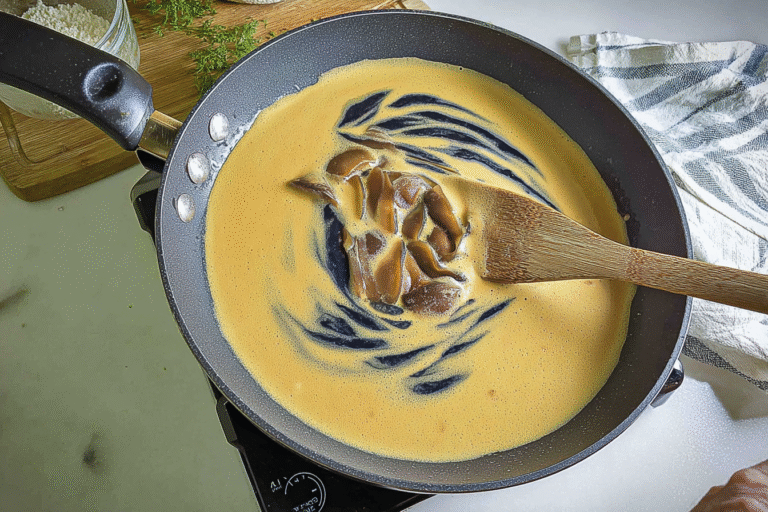
Roux
🍯 Master the essential foundation of classic French cooking with this versatile roux that transforms simple ingredients into the perfect thickening base for countless dishes
🥘 Elevate your culinary skills by learning this fundamental technique that gives your gravies, sauces, and soups professional consistency and rich, complex flavors
Ingredients
– 1/2 cup unsalted butter for a rich base and smooth texture
– 1/2 cup all-purpose flour for thickening sauces and creating structure
– Salt to taste to enhance overall flavor
– 1/2 cup coconut oil or vegan butter for vegan adaptations; replaces butter to maintain a plant-based approach
– 1/2 cup rice flour or cornstarch for gluten-free versions; substitutes all-purpose flour to accommodate gluten sensitivities
– 1/2 cup olive oil for a low-calorie alternative; offers a lighter fat option while preserving the roux’s properties
Instructions
1-First step: Gather and measure all ingredients precisely to ensure consistent results, using a heavy-bottomed skillet for even heat distribution. This setup helps in cooking the mixture over moderate heat until smooth and achieving the desired color, from white to dark brown. Cooking time varies from a few minutes for a light roux to 15-20 minutes or more for darker roux, influencing both flavor and thickening ability.
2-Second step: Melt butter over medium heat until fully liquefied, taking care not to let it brown, and consider vegan options like coconut oil for substitutions. Lighter roux thickens more but has a milder taste, while darker roux offers a nuttier flavor with less thickening power. Use fats with higher smoke points like vegetable oil when aiming for darker roux to prevent burning.
3-Third step: Gradually whisk in the flour, stirring continuously to combine with the fat and form the base. Stir constantly to avoid lumps and burning, ensuring the mixture stays smooth throughout. In some regional recipes, onions or garlic might be added during preparation to enhance flavor.
4-Fourth step: Cook the roux over medium heat, stirring constantly to reach the desired color blond, golden, or dark brown while adapting for dietary suitability. The color not only affects flavor but also how well it thickens your final dish. Always monitor the heat to maintain control and achieve the best outcome.
5-Fifth step: Remove from heat and use immediately, or cool for storage if preparing in advance. Reheat gently while stirring to restore smoothness, making it ideal for batch cooking. This method ensures your roux integrates seamlessly into various recipes.
6-Final step: Incorporate the roux into sauces, soups, or stews, adjusting seasoning as needed for the adaptable nature of this technique. Remember to store any unused roux in cool conditions for later use, preserving its quality. For more on roux variations, visit our beginner recipes section to explore further.
Last Step:
Please leave a rating and comment letting us know how you liked this recipe! This helps our business to thrive and continue providing free, high-quality recipes for you.Notes
🍯 For darker roux, use oil or bacon drippings instead of butter to prevent burning at higher temperatures
⏰ Always cook roux to at least the white stage to eliminate the raw flour taste in your final dish
🥘 Store cooled roux in an airtight container in the refrigerator for up to 1 week or freeze for up to 3 months




This roux tutorial is fantastic, clear and practical.
I browned mine a bit longer for a deeper flavor when making gumbo, and the heat control tips really helped.
😊