
What Are Campfire Baked Potatoes?
Campfire Baked Potatoes are whole Russet potatoes wrapped in heavy-duty aluminum foil and cooked directly on glowing embers. The method turns a basic potato into a filling outdoor meal that needs little active attention. Once the packets leave the fire, each person can open one and add butter, sour cream, and cheddar cheese.
This recipe is designed for eight people and uses one medium potato per person. The source treats the potatoes as a main course because the toppings make them hearty. They can also work as a side dish beside another campfire food, but the measured ingredient list remains the same.
The quality of the fire matters as much as the potato. High flames can scorch the outside before the center softens, while a bed of steady embers supplies more even heat. That is why the packets sit on glowing coals rather than inside tall flames.
Preparation is simple, but it still deserves care. A secure double layer of foil protects the potatoes, long tongs keep hands away from the heat, and an organized topping area makes serving easier. The result is a practical camping potato bar with minimal dishes to wash.
Jump to:
- What Are Campfire Baked Potatoes?
- Campfire Baked Potatoes Ingredients
- Equipment to organize first
- How to Make Campfire Baked Potatoes
- 1. Clean and prepare the potatoes
- 2. Double-wrap each potato
- 3. Build a bed of glowing embers
- 4. Cook on the embers
- 5. Remove and rest safely
- 6. Arrange the loaded potato bar
- Why This Ember Method Works
- Russets support a fluffy center
- Foil manages the harsh cooking environment
- Embers provide steadier heat than flames
- Tips, Variations, Serving, and Storage
- Match the potatoes by size
- Use the measured toppings as the base
- Consider grill variations separately
- Handle leftovers with camping conditions in mind
- Finish with responsible fire care
- Campfire Baked Potatoes FAQs
- How long do Campfire Baked Potatoes cook?
- Should the potatoes be placed in flames?
- How many potatoes should I prepare per person?
- What toppings are included?
- Serve the Potatoes Straight from the Fire
- Campfire Baked Potatoes
- Ingredients
- Instructions
- Last Step:
- Nutrition
- Did you make this recipe?
Campfire Baked Potatoes Ingredients
- 8 Russet potatoes: Use medium potatoes for the source recipe’s 45-minute ember cooking instruction. Russets are the specified variety and their starchy flesh suits a fluffy baked potato.
- 8 oz sour cream: Divide it among the opened potatoes at serving time. Keep this perishable topping cold until the meal is ready.
- 8 oz cheddar cheese: Add the cheese while the potatoes are hot so it begins to soften against the flesh.
- 2 oz salted butter: Place small portions inside the split potatoes before the cooler toppings. The measured recipe specifically uses salted butter.
Bacon bits are mentioned by the source as an optional topping, but they are not part of the measured four-ingredient recipe. Salt and pepper may also be offered if desired, especially when using unsalted butter. Keep those optional additions separate so the canonical quantities above stay clear.
Equipment to organize first
Set out heavy-duty aluminum foil, a sharp knife, heavy-duty disposable plates, and long grilling tongs. The source also permits long sticks for removing packets, but proper tongs provide a more controlled grip. A heat-safe work area near the fire helps you move the potatoes without crossing the serving space.
Prepare enough foil to wrap every potato twice. Regular thin foil is easier to puncture and provides less protection from direct contact with embers. Check each packet for exposed areas before it goes onto the coals.
How to Make Campfire Baked Potatoes
1. Clean and prepare the potatoes
If you plan to eat the skins, wash the potatoes and dry them. FoodSafety.gov potato washing guidance advises rinsing firm produce under cold running water, scrubbing it with a clean brush, and avoiding soap or other chemicals. Even when the peel will not be eaten, cleaning prevents dirt from moving inside when the potato is cut.
Prick each Russet potato all over with a fork. This is the preparation specified in the recipe before wrapping. Keep the potatoes whole and do not add unmeasured oil or seasonings inside the packets.

2. Double-wrap each potato
Wrap every potato snugly in heavy-duty aluminum foil, then add a second layer. Fold the seams firmly so loose edges do not open when the packets are moved. Double wrapping is a source-specific safeguard against burning while the potatoes sit on the embers.
3. Build a bed of glowing embers
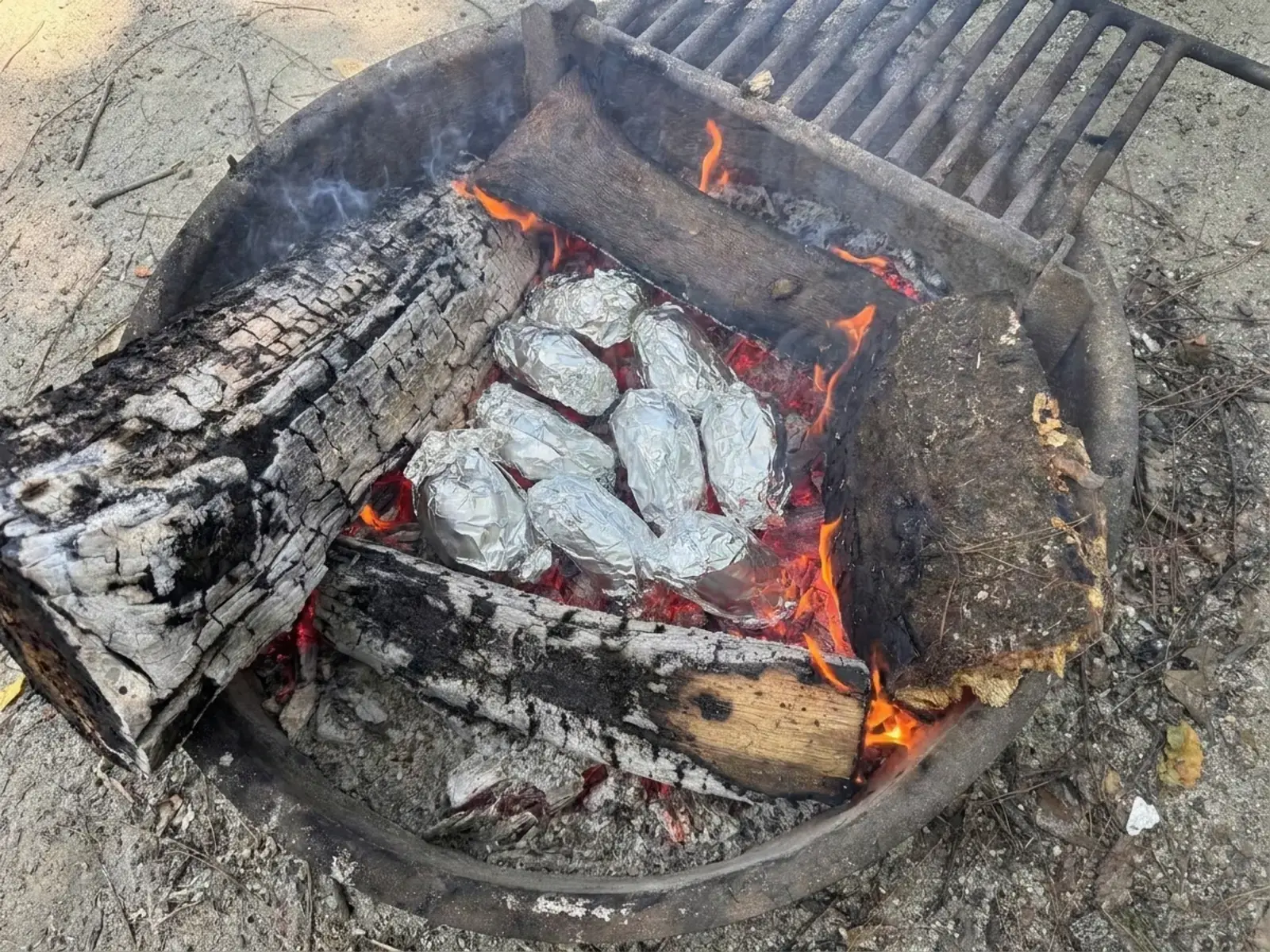
Allow the campfire to develop hot coals before adding the potatoes. Gather the embers into a useful cooking area with a long-handled fire tool. Do not place the packets in high flames because the source warns that direct flames can burn them.
Before lighting any fire, check the campground’s current rules and conditions. National Park Service campfire safety advises confirming local restrictions and burn bans, and keeping tents, gear, and other flammable objects at least 15 feet away and upwind of the firepit.
4. Cook on the embers
Place the wrapped medium potatoes on top of the glowing coals without burying them. Cook them for 45 minutes, following the recipe’s authoritative timing. Large or jumbo Russets may need an additional 5 to 10 minutes according to the source article, so potato size should guide that adjustment.
Avoid repeatedly opening the foil to inspect the center. Every opening releases heat and makes the packet harder to handle safely. Instead, begin with similarly sized potatoes, keep them together over comparable embers, and use the specified timing as the starting point.

5. Remove and rest safely
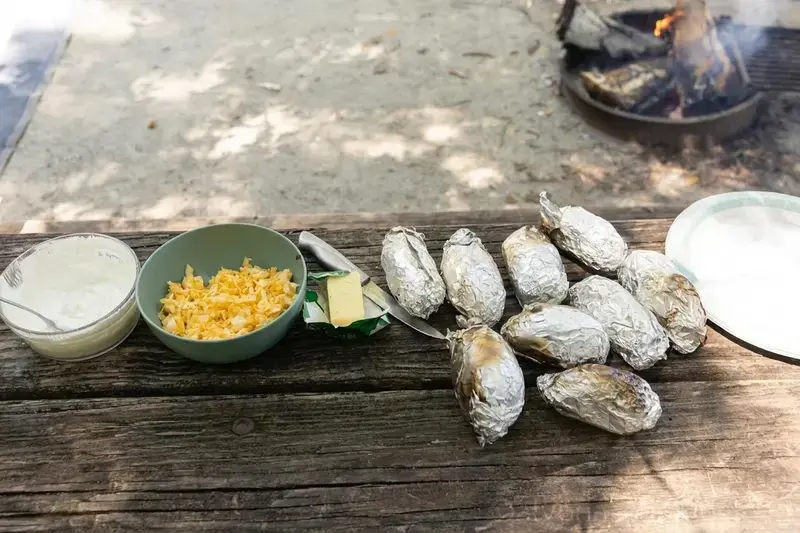
Lift the packets from the campfire with long grilling tongs or long sticks, keeping your face and hands away from escaping steam. Set them on a wooden picnic table or another stable heat-safe surface. The source notes that a 10-minute rest makes the potatoes easier to open and serve.
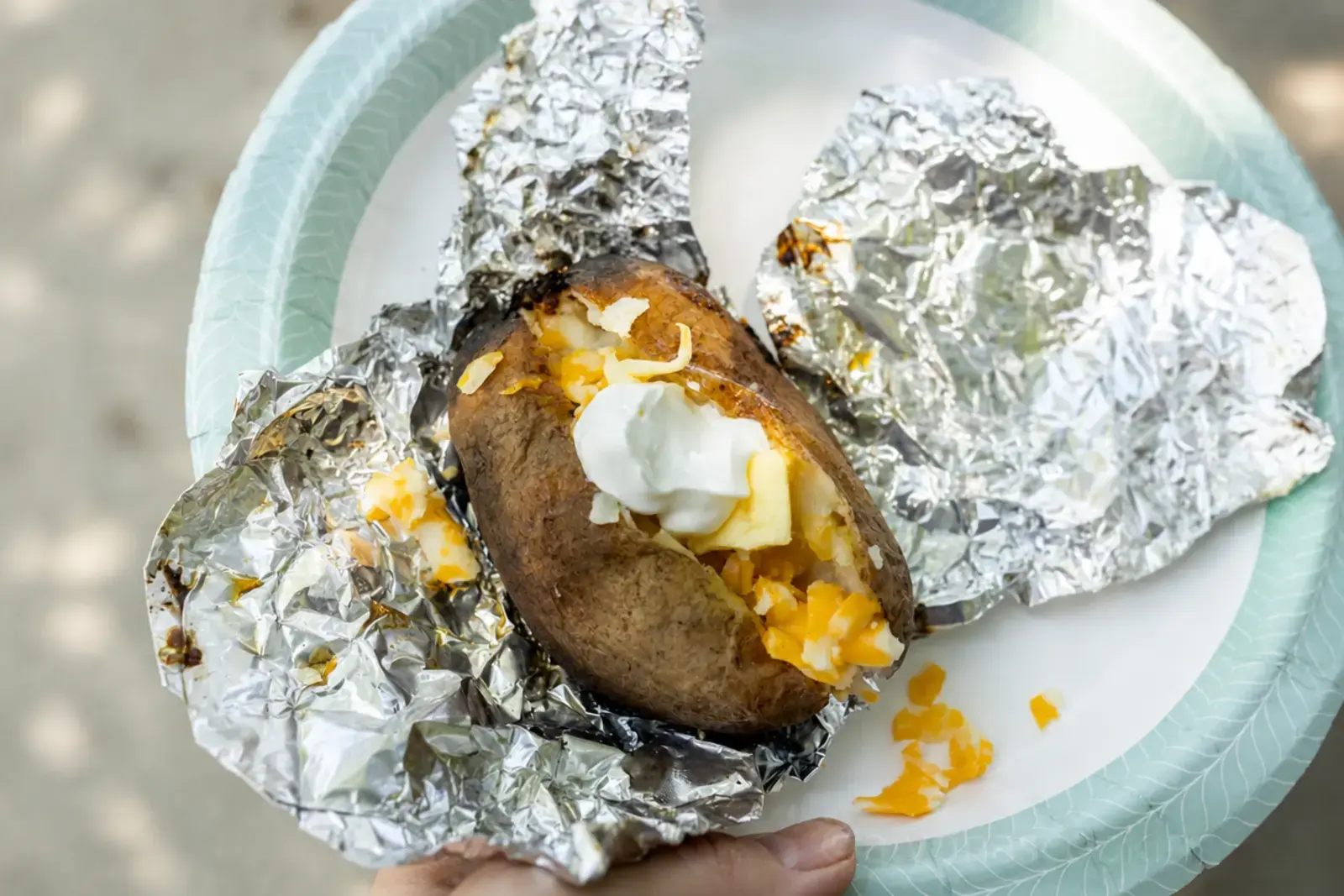
Open each packet cautiously because trapped steam can burn skin. Cut the potato only after it is stable on a plate. Fluff the center with a fork while leaving the foil around the outside to help contain the toppings.
6. Arrange the loaded potato bar
Place the potatoes, plates, salted butter, sour cream, and cheddar cheese in a serving line. Let each person unwrap and load a potato. Butter can go in first, followed by cheese and sour cream, while optional bacon bits, salt, or pepper remain separate choices.
Keep the cold toppings in their cooler until serving begins. USDA camping food safety recommends transporting perishable foods with ice, frozen gel packs, or another cold source. Return sour cream and cheese to the cooler promptly rather than leaving them beside the warm fire.

Why This Ember Method Works
Russets support a fluffy center
The source specifically selects Russet potatoes because they are starchy. As the potato heats inside its sealed foil layers, the flesh becomes suitable for fluffing and holding rich toppings. Using one variety and a similar size also makes the batch more consistent.
Foil manages the harsh cooking environment
An ember bed has concentrated hot spots that an oven rack does not. Two layers of heavy-duty foil form a sturdier barrier and help prevent exposed skin from taking the full force of the coals. The wrapping also gives the tongs a surface to grip without crushing the cooked potato.
Embers provide steadier heat than flames
Visible flames move, flare, and can blacken the packet quickly. Glowing coals radiate heat more steadily around the potato. Waiting for that stage is part of the cooking method, not an optional delay, so plan the fire before the meal is expected.
Tips, Variations, Serving, and Storage
Match the potatoes by size
Choose medium Russets that are close in size so they finish together. If the batch includes larger potatoes, keep track of them separately and apply the source’s additional 5 to 10 minutes only where needed. This is more reliable than extending the entire batch unnecessarily.
Use the measured toppings as the base
The recipe provides sour cream, cheddar cheese, and salted butter for eight potatoes. Optional bacon bits can make the bar more varied without changing the base recipe. If the potatoes accompany another protein, smaller topping portions may be comfortable, but no new quantity needs to be invented.
Consider grill variations separately
The source also discusses gas and charcoal grills, but those are variations rather than the primary campfire method. On a gas grill, it recommends creating a hot zone on one side and placing wrapped potatoes over indirect heat on the other. A charcoal grill can use a similar two-zone arrangement.
Because those grill methods have their own timing guidance, do not silently substitute them for the 45-minute ember method. Follow the equipment-specific instructions from the source when choosing a grill instead of a campfire.
Handle leftovers with camping conditions in mind
The source suggests making one potato per person to limit leftovers. It says wrapped leftovers may be held in an ice cooler for one to two days and reheated in an RV oven at 350°F for about 20 minutes, or over the fire for 10 to 15 minutes.
That source advice assumes the cooler remains cold. USDA camping guidance says leftover food is safe only while the cooler still has ice; otherwise, it should be discarded. Never judge safety only by smell or appearance, and keep dairy toppings chilled as well.
Finish with responsible fire care
Cooking ends only after the campfire is managed according to the site’s rules. Keep water and a tool for stirring nearby, supervise the fire continuously, and follow local instructions for extinguishing it completely. Restrictions can change with weather, so check them on the day of the trip.
Campfire Baked Potatoes FAQs
How long do Campfire Baked Potatoes cook?
Should the potatoes be placed in flames?
How many potatoes should I prepare per person?
What toppings are included?
Serve the Potatoes Straight from the Fire
Campfire Baked Potatoes work because the process stays focused: clean medium Russets, double-wrap them, wait for glowing embers, cook for the documented 45 minutes, and serve with the measured toppings. Organizing the fire, cold ingredients, and serving table in advance keeps the outdoor meal calm and easy to share.
Print
Campfire Baked Potatoes
What Are Campfire Baked Potatoes? Campfire Baked Potatoes are whole Russet potatoes wrapped in heavy-duty aluminum foil and cooked directly on glowing embers.
- Total Time: 47 min
- Yield: 8 people 1x
Ingredients
Ingredients
8 Russet potatoes
8 oz sour cream
8 oz cheddar cheese
2 oz salted butter
Instructions
Directions
1-If you prefer to eat the skins: If you prefer to eat the skins of the potatoes then wash the potatoes otherwise you can prick them all over with a fork and double wrap them in heavy-duty aluminum foil.
2-Place potatoes over hot embers (glowing hot: Place potatoes over hot embers (glowing hot coals) and cook for 45 minutes.
3-Remove the baked potatoes from the campfire: Remove the baked potatoes from the campfire using sticks or long tongs and place them on a wooden picnic table. Arrange the paper plates and all of the toppings (salted butter, sour cream, cheddar cheese, and bacon bits if using).
4-Let everyone unwrap and load their own: Let everyone unwrap and load their own potatoes with desired toppings. Enjoy!
Last Step:
Please leave a rating and comment letting us know how you liked this recipe! This helps our business to thrive and continue providing free, high-quality recipes for you.- Prep Time: 2 min
- Cook Time: 45 min
- Method: campfire
Nutrition
- Serving Size: 1 baked potato with toppings
- Calories: 391
- Sugar: 2g
- Sodium: 250mg
- Fat: 21g
- Saturated Fat: 12g
- Carbohydrates: 40g
- Fiber: 3g
- Protein: 12g
- Cholesterol: 60mg