

What Is Keto Zucchini Lasagna?
Keto zucchini lasagna is a low carb casserole that replaces traditional wheat pasta sheets with thin slices of fresh zucchini. The slices are layered with a beefy marinara sauce, a ricotta and Parmesan white sauce, and slices of fresh mozzarella.
The goal is a dinner that tastes like a real Italian bake but keeps the carb count low enough for a keto lifestyle.

I have tested plenty of zucchini casserole variations, and the biggest complaint is always the same: the dish turns into a watery mess on the plate. This recipe solves that problem with a specific moisture control step before the zucchini ever touches the casserole dish. The result is a lasagna that slices cleanly and holds its shape.
The recipe comes from KetoFocus and was developed by Annie Lampella, who emphasizes that the salting step is the make, or break moment for the entire dish. She is right.
I salted my zucchini slices for a full 20 minutes and the layers held together clean enough to pull a whole square out of the pan, which never happens with zucchini anything.
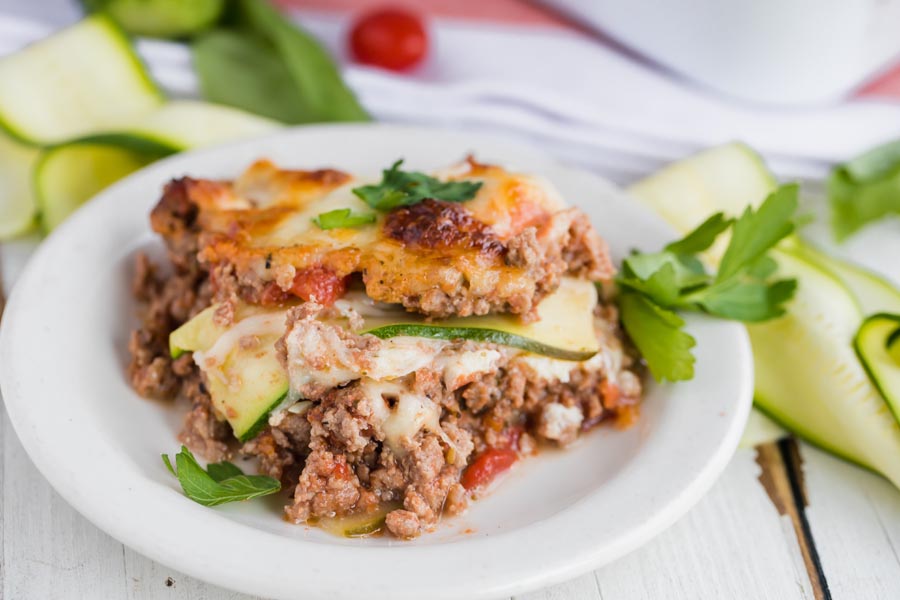
The flavor profile relies on ground beef browned with Italian seasoning and a small amount of anise seeds. The anise is what makes this taste like a lasagna from a good Italian restaurant rather than a generic keto casserole. Combined with three cheeses, the dish delivers the richness and stretch you expect from a traditional lasagna without the pasta.
Each serving provides 333 calories, 2.5g net carbs, and 19.9g protein, making it a filling main course for keto dinners. The recipe serves 8 and can be doubled for a crowd.
Jump to:
- What Is Keto Zucchini Lasagna?
- The Moisture Control Method
- The Three Cheese and Anise Difference
- Building the Layers
- Baking and Serving
- FAQs
- How do you keep keto zucchini lasagna from getting watery?
- How many carbs are in keto zucchini lasagna?
- What cheese is best for keto zucchini lasagna?
- Can you make keto zucchini lasagna ahead of time?
- Keto Zucchini Lasagna
- Ingredients
- Instructions
- Last Step:
- Nutrition
- Did you make this recipe?
The Moisture Control Method
The single most important step in this recipe is controlling the water content of the zucchini. Zucchini is roughly 95 percent water, and if you skip the prep step, all that water releases into your casserole while it bakes. You end up with a soupy layer of cheese and meat floating in liquid.
The method has two parts. First, slice the zucchini as thinly as possible. A mandoline slicer is the best tool for this, but a vegetable peeler also works if you want paper thin strips. Thinner slices trap less moisture between layers, and they conform to the shape of the dish more easily.
Second, salt the slices and let them sit.
- Lay the zucchini strips flat on a plate or cutting board.
- Sprinkle a very thin layer of salt across both sides.
- Let them sit for 15 minutes. You can go up to 30 minutes for extra insurance.
- Blot each strip dry with paper towels before assembling.
The salt draws water out of the zucchini through osmosis. After 15 minutes you will see visible beads of moisture on the surface. That is exactly what you want to remove before the zucchini goes into the oven.
The salting step is the difference between a lasagna that slices clean and one that floods your plate. Do not skip it.
I tested both 15 minutes and 30 minutes. The 30 minute batch released noticeably more water and produced a slightly firmer layer. If you have the time, go longer. If you are in a rush, 15 minutes is the minimum.
The source also mentions grilling the zucchini slices as an alternative that drives off moisture faster. I tried this, and while it works, the grilled strips become less flexible and do not conform to the dish as neatly. I prefer the salt method because the zucchini stays pliable for better layering.
No pre cooking of the zucchini is necessary. The raw salted slices finish cooking in the oven during the 25 to 30 minute bake.
The Three Cheese and Anise Difference
This recipe uses three cheeses, and each one serves a specific purpose. The combination is what gives the lasagna its structure and flavor depth.
- Fresh mozzarella: Sliced and layered between the meat and ricotta. It melts into stretchy golden pockets on top and throughout the casserole.
- Grated Parmesan: Mixed into the ricotta white sauce. It adds a salty, nutty kick that sharpens the overall flavor.
- Ricotta: Combined with an egg and garlic powder to create the white sauce layer. The ricotta provides creaminess while the egg helps it set firm in the oven.
The egg in the ricotta mixture is essential. I tested both with and without the egg, and the difference is obvious. Without the egg, the ricotta layer slides around when you cut into the lasagna. With the egg, the ricotta sets into a cohesive layer that holds its position. The white sauce stays where you put it.
The anise seeds are the other detail that sets this recipe apart. You only need 1/4 teaspoon, but it changes the entire character of the beef sauce.
Anise seeds give the meat mixture a faintly sweet, aromatic quality that mimics the flavor of Italian sausage without adding extra carbs. When the beef browns with the anise, Italian seasoning, salt, and pepper, the kitchen smells like a bakery in an old Italian neighborhood.
If you cannot find anise seeds, fennel seeds are a reasonable substitute, but the flavor will be slightly different. The anise is worth seeking out for this recipe.
Building the Layers
Once your zucchini is salted and blotted, your beef sauce is cooked, and your ricotta mixture is ready, the assembly goes quickly. The order matters because each layer builds structure for the next one.
Start with sauce on the bottom. Pour 1/2 cup of the low carb marinara into the bottom of your casserole dish and spread it thin. This prevents the zucchini from sticking to the pan and gives the bottom layer something to rest on.
Then build in this order:
- Layer of zucchini slices, arranged to cover the sauce.
- Half of the ground beef mixture, spread evenly.
- Half of the ricotta white sauce, dotted and spread gently.
- Half of the sliced fresh mozzarella, laid across the top.
- Repeat: zucchini, remaining beef, remaining ricotta, remaining mozzarella.
Use a small casserole dish for the standard recipe. If you are doubling for a crowd, use a 9×13 pan and add about 10 minutes to the bake time.
| Layer | Ingredient | Amount for Single Recipe |
|---|---|---|
| 1 (bottom) | Marinara sauce | 1/2 cup |
| 2 | Zucchini slices | 1 zucchini, sliced thin |
| 3 | Ground beef mixture | Half of cooked batch |
| 4 | Ricotta white sauce | Half of mixture |
| 5 | Fresh mozzarella | Half of 12 oz |
| 6 to 10 | Repeat layers | Remaining halves |
Do not overload any single layer. The goal is even distribution so the lasagna bakes uniformly and slices cleanly. Press the zucchini slices down gently as you build to eliminate air pockets.
Baking and Serving
Bake the assembled lasagna at 400 degrees Fahrenheit for 25 to 30 minutes. The top layer of mozzarella should be golden and bubbly with slightly browned edges. If the top is browning too fast, you can tent a piece of foil over the dish for the last 5 minutes.
When you pull it from the oven, let it rest for at least 5 minutes before cutting. The resting period lets the layers finish setting and the cheese firms up slightly.
If you cut into it immediately, the layers will slide apart and the cheese will run. I let mine rest for closer to 10 minutes, and the slices come out cleaner every time.
Leftovers keep in the refrigerator for up to 5 days. The lasagna actually tastes better the next day because the layers fully set and the flavors meld overnight. Reheat individual portions in the microwave or warm the whole dish covered in the oven at 375 degrees for about 20 minutes.
You can also assemble the lasagna up to two days in advance and bake it later. If you go straight from the refrigerator to the oven, add 5 to 10 extra minutes to the bake time.
For freezing, bake the lasagna first, then cut it into individual portions. Wrap each portion tightly and freeze for up to 3 months. Reheat directly from frozen at 375 degrees for 25 to 30 minutes, or thaw overnight in the fridge and bake at 375 degrees for 20 minutes.
To feed a larger group, double all the ingredients and bake in a 9×13 pan. Add roughly 10 minutes to the total bake time and check that the center is hot and bubbly before pulling it out.
A few optional variations work well if you want to switch things up. Cottage cheese can replace the ricotta for a lighter white sauce. Cream cheese mixed with Parmesan creates a richer, denser filling.
Provolone or smoked gouda can substitute for the mozzarella if you want more flavor depth. To add vegetables, saute mushrooms with the beef or tuck fresh spinach between the zucchini layers.
Eggplant slices can also replace the zucchini, but salt and drain them the same way to control moisture.
FAQs
How do you keep keto zucchini lasagna from getting watery?
How many carbs are in keto zucchini lasagna?
What cheese is best for keto zucchini lasagna?
Can you make keto zucchini lasagna ahead of time?
Keto Zucchini Lasagna
What Is Keto Zucchini Lasagna? Keto zucchini lasagna is a low carb casserole that replaces traditional wheat pasta sheets with thin slices of fresh zucchini.
- Total Time: 45 min
- Yield: 8 1x
Ingredients
Zucchini Lasagna Ingredients
1 zucchini
2 tablespoons olive oil
1 pound ground beef
1 teaspoon salt
1/2 teaspoon pepper
1 tablespoon Italian seasoning
1/4 teaspoon anise seeds
1 1/2 cups low-carb marinara sauce, divided
1/4 cup ricotta cheese
1/4 cup grated parmesan cheese
1 egg
1 teaspoon garlic powder
12 oz fresh mozzarella cheese, sliced
Instructions
1-Preheat the oven to 400 degrees: Preheat the oven to 400 degrees
2-Slice the ends of the zucchini: Slice the ends of the zucchini. Using a mandoline slicer, cut the zucchini into thin strips lengthwise.
3-Lay the zucchini down on a plate: Lay the zucchini down on a plate or cutting board and a very thin layer of salt over the zucchini. Let sit for 15 minutes. Blot moisture out of zucchini afterwards.
4-While zucchini is dehydrating, add olive oil: While zucchini is dehydrating, add olive oil to a skillet over medium heat. Add ground beef and cook for 2-3 minutes. Season with salt, pepper, Italian seasoning and anise. Continue cooking until ground beef has cooked through. Pour in 1 cup marinara sauce. Simmer for 1-2 minutes. Remove from heat and set aside.
5-While ground beef is cooking, make the: While ground beef is cooking, make the white sauce. In a small bowl, combine ricotta, egg, parmesan and garlic powder.
6-Assemble the lasagna: Assemble the lasagna. Pour 1/2 cup marinara sauce in the bottom of a small casserole dish. Lay down a layer of zucchini noodles.
7-Top with half the ground beef mixture: Top with half the ground beef mixture. Spread half the white sauce on top. Layer half the mozzarella cheese down. Repeat the layers.
8-Bake at 400 degrees for 25 to: Bake at 400 degrees for 25 to 30 minutes. Let sit for 3-5 minutes to cool before serving.
Last Step:
Please leave a rating and comment letting us know how you liked this recipe! This helps our business to thrive and continue providing free, high-quality recipes for you.- Prep Time: 15 min
- Cook Time: 30 min
- Method: bake
Nutrition
- Calories: 333
- Fat: 25.5g
- Carbohydrates: 3.8g
- Fiber: 1.3g
- Protein: 19.9g