


Why You’ll Love This Thai Green Curry
Imagine whipping up a flavorful dish that brings the tastes of Thailand right to your kitchen, and that’s exactly what this Thai Green Curry offers. It’s super simple to make, taking less than 35 minutes from start to finish, which makes it perfect for busy days when you want something delicious without spending hours cooking. Plus, with its fresh herbs, veggies, and protein, it packs a nutritious punch that can fit into various diets, making it a go-to recipe for home cooks like you.
This Thai Green Curry is packed with health benefits, thanks to ingredients like fresh ginger, garlic, and vibrant vegetables that deliver vitamins and antioxidants to keep you feeling great. For instance, if you’re watching your diet, you can swap in plant-based options to keep it light and wholesome. And let’s not forget the burst of flavors from lemongrass, kaffir lime leaves, and Thai basil that make every bite exciting and satisfying. Whether you’re a student grabbing a quick meal or a family sharing a fun dinner, this recipe adapts easily and adds a touch of joy to your table.
One of the best things about this Thai Green Curry is how versatile it is you can tweak it for vegan, gluten-free, or low-calorie needs without losing that authentic Thai vibe. Picture serving it over steaming jasmine rice for a comforting meal that feels like a trip to Bangkok. If you’re curious about more healthy eating ideas, you might want to learn about the health benefits of similar dishes. Overall, it’s a recipe that not only tastes amazing but also helps you create those special moments around the table with friends and family.
Jump to:
- Why You’ll Love This Thai Green Curry
- Essential Ingredients for Thai Green Curry
- How to Prepare the Perfect Thai Green Curry: Step-by-Step Guide
- Preparation Time Breakdown
- Dietary Substitutions to Customize Your Thai Green Curry
- Mastering Thai Green Curry: Advanced Tips and Variations
- Flavor Boosters and Make-Ahead Ideas
- How to Store Thai Green Curry: Best Practices
- FAQs: Frequently Asked Questions About Thai Green Curry
- What are the key ingredients needed to make authentic Thai green curry?
- Can I use store-bought green curry paste, and how can I improve its flavor?
- How spicy is Thai green curry, and can I adjust the heat to my taste?
- What are some common protein and vegetable alternatives for Thai green curry?
- What should I serve with Thai green curry for a traditional meal?
- Thai Green Curry
- Ingredients
- Instructions
- Last Step:
- Notes
- Nutrition
- Did you make this recipe?
Essential Ingredients for Thai Green Curry
Gathering the right ingredients is key to nailing that authentic Thai Green Curry flavor, and this list covers everything you need for a perfect batch. I’ll walk you through each one so you can see how they come together to create that creamy, spicy magic. Remember, fresh is best, but don’t worry if you have to swap a few things it’s all about making it work for your kitchen.
- Green curry paste: 4 to 6 tablespoons (homemade or store-bought)
- Garlic cloves, minced: 2 large (if using jar paste)
- Fresh ginger, finely grated: 2 teaspoons (if using jar paste)
- Lemongrass paste: 1 tablespoon (can substitute with fresh lemongrass)
- Vegetable oil: 2 tablespoons
- Chicken or vegetable broth, low sodium: 1 cup (250 ml)
- Full-fat coconut milk: 400 g (14 oz)
- Fish sauce: 1 to 3 teaspoons
- White sugar: 1 to 3 teaspoons
- Salt: 1/8 teaspoon
- Kaffir lime leaves: 6 (torn in half; can substitute with lemongrass or lime peel)
- Chicken thigh, skinless and boneless, sliced: 350 g (12 oz) (breast can be used with adjusted cooking time)
- Japanese eggplants, small, sliced 1 cm thick: 2 (or substitute with small regular eggplants or zucchini)
- Snow peas, trimmed: 1.5 cups
- Thai basil leaves: 16 (can substitute with regular basil)
- Lime juice: juice of half a lime (to taste)
- Optional garnishes: crispy fried Asian shallots, extra Thai basil or cilantro, sliced green or red chilies
This structured list makes it easy to shop and measure out everything, ensuring your curry turns out just right every time. Each ingredient plays a role in building that signature Thai taste, from the creamy coconut milk to the zesty lime juice. If you’re new to this, start with the basics and add garnishes for that extra wow factor.
How to Prepare the Perfect Thai Green Curry: Step-by-Step Guide
Getting started with Thai Green Curry is as straightforward as it gets, and I’ll guide you through each step to make sure it’s a breeze. First, pull together all your ingredients and get them prepped this means slicing the chicken, chopping the veggies, and having everything ready to go for smooth cooking. For a fun twist, think of it like building a puzzle where each piece adds to the final picture of a tasty meal.
Heat 2 tablespoons of vegetable oil in a heavy skillet or pot over medium-high heat, then add the green curry paste. If you’re using jar paste, toss in the 2 large minced garlic cloves, 2 teaspoons of finely grated fresh ginger, and 1 tablespoon of lemongrass paste to amp up the flavor. Cook this mix for 2 to 3 minutes until it’s mostly dry and fragrant, which really brings out those deep, aromatic notes.
Next, pour in 1 cup (250 ml) of low-sodium chicken or vegetable broth and 400 g (14 oz) of full-fat coconut milk, stirring well to dissolve the curry paste into a creamy base. For seasoning, if it’s jar paste, add 1 teaspoon of fish sauce and 1 teaspoon of white sugar without any salt; but if you’re using homemade paste, go for 3 teaspoons of fish sauce, 3 teaspoons of sugar, and 1/8 teaspoon of salt. Throw in the 6 torn kaffir lime leaves, mix everything together, and bring it to a simmer for that citrusy kick.
Add the 350 g (12 oz) of sliced, skinless boneless chicken thigh, then lower the heat to medium and let it simmer gently for 7 minutes until the chicken is cooked through. For chicken breast, keep an eye on it and adjust the time to avoid drying it out. After that, toss in the 2 sliced Japanese eggplants and cook for another 5 minutes until they’re soft and have soaked up the sauce nicely.
Taste the sauce at this point and tweak it with more fish sauce for saltiness or white sugar for sweetness to get it just right. Add the 1.5 cups of trimmed snow peas and cook for 2 more minutes so they stay crisp-tender. Finally, stir in the 16 Thai basil leaves and the juice of half a lime for a fresh finish, then serve it hot over steamed jasmine rice. Keep the sauce on the thinner side to hold onto that vibrant color and flavor it’s all about that balance. If you’re looking for more ideas on switching things up, check out our section on dietary substitutions for easy tweaks.
Preparation Time Breakdown
To keep things organized, here’s a quick look at the timing: Prep takes about 15 minutes, cooking is around 20 minutes, and the total time is just 35 minutes. That makes it ideal for busy parents or working professionals who want a homemade meal without the fuss.

Dietary Substitutions to Customize Your Thai Green Curry
One of the joys of Thai Green Curry is how flexible it is, so let’s talk about swapping ingredients to fit your needs. Whether you’re going vegan or just want to lighten things up, these changes keep the dish delicious and approachable. It’s like having a recipe that grows with you, perfect for food enthusiasts experimenting in the kitchen.
For protein swaps, you can replace the 350 g (12 oz) of chicken thigh with tofu, tempeh, or even seitan to make it plant-based and hearty. If seafood is more your style, try shrimp or firm fish, but remember to adjust the cooking time since they cook faster. Veggies like mushrooms can add an earthy texture if you’re skipping meat altogether, making it a great option for diet-conscious folks.
When it comes to vegetables, swap the 2 Japanese eggplants with zucchini or regular eggplants if that’s what you have on hand. For sauces, use tamari instead of fish sauce to keep it gluten-free, and play with herbs like cilantro to change up the aroma. These tweaks let you control the heat and flavor, so it’s easy for beginners or seniors to enjoy a personalized version.
Mastering Thai Green Curry: Advanced Tips and Variations
Once you’re comfortable with the basics, let’s dive into some pro tips to take your Thai Green Curry to the next level. Start by frying the curry paste in oil before adding liquids it really deepens the flavor and makes everything pop. For that rich creaminess, stick with full-fat coconut milk or even coconut cream, and don’t forget how kaffir lime leaves add that unmistakable citrus zing frozen ones work just fine if fresh aren’t available.
Chicken thigh is my top pick for juiciness, but if you use breast, shorten the cooking time to keep it tender. Japanese eggplants soak up the sauce beautifully, though zucchini is a solid substitute if you’re in a pinch. To amp up the authenticity, Thai basil is a must, and those crispy fried Asian shallots as garnishes add a fun crunch that everyone loves. Keep the sauce thinner than other curries to preserve those bright flavors and colors, and feel free to tweak the curry paste amount if you want less spice.
Want some variations? Try adding a splash of lime juice for extra tang or mix in roasted peanuts for crunch it’s all about making it your own. This recipe adapts easily for vegetarian diets or other proteins like shrimp, fish, beef, or pork, so adjust cooking times accordingly. For more inspiration on healthy choices, you can explore nutrition tips for proteins like chicken.
Flavor Boosters and Make-Ahead Ideas
Here are a few extras: Toast your curry paste for deeper taste, or prepare the base ahead and store it in the fridge for up to a day, adding fresh herbs and proteins when you’re ready to eat. It’s perfect for meal prep, especially for students or working pros.
How to Store Thai Green Curry: Best Practices
Storing your Thai Green Curry the right way keeps it tasty for later, so let’s cover the basics to avoid any waste. Pop it in an airtight container and stick it in the fridge for up to 3 days to keep the flavors fresh. If you’re planning ahead, freezing in sealed portions works great for up to 2 months just thaw it overnight in the fridge first.
When reheating, warm it gently on the stovetop or in the microwave, giving it a stir now and then to keep the texture smooth. For meal prep lovers, batch cooking and dividing into individual containers makes it super easy for grab-and-go lunches. These tips help maintain that vibrant taste, so you can enjoy it throughout the week without much effort.

FAQs: Frequently Asked Questions About Thai Green Curry
What are the key ingredients needed to make authentic Thai green curry?
Can I use store-bought green curry paste, and how can I improve its flavor?
How spicy is Thai green curry, and can I adjust the heat to my taste?
What are some common protein and vegetable alternatives for Thai green curry?
What should I serve with Thai green curry for a traditional meal?
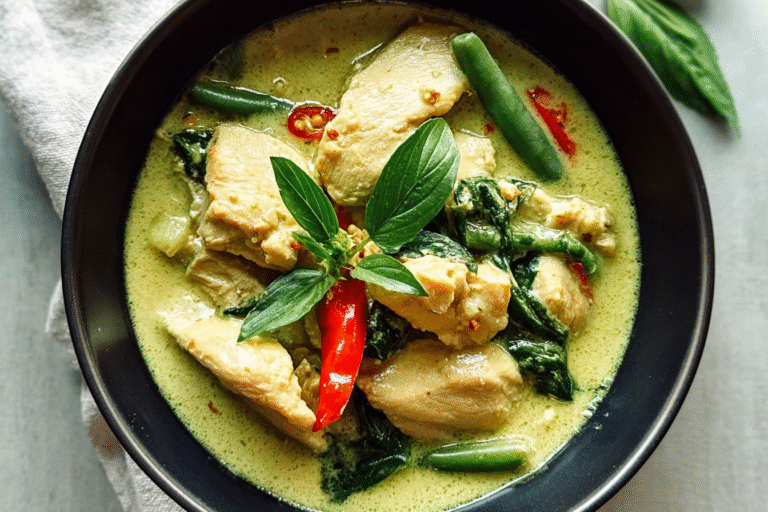
Thai Green Curry
🌿 Discover how to create authentic Thai Green Curry with rich, complex flavors and easy cooking tips.
🍛 This recipe guide ensures a perfectly balanced, aromatic curry that captures the essence of traditional Thai cuisine every time.
- Total Time: 35 minutes
- Yield: 4 servings 1x
Ingredients
4 to 6 tablespoons Green curry paste
2 large Garlic cloves, minced (if using jar paste)
2 teaspoons Fresh ginger, finely grated (if using jar paste)
1 tablespoon Lemongrass paste (can substitute with fresh lemongrass)
2 tablespoons Vegetable oil
1 cup Chicken or vegetable broth, low sodium
400 g Full-fat coconut milk
1 to 3 teaspoons Fish sauce
1 to 3 teaspoons White sugar
1/8 teaspoon Salt
6 Kaffir lime leaves (torn in half; can substitute with lemongrass or lime peel)
350 g Chicken thigh, skinless and boneless, sliced (breast can be used with adjusted cooking time)
2 Japanese eggplants, small, sliced 1 cm thick (or substitute with small regular eggplants or zucchini)
1.5 cups Snow peas, trimmed
16 Thai basil leaves (can substitute with regular basil)
juice of half a lime Lime juice (to taste)
Optional garnishes: crispy fried Asian shallots, extra Thai basil or cilantro, sliced green or red chilies
Instructions
1-Getting started: Getting started with Thai Green Curry is as straightforward as it gets, and I’ll guide you through each step to make sure it’s a breeze. First, pull together all your ingredients and get them prepped this means slicing the chicken, chopping the veggies, and having everything ready to go for smooth cooking. For a fun twist, think of it like building a puzzle where each piece adds to the final picture of a tasty meal.
2-Cook curry paste: Heat 2 tablespoons of vegetable oil in a heavy skillet or pot over medium-high heat, then add the green curry paste. If you’re using jar paste, toss in the 2 large minced garlic cloves, 2 teaspoons of finely grated fresh ginger, and 1 tablespoon of lemongrass paste to amp up the flavor. Cook this mix for 2 to 3 minutes until it’s mostly dry and fragrant, which really brings out those deep, aromatic notes.
3-Add liquids and seasoning: Next, pour in 1 cup (250 ml) of low-sodium chicken or vegetable broth and 400 g (14 oz) of full-fat coconut milk, stirring well to dissolve the curry paste into a creamy base. For seasoning, if it’s jar paste, add 1 teaspoon of fish sauce and 1 teaspoon of white sugar without any salt; but if you’re using homemade paste, go for 3 teaspoons of fish sauce, 3 teaspoons of sugar, and 1/8 teaspoon of salt. Throw in the 6 torn kaffir lime leaves, mix everything together, and bring it to a simmer for that citrusy kick.
4-Cook chicken and vegetables: Add the 350 g (12 oz) of sliced, skinless boneless chicken thigh, then lower the heat to medium and let it simmer gently for 7 minutes until the chicken is cooked through. For chicken breast, keep an eye on it and adjust the time to avoid drying it out. After that, toss in the 2 sliced Japanese eggplants and cook for another 5 minutes until they’re soft and have soaked up the sauce nicely.
5-Final seasoning and finish: Taste the sauce at this point and tweak it with more fish sauce for saltiness or white sugar for sweetness to get it just right. Add the 1.5 cups of trimmed snow peas and cook for 2 more minutes so they stay crisp-tender. Finally, stir in the 16 Thai basil leaves and the juice of half a lime for a fresh finish, then serve it hot over steamed jasmine rice. Keep the sauce on the thinner side to hold onto that vibrant color and flavor it’s all about that balance. If you’re looking for more ideas on switching things up, check out our section on dietary substitutions for easy tweaks.
Last Step:
Please leave a rating and comment letting us know how you liked this recipe! This helps our business to thrive and continue providing free, high-quality recipes for you.Notes
🔥 Fry curry paste before adding liquids to develop deeper flavor.
🥥 Use full-fat coconut milk or coconut cream for a richer, creamier curry.
🍋 Kaffir lime leaves add distinctive citrus aroma; frozen leaves work well if fresh are unavailable.
- Prep Time: 15 minutes
- Cook Time: 20 minutes
- Category: Main Dish
- Method: Sautéing and simmering
- Cuisine: Thai
- Diet: Gluten-Free, Dairy-Free
Nutrition
- Serving Size: 1 serving
- Calories: 352 kcal
- Sugar: 7 g
- Sodium: 54 mg
- Fat: 31 g
- Saturated Fat: 25 g
- Trans Fat: 0 g
- Carbohydrates: 16 g
- Fiber: 5 g
- Protein: 7 g
- Cholesterol: 0 mg



This Thai green curry recipe looks amazing! 🌿 I’m curious, do you think it would work well with tofu instead of chicken for a vegetarian option? Excited to try making it this weekend!