DON’Ts
Over the years, I’ve made every turkey mistake in the book, and I’m here to save you from the same disasters. Trust me, a dry, flavorless bird is nobody’s idea of a holiday centerpiece. Here are the five things you absolutely should skip when making your best roast turkey.
- Don’t wash the turkey. I know it feels counterintuitive, but splashing water around your sink is a fast way to spread bacteria. The USDA is crystal clear on this – just pat it dry with paper towels inside and out. The oven’s heat will take care of any pathogens.
- Don’t brine (unless you really want to). I ditched wet brining years ago and never looked back. It’s messy, takes up fridge space, and honestly, I get incredibly moist results without it. If you love a brined bird, go for it – I have a best turkey brine recipe that’s simple and reliable. But for this method, skip it.
- Don’t stuff the bird. Stuffing the cavity forces you to overcook the meat just to get the stuffing safely up to temperature. I prefer my dressing crispy on top and cooked separately. (Looking for a killer cornbread stuffing? That’s a different day, but keep an eye out.)
- Don’t cook low and slow at 325°F the whole time. The packaging directions try to play it safe, but high heat for the first hour gives you a jump on that glorious crispy skin and juicy meat. I’ll break down the exact timing in the DOs section.
- Don’t baste. Opening the oven door lets precious heat escape, extending your cook time and steaming the skin. Basting liquid never actually penetrates the meat – it just runs off. Butter or oil on the outside before roasting does a better job.
Jump to:
- DON’Ts
- DOs
- Frequently Asked Questions
- What is the best way to roast a turkey?
- How do you keep turkey moist?
- Should you baste a turkey?
- What temperature should you cook a turkey?
- How long to cook a turkey per pound?
- Do you wash a turkey before roasting?
- Reader Photos:
- Roast Turkey with Dry Brine and Herb Butter
- Ingredients
- Instructions
- Last Step:
- Notes
- Nutrition
- Did you make this recipe?
DOs
Now for the fun part! These are the steps I swear by for a turkey that comes out so moist and golden, you’ll feel like a pro. Grab your tools, and let’s do this right.
- Test your oven temperature. I can’t stress this enough – most ovens lie. Pick up an inexpensive oven thermometer and confirm that 350°F and 400°F settings are accurate. If your oven runs hot, your turkey will be tough; too cool, and you’re eating late.
- Thaw completely in the fridge. Plan ahead: allow 24 hours per 4-5 pounds. That means a 14-pounder needs 3 full days in the refrigerator. Thawing on the counter is risky because the outside warms up while the inside stays frozen – then you cook unevenly and end up with dry outer meat. No thanks.
- Season inside and out. For the cavity, toss in quartered lemon and onion with sprigs of parsley, sage, rosemary, and thyme. It infuses the meat and makes your kitchen smell like heaven. But the real game-changer? Dry brine the skin. I mix kosher salt and a pinch of baking powder, rub it all over the turkey, then let it sit uncovered in the fridge for 12-24 hours. That baking powder trick pulls moisture out of the skin, and when it hits high heat, you get the crackliest, crispiest finish.
- Start with high heat. For the first hour, roast at 400°F (some folks prefer 425°F for 30 minutes). This blast seals in juices and sets the skin. Then drop the temperature to 350°F and let it finish gently.
- Roast breast side down first. This is my favorite little gravity trick. By starting the bird upside down, the dark meat juices naturally run down into the breasts, keeping them amazingly moist. After about an hour (or 45 minutes for smaller birds), flip it carefully – using a clean towel or silicone gloves – so the breast can brown beautifully on top.
- Rely on a thermometer, not a timer. Pop-up timers are famously unreliable. I use a remote probe thermometer stuck into the thickest part of the thigh, and I double-check with an instant-read in multiple spots. You’re aiming for the thigh to hit 170-175°F and the breast 160°F. Carryover heat will bring it right up to the USDA safe minimum of 165°F without overcooking.
- Let it rest. Once you pull that beauty from the oven, tent it loosely with foil and walk away for at least 30 minutes (I go up to an hour if the sides need finishing). This is non-negotiable: carving too soon sends all those juices onto the cutting board instead of back into the meat.
Quick sanity saver: No basting, no stuffing, no washing – and a good thermometer. That’s all you need to remember.
Here’s a handy cheat sheet for the temperature stages:
| Stage | Oven Temp | Approx. Time | Pull When |
|---|---|---|---|
| High-heat sear (breast down) | 400°F (or 425°F) | 1 hour (or 30-45 min) | N/A |
| Finish roasting (breast up) | 350°F | 2-2.5 hours for 14-16 lb bird | Breast 160°F, Thigh 170-175°F |
| Rest (tented with foil) | Off heat | 30-60 minutes | Breast reaches 165°F carryover |
For a 14-pound turkey, I budget about 13 minutes per pound total cook time, landing somewhere between 2.5 and 3.5 hours depending on your oven. And those drippings at the bottom of the pan? Pure gold. I use them to build my roasted garlic gravyit’s ridiculously good.
I’m far from alone in this high-heat, no-fuss approach. Sites like Serious Eats have been preaching similar methods, and they know their stuff.
Frequently Asked Questions
What is the best way to roast a turkey?
How do you keep turkey moist?
Should you baste a turkey?
What temperature should you cook a turkey?
How long to cook a turkey per pound?
Do you wash a turkey before roasting?
Reader Photos:
Seeing your roasted masterpieces is honestly my favorite part of this whole blogging thing. Nothing makes me happier than knowing a recipe from my little corner of the internet helped make your holiday special.

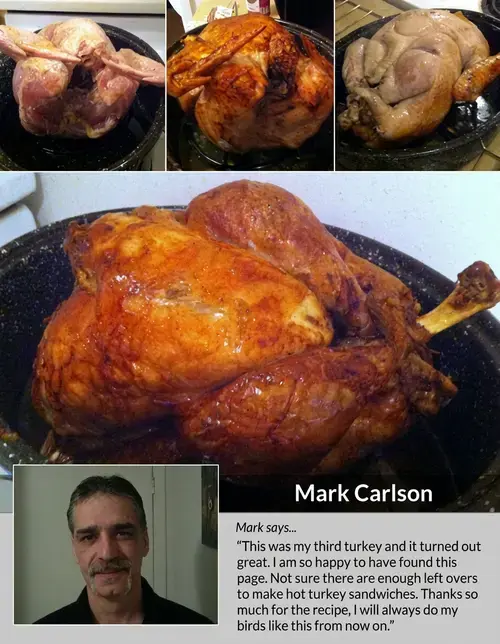
If you give this turkey method a go, I’d be over the moon to see how it turned out. Send me a photo through my contact page or tag me on social media – I feature my favorite snapshots right here!
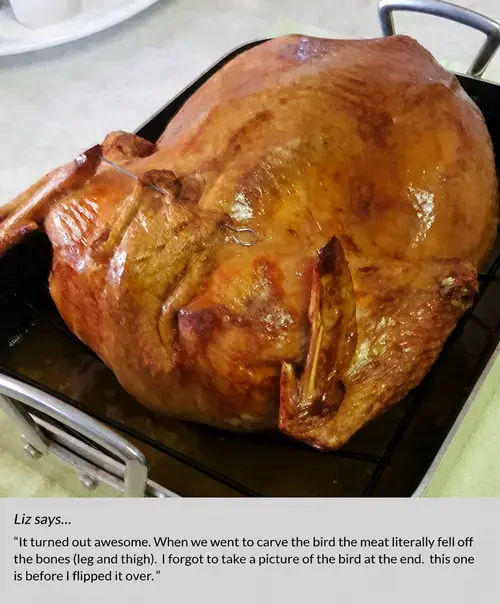
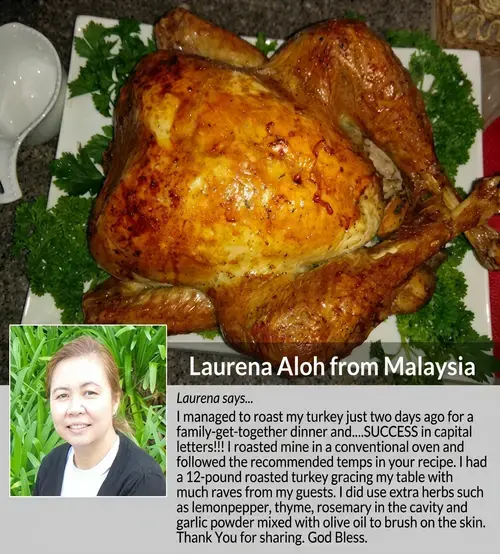
Below are a few stunners from readers who nailed it. A huge thank you to everyone who shares their kitchen wins with me!
Print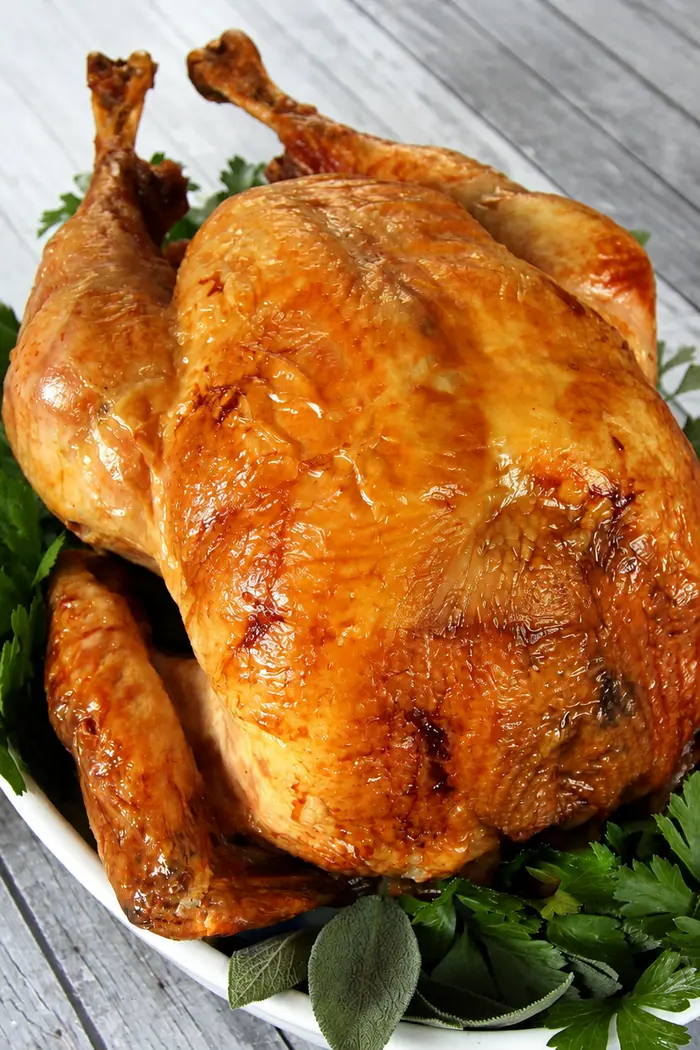
Roast Turkey with Dry Brine and Herb Butter
🦃 A foolproof dry-brined turkey with the crispiest skin and juicy meat—perfect for your holiday table.
🧈 Herb butter under the skin and a smart flip technique guarantee moist breast meat every time.
- Total Time: 16 hours
- Yield: 10 to 12 servings 1x
Ingredients
1 whole turkey (12 to 16 pounds), thawed
3 tablespoons kosher salt
1 teaspoon baking powder
½ cup unsalted butter, softened
2 tablespoons fresh sage, finely chopped
1 tablespoon fresh rosemary, finely chopped
1 tablespoon fresh thyme, finely chopped
3 cloves garlic, minced
½ teaspoon freshly ground black pepper
1 lemon, quartered
1 medium onion, quartered
4 sprigs fresh parsley
2 sprigs fresh sage
2 sprigs fresh rosemary
2 sprigs fresh thyme
Instructions
1-Thaw the turkey: Thaw completely in the refrigerator, allowing 24 hours per 4 to 5 pounds.
2-Pat dry the turkey: Remove giblets and pat the turkey dry with paper towels inside and out; do not wash.
3-Dry brine the skin: Mix kosher salt and baking powder, then rub evenly over the turkey skin.
4-Chill uncovered: Place on a rack over a baking sheet and refrigerate uncovered for 12 to 24 hours.
5-Make the herb butter: Combine softened butter with chopped sage, rosemary, thyme, minced garlic, and black pepper.
6-Stuff the cavity: Fill the turkey cavity with quartered lemon, quartered onion, and fresh herb sprigs.
7-Apply herb butter: Loosen breast skin and spread herb butter underneath, then rub remaining butter over the outside.
8-Preheat the oven: Set the oven to 400°F and position a rack in the lower third.
9-Roast breast side down: Place turkey breast side down on a roasting rack and roast at 400°F for 1 hour.
10-Flip the turkey: Carefully flip the turkey breast side up using clean towels or silicone gloves.
11-Finish roasting: Reduce oven to 350°F and roast until thigh reaches 170–175°F and breast 160°F, about 2–2.5 hours for a 14- to 16-pound bird.
12-Rest before carving: Remove from oven, tent loosely with foil, and rest for 30 to 60 minutes before carving.
Last Step:
Please leave a rating and comment letting us know how you liked this recipe! This helps our business to thrive and continue providing free, high-quality recipes for you.Notes
🧂 A pinch of baking powder in the dry brine pulls moisture from the skin, delivering an incredibly crispy, golden finish.
🌡️ Skip the pop-up timer; use a probe thermometer in the thigh and an instant-read in the breast for accurate results.
⏳ Never skip the resting step—30 to 60 minutes under foil lets the juices redistribute so every slice is moist.
- Prep Time: 30 minutes
- Dry brine: 12 hours
- Cook Time: 3 hours
- Category: Dinner, Main Course
- Method: Roast
- Cuisine: American
- Diet: Gluten-Free, Low-Carb
Nutrition
- Serving Size: 6 oz
- Calories: 380
- Sugar: 0g
- Sodium: 620mg
- Fat: 22g
- Saturated Fat: 9g
- Unsaturated Fat: 11g
- Trans Fat: 0g
- Carbohydrates: 1g
- Fiber: 0g
- Protein: 42g
- Cholesterol: 140mg