

Kimchi Bean Sprout Soup for a Light, Flavorful Meal
Kimchi Bean Sprout Soup, known as kimchi kongnamul-guk, brings together crisp soybean sprouts, tangy fermented kimchi, soft tofu, and a clear savory broth. The result is warming without feeling heavy. It is a practical Korean soup for days when you want bold flavor from a short list of ingredients.
The character of this soup comes from balance. Sour kimchi contributes acidity and chile warmth, while its brine seasons the broth throughout. Soybean sprouts remain fresh and lightly crunchy when they are cooked correctly. Tofu makes each bowl more substantial without overpowering the clean broth.

This version follows a focused method and can be completed in about 20 minutes. It makes enough for four people and is especially good served hot with plain rice. Before starting, gather and measure everything because the cooking stages move quickly once the broth reaches a boil.
Jump to:
- Kimchi Bean Sprout Soup for a Light, Flavorful Meal
- What Makes This Korean Soup Distinctive
- Kimchi Bean Sprout Soup Ingredients
- Choose the Right Soybean Sprouts
- Use Sour, Well-Fermented Kimchi
- Select the Broth and Seasoning
- How to Make Kimchi Bean Sprout Soup
- 1. Build the Kimchi Broth
- 2. Simmer the Soybean Sprouts
- 3. Add Tofu, Garlic, and Seasoning
- 4. Finish and Serve
- Tips, Variations, Serving, and Storage
- Protect the Texture
- Make Thoughtful Adjustments
- Store and Reheat Carefully
- Frequently Asked Questions
- What kind of sprouts should I use for Kimchi Bean Sprout Soup?
- What type of kimchi works best in this soup?
- Can I make the broth without Korean stock coins?
- How should I store leftover Kimchi Bean Sprout Soup?
- A Simple Soup with Careful Balance
- Kimchi Bean Sprout Soup (Kimchi Kongnamul-guk)
- Ingredients
- Instructions
- Last Step:
- Nutrition
- Did you make this recipe?
What Makes This Korean Soup Distinctive
Kongnamul-guk is a Korean soup centered on soybean sprouts in a mild, clear broth. Adding mature kimchi changes its personality. The broth becomes tangier, more aromatic, and deeper in color, yet it remains lighter than a thick stew such as kimchi jjigae.
The name matters when shopping. Kongnamul means soybean sprouts, which have a visible yellow bean at one end and a firm stem. They are not the same as mung bean sprouts, which are common in many stir-fries. Using the specified soybean sprouts preserves the intended texture and flavor.
A traditional anchovy-based stock supports the vegetables without masking them. Korean stock coins provide a convenient shortcut, while dried anchovies and sea kelp offer a simple homemade alternative. Both approaches are included below, so the recipe remains accessible without changing its central flavor profile.
Kimchi Bean Sprout Soup Ingredients
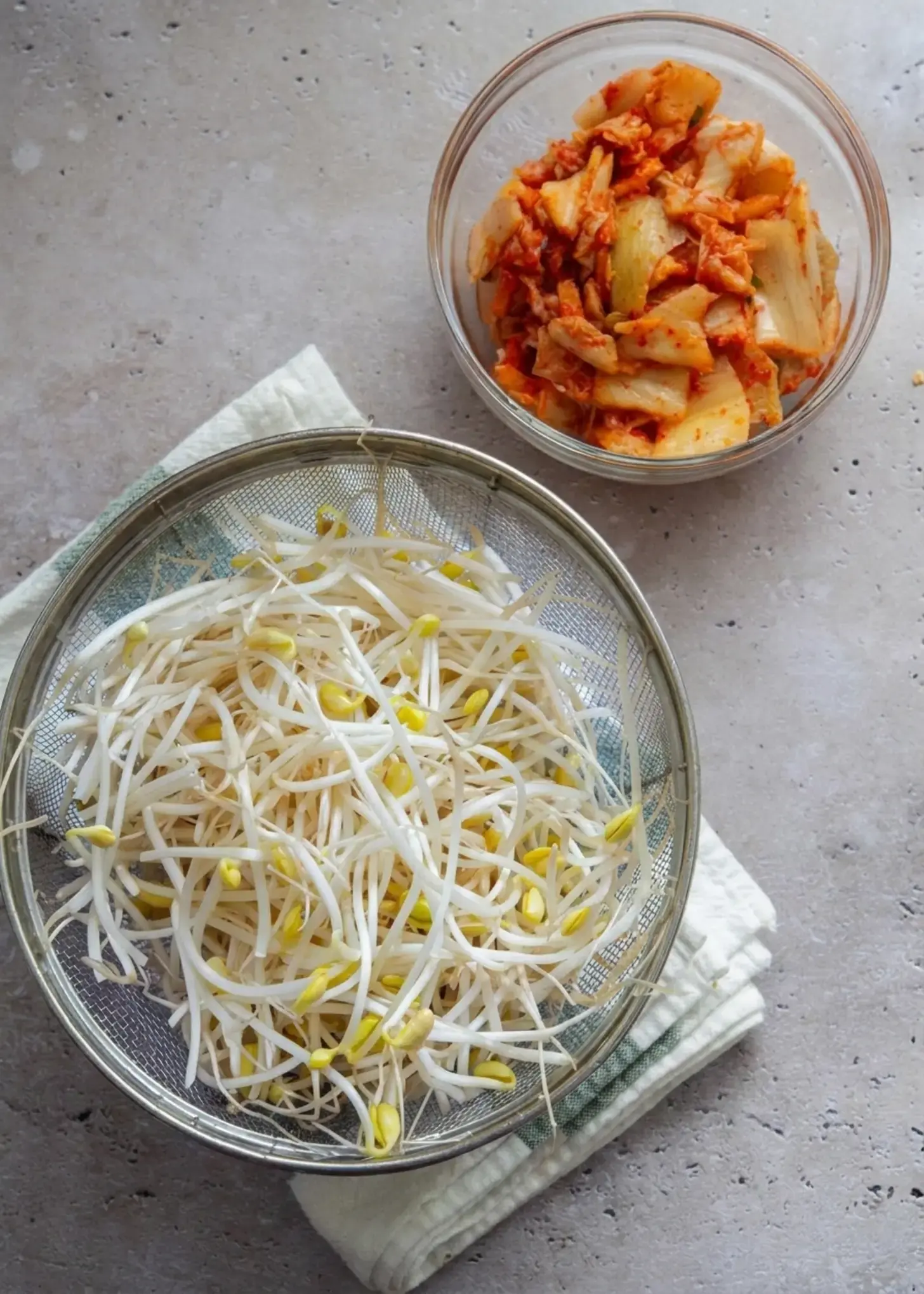
Use the following exact quantities for the intended balance:
- 6 cups (1.5 liters) water
- 3 Korean stock coins or tablets
- 2 cups (480 ml) sour cabbage kimchi, sliced
- 4 tablespoons (60 ml) kimchi brine
- 7 ounces (200 g) soybean sprouts
- 1/2 pound (250 g) soft tofu, cut into cubes
- 2 garlic cloves, minced
- 1 tablespoon (15 ml) Korean fish sauce or Korean soup soy sauce
- Salt and pepper, to taste
- 1 green onion, chopped
Choose the Right Soybean Sprouts
Look for plump, crisp soybean sprouts with fresh stems and firm yellow heads. Avoid packages with excessive liquid, a slimy surface, or a strong unpleasant odor. The thin roots may be trimmed for appearance, but removing them is optional and does not determine the success of the soup.
Keep the sprouts refrigerated until you are ready to cook. Rinse them carefully under running water and drain them. The FDA guidance for handling produce safely recommends clean hands, clean utensils, and thorough rinsing under running water rather than washing produce with soap.
Use Sour, Well-Fermented Kimchi
Fresh kimchi can taste lively, but mature sour cabbage kimchi is the better choice here. Its developed acidity gives the clear broth enough depth in a short cooking period. Slice large pieces into spoon-friendly strips so kimchi, tofu, and sprouts can be eaten comfortably together.
Do not discard the liquid in the kimchi container. Four tablespoons of kimchi brine are part of the recipe, not an optional garnish. The brine spreads fermented flavor through the water and helps create a cohesive soup rather than a plain broth with separate pieces of kimchi.
Select the Broth and Seasoning
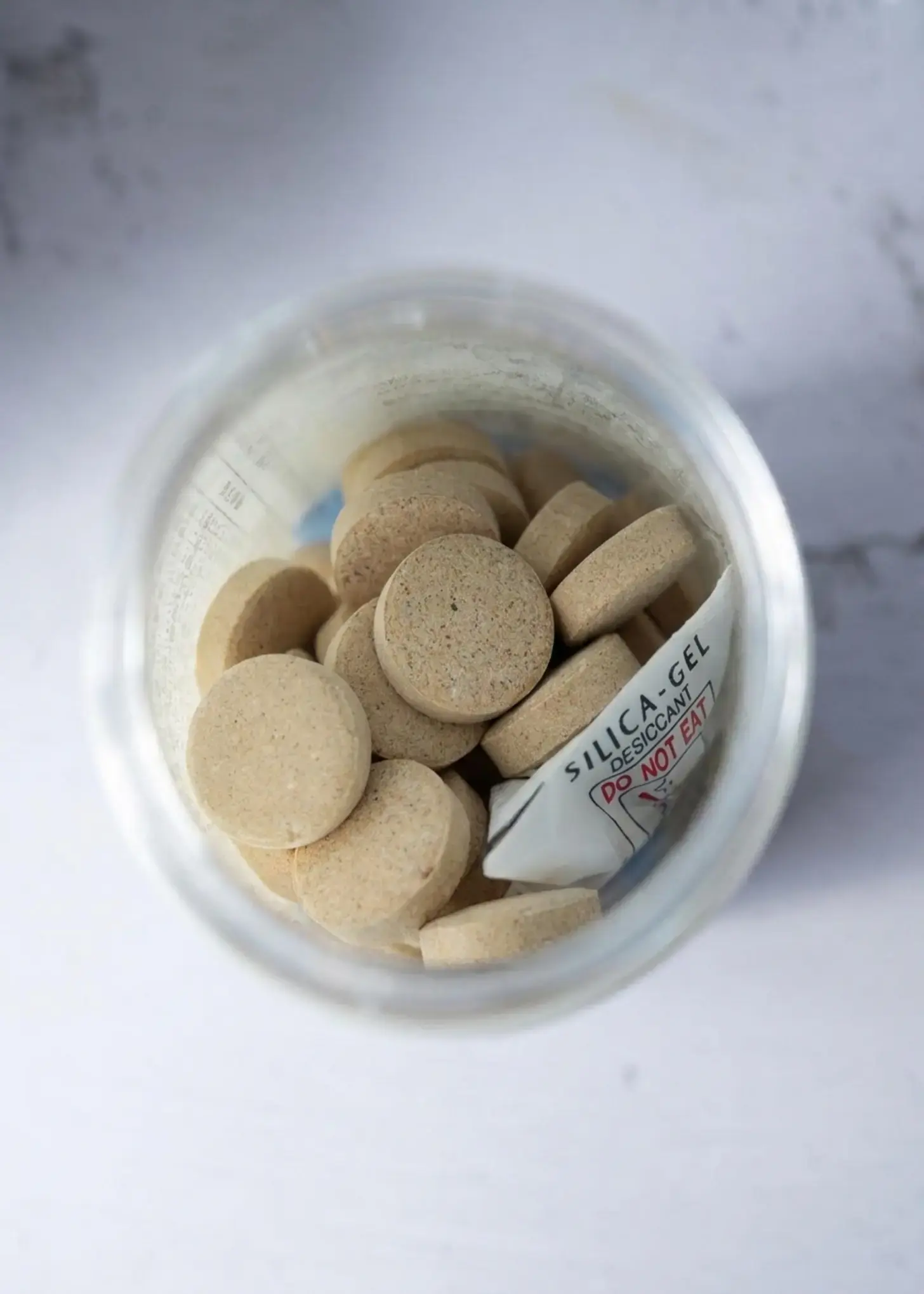
Three Korean stock coins dissolved in the water are the fastest option. Because brands vary in salt intensity, final seasoning should happen only after the kimchi and fish sauce have flavored the broth. Taste first, then add salt and pepper gradually.
If stock coins are unavailable, simmer six or seven large dried anchovies with a piece of dried sea kelp in the measured water for five minutes. Strain out both ingredients before adding the kimchi. This produces a clean anchovy stock while keeping the rest of the method unchanged.
Korean fish sauce gives the broth savory depth, while Korean soup soy sauce is the stated alternative. Choose one, not both, and use one tablespoon. Ordinary dark soy sauce is not an ideal substitute because it may darken the broth and give it a different sweetness and intensity.
How to Make Kimchi Bean Sprout Soup
1. Build the Kimchi Broth
Pour six cups of water into a pot and dissolve the three Korean stock coins or tablets. Add the sliced sour cabbage kimchi and all four tablespoons of kimchi brine. Distribute the kimchi through the liquid instead of leaving it in one compact mound.

Cover the pot and bring the mixture to a boil over medium heat. Once boiling, let it cook for five minutes. This brief stage softens the kimchi slightly and transfers its acidity, chile flavor, and fermented savor to the broth.
For homemade anchovy stock, prepare and strain it before this step. Return the clear stock to the pot, add the kimchi and brine, cover, and follow the same five-minute boil. Removing the anchovies and kelp prevents their textures from distracting from the finished soup.
2. Simmer the Soybean Sprouts
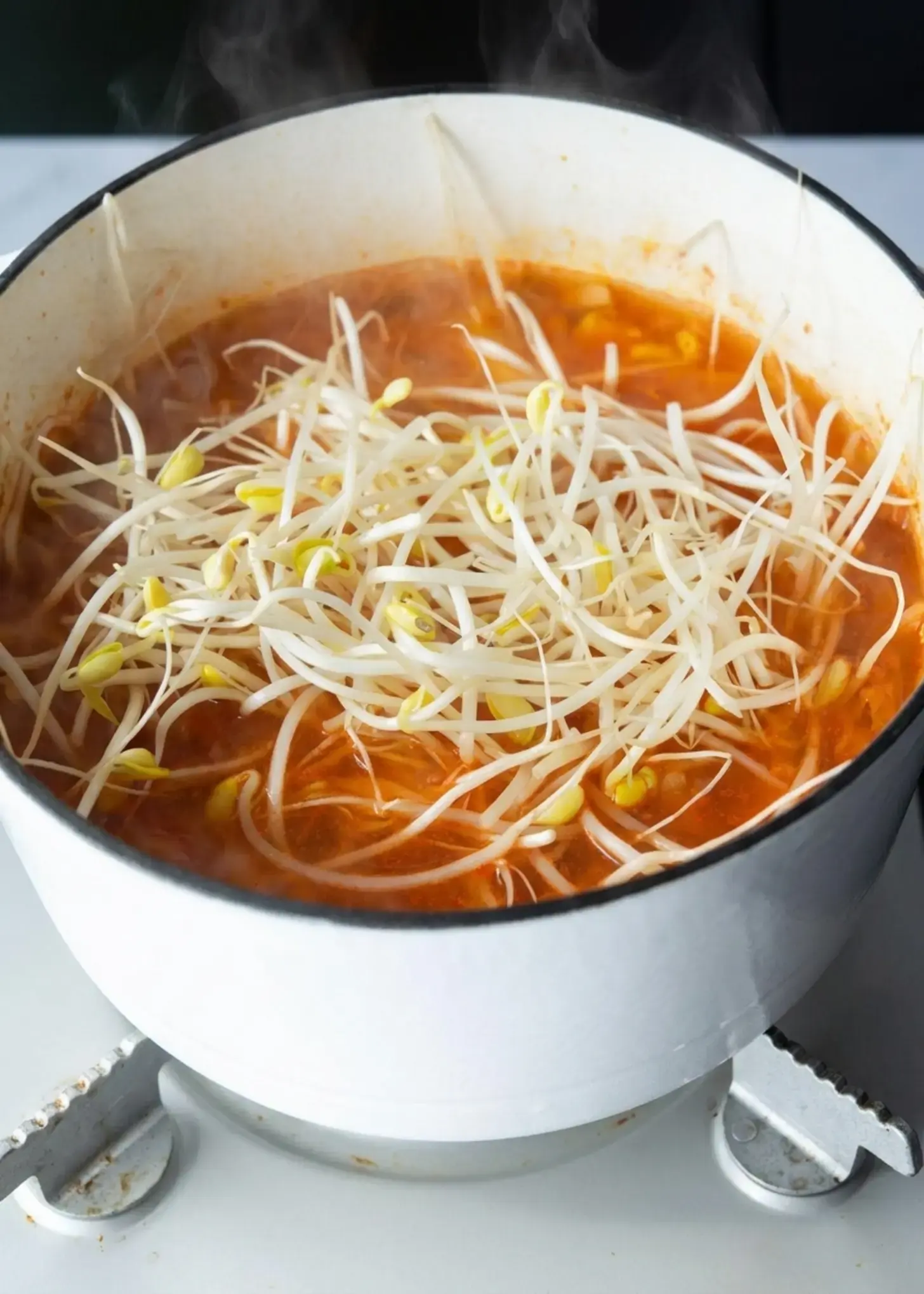
Add the drained soybean sprouts to the bubbling kimchi broth. Press them gently into the liquid so they cook evenly, but do not crush their stems. Cover the pot again and reduce the activity to a gentle simmer.

Leave the lid closed and simmer for five additional minutes. Keeping a consistent covered cooking method helps the sprouts cook evenly. Avoid repeatedly lifting the lid, which releases steam and interrupts the controlled simmer.

Do not extend this stage unnecessarily. The sprouts should be cooked but still retain a pleasant bite. Long boiling softens them and removes the contrast that makes kimchi kongnamul-guk appealing.
3. Add Tofu, Garlic, and Seasoning
Gently stir in the cubed soft tofu and minced garlic. Use a broad spoon and slow movements so the tofu remains in distinct pieces. The residual heat warms the delicate cubes quickly, so there is no need for aggressive boiling.
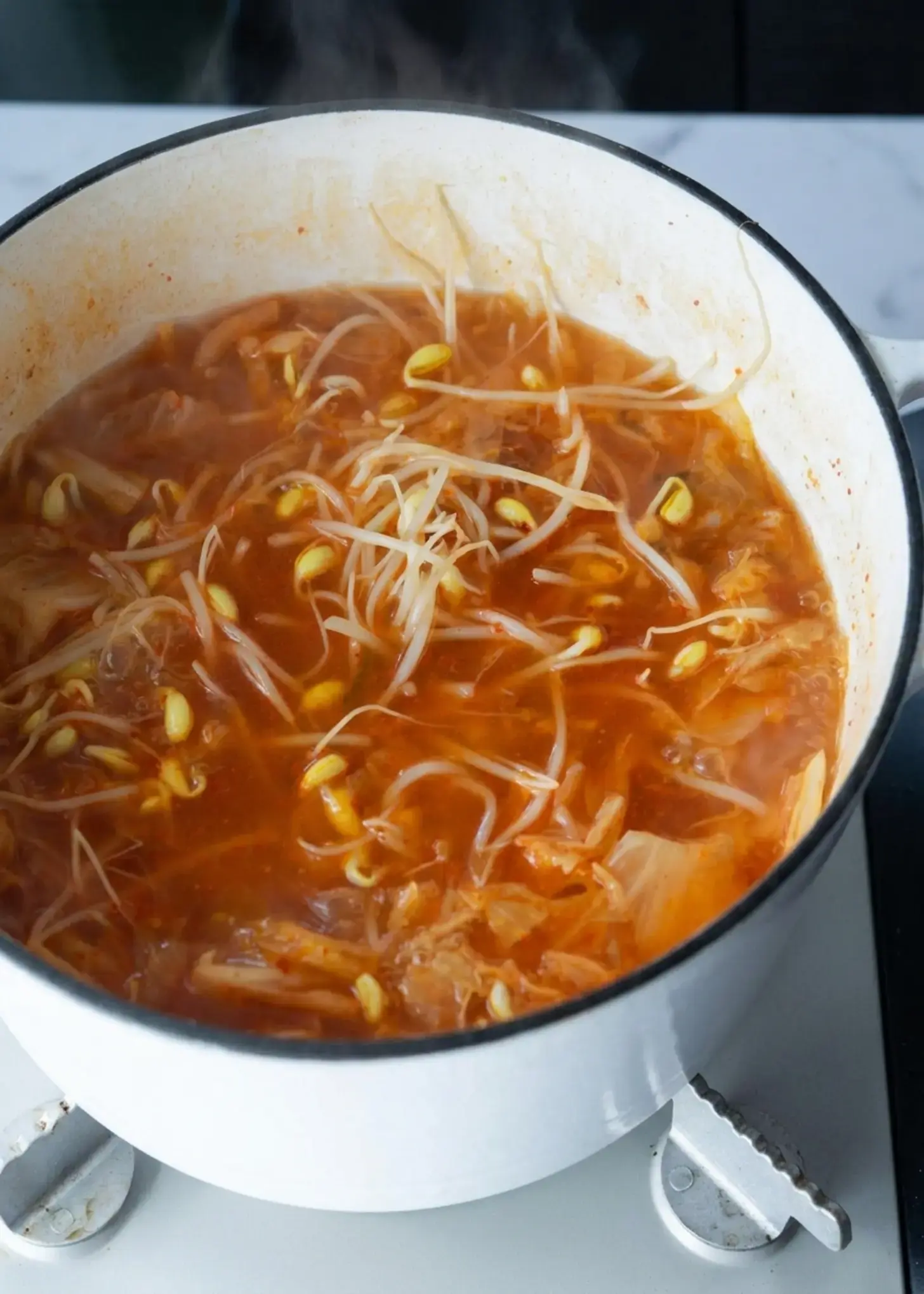
Add one tablespoon of Korean fish sauce or Korean soup soy sauce. Stir, taste the broth, and add only the salt and pepper it needs. Kimchi, brine, stock coins, and fish sauce can all contribute salt, making gradual adjustment more reliable than seasoning heavily at the beginning.

The finished broth should taste tangy, savory, and clean. If it seems mild, first stir and taste another spoonful containing some kimchi brine. Add salt only when the whole pot truly needs it, rather than changing the established ingredient ratios.

4. Finish and Serve
Scatter the chopped green onion over the pot just before serving. Its fresh aroma brightens the fermented broth and adds color. Ladle the soup carefully so each bowl receives kimchi, soybean sprouts, tofu, and enough clear broth.

Serve the soup hot with plain steamed rice on the side. Diners can alternate between spoonfuls of soup and rice or place a little rice into the broth. For another Korean-inspired meal idea, pair your menu planning with this Korean BBQ chicken recipe.
Tips, Variations, Serving, and Storage

Protect the Texture
The most important technique is restraint. Keep the soybean sprout stage to the specified gentle five-minute simmer and avoid unnecessary stirring. Add soft tofu near the end, then move it carefully. These choices preserve crisp stems and intact tofu against the tender kimchi.
Maintain one lid strategy once the sprouts enter the pot. This recipe uses a covered pot, so leave it covered for the full five minutes. A stable temperature cooks the sprouts more predictably than repeatedly opening the pot to check them.
Make Thoughtful Adjustments
The verified recipe allows Korean soup soy sauce in place of Korean fish sauce. This changes the seasoning character and removes the fish sauce, but the broth may still contain anchovy ingredients if you use the stock coins or homemade anchovy stock. Check product labels when dietary restrictions matter.
Spice levels depend heavily on the kimchi and its brine. Taste your kimchi before cooking rather than adding extra chile automatically. The goal is a balanced, tangy soup in which the sprouts and tofu remain noticeable, not a broth whose heat hides every other ingredient.
Do not replace soybean sprouts merely because mung bean sprouts look similar. If soybean sprouts are difficult to find, search the refrigerated produce area of a Korean or Asian grocery. Their firm bean heads and nutty quality are defining elements of kongnamul-guk.
Store and Reheat Carefully
Cool leftovers promptly and place them in a covered container in the refrigerator. USDA food-safety guidance generally recommends using refrigerated leftovers within three to four days. Reheat the soup thoroughly to 165°F (74°C), stirring so the broth and solid ingredients heat evenly.
Freezing is not recommended when texture is a priority. The original recipe author notes that soybean sprouts can lose their crunch and become mushy after freezing. If a softer texture is acceptable, freezing is possible, but a freshly made or refrigerated bowl will better preserve the intended contrast.
Frequently Asked Questions
What kind of sprouts should I use for Kimchi Bean Sprout Soup?
What type of kimchi works best in this soup?
Can I make the broth without Korean stock coins?
How should I store leftover Kimchi Bean Sprout Soup?
A Simple Soup with Careful Balance
Kimchi Bean Sprout Soup succeeds because every ingredient has a clear role. Sour kimchi and brine energize the broth, anchovy stock supplies savor, kongnamul brings crunch, and tofu adds softness. Green onion and garlic finish the bowl without making the clean broth feel crowded.
Measure the ingredients, keep the sprout cooking stage covered, and season only after the major salty components are present. With those details in place, kimchi kongnamul-guk becomes a dependable, comforting soup that delivers lively Korean flavor in a remarkably direct method.
Print
Kimchi Bean Sprout Soup (Kimchi Kongnamul-guk)
Kimchi Bean Sprout Soup for a Light, Flavorful Meal Kimchi Bean Sprout Soup, known as kimchi kongnamul-guk, brings together crisp soybean sprouts, tangy fermented kimchi, soft tofu, and a clear savory broth. The result is warming without feeling heavy.
- Total Time: 20 min
- Yield: 4 people 1x
Ingredients
6 cups water
3 Korean stock coins, see instructions for adaptation
2 cup sour cabbage kimchi, sliced
4 tbsp kimchi brine
7 oz soybean sprouts
1/2 lb soft tofu, cubed
2 cloves garlic, minced
1 tbsp Korean fish sauce
salt & pepper
1 green onion, chopped
Instructions
1-In a pot, dissolve the soup coins: In a pot, dissolve the soup coins (or tablets) in water, then add the chopped cabbage kimchi and kimchi brine. Cover the pot and bring it to a boil over medium heat, letting it cook for 5 minutes. *If you’re making homemade stock, simmer 6-7 large dried anchovies and a piece of dried sea kelp in water for about 5 minutes, then strain out the anchovies and kelp.
2-Add the soybean sprouts into the kimchi: Add the soybean sprouts into the kimchi soup and cover the pot once more. Allow it to gently simmer for an additional 5 minutes.
3-Stir in the tofu and garlic, then: Stir in the tofu and garlic, then flavor the soup with Korean fish sauce and a pinch of salt. Top it off with chopped green onions before serving. Enjoy it hot with a bowl of rice on the side.
Last Step:
Please leave a rating and comment letting us know how you liked this recipe! This helps our business to thrive and continue providing free, high-quality recipes for you.- Prep Time: 5 min
- Cook Time: 15 min
- Method: stovetop
Nutrition
- Calories: 69
- Sugar: 4
- Sodium: 1070
- Fat: 2
- Saturated Fat: 0.3
- Carbohydrates: 9
- Fiber: 3
- Protein: 6