Why You Will Love These Cuban Sandwiches
Cuban Sandwiches are a classic pressed sandwich with a strong identity, simple ingredients, and a crisp finish that many home cooks appreciate. This cuban sandwich recipe works well for lunch, dinner, or a filling weekend meal, and it fits many routines because the steps are direct and familiar.
- Easy preparation: The sandwich uses a short list of ingredients and simple assembly. Once the pork is cooked, the rest of the work is quick, which makes it practical for busy parents, students, and working professionals.
- Balanced flavor: The mix of roasted pork, ham, Swiss cheese, pickles, and yellow mustard gives Cuban Sandwiches a salty, tangy, and savory taste that stands out from a standard ham sandwich.
- Flexible serving style: This authentic Cuban sandwich can be served as a full meal or cut into smaller portions for sharing. It also works for meal planning when you want a reliable make-ahead option.
- Distinct texture: A crispy Cuban sandwich has crunchy bread on the outside and warm melted cheese inside, which gives it a satisfying contrast in every bite.
The sandwich is popular in Miami, Tampa, New York City, Los Angeles, Chicago, and Washington DC, which shows how widely it has traveled while keeping a clear cultural base. For readers who want more sandwich ideas, you may also like our recipe collection and practical meal planning tips.
The best Cuban Sandwiches are not overloaded. They rely on good bread, well-seasoned pork, and even pressing for a crisp, clean finish.
This dish also suits food enthusiasts and travelers who want a taste of Cuban-American cooking that has remained recognizable for decades. If you are looking for a classic Cuban sandwich with traditional flavor and strong texture, this recipe stays close to the version most people expect.
Jump to:
- Why You Will Love These Cuban Sandwiches
- Essential Ingredients for Cuban Sandwiches
- Special Dietary Options
- How to Prepare the Perfect Cuban Sandwiches: Step-by-Step Guide
- First Step: Prepare the bread and filling
- Second Step: Spread the mustard
- Third Step: Layer the meats and cheese
- Fourth Step: Add the pickles and close the sandwich
- Fifth Step: Press until crisp and melted
- Final Step: Slice and serve
- Protein and Main Component Alternatives
- Pork substitutions
- Ham and cheese swaps
- Regional and dietary adjustments
- Vegetable, Sauce, and Seasoning Modifications
- Vegetable options
- Sauce choices
- Seasoning notes
- Mastering Cuban Sandwiches: Advanced Tips and Variations
- Pro cooking techniques
- Flavor variations
- Presentation tips
- Make-ahead options
- How to Store Cuban Sandwiches: Best Practices
- Refrigeration
- Freezing
- Reheating
- Meal prep considerations
- FAQs: Frequently Asked Questions About Cuban Sandwiches
- What is a Cuban sandwich?
- What are the key ingredients in a Cuban sandwich?
- How do I make a Cuban sandwich at home?
- What’s the difference between Tampa and Miami Cuban sandwiches?
- Where can I find the best Cuban sandwiches in the US?
- Cuban Sandwiches
- Ingredients
- Instructions
- Last Step:
- Notes
- Nutrition
- Did you make this recipe?
Essential Ingredients for Cuban Sandwiches
The ingredient list for Cuban Sandwiches is short, but each item has a specific role. Use fresh bread, quality meats, and proper pressing for the most reliable result. The list below includes the full set of ingredients mentioned in the recipe summary, plus the optional variations often associated with regional styles.
- 1 loaf Cuban bread, sliced into 8 to 12 inch lengths and cut in half horizontally – This is the traditional base and gives the sandwich its light crust and soft interior.
- 2 tablespoons butter or 2 tablespoons olive oil, for lightly brushing the bread – This helps the outside brown evenly during pressing.
- 2 tablespoons yellow mustard – Spread on the bread for the sharp, classic flavor that defines a traditional Cuban sandwich recipe.
- 8 ounces roasted pork or marinated pork – This is the main protein and provides the deep savory flavor that anchors the sandwich.
- 4 ounces ham – Adds saltiness and a second meat layer for the classic profile.
- 4 slices Swiss cheese – Melts well and brings a mild, creamy finish.
- 8 dill pickle slices – Add acidity and crunch to balance the rich meats and cheese.
- 2 to 4 slices salami, optional for Tampa-style only – Used in Tampa versions, but not in South Florida style.
- Lettuce, optional for Key West variations – Not part of the traditional version, but sometimes used regionally.
- Tomatoes, optional for Key West variations – Add freshness in some local styles.
- Mayonnaise, optional for Key West variations – Also seen in some regional versions, though not in the classic sandwich.
Special Dietary Options
- Vegan: Use plant-based deli slices, vegan cheese, mustard, pickles, and vegan butter on Cuban-style bread.
- Gluten-free: Choose gluten-free sandwich bread that can be pressed without falling apart.
- Low-calorie: Use less cheese, lean pork, and a lighter brush of olive oil instead of butter.
| Ingredient | Role in Cuban Sandwiches | Notes |
|---|---|---|
| Cuban bread | Creates the crisp shell and soft center | Traditional choice for an authentic Cuban sandwich |
| Roasted pork | Main savory protein | Can be marinated for stronger flavor |
| Ham | Adds salt and balance | Works well with Swiss cheese |
| Pickles | Adds tang and crunch | Use dill pickles for the classic style |
How to Prepare the Perfect Cuban Sandwiches: Step-by-Step Guide
First Step: Prepare the bread and filling
Start with Cuban bread sliced into 8 to 12 inch lengths. Cut each piece in half horizontally so you have a top and bottom section for layering. If you want a lightly richer crust, brush the outside surfaces with a small amount of butter or olive oil before pressing later. Set out the mustard, pork, ham, Swiss cheese, and pickles so the assembly moves quickly.
If you are making a how to make Cuban sandwich guide for a family meal, this is a good point to organize all the fillings on a tray. Busy cooks often find that a tidy setup reduces mistakes and keeps the sandwich from becoming soggy. For readers looking for more hands-on cooking methods, our cooking techniques guide may be helpful.
Second Step: Spread the mustard
Spread yellow mustard on both halves of the bread. Use a thin, even layer so the flavor stays sharp without overpowering the other ingredients. The mustard is one of the most recognizable parts of a classic Cuban sandwich, and it gives the sandwich its signature tang.
Traditional versions use mustard only, not mayonnaise. That detail matters for anyone who wants an authentic Cuban sandwich recipe. If you prefer a regional variation, Key West styles may include mayonnaise, lettuce, and tomatoes, but those ingredients are not part of the standard version used in Miami or most classic recipes.
Third Step: Layer the meats and cheese
Add the roasted pork or marinated pork first, then the ham, followed by Swiss cheese. If you are making the Tampa-style version, add the salami as well. The order matters because the bread supports the meat layers and the cheese helps hold everything together as it melts.
Use enough filling to give the sandwich substance, but do not overpack it. Cuban Sandwiches should press down neatly and still hold their shape after grilling. For a balanced result, the pork should remain the largest protein component, with ham and cheese supporting the flavor profile.
Fourth Step: Add the pickles and close the sandwich
Place the pickle slices on top of the cheese or between the meat layers, depending on your preferred method. Pickles add brightness and cut through the richness of the pork and ham. Then close the sandwich with the top half of the bread and press gently with your hands before moving it to the grill or plancha.
A good Cuban sandwich should taste layered, not crowded. Each ingredient should be easy to identify after pressing.
Fifth Step: Press until crisp and melted
Place the sandwich in a plancha or similar press. Cook until the bread is crispy and golden and the cheese has fully melted. A medium heat works well because it browns the bread without burning it before the center warms through. This step is the key to a crispy classic Cuban sandwich.
If you do not have a plancha, use a skillet and place another heavy pan on top. Press evenly so the sandwich flattens and the filling heats through. The goal is a crisp shell with a warm interior, not a flattened dry sandwich.
Final Step: Slice and serve
Cut the sandwich into diagonal halves before serving. The diagonal cut makes the layers visible and makes the sandwich easier to handle. Serve it right away while the bread is crisp and the cheese is still soft. Cuban Sandwiches are often served as a hearty lunch, but they also work for dinner with a side salad, plantain chips, or black beans.
Because nutritional information is not specified for this version, portion size will depend on the amount of pork, cheese, and bread used. For home cooks managing time, the hands-on assembly is quick, while the pork may take longer if you prepare it from scratch.
Protein and Main Component Alternatives
Pork substitutions
The traditional filling uses roasted pork or marinated pork, but there are a few acceptable alternatives when supplies are limited. Slow-cooked pork shoulder works well because it stays tender after pressing. Leftover roast pork also fits the sandwich well if it is sliced thin. For a lighter version, use lean pork loin, though the texture will be less rich than the classic version.
Ham and cheese swaps
If smoked ham is unavailable, use another mild cured ham that slices thinly. The goal is saltiness without too much seasoning overlap. Swiss cheese remains the best match because it melts smoothly and supports the flavor of the meats, but provolone can be used in a pinch if needed. These changes still keep the sandwich close to the original traditional Cuban sandwich recipe.
Regional and dietary adjustments
For Tampa-style Cuban Sandwiches, include salami. For South Florida, leave it out. That difference matters because it changes both the flavor and the regional identity of the sandwich. For vegetarian or vegan readers, plant-based deli slices, vegan cheese, and mustard can create a sandwich that keeps the pressed format even if the filling changes.
If you need gluten-free options, choose a sturdy gluten-free roll that can handle pressure without breaking apart. The key is to keep the structure strong enough for pressing. The sandwich should still crisp, even when the bread changes.
Vegetable, Sauce, and Seasoning Modifications
Vegetable options
The classic version of Cuban Sandwiches does not include lettuce or tomatoes, but some regional adaptations, especially Key West variations, do. If you want a fresher bite, add thin tomato slices after pressing or use a small amount of shredded lettuce on the side rather than inside the sandwich. This keeps the bread from softening too quickly.
Sauce choices
Yellow mustard is the standard sauce and should remain the main condiment for an authentic Cuban sandwich. Mayonnaise is sometimes used in regional versions, but it changes the flavor and makes the sandwich less traditional. For most home cooks, keeping the mustard front and center is the simplest way to stay true to the dish.
Seasoning notes
The meats already bring most of the flavor, so additional seasoning is usually light. If you are preparing marinated pork, use garlic, citrus, oregano, and cumin in the marinade for a deeper Cuban-style profile. Pickles bring acidity, mustard brings sharpness, and cheese adds mild creaminess, so the sandwich does not need much else.
For readers in warm-weather months, a lighter side such as fruit or salad can make the meal feel less heavy. In colder months, the full sandwich pairs well with soup or beans. This flexibility helps Cuban Sandwiches fit many households and schedules.
Mastering Cuban Sandwiches: Advanced Tips and Variations
Pro cooking techniques
Use a plancha or heavy press for even heat distribution. This is one of the best ways to make a crispy Cuban sandwich because the pressure helps the bread toast evenly while the cheese melts fully. Keep the heat at medium so the outside browns before the filling dries out.
For extra control, warm the pork before assembling the sandwich. Warm filling helps the cheese melt faster, which shortens the pressing time and reduces the chance of burning the bread. If you are cooking for several people, assemble the sandwiches first and press them one at a time.
Flavor variations
The classic Cuban sandwich remains the best-known version, but regional differences are part of its history. Tampa-style versions use salami, while Key West variations may add lettuce, tomatoes, and mayonnaise. These changes create a different balance of salt, richness, and freshness. If you want the most widely accepted version, leave out the extras and keep the sandwich simple.
Some home cooks also use a touch more mustard for a sharper finish. Others prefer a thicker layer of pork for a more filling meal. Both choices can work as long as the bread still presses properly.
Presentation tips
Serve the sandwich cut diagonally on a simple plate so the layers are visible. A small pile of plantain chips or a few pickles on the side gives the plate a more complete look. For travelers and food enthusiasts, this presentation feels similar to what you might find in Cuban-American diners in major cities.
Make-ahead options
You can cook the pork ahead of time and refrigerate it until needed. Bread and pickles should stay separate from the meat until assembly time. This keeps the sandwich from becoming damp. If you are preparing lunch for work or school, assemble the sandwich shortly before pressing for the best texture.
How to Store Cuban Sandwiches: Best Practices
Cuban Sandwiches are best eaten fresh, but leftovers can be stored with a few simple steps. Because pressed bread loses crispness over time, the storage method matters if you want the sandwich to keep its texture.
Refrigeration
Wrap leftover sandwich halves tightly and refrigerate them for up to 2 days. If possible, store the components separately and assemble later. This helps protect the bread from moisture and keeps the pickles from softening the crust too much.
Freezing
Cooked pork can be frozen for longer storage, but assembled sandwiches are not ideal for freezing because the bread texture changes after thawing. If you want batch cooking, freeze the pork and ham portions separately in airtight containers, then thaw and press fresh sandwiches later.
Reheating
Reheat in a skillet, plancha, or toaster-style press rather than a microwave. Dry heat helps restore the crisp exterior and rewarm the cheese. If you microwave the sandwich, the bread usually becomes soft and loses its signature texture.
Meal prep considerations
For meal prep, cook the pork in advance, slice the bread near serving time, and keep mustard, pickles, and cheese ready in the refrigerator. This makes it easier to build a fresh sandwich in minutes. The method is practical for busy parents and working professionals who want a quick lunch without losing quality.

FAQs: Frequently Asked Questions About Cuban Sandwiches
What is a Cuban sandwich?
What are the key ingredients in a Cuban sandwich?
How do I make a Cuban sandwich at home?
What’s the difference between Tampa and Miami Cuban sandwiches?
Where can I find the best Cuban sandwiches in the US?
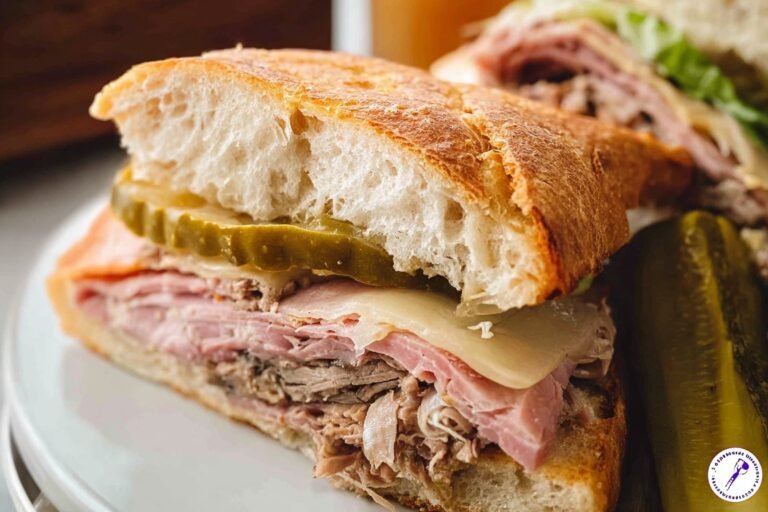
Cuban Sandwiches
🥪 Experience the iconic crunch and melt of authentic Cuban layers – roasted pork, ham, Swiss, and pickles for unbeatable flavor!
🔥 Crispy classic that’s quick to assemble and press at home, bringing Miami streets to your kitchen table!
- Total Time: 20 minutes
- Yield: 4 sandwiches
Ingredients
– 1 loaf Cuban bread
– 2 tablespoons butter or 2 tablespoons olive oil, for lightly brushing the bread
– 2 tablespoons yellow mustard
– 8 ounces roasted pork or marinated pork
– 4 ounces ham
– 4 slices Swiss cheese
– 8 dill pickle slices
– 2 to 4 slices salami, optional for Tampa-style only
– Lettuce, optional for Key West variations
– Tomatoes, optional for Key West variations
– Mayonnaise, optional for Key West variations
Instructions
1-First Step: Prepare the bread and filling Start with Cuban bread sliced into 8 to 12 inch lengths. Cut each piece in half horizontally so you have a top and bottom section for layering. If you want a lightly richer crust, brush the outside surfaces with a small amount of butter or olive oil before pressing later. Set out the mustard, pork, ham, Swiss cheese, and pickles so the assembly moves quickly.
2-Second Step: Spread the mustard Spread yellow mustard on both halves of the bread. Use a thin, even layer so the flavor stays sharp without overpowering the other ingredients. The mustard is one of the most recognizable parts of a classic Cuban sandwich, and it gives the sandwich its signature tang.
3-Third Step: Layer the meats and cheese Add the roasted pork or marinated pork first, then the ham, followed by Swiss cheese. If you are making the Tampa-style version, add the salami as well. The order matters because the bread supports the meat layers and the cheese helps hold everything together as it melts. Use enough filling to give the sandwich substance, but do not overpack it. Cuban Sandwiches should press down neatly and still hold their shape after grilling. For a balanced result, the pork should remain the largest protein component, with ham and cheese supporting the flavor profile.
4-Fourth Step: Add the pickles and close the sandwich Place the pickle slices on top of the cheese or between the meat layers, depending on your preferred method. Pickles add brightness and cut through the richness of the pork and ham. Then close the sandwich with the top half of the bread and press gently with your hands before moving it to the grill or plancha.
5-Fifth Step: Press until crisp and melted Place the sandwich in a plancha or similar press. Cook until the bread is crispy and golden and the cheese has fully melted. A medium heat works well because it browns the bread without burning it before the center warms through. This step is the key to a crispy classic Cuban sandwich. If you do not have a plancha, use a skillet and place another heavy pan on top. Press evenly so the sandwich flattens and the filling heats through. The goal is a crisp shell with a warm interior, not a flattened dry sandwich.
6-Final Step: Slice and serve Cut the sandwich into diagonal halves before serving. The diagonal cut makes the layers visible and makes the sandwich easier to handle. Serve it right away while the bread is crisp and the cheese is still soft. Cuban Sandwiches are often served as a hearty lunch, but they also work for dinner with a side salad, plantain chips, or black beans.
Last Step:
Please leave a rating and comment letting us know how you liked this recipe! This helps our business to thrive and continue providing free, high-quality recipes for you.Notes
🥪 For true authenticity, skip lettuce, tomatoes, or mayo – stick to the classic Miami style.
🌆 Add thinly sliced salami only if making the Tampa variation.
🔥 A hot plancha or panini press ensures even crisping and perfect cheese melt.
- Prep Time: 10 minutes
- Cook Time: 10 minutes
- Category: Sandwiches
- Method: Panini Press
- Cuisine: Cuban
Nutrition
- Serving Size: 1 sandwich
- Calories: 823 kcal
- Sugar: 4 g
- Sodium: 2493 mg
- Fat: 46 g
- Saturated Fat: 17 g
- Unsaturated Fat: 27 g
- Trans Fat: 0 g
- Carbohydrates: 60 g
- Fiber: 3 g
- Protein: 48 g
- Cholesterol: 150 mg