
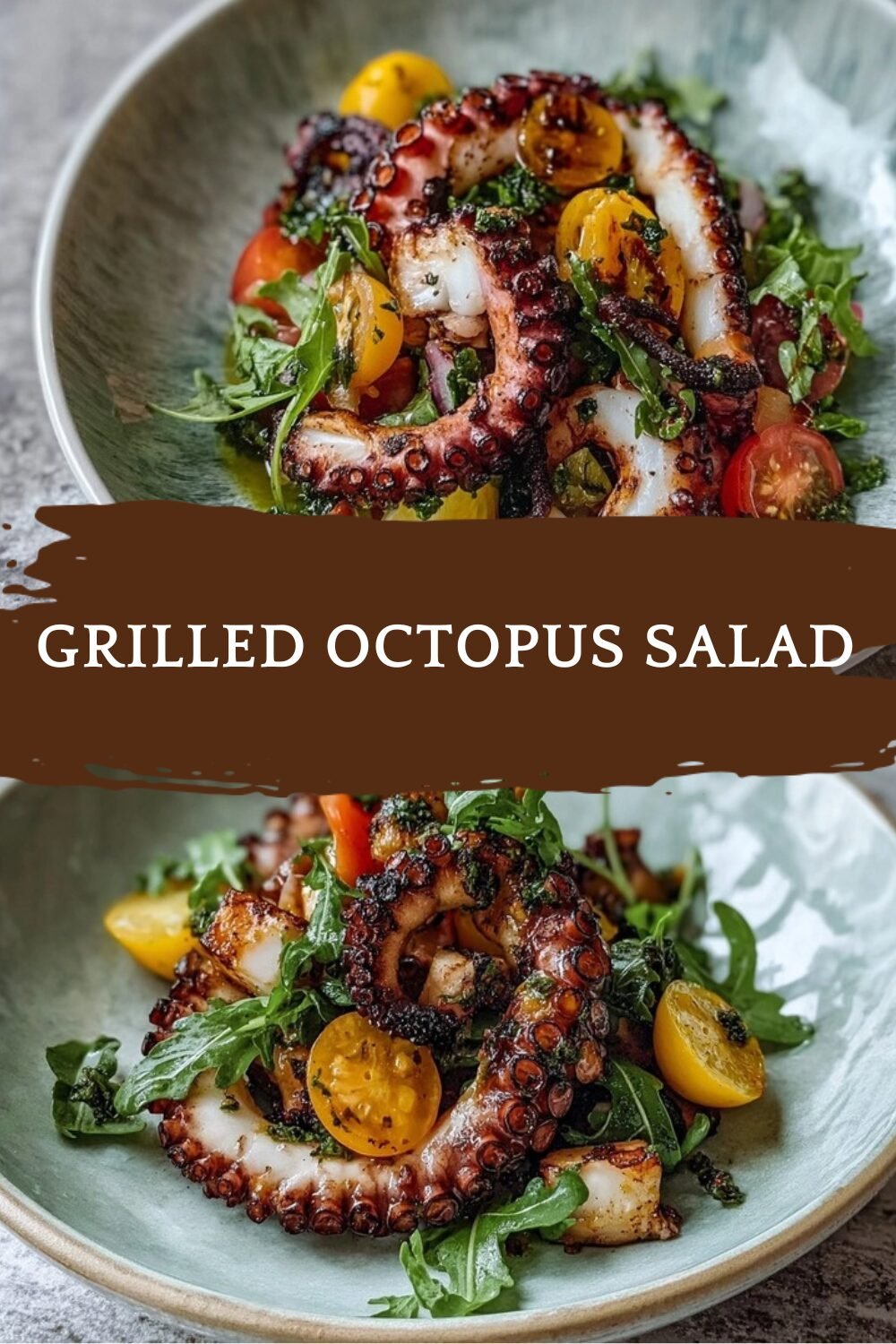
Why You’ll Love This Grilled Octopus Salad
If you have never made Grilled Octopus Salad at home, honestly, this is a fun one to try. It looks fancy, but the method is simple once you break it into a few easy steps. You simmer the octopus until tender, give it a quick kiss on the grill, then toss it with bright Mediterranean flavors. The result feels special without needing a long ingredient list or a complicated sauce.
- Easy enough for home cooks: The octopus cooks in a pot first, so grilling only takes a minute or two. That means you get smoky flavor fast, which is great for busy parents, students, and working professionals.
- Good for lighter eating: Octopus is naturally lean and pairs well with vegetables, olive oil, and herbs. If you want a fresh meal that still feels filling, this recipe fits the bill.
- Flexible for many tables: You can serve it warm, room temperature, or chilled. It works for casual lunches, date nights, and make-ahead meals for the week.
- Big flavor, simple ingredients: The mix of lemon, oregano, olives, tomatoes, and parsley gives the salad a bold Mediterranean taste that feels bright and balanced.
For readers who like to check nutrition details, you can also take a look at this overview of the health benefits of octopus. It is a nice reminder that seafood can fit into a balanced meal when prepared well.
Tip: Serve this salad at room temperature for the best flavor. The octopus stays tender, and the dressing tastes more rounded once the chill comes off.
Jump to:
- Why You’ll Love This Grilled Octopus Salad
- Essential Ingredients for Grilled Octopus Salad
- Main ingredients
- Special dietary options
- How to Prepare the Perfect Grilled Octopus Salad: Step-by-Step Guide
- First step: Prep the octopus and get the pot ready
- Second step: Use the dunk-and-lift method
- Third step: Cool, clean, and separate the tentacles
- Fourth step: Grill for quick char
- Fifth step: Cut into pieces and build the salad
- Final step: Serve at room temperature
- Dietary Substitutions to Customize Your Grilled Octopus Salad
- Protein and main component alternatives
- Vegetable, sauce, and seasoning modifications
- Mastering Grilled Octopus Salad: Advanced Tips and Variations
- Pro cooking techniques
- Flavor variations
- Presentation tips
- Make-ahead options
- How to Store Grilled Octopus Salad: Best Practices
- Refrigeration
- Freezing
- Reheating
- Meal prep considerations
- FAQs: Frequently Asked Questions About Grilled Octopus Salad
- Is octopus safe to eat?
- What does octopus taste like in a grilled salad?
- How do you boil octopus to make it tender?
- How long do you grill octopus for salad?
- What’s a simple grilled octopus salad recipe?
- Grilled Octopus Salad
- Ingredients
- Instructions
- Last Step:
- Notes
- Nutrition
- Did you make this recipe?
Essential Ingredients for Grilled Octopus Salad
This recipe serves 4 and uses simple ingredients that work together to make the octopus shine. The key is to keep the seasoning clean so the smoky, tender seafood and crisp vegetables stay front and center.
Main ingredients
- 4 to 5 pound whole octopus, thawed and rinsed – The star of the dish. Thawing and rinsing help it cook evenly.
- 2 bay leaves – Add a gentle herbal note to the boiling water.
- 2 tablespoons kosher salt for boiling – Seasons the cooking liquid and helps flavor the octopus.
- 2 tablespoons olive oil – Brings richness and helps coat the salad.
- 1 teaspoon white wine vinegar – Adds a light tang that balances the olive oil.
- Juice of 1/2 lemon – Gives the salad a fresh, bright finish.
- 1 stalk celery, halved lengthwise and shaved – Adds crunch and a clean, fresh bite.
- 1/4 red onion, sliced thin – Brings color and sharp flavor.
- 10 heirloom cherry tomatoes, halved – Add sweetness, juiciness, and a pop of color.
- 1 teaspoon dried oregano – Gives the salad a classic Mediterranean flavor.
- 1/2 cup Greek olives, rough chopped – Add saltiness and a briny bite.
- 2 to 3 tablespoons fresh parsley, chopped – Lifts the salad with fresh green flavor.
- 1/2 teaspoon kosher salt for salad – Seasons the finished dish.
- 1 teaspoon black pepper – Adds gentle heat and depth.
Special dietary options
- Vegan: Swap the octopus for grilled artichoke hearts, king oyster mushrooms, or chickpeas for a plant-based version.
- Gluten-free: This recipe is naturally gluten-free as written.
- Low-calorie: Use a little less olive oil and add extra celery, tomatoes, and parsley for a lighter bowl.
If you like seafood meals with big flavor, you may also enjoy pairing this with another simple dish from the site, like this homemade Cajun seasoning blend for future seafood recipes.
How to Prepare the Perfect Grilled Octopus Salad: Step-by-Step Guide
First step: Prep the octopus and get the pot ready
Start by thawing the octopus if it is frozen, then rinse it well under cool water. Set out a large pot and fill it with enough water to fully cover the octopus later. Add the 2 tablespoons kosher salt and the 2 bay leaves now so the water is ready once it boils. This first setup makes the rest of the cooking smoother.
Bring the pot to a boil over high heat. While the water heats, pat the octopus dry with paper towels. If you are using a whole octopus, it may look a little intimidating at first, but that is normal. Once it goes into the hot water, it starts to soften and curl.
Second step: Use the dunk-and-lift method
When the water reaches a rolling boil, hold the octopus and dunk it into the pot, then lift it back out. Repeat this 3 to 5 times. This helps the tentacles curl and gives the exterior a better texture. After that, lower the octopus fully into the pot.
Reduce the heat to a gentle simmer. Let it cook for 45 minutes to 1 hour, depending on size. The octopus is ready when a knife or fork inserts with little resistance. If the meat still feels tough, keep simmering a bit longer and test again.
Good rule of thumb: tender octopus should feel easy to pierce, not rubbery or stiff.
Third step: Cool, clean, and separate the tentacles
Once the octopus is tender, remove it from the pot and let it cool enough to handle. Set it on a cutting board and cut off the tentacles. Discard the head. For this salad, the tentacles are the part you want. They have the best texture and look great once sliced.
If some pieces are larger than others, trim them into more even sections. You can also adjust your knife cuts later depending on how chunky you like your salad. Some people prefer bigger bite-size pieces, while others like smaller ones that mix more easily with the vegetables.
Fourth step: Grill for quick char
Heat your grill until it is very hot. If you are using a gas grill, aim for high heat. If you are using a grill pan indoors, preheat it well so the octopus sears fast. Brush the tentacles lightly with some of the olive oil if needed.
Place the tentacles on the grill for about 1 minute, just long enough to get a little char. This step adds smoky flavor without drying out the meat. Since the octopus is already cooked, you only need a short grill time. Flip only if needed, but most of the time a quick sear on the first side is enough.
Fifth step: Cut into pieces and build the salad
Once the tentacles come off the grill, cut them into 1-inch pieces. Add them to a large bowl with the remaining ingredients: 2 tablespoons olive oil, 1 teaspoon white wine vinegar, juice of 1/2 lemon, shaved celery, sliced red onion, halved heirloom cherry tomatoes, 1 teaspoon dried oregano, 1/2 cup Greek olives, 2 to 3 tablespoons chopped parsley, 1/2 teaspoon kosher salt, and 1 teaspoon black pepper.
Toss gently so everything gets coated without breaking the tomatoes or bruising the herbs. Taste the salad and adjust with a little more oil, vinegar, or salt if needed. The flavor should feel bright, briny, and balanced.
Final step: Serve at room temperature
Let the salad sit for a few minutes before serving so the flavors come together. Room temperature is best here because cold octopus can taste a little firm, while warmer salad brings out the lemon, oregano, and olive flavor more clearly. Serve it on a platter or in a shallow bowl for a nice look.
This recipe makes 4 servings and takes about 5 minutes to prep, 1 hour and 5 minutes to cook, for a total time of 1 hour and 10 minutes. Each serving is one portion, which makes it easy to plan for lunch or dinner.
| Recipe Detail | Amount |
|---|---|
| Prep time | 5 minutes |
| Cook time | 1 hour 5 minutes |
| Total time | 1 hour 10 minutes |
| Yield | 4 servings |
| Serving size | 1 serving |

Dietary Substitutions to Customize Your Grilled Octopus Salad
Protein and main component alternatives
If octopus is hard to find, start with pre-cooked frozen tentacles. That is the easiest shortcut and fits the tip from the recipe notes. It lets you skip the boiling step and jump straight to grilling. Just thaw, pat dry, and char briefly before slicing.
For a seafood-free version, try grilled artichoke hearts or thick king oyster mushroom strips. Both hold up well to a quick sear and work nicely with lemon, olives, and herbs. Chickpeas can also be used if you want more of a pantry-style salad bowl with a Mediterranean feel.
Vegetable, sauce, and seasoning modifications
You can easily change the vegetable mix based on what you have. Swap celery for shaved fennel, use cucumbers for extra crunch, or add arugula for a peppery bite. If you prefer a milder onion flavor, soak the sliced red onion in cold water for 10 minutes before adding it.
For the dressing, keep the same olive oil and lemon base, then adjust the white wine vinegar to taste. Some people like more citrus, while others want a little more richness from oil. The same goes for salt. Taste as you go and let your preference guide the bowl.
For a heartier seafood meal plan, you might pair this salad with another easy recipe from the site, such as a cozy bowl of loaded baked potato soup for a mixed menu that works well for family dinners.
Mastering Grilled Octopus Salad: Advanced Tips and Variations
Pro cooking techniques
The biggest secret to great octopus is patience during the simmer. If you rush that step, the texture can turn rubbery. Keep the heat at a gentle simmer, not a hard boil. You want steady heat that softens the meat without making it tough.
Another useful trick is to dry the tentacles well before grilling. Less surface moisture means better char. If your grill runs hot, you may only need 30 to 60 seconds per side. Watch closely so the outside picks up color without drying out the inside.
Flavor variations
Once you master the base recipe, you can play with the flavor profile. Add chopped cucumbers for a more refreshing salad, or sprinkle in a little crushed red pepper for heat. A spoonful of capers can also add a salty punch that works well with the olives.
If you want a richer Mediterranean feel, add crumbled feta on top. Fresh dill or mint also works if you want a different herbal note. Honestly, the beauty of this salad is how easily it changes while still tasting clean and bright.
Presentation tips
For a pretty plate, arrange the salad on a wide serving dish and top it with a few extra parsley leaves. Keep some tomato halves and olive pieces visible on top so the colors pop. The curled octopus pieces look especially nice when scattered across the vegetables instead of buried underneath.
A light drizzle of olive oil right before serving makes the salad shine. Serve with lemon wedges on the side so guests can add more brightness if they want.
Make-ahead options
You can boil the octopus earlier in the day or even the day before. After it cools, store it in the fridge and grill it just before serving. The vegetables can also be sliced ahead of time. When dinner hour gets busy, this is a nice way to save time without sacrificing flavor.
If you are planning ahead, keep the dressing and vegetables separate until close to serving time. That helps the salad stay crisp and fresh.
How to Store Grilled Octopus Salad: Best Practices
Refrigeration
Store leftovers in an airtight container in the fridge for 2 to 3 days. For the best taste, let the salad sit at room temperature for a few minutes before eating. This helps the olive oil loosen up and keeps the octopus from tasting too firm.
Freezing
Freezing is not the best choice for the finished salad because the vegetables can lose their texture. If you want to freeze anything, freeze the cooked octopus on its own before mixing with the salad ingredients. Wrap it well and thaw in the fridge before using.
Reheating
This dish is best served at room temperature, so heavy reheating is not needed. If the octopus was stored cold, let it rest on the counter for a short time before serving. Avoid over-warming it, since that can make the texture less pleasant.
Meal prep considerations
If you like meal prep, cook the octopus ahead and keep it ready for quick salads during the week. Slice the vegetables closer to serving day so they stay fresh. You can also make a double batch of the dressing and use it on other seafood or vegetable dishes.
FAQs: Frequently Asked Questions About Grilled Octopus Salad
Is octopus safe to eat?
What does octopus taste like in a grilled salad?
How do you boil octopus to make it tender?
How long do you grill octopus for salad?
What’s a simple grilled octopus salad recipe?
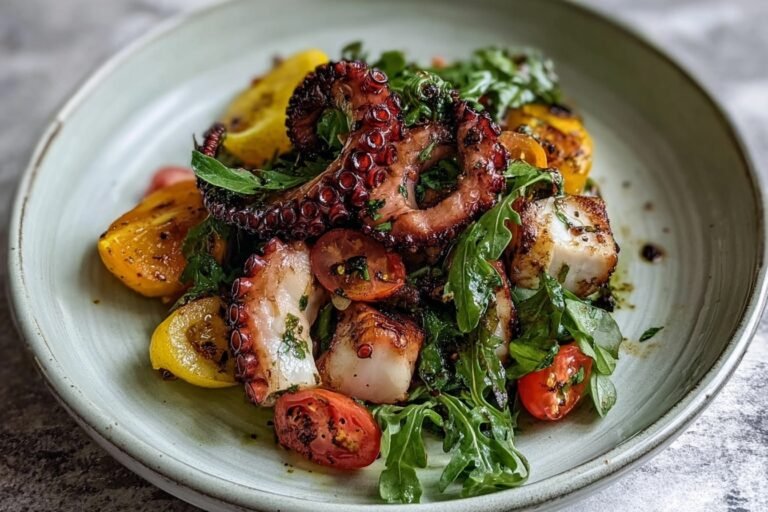
Grilled Octopus Salad
🦑 Tender, charred grilled octopus in a vibrant salad – high-protein, low-carb Mediterranean delight!
🥗 Quick post-boil assembly for impressive, fresh seafood flavor without fuss.
- Total Time: 1 hour 10 minutes
- Yield: 4 servings
Ingredients
– 4 to 5 pound whole octopus, thawed and rinsed
– 2 bay leaves
– 2 tablespoons kosher salt for boiling
– 2 tablespoons olive oil
– 1 teaspoon white wine vinegar
– Juice of 1/2 lemon
– 1 stalk celery, halved lengthwise and shaved
– 1/4 red onion, sliced thin
– 10 heirloom cherry tomatoes, halved
– 1 teaspoon dried oregano
– 1/2 cup Greek olives, rough chopped
– 2 to 3 tablespoons fresh parsley, chopped
– 1/2 teaspoon kosher salt for salad
– 1 teaspoon black pepper
Instructions
1-First step: Prep the octopus and get the pot ready Start by thawing the octopus if it is frozen, then rinse it well under cool water. Set out a large pot and fill it with enough water to fully cover the octopus later. Add the 2 tablespoons kosher salt and the 2 bay leaves now so the water is ready once it boils. This first setup makes the rest of the cooking smoother. Bring the pot to a boil over high heat. While the water heats, pat the octopus dry with paper towels. If you are using a whole octopus, it may look a little intimidating at first, but that is normal. Once it goes into the hot water, it starts to soften and curl.
2-Second step: Use the dunk-and-lift method When the water reaches a rolling boil, hold the octopus and dunk it into the pot, then lift it back out. Repeat this 3 to 5 times. This helps the tentacles curl and gives the exterior a better texture. After that, lower the octopus fully into the pot. Reduce the heat to a gentle simmer. Let it cook for 45 minutes to 1 hour, depending on size. The octopus is ready when a knife or fork inserts with little resistance. If the meat still feels tough, keep simmering a bit longer and test again. Good rule of thumb: tender octopus should feel easy to pierce, not rubbery or stiff.
3-Third step: Cool, clean, and separate the tentacles Once the octopus is tender, remove it from the pot and let it cool enough to handle. Set it on a cutting board and cut off the tentacles. Discard the head. For this salad, the tentacles are the part you want. They have the best texture and look great once sliced. If some pieces are larger than others, trim them into more even sections. You can also adjust your knife cuts later depending on how chunky you like your salad. Some people prefer bigger bite-size pieces, while others like smaller ones that mix more easily with the vegetables.
4-Fourth step: Grill for quick char Heat your grill until it is very hot. If you are using a gas grill, aim for high heat. If you are using a grill pan indoors, preheat it well so the octopus sears fast. Brush the tentacles lightly with some of the olive oil if needed. Place the tentacles on the grill for about 1 minute, just long enough to get a little char. This step adds smoky flavor without drying out the meat. Since the octopus is already cooked, you only need a short grill time. Flip only if needed, but most of the time a quick sear on the first side is enough.
5-Fifth step: Cut into pieces and build the salad Once the tentacles come off the grill, cut them into 1-inch pieces. Add them to a large bowl with the remaining ingredients: 2 tablespoons olive oil, 1 teaspoon white wine vinegar, juice of 1/2 lemon, shaved celery, sliced red onion, halved heirloom cherry tomatoes, 1 teaspoon dried oregano, 1/2 cup Greek olives, 2 to 3 tablespoons chopped parsley, 1/2 teaspoon kosher salt, and 1 teaspoon black pepper. Toss gently so everything gets coated without breaking the tomatoes or bruising the herbs. Taste the salad and adjust with a little more oil, vinegar, or salt if needed. The flavor should feel bright, briny, and balanced.
6-Final step: Serve at room temperature Let the salad sit for a few minutes before serving so the flavors come together. Room temperature is best here because cold octopus can taste a little firm, while warmer salad brings out the lemon, oregano, and olive flavor more clearly. Serve it on a platter or in a shallow bowl for a nice look.
Last Step:
Please leave a rating and comment letting us know how you liked this recipe! This helps our business to thrive and continue providing free, high-quality recipes for you.Notes
🦑 Skip boiling by using pre-cooked frozen octopus tentacles for faster prep.
🍋 Taste and adjust olive oil, vinegar, or salt for perfect balance.
❄️ Refrigerate leftovers up to 3 days; bring to room temperature before serving.
- Prep Time: 5 minutes
- Cook Time: 1 hour 5 minutes
- Category: Salad
- Method: Grilling
- Cuisine: Mediterranean
- Diet: Pescatarian
Nutrition
- Serving Size: 1 serving
- Calories: 350 kcal
- Sugar: 2g
- Sodium: 800mg
- Fat: 15g
- Saturated Fat: 2g
- Unsaturated Fat: 12g
- Trans Fat: 0g
- Carbohydrates: 10g
- Fiber: 2g
- Protein: 40g
- Cholesterol: 150mg