
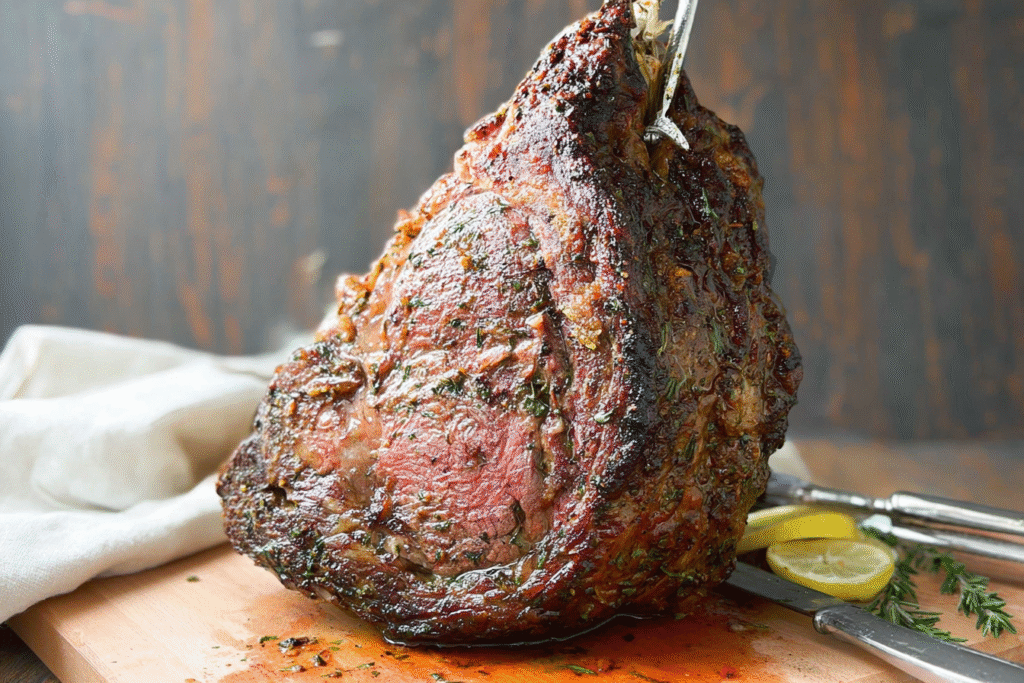
Why You’ll Love This Prime Rib Roast
This prime rib roast recipe stands out for its simplicity and delicious results, making it a favorite among home cooks looking to impress without spending all day in the kitchen. You can prepare it with ease, spending just a short time gathering ingredients and seasoning before popping it in the oven. Beyond being straightforward, this dish delivers rich nutrition, helping support everyday health while satisfying your taste buds.
One reason many people enjoy this prime rib roast is its health benefits, packed with high amounts of protein for muscle repair and essential nutrients that contribute to overall wellness. It’s versatile too, fitting into various meal plans whether you’re aiming for gluten-free or low-calorie options. The flavorful combination of herbs and spices creates a standout dish that’s perfect for family dinners or special occasions, turning any meal into a memorable event.
Finally, this recipe’s adaptability lets you tweak it for different preferences, ensuring everyone at the table can enjoy it. Whether you’re cooking for a crowd or just yourself, the juicy and tender outcome makes it worth trying. For those curious about beef’s role in a balanced diet, check out this Beef Nutrition Resources guide to learn more about its nutritional value.
Jump to:
- Why You’ll Love This Prime Rib Roast
- Essential Ingredients for Prime Rib Roast
- How to Prepare the Perfect Prime Rib Roast: Step-by-Step Guide
- Nutritional Breakdown
- Dietary Substitutions to Customize Your Prime Rib Roast
- Mastering Prime Rib Roast: Advanced Tips and Variations
- How to Store Prime Rib Roast: Best Practices
- FAQs: Frequently Asked Questions About Prime Rib Roast
- How much prime rib should I buy per person for a dinner?
- Should I choose bone-in or boneless prime rib for roasting?
- What is the best temperature and cooking time for prime rib?
- What internal temperature should prime rib reach before removing it from the oven?
- Why is resting prime rib important after cooking, and how long should I let it rest?
- Prime Rib Roast
- Ingredients
- Instructions
- Last Step:
- Notes
- Nutrition
- Did you make this recipe?
Essential Ingredients for Prime Rib Roast
Gathering the right ingredients is the first step to creating a mouthwatering prime rib roast. This section lists everything you need, based on a standard 5-pound roast, to ensure your dish turns out perfectly seasoned and flavorful. I’ll break it down into a clear, structured list so you can follow along easily and measure accurately.
- 5 pounds beef prime rib (adjust spices if using a larger roast)
- 1 1/2 teaspoons salt
- 2 teaspoons black pepper
- 2 teaspoons fresh rosemary
- 1 teaspoon fresh thyme
- 8 cloves garlic, minced
- 1/4 cup olive oil
- Horseradish for serving (optional)
These ingredients provide a solid base for a tender and flavorful roast. For special dietary needs, you can make adjustments like using a large portobello mushroom or seitan roast for a vegan option, or keeping everything as is for gluten-free preparations since the list naturally fits that requirement. If you’re watching calories, simply reduce the olive oil to make it lighter while maintaining great taste. Remember, garlic not only adds flavor but also brings health perks; you can read more about that in this Garlic Health Benefits overview.
How to Prepare the Perfect Prime Rib Roast: Step-by-Step Guide
Getting a prime rib roast just right involves a few key steps that ensure it’s tender and full of flavor. Start by pulling the roast from the fridge an hour ahead to let it reach room temperature, which helps it cook evenly and stay juicy. Once it’s ready, you’ll mix your seasonings and get roasting for that perfect crust and inside.
Here are the detailed directions to floationow:
- Remove the prime rib from the refrigerator one hour before cooking to reach room temperature. Season all sides with salt and cover loosely with plastic wrap.
- Preheat the oven to 500°F (260°C) with the rack adjusted to the center.
- In a bowl, combine salt, black pepper, rosemary, thyme, garlic, and olive oil.
- Pat the roast dry and rub the seasoning mixture evenly over all sides.
- Place the bone-in roast with bones facing down in a roasting pan. For boneless roast, place it on a rack inside the roasting pan.
- Roast at 500°F (260°C) for 15 minutes, then reduce oven temperature to 325°F (163°C). Continue roasting until the internal temperature is 5-10 degrees below the preferred doneness as measured by a meat thermometer: Rare at 115-120°F (46-49°C), Medium Rare at 125-130°F (52-54°C), Medium at 135-140°F (57-60°C), or Medium Well at 145-150°F (63-66°C).
- Remove the roast from the oven, tent with foil, and let rest for 30 minutes to allow the temperature to rise further and juices to redistribute.
- Carve by slicing across the grain into approximately ½-inch thick slices. Serve with horseradish if desired.
This method takes about 10 minutes to prepare, 1 hour and 45 minutes to cook depending on size and doneness, and 30 minutes to rest, for a total time of around 1 hour and 55 minutes. For more tips on keeping your roast juicy, be sure to check out the section on How to Store Prime Rib Roast, which covers resting and other best practices. After cooking, you’ll find the nutritional details per serving include 729 calories, 31g of protein, and various vitamins like Vitamin C at 1mg, making it a nourishing choice.
Nutritional Breakdown
To help you understand what goes into each serving, here’s a quick table of the nutritional information:
| Nutrient | Amount per Serving |
|---|---|
| Calories | 729 |
| Carbohydrates | 1g |
| Protein | 31g |
| Fat | 66g (Saturated: 26g, Polyunsaturated: 3g, Monounsaturated: 30g) |
| Cholesterol | 137mg |
| Sodium | 102mg |
| Potassium | 517mg |
| Fiber | 0.2g |
| Sugar | 0.03g |
| Vitamin A | 12 IU |
| Vitamin C | 1mg |
| Calcium | 24mg |
| Iron | 3mg |
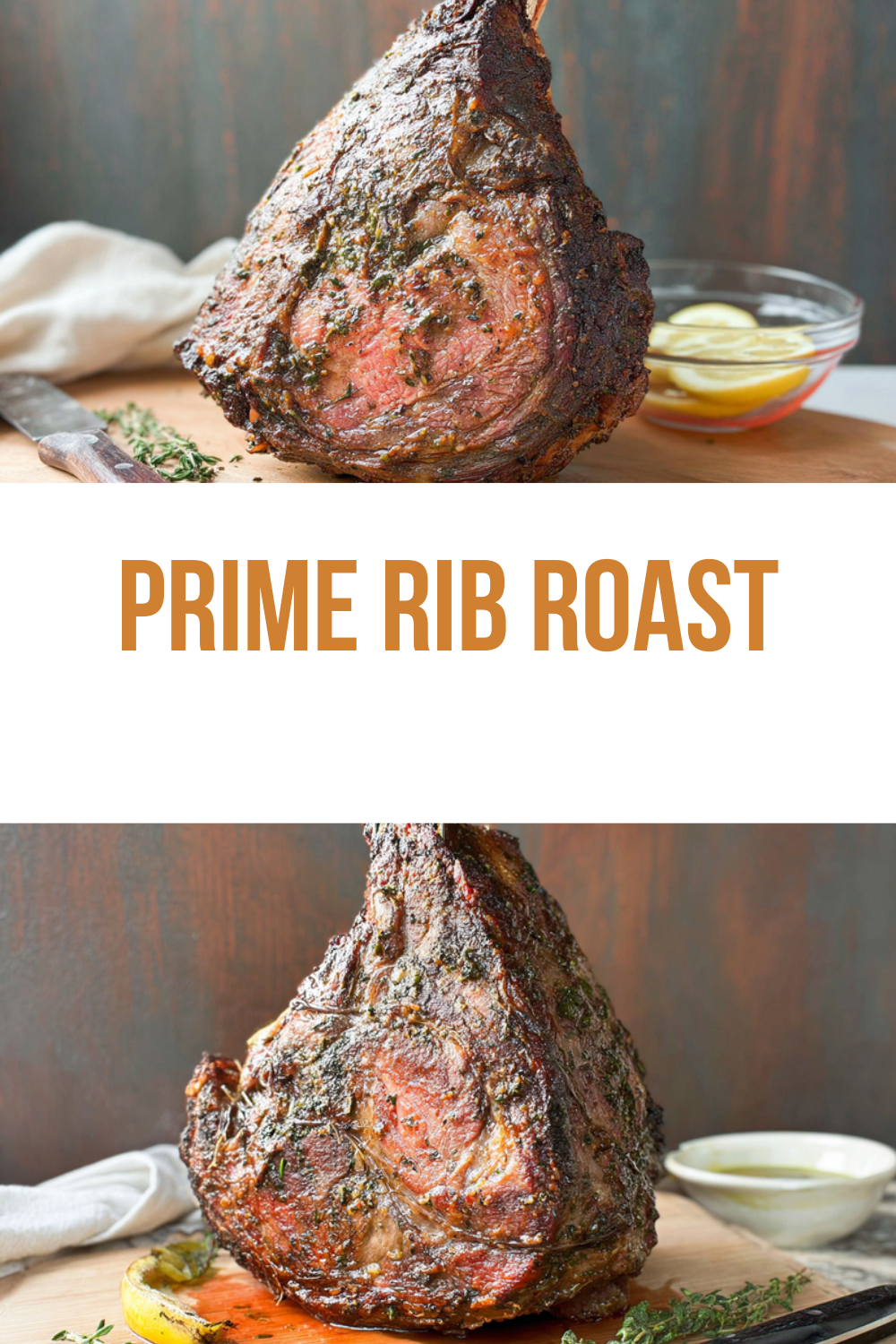
Remember these tips for the best results: Use a meat thermometer to avoid overcooking, rest the meat for 30 minutes to keep it tender, and always slice across the grain. Bone-in roasts offer better flavor, so consider that option if available.

Dietary Substitutions to Customize Your Prime Rib Roast
Making a prime rib roast work for your dietary needs is simple with a few smart swaps. For instance, if you’re looking for a leaner meal, swap the prime rib with beef tenderloin to cut down on fat. These changes help keep the dish enjoyable while fitting into your lifestyle, whether you’re vegan or watching your gluten intake.
- Substitute prime rib with beef tenderloin for a leaner option.
- For a vegan alternative, use a marinated seitan roast or large grilled portobello mushrooms.
- Swap traditional rosemary with thyme or sage for different herbal notes.
- Use gluten-free soy sauce in place of traditional sauces to accommodate gluten sensitivity.
- Add seasonal vegetables like roasted carrots or steamed asparagus as sides to suit preferences.
This flexibility makes the recipe a great choice for busy parents or students who need quick adjustments. By trying these variations, you can explore new flavors without straying from your goals.
Mastering Prime Rib Roast: Advanced Tips and Variations
Taking your prime rib roast to the next level involves some pro techniques that enhance both taste and presentation. One popular method is reverse searing, where you slow roast the meat first and then finish with a high-heat sear for a crispy exterior. This approach gives you more control over the final texture and doneness, perfect for food enthusiasts wanting consistent results.
- Try reverse searing by slow roasting first, then searing at high heat for a perfect crust.
- Experiment with coffee rubs or smoked paprika for a unique taste experience.
- Garnish with fresh herbs and serve on a wooden carving board to impress guests.
- Season the roast the night before and refrigerate to deepen flavor, ensuring convenient prep on serving day.
These variations can make your prime rib roast stand out, especially for gatherings with working professionals or newlyweds. With a little experimentation, you’ll create dishes that feel special and tailored to your taste.
How to Store Prime Rib Roast: Best Practices
Proper storage keeps your prime rib roast fresh and safe to eat later, helping reduce waste for busy families. After cooking, put leftovers in the fridge right away to maintain quality. Following these steps ensures your meal stays delicious for days or even months if frozen.
- Store leftovers in an airtight container within 2 hours of cooking, and consume within 3-4 days.
- Wrap tightly in foil and place in freezer-safe bags for up to 3 months.
- Warm in a low oven at 250°F covered with foil to keep moisture and avoid drying out.
- Slice and portion the roast before freezing for easy thawing and use in meals throughout the week.
This method works well for seniors or baking enthusiasts who plan meals in advance, making it easier to enjoy prime rib roast anytime.
FAQs: Frequently Asked Questions About Prime Rib Roast
How much prime rib should I buy per person for a dinner?
Should I choose bone-in or boneless prime rib for roasting?
What is the best temperature and cooking time for prime rib?
What internal temperature should prime rib reach before removing it from the oven?
Why is resting prime rib important after cooking, and how long should I let it rest?

Prime Rib Roast
🥩 Experience the ultimate show-stopping centerpiece with this perfectly seasoned prime rib that delivers restaurant-quality tenderness and incredible flavor right in your own kitchen
🍖 Master the art of roasting with this foolproof technique that guarantees juicy, perfectly cooked beef every time, making you the star of any special occasion or holiday gathering
- Total Time: 1 hour 55 minutes
- Yield: 6-8 servings
Ingredients
– 5 pounds beef prime rib (adjust spices if using a larger roast)
– 1 1/2 teaspoons salt
– 2 teaspoons black pepper
– 2 teaspoons fresh rosemary
– 1 teaspoon fresh thyme
– 8 cloves garlic, minced
– 1/4 cup olive oil
– Horseradish for serving (optional)
Instructions
1-Remove the prime rib from the refrigerator one hour before cooking to reach room temperature. Season all sides with salt and cover loosely with plastic wrap.
2-Preheat the oven to 500°F (260°C) with the rack adjusted to the center.
3-In a bowl, combine salt, black pepper, rosemary, thyme, garlic, and olive oil.
4-Pat the roast dry and rub the seasoning mixture evenly over all sides.
5-Place the bone-in roast with bones facing down in a roasting pan. For boneless roast, place it on a rack inside the roasting pan.
6-Roast at 500°F (260°C) for 15 minutes, then reduce oven temperature to 325°F (163°C). Continue roasting until the internal temperature is 5-10 degrees below the preferred doneness as measured by a meat thermometer: Rare at 115-120°F (46-49°C), Medium Rare at 125-130°F (52-54°C), Medium at 135-140°F (57-60°C), or Medium Well at 145-150°F (63-66°C).
7-Remove the roast from the oven, tent with foil, and let rest for 30 minutes to allow the temperature to rise further and juices to redistribute.
8-Carve by slicing across the grain into approximately ½-inch thick slices. Serve with horseradish if desired.
Last Step:
Please leave a rating and comment letting us know how you liked this recipe! This helps our business to thrive and continue providing free, high-quality recipes for you.Notes
🌡️ Use a meat thermometer to avoid overcooking as the roast continues to cook while resting – this is the secret to perfectly juicy prime rib
⏰ Let the meat rest for a full 30 minutes before carving – this crucial step allows juices to redistribute for maximum tenderness and flavor
🦴 Choose bone-in roasts for superior flavor and moisture – ask your butcher to tie the bones back on for even cooking and remove them before serving
- Prep Time: 10 minutes
- Resting Time: 30 minutes
- Cook Time: 1 hour 45 minutes
- Category: Main Dish
- Method: Roasting
- Cuisine: American
- Diet: Gluten-Free
Nutrition
- Serving Size: 4 ounces
- Calories: 729
- Sugar: 0.03g
- Sodium: 102mg
- Fat: 66g
- Saturated Fat: 26g
- Unsaturated Fat: 33g
- Trans Fat: 0g
- Carbohydrates: 1g
- Fiber: 0.2g
- Protein: 31g
- Cholesterol: 137mg
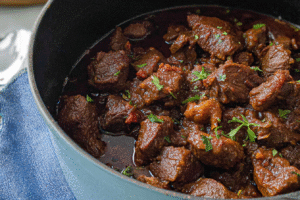
This prime rib roast recipe was absolutely perfect for our holiday dinner, the crust and juices were spot on 😊.
I seared it first in a cast iron and then finished at a lower temperature, which gave a great even medium-rare throughout.