

Spicy Korean Ground Beef With Kimchi Slaw
Spicy Korean Ground Beef With Kimchi Slaw pairs warm, saucy ground beef with a cool mixture of cabbage, kimchi, carrots, and cucumber. Gochujang, soy sauce, sesame oil, brown sugar, ginger, and garlic create a sweet, savory, spicy sauce, while rice vinegar gives both the beef and slaw a tangy finish.
The source recipe takes about 30 minutes and makes four bowls. It is a Korean-inspired weeknight dish rather than traditional bulgogi. Ground beef cooks quickly and does not require marinating, and the slaw is prepared first so its flavors can combine while the skillet is on the stove.

Jump to:
- Spicy Korean Ground Beef With Kimchi Slaw
- What Is This Korean-Inspired Beef Bowl?
- Spicy Korean Ground Beef Ingredients
- Understanding Gochujang
- Kimchi Slaw and Serving Ingredients
- For the Slaw
- For Serving
- Prepare Raw Vegetables Safely
- How to Make the Kimchi Slaw
- How to Make the Spicy Ground Beef
- Mix the Sauce
- Brown the Beef
- Simmer With the Sauce
- Assembling the Bowls
- Variations and Heat Adjustments
- Storage and Meal Prep
- Frequently Asked Questions
- How long does Spicy Korean Ground Beef with Kimchi Slaw take?
- How can I make the dish less spicy?
- Is this the same as bulgogi?
- Can I prepare it ahead?
- A Bowl Built on Contrast
- Spicy Korean Ground Beef with Kimchi Slaw
- Ingredients
- Instructions
- Last Step:
- Did you make this recipe?
What Is This Korean-Inspired Beef Bowl?
The hot component starts with one pound of ground beef, preferably 85/15 according to the source. It is browned in vegetable oil, coated with the prepared gochujang sauce, and simmered briefly until the sauce thickens and clings to the meat. Green onions finish the skillet.
The cold component combines finely shredded napa cabbage, chopped kimchi, julienned carrots, and thin cucumber slices. A dressing of rice vinegar, sesame oil, honey or maple syrup, salt, and sugar seasons the vegetables without cooking them. Keeping the slaw distinct preserves its fresh crunch against the hot beef and rice.
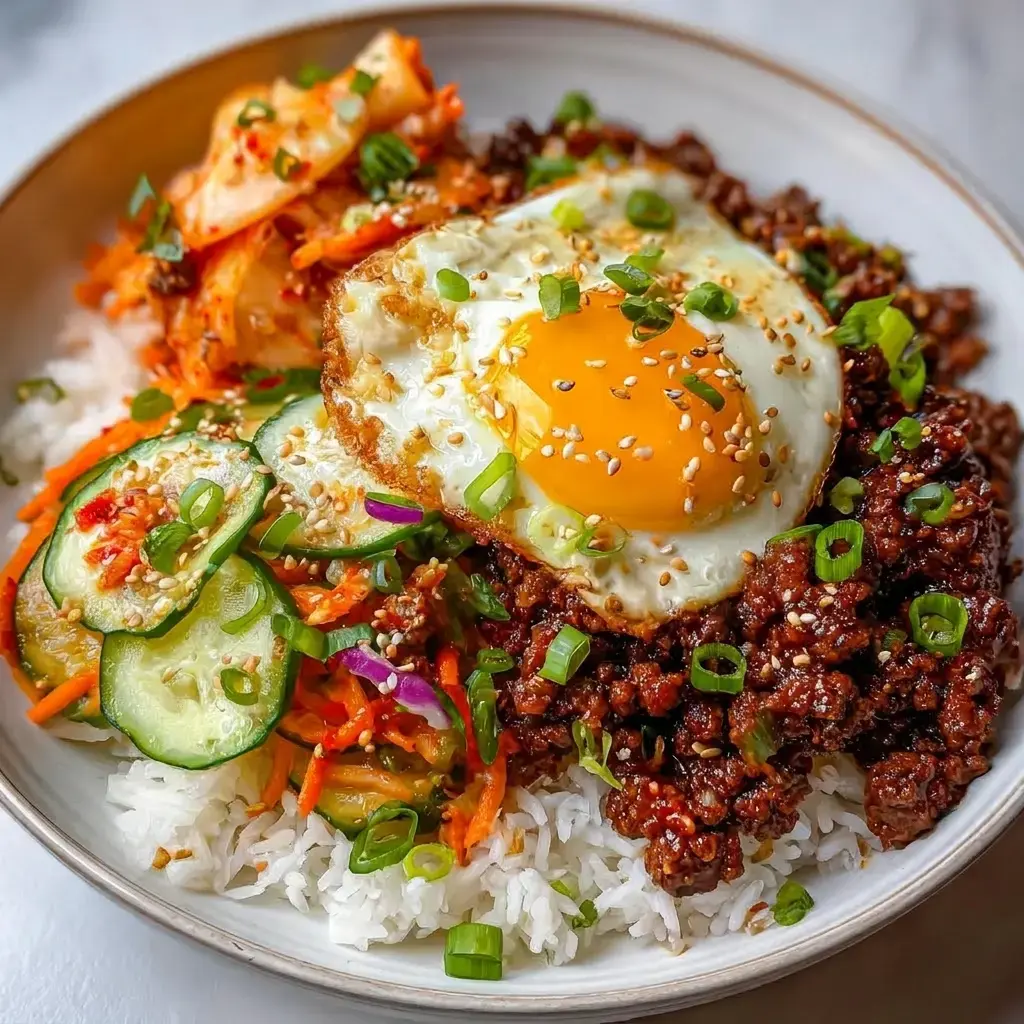
Bulgogi usually features thinly sliced marinated beef that is grilled or pan-seared. This recipe instead uses crumbled ground beef and a quick skillet sauce. The balance of soy, sesame, garlic, ginger, sweetness, and gochujang is inspired by Korean flavors, but the method and format are their own.
Spicy Korean Ground Beef Ingredients
- 1 pound ground beef, preferably 85/15 for flavor
- 3 tablespoons soy sauce
- 1 tablespoon sesame oil
- 1 tablespoon gochujang, Korean chili paste
- 1 tablespoon brown sugar
- 2 teaspoons rice vinegar
- 1 teaspoon grated ginger
- 3 cloves garlic, minced
- 1 teaspoon crushed red pepper flakes, optional for extra heat
- 1 tablespoon vegetable oil
- 2 green onions, thinly sliced, plus more for garnish
- Toasted sesame seeds for garnish
Understanding Gochujang
Gochujang is a fermented Korean chili paste that contributes heat, sweetness, saltiness, and depth. The measured recipe uses one tablespoon. Brands vary, so taste and check the label for allergens, especially wheat or soy, before adding the optional red pepper flakes.
For a milder bowl, omit the red pepper flakes first. The source also permits reducing the gochujang, but doing so changes more than heat because the paste supplies flavor and body. Keeping the full tablespoon and skipping the flakes stays closer to the canonical sauce.
Kimchi Slaw and Serving Ingredients
For the Slaw
- 1 cup napa cabbage, finely shredded
- 1/2 cup kimchi, chopped
- 1/2 cup carrots, julienned
- 1/4 cup cucumber, thinly sliced
- 2 tablespoons rice vinegar
- 1 tablespoon sesame oil
- 1 teaspoon honey or maple syrup
- A pinch of salt
- A pinch of sugar
For Serving
- Steamed white rice or jasmine rice
- A fried egg on top, optional
- Lime wedges
The source does not state a rice quantity, so none should be invented. Prepare enough using the instructions for the chosen rice and the needs of four diners. Jasmine rice and short-grain white rice are source-backed options, and brown rice is another documented serving variation.
Prepare Raw Vegetables Safely
The slaw is not cooked, making clean preparation especially important. Wash the cabbage, carrots, cucumber, green onions, and lime under running water where appropriate, then dry them with a clean towel. Do not wash produce with soap.
The FDA fresh produce safety guide recommends clean hands and utensils and keeping produce separate from raw meat. Use a different cutting board for the vegetables, or thoroughly clean and sanitize equipment before it touches the slaw.
How to Make the Kimchi Slaw
Place one cup shredded napa cabbage, one-half cup chopped kimchi, one-half cup julienned carrots, and one-quarter cup sliced cucumber in a medium mixing bowl. Separate any cabbage clumps so the dressing can reach the vegetables evenly.
In a small bowl, whisk two tablespoons rice vinegar, one tablespoon sesame oil, one teaspoon honey or maple syrup, a pinch of salt, and a pinch of sugar. Continue until the sweetener is dispersed rather than sitting at the bottom.
Pour the dressing over the vegetables and toss well. Set the slaw aside briefly so the flavors can combine, or cover and refrigerate it until assembly. Keep it away from the raw ground beef and the utensils used to handle the meat.
Do not stir the slaw into the hot skillet. Its purpose is to provide a cool, crisp contrast. Add it to each bowl at the end so the cabbage and cucumber do not wilt before serving.
How to Make the Spicy Ground Beef
Mix the Sauce
Whisk together three tablespoons soy sauce, one tablespoon sesame oil, one tablespoon gochujang, one tablespoon brown sugar, two teaspoons rice vinegar, one teaspoon grated ginger, and three minced garlic cloves. Add the optional teaspoon of red pepper flakes only when extra heat is wanted.
Mixing the sauce before the skillet heats prevents the garlic, sugar, or gochujang from being added separately and scorching. Scrape the bottom of the bowl so the brown sugar dissolves and the thick chili paste is fully incorporated.
Brown the Beef
Heat one tablespoon vegetable oil in a large skillet or wok over medium-high heat. Add one pound ground beef and break it into small pieces with a wooden spoon or spatula. Cook for four to five minutes, stirring and turning the meat as it browns.
The source uses “no longer pink” as a visual cue, but color alone is not a safety test. Check several areas with a food thermometer. The USDA safe internal temperature chart lists 160°F for ground meats such as beef.
Simmer With the Sauce
Pour the prepared sauce over the cooked beef and stir until every piece is coated. Simmer for another two to three minutes. The mixture is ready when the sauce thickens slightly and clings to the meat rather than pooling thinly around it.
Stir in the two sliced green onions, reserving additional slices for garnish if desired. Remove the skillet from the heat. Taste cautiously before adding any extra salt because soy sauce, gochujang, and kimchi all contribute seasoning to the finished bowl.
Assembling the Bowls
Spoon hot white or jasmine rice into four individual bowls. Add a portion of the spicy ground beef, then place the kimchi slaw beside it or over one section. Keeping the components partly separate lets each diner control how much cool slaw mixes with the hot sauce.
Finish with toasted sesame seeds and extra sliced green onions. Add a lime wedge for fresh acidity. A fried egg is optional; cook it to the doneness appropriate for the diner and handle it safely.
The bowl can also be served with steamed or stir-fried bok choy. The source suggests pickled radish, cucumber banchan, miso soup, or egg drop soup as other accompaniments. Choose one simple side rather than crowding the bowl with additional wet toppings.
Variations and Heat Adjustments
Ground turkey can replace ground beef according to the source, but it needs its own safe cooking target and may taste less rich. Finely chopped sirloin is another variation that moves the texture closer to sliced beef, though it still does not turn this quick recipe into traditional bulgogi.
For lettuce wraps, serve the cooked beef and slaw in sturdy leaves instead of over rice. Soft tortillas create Korean-inspired beef tacos. The meat may also be tossed with soba or rice noodles, using the separate noodle package directions rather than guessing a cooking time.
To reduce heat, leave out the optional pepper flakes. If the full tablespoon of gochujang remains too hot for your preference, reduce it slightly as the source suggests. Expect a softer chili flavor and a less intense sauce, then avoid compensating with unmeasured sugar or salt.
Storage and Meal Prep
Store the cooked beef and slaw in separate covered containers. The source says the beef keeps in the refrigerator for up to three days, while the slaw is best fresh but can be held for one to two days. Keeping them apart protects the slaw’s texture and allows safe reheating.
Reheat only the beef, either in a skillet or microwave, until the center reaches 165°F. Prepare fresh rice or reheat properly stored rice separately. Add cold slaw only after the hot components are ready, and discard food that has been held under unsafe conditions.
For meal prep, portion beef and rice together only if both will be cooled and refrigerated promptly. Pack slaw and garnishes in a second container. This arrangement prevents the dressing from soaking into the rice and avoids heating raw cucumber and cabbage.
Frequently Asked Questions
How long does Spicy Korean Ground Beef with Kimchi Slaw take?
How can I make the dish less spicy?
Is this the same as bulgogi?
Can I prepare it ahead?
A Bowl Built on Contrast
This recipe works because each component keeps a distinct role. The beef is warm, sweet, savory, and spicy; the slaw is cool, tangy, and crisp; the rice softens the sauce; and lime and sesame provide the finishing accents.
Prepare the slaw first, mix the sauce before cooking, verify the ground beef at 160°F, and assemble only when everything is ready. Keeping leftovers separate preserves both texture and food safety for the next bowl.
Print
Spicy Korean Ground Beef with Kimchi Slaw
Spicy Korean Ground Beef With Kimchi Slaw Spicy Korean Ground Beef With Kimchi Slaw pairs warm, saucy ground beef with a cool mixture of cabbage, kimchi, carrots, and cucumber. Gochujang, soy sauce, sesame oil, brown sugar, ginger, and garlic create a sweet, savory, spicy sauce, while rice vinegar gives both the beef and slaw a tangy finish.
- Total Time: 30 min
- Yield: 4 1x
Ingredients
For the Spicy Korean Ground Beef
1 lb ground beef, preferably 85/15 for flavor
3 tablespoons soy sauce
1 tablespoon sesame oil
1 tablespoon gochujang, Korean chili paste
1 tablespoon brown sugar
2 teaspoons rice vinegar
1 teaspoon ginger, grated
3 cloves garlic, minced
1 teaspoon crushed red pepper flakes
1 tablespoon vegetable oil
2 green onions, thinly sliced (plus more for garnish)
toasted sesame seeds, for garnish
For the Kimchi Slaw
1 cup napa cabbage, finely shredded
1/2 cup kimchi, chopped
1/2 cup carrots, julienned
1/4 cup cucumber, thinly sliced
2 tablespoons rice vinegar
1 tablespoon sesame oil
1 teaspoon honey or maple syrup
Pinch salt
Pinch sugar
For Serving
steamed white rice or jasmine rice
fried egg, on top
lime wedges, for added zing
Instructions
Prepare the Kimchi Slaw
1-Start by making the slaw so it: Start by making the slaw so it has time to absorb all the flavors. In a medium mixing bowl, combine shredded napa cabbage, chopped kimchi, carrots, and cucumber. In a small bowl, whisk together rice vinegar, sesame oil, honey, salt, and sugar. Pour the dressing over the slaw and toss well. Set aside at room temperature or refrigerate until ready to serve.
Make the Spicy Sauce
2-In a small bowl, whisk together soy: In a small bowl, whisk together soy sauce, sesame oil, gochujang, brown sugar, rice vinegar, ginger, and garlic. This punchy sauce is the heart of the dish-it’s spicy, savory, and just a touch sweet.
Cook the Ground Beef
3-Heat vegetable oil in a large skillet: Heat vegetable oil in a large skillet or wok over medium-high heat. Add the ground beef and break it apart with a wooden spoon. Cook for about 4-5 minutes, until the beef is browned and no longer pink.
4-Pour the sauce over the beef and: Pour the sauce over the beef and stir to coat evenly. Let it simmer for another 2-3 minutes until the sauce thickens slightly and clings to the meat. Stir in sliced green onions, then remove from heat.
Assemble the Bowl
5-Spoon hot rice into individual bowls: Spoon hot rice into individual bowls. Top with a generous portion of spicy Korean ground beef. Add a heap of kimchi slaw on the side or on top, depending on how you like your textures mixed. Sprinkle with toasted sesame seeds and extra green onions. Add a fried egg on top if you’re feeling indulgent.
Last Step:
Please leave a rating and comment letting us know how you liked this recipe! This helps our business to thrive and continue providing free, high-quality recipes for you.- Prep Time: 20 min
- Cook Time: 10 min
- Method: no_cook