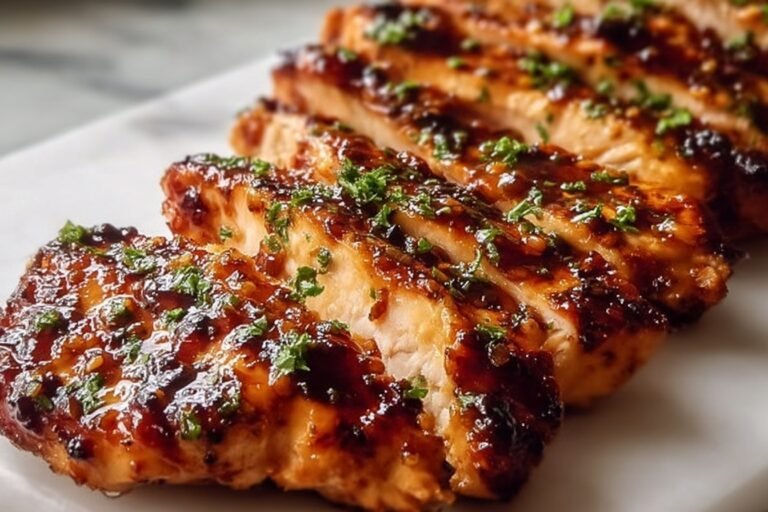
Ingredients
– 1/2 cup extra virgin olive oil
– 1/2 cup balsamic vinegar or other vinegar
– 1/4 cup low-sodium soy sauce
– 1/4 cup Worcestershire sauce
– 1/8 cup lemon juice
– 3/4 cup brown sugar
– 2 teaspoons dried rosemary
– 2 tablespoons Dijon mustard or spicy brown mustard
– 1 1/2 teaspoons salt
– 1 teaspoon ground black pepper
– 2 teaspoons garlic powder
– 6 chicken breasts or 3.5 pounds of chicken
Instructions
1-First Step: Mix the marinade Start by adding the olive oil, balsamic vinegar, soy sauce, Worcestershire sauce, lemon juice, brown sugar, dried rosemary, Dijon mustard, salt, black pepper, and garlic powder to a medium bowl or large measuring cup. Whisk until the sugar starts to dissolve and the mixture looks smooth. If you like a stronger herb flavor, let the bowl sit for 5 minutes before adding the chicken so the rosemary can soften a bit. This is the point where the marinade recipe really comes together. The oil helps the seasonings coat the chicken, while the vinegar and lemon juice brighten the flavor. If you are cooking for a family with different tastes, keep the base the same and plan to serve the chicken with mild side dishes or sauce options later.
2-Second Step: Prep the chicken Place the 6 chicken breasts, or about 3.5 pounds of chicken, into a large resealable bag, shallow dish, or glass container. If the pieces are thick, lightly pound them to even thickness so they cook more evenly. This is especially helpful for chicken breasts, which can dry out if one side is much thicker than the other. For bone-in pieces, trim any excess skin or fat if needed, but keep enough on for flavor if that is your style. For tenders, wings, or thighs, the same chicken marinade recipe works well, but the cooking time will change later. If you are using a bag, lay it flat so the marinade covers the chicken more evenly and saves space in the fridge.
3-Third Step: Coat the chicken well Pour the marinade over the chicken and turn the pieces until every surface is covered. Press out as much air as you can if using a bag, then seal it tightly. If using a dish, cover it well so the chicken stays protected while it marinates in the refrigerator. Flip the bag or stir the chicken once or twice during marinating if you have time. That little extra step helps the flavor reach every part of the meat. For the best chicken marinade recipe results, let the chicken marinate for at least 30 minutes. If you have more time, 4 to 12 hours in the fridge gives deeper flavor and better tenderness.
4-Fourth Step: Marinate safely Always marinate chicken in the refrigerator, not on the counter, unless you are only letting it sit briefly before cooking. A sealed container helps prevent spills and keeps the chicken at a safe temperature. If you are meal prepping, you can even portion the chicken into smaller bags so each one is ready for a different meal later in the week. Do not let chicken sit in the marinade too long. The acids in the vinegar and lemon juice can break down the meat too much if you leave it for more than 24 hours. That can lead to a mushy texture instead of juicy, tender chicken. If you need a more detailed food-safety reference, the health benefits of chicken on WebMD is a useful read for home cooks who want both flavor and nutrition.
5-Fifth Step: Choose your cooking method Once the chicken is ready, take it out of the marinade and let the excess drip off. You can grill it over medium-high heat, bake it in the oven, or cook it in a skillet on the stove. For grilled chicken, aim for 375 to 450°F and cook 6 to 8 minutes per side depending on thickness. For baking, set the oven to 425°F and cook for about 20 to 25 minutes. For pan-searing, heat a little oil in a skillet over medium heat and cook for about 5 to 7 minutes per side. Whichever method you choose, use a meat thermometer and cook until the internal temperature reaches 165°F. That is the safest way to know your chicken is done without overcooking it. Let the chicken rest for 5 minutes before slicing so the juices stay inside the meat. If you are making dinner for a crowd, this step helps every serving stay moist and tender.
6-Final Step: Serve and enjoy Slice the chicken and serve it with rice, roasted vegetables, salad, potatoes, or tucked into wraps and sandwiches. The flavor is bold enough to stand alone, but it also works well with simple sides. If you want a complete meal plan, this marinade recipe can anchor a quick weeknight dinner, Sunday meal prep, or a weekend cookout. Leftover chicken can also be sliced cold for salads, grain bowls, pasta, or lunch wraps. That makes this the best chicken marinade recipe for anyone who wants a dish that stretches across more than one meal. A good chicken marinade should save time, cut stress, and make dinner feel easy again.
Last Step:
Please leave a rating and comment letting us know how you liked this recipe! This helps our business to thrive and continue providing free, high-quality recipes for you.Notes
🧂 Pat chicken dry before marinating for better absorption.
⏱️ Marinate 4-6 hours max for breasts to avoid mushiness from acid.
🔥 Grill over medium-high; baste with boiled marinade last 2 minutes.
- Prep Time: 10 minutes
- Marinate: 4-8 hours
- Cook Time: Varies (15-20 min grill)
- Category: Condiment
- Method: Marinating
- Cuisine: American
Nutrition
- Serving Size: about ¼ cup marinade per breast
- Calories: 120 kcal (marinade per 2 tbsp)
- Sugar: 10g
- Sodium: 450mg
- Fat: 8g
- Saturated Fat: 1g
- Unsaturated Fat: 7g
- Trans Fat: 0g
- Carbohydrates: 12g
- Fiber: 0g
- Protein: 0g
- Cholesterol: 0mg