
The Ultimate Cheese Scones
If you want a savory bake that feels special but comes together fast, these cheese scones are for you. They bake up light, fluffy and flaky, with a rich cheddar flavor in every tender bite. The recipe suits every skill level, from your very first scone to confident home baking, and the whole batch is ready in under 35 minutes.
Serve them warm with butter for breakfast or afternoon tea and watch them disappear. They are also wonderful alongside soup. Pair them with carrot and coriander soup or a creamy seafood chowder, or use them as a golden topping for beef cobbler for a hearty one pan style dinner. This recipe is adapted from the ultimate cheese scones recipe.

Below you will find everything you need for success: the ingredients and why each one matters, easy swaps, clear numbered steps, storage guidance and answers to common scone troubles. Follow the gentle mixing cues and keep your ingredients cold, and you will pull a tray of tall, golden scones from the oven every time.
Jump to:
- The Ultimate Cheese Scones
- ️ Why These Cheese Scones Work
- Key Ingredients
- Substitutions & Variations
- 🏻 Cheese Scones In 4 Steps
- Top Tip For Fluffy Scones
- Storage
- Top Tips
- Troubleshooting
- What To Serve With Cheese Scones
- FAQs
- What cheese is best for ultimate cheese scones?
- How do you make cheese scones rise tall and fluffy?
- Can I use all-purpose flour instead of self-rising flour for cheese scones?
- Can I freeze cheese scones before baking?
- The Ultimate Cheese Scones
- Ingredients
- Instructions
- Last Step:
- Nutrition
- Did you make this recipe?
️ Why These Cheese Scones Work
Here is why this recipe earns a regular spot in the baking rotation.
- Family friendly: a great baking project for kids who love to stir, cut and sprinkle cheese.
- Versatile: just as welcome at breakfast, afternoon tea, dinner or snack time.
- Quick and easy: ready in under 35 minutes, so it fits a busy day.
- Texture: light and fluffy, nothing like dense store bought scones.
- Flavor: rich cheddar in every bite, with optional herbs for a savory twist.
Simple ingredients, one bowl for the dry mix and a short bake. That is the whole secret.
Key Ingredients
Each ingredient has a job to do. Here is what goes into the dough and why it matters.
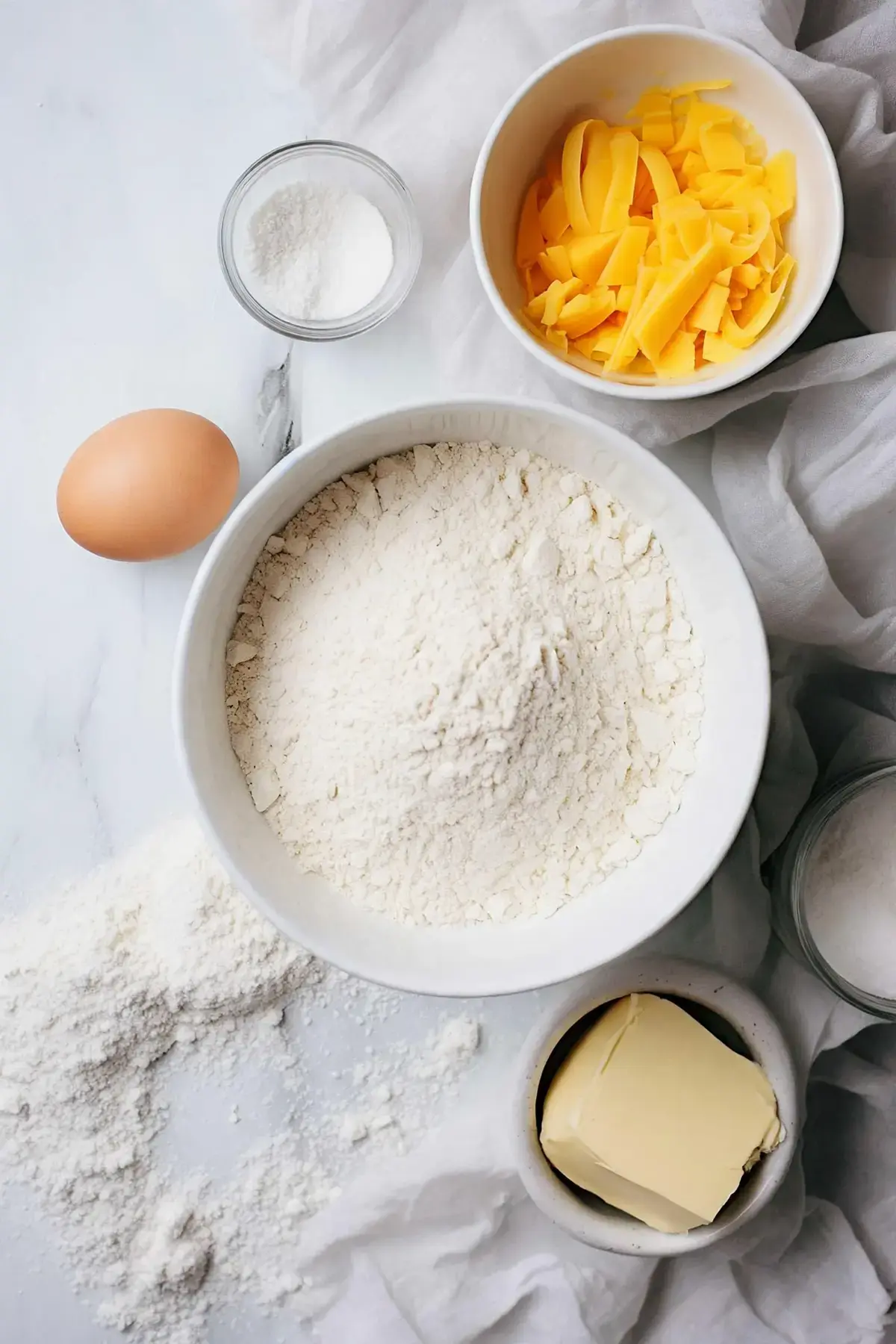
- 250 g self raising flour: the structure and base of every scone.
- 75 g cold butter, cubed: cold butter worked into the flour creates those flaky layers.
- 150 g cheddar cheese, grated: the star of the show, adding rich savory flavor. Use mild or strong cheddar, whichever you prefer.
- 125 ml milk: moistens the dough and gives it a tender, pastry like quality.
- 1 large egg: binds the mixture and helps the scones hold their shape.
- 1 tsp baking powder: helps the scones rise tall and turn out fluffy.
- 1/2 tsp mustard powder, optional: adds a gentle warmth and depth. Leave it out for a milder scone.
- 1/4 tsp salt: seasoning that sharpens the cheesy flavor.
- Pinch of cayenne pepper, optional: a little background spice for grown up palates.
Cold is the theme here. Cold butter, and ideally cold milk too, keeps the fat in small pieces that melt in the oven and leave flaky pockets behind. Grate the cheese before you start so it is ready to stir in the moment the crumbs look right. Gather everything first and the mixing goes quickly.
Substitutions & Variations
Once you master the basic dough, small swaps keep it interesting.
- Cheese: try Red Leicester, Parmesan or smoked cheddar in place of the cheddar.
- Herbs: stir in fresh chopped rosemary, chives or green onions for a savory twist.
- Seasoning: omit the mustard powder for a milder flavor that kids may prefer.
Keep the flour, butter, milk and egg the same so the texture stays light and fluffy.
🏻 Cheese Scones In 4 Steps
Here is the method in four simple stages. Work gently at each stage and your scones will reward you with a tall, even rise.
- Heat the oven and prep the tray. Preheat the oven to 220°C (425°F) with the rack in the middle position. Line a baking sheet with parchment paper or a silicone baking mat.
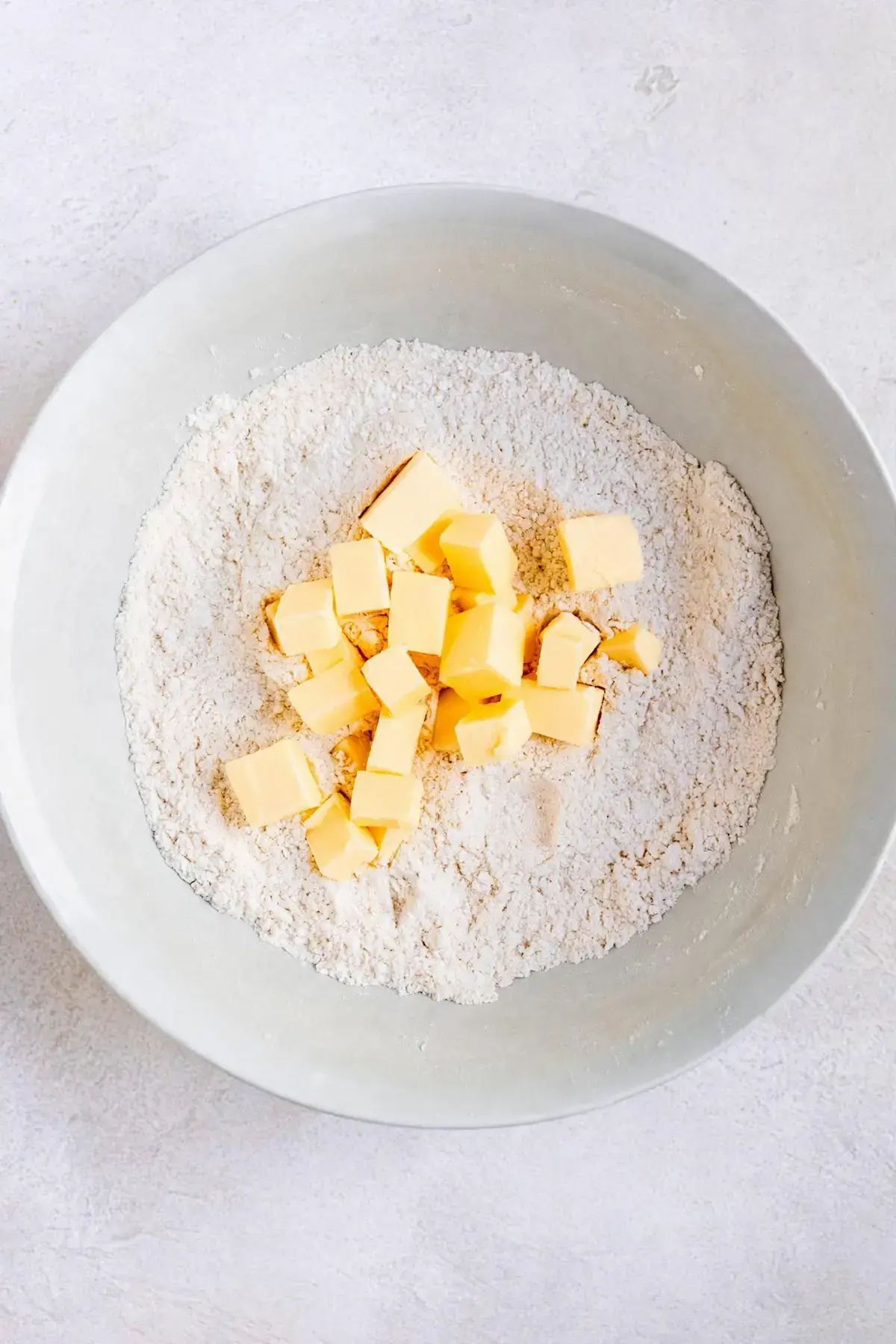
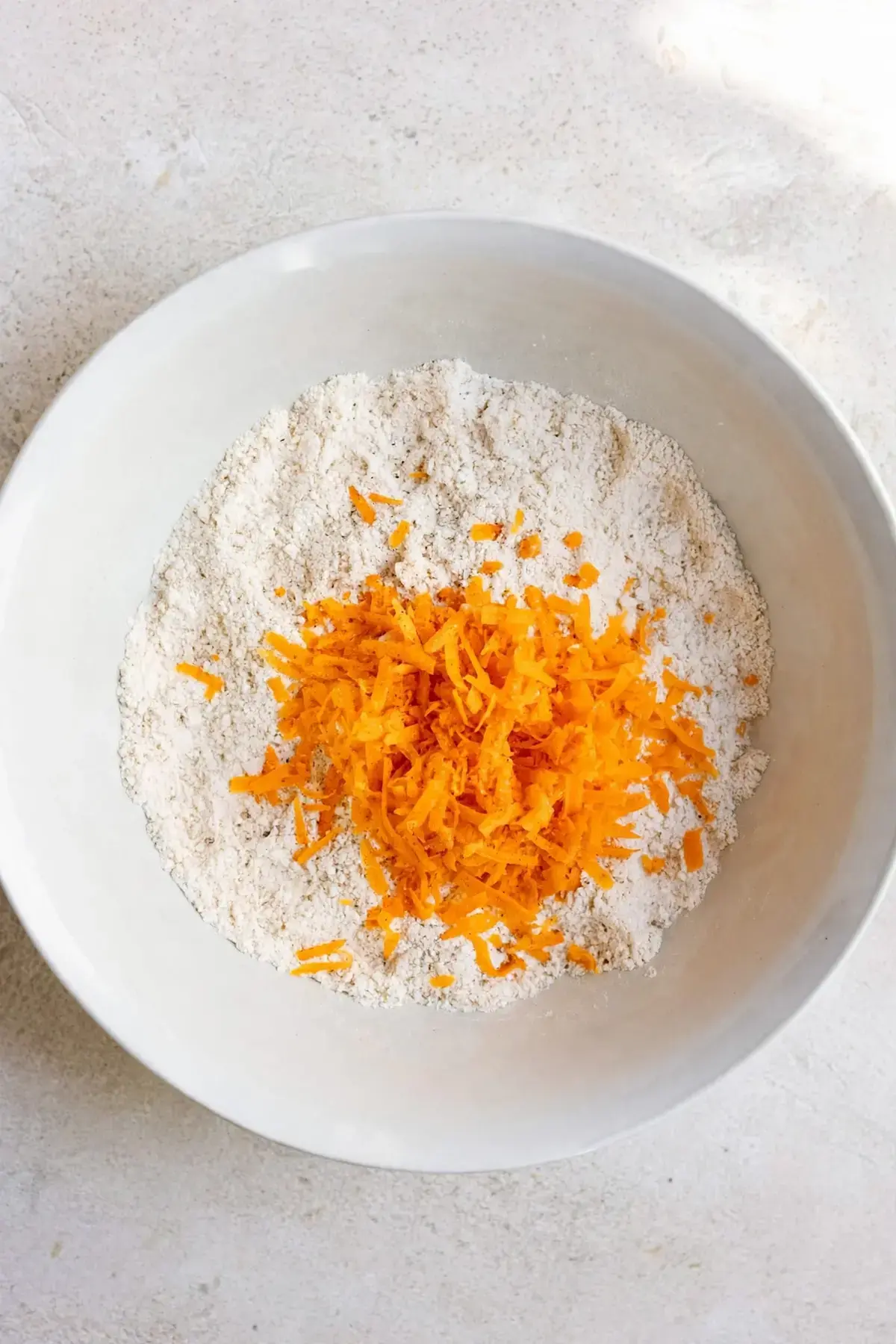
- Mix the dry ingredients and cut in the butter. Sift the self raising flour, baking powder, salt and cayenne into a large bowl. If you are using mustard powder, sift it in too. Add the cold cubed butter and work it in with a pastry blender, a fork or your fingertips until the mixture looks like coarse crumbs, similar to breadcrumbs. Stir in the grated cheddar.
- Add the wet ingredients. Whisk the milk and egg together in a separate bowl. Make a well in the center of the dry mixture, pour in the wet mixture and stir gently only until just combined. The dough will look sticky, and that is fine.
- Shape, top and bake. Turn the dough onto a lightly floured surface and knead gently 4 to 5 times to bring it together. Pat or roll it into a round disc about 2 cm thick. Cut out rounds with a cookie cutter, or cut the disc into 8 wedges. Place the scones on the prepared sheet, brush the tops with a little milk and sprinkle over extra grated cheese. Bake for 15 to 20 minutes, until deep golden on top, then cool slightly on a wire rack.
The most important rule: do not overmix. Stir only until the dough just comes together. Overworking develops gluten and turns tender scones tough.
A few visual cues help along the way. The buttered flour should look like coarse breadcrumbs before the cheese goes in, and the finished dough should feel soft and slightly sticky rather than smooth.
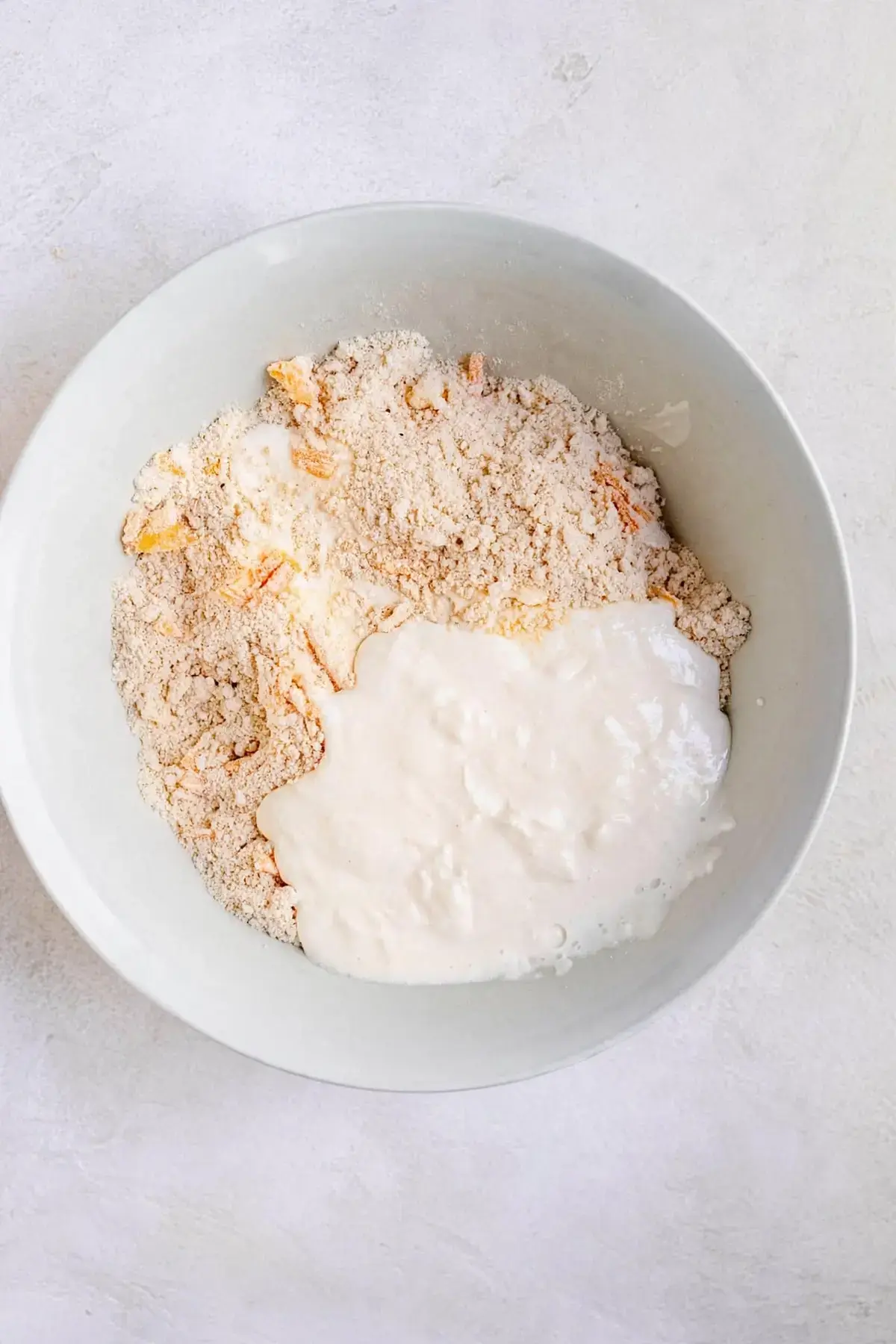
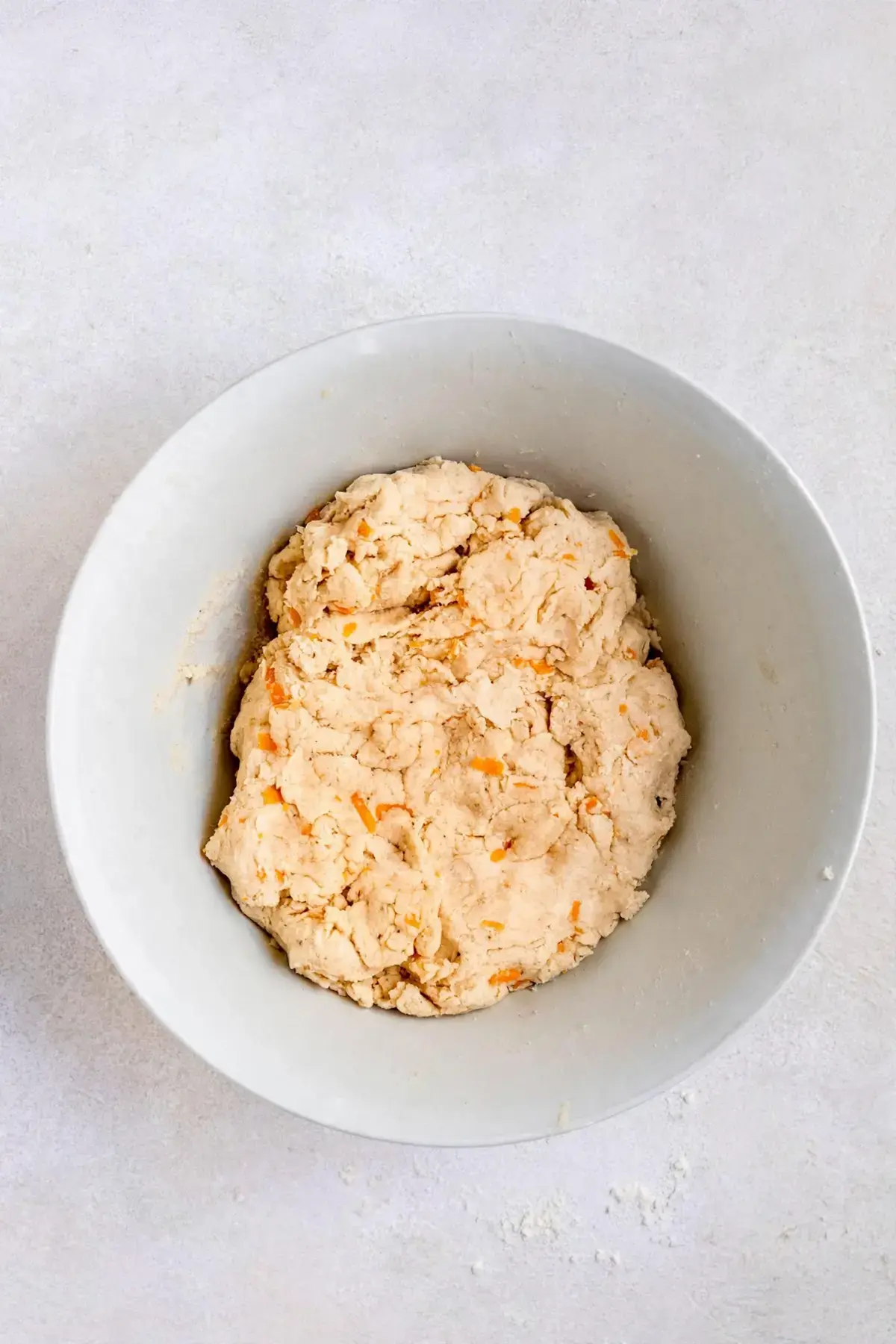
When you pat out the disc, aim for an even 2 cm thickness so every scone bakes at the same rate. If you use a cutter, press straight down without twisting so the edges stay clean and the scones rise evenly.
Serve warm with butter for the full experience.
Top Tip For Fluffy Scones
Scone recipes give an estimated baking time, but every oven behaves a little differently. Start checking for doneness a few minutes before the earliest recommended time. Look for tall, evenly risen scones with deep golden tops, then pull them out promptly so they stay moist inside.
Storage
These scones are at their best fresh and warm, but they keep well too.
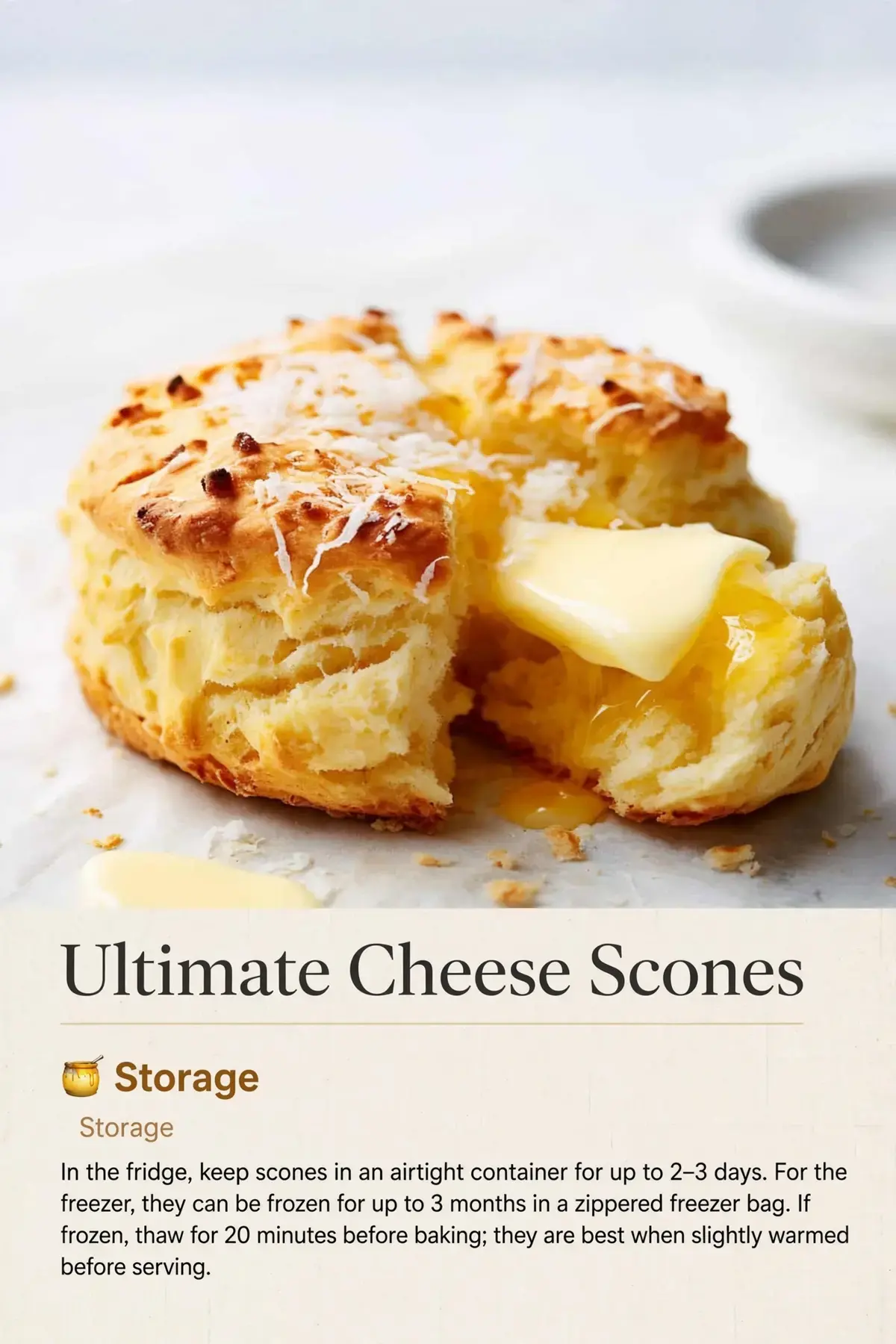
- Fridge: store in an airtight container for up to 2 to 3 days.
- Freezer: freeze in a zippered freezer bag for up to 3 months.
- Thawing: if frozen, thaw for about 20 minutes before baking or warming.
- Reheating: warm in an oven set to 180°C (350°F) for about 10 minutes, and serve slightly warm.
A short warm up in the oven brings back that just baked softness.
Top Tips
Two small habits make a big difference. Use cold butter and cold milk for the best flaky texture, and handle the dough as little as possible. Minimal handling keeps the gluten relaxed, which is what keeps your scones light instead of hard.
Troubleshooting
Even simple recipes can surprise you. Here are the most common cheese scone problems and how to fix them, so your next batch comes out just right.
| Problem | Likely cause | Fix |
|---|---|---|
| Dense, heavy scones | Overworking the dough, which develops gluten | Mix only until the ingredients are just combined |
| Uneven, lopsided rise | Old baking powder, a dull cutter or an oven that was not fully hot | Use fresh baking powder, cut with a sharp straight edged cutter and preheat the oven fully |
| Bland flavor | Mild cheese or under seasoning | Use sharp or mature cheddar, and add mustard powder or a sprinkle of cayenne |
| Dry, crumbly texture | Inaccurate measuring or overbaking | Measure carefully, avoid overbaking and brush the tops with a little milk |
| Soggy bases | Dough that is too wet, or too much cheese releasing moisture as it melts | Measure carefully, add a little more flour if the dough looks too wet and bake in a fully preheated oven |
Most scone trouble traces back to two things: mixing too much and baking by the clock instead of by look. Stir gently, keep everything cold and start checking a few minutes early. If your first batch leans dense, mix even less next time.
If the tops brown before the centers set, your oven may run hot, so check early and trust the golden color and tall rise as your guide.
Flavor fixes are easy too. A sharper cheddar gives a bolder scone without changing anything else, and a pinch of cayenne or a little mustard powder lifts the whole batch.
For soggy bottoms, remember that extra cheese adds moisture, so measure the cheese just as carefully as the flour and give the oven time to reach full heat before the tray goes in.
What To Serve With Cheese Scones
These scones shine as an accompaniment to any meal, and they are just as good on their own with butter. For a cozy lunch or light dinner, serve them warm beside soup. Carrot and coriander soup and creamy seafood chowder are both lovely partners for the rich cheddar flavor.
For heartier fare, use the scones as a topping for beef cobbler. Bake them on top until golden and you get a complete comfort dish in one pan style bake. At breakfast or afternoon tea, split them while warm and add butter, and they need nothing else.
For afternoon tea, arrange the scones on a warm plate with butter and let everyone split their own. They sit happily next to a simple green salad or a bowl of soup for lunch, and leftovers make a fine next day snack after a quick warm in the oven.
If you enjoy quick bakes like this one, try my Quick and Easy Homemade Scones on another day, or keep a second cheesy batch in mind with this Cheese Scones Recipe. However you serve them, bake them warm and watch them vanish.
See the additional source.
FAQs
What cheese is best for ultimate cheese scones?
How do you make cheese scones rise tall and fluffy?
Can I use all-purpose flour instead of self-rising flour for cheese scones?
Can I freeze cheese scones before baking?

The Ultimate Cheese Scones
The Ultimate Cheese Scones If you want a savory bake that feels special but comes together fast, these cheese scones are for you. They bake up light, fluffy and flaky, with a rich cheddar flavor in every tender bite.
- Total Time: 35 min
- Yield: 8 Scones 1x
Ingredients
Ingredients
250 g Self-Raising Flour
75 g Cold Butter, cubed
150 g Cheddar Cheese, grated
125 ml Milk
1 Large Egg
½ tsp Mustard Powder
1 tsp Baking Powder
¼ tsp Salt
Pinch Cayenne Pepper
Instructions
Preparation
1-Preheat your oven to 220°C (425°F): Preheat your oven to 220°C (425°F). Position your oven rack in the middle for even baking.
2-Line a baking sheet with parchment paper: Line a baking sheet with parchment paper or a silicone baking mat.
Make the Scone Dough
3-In a large mixing bowl, sift together: In a large mixing bowl, sift together 250g self-raising flour, 1 tsp baking powder, 1/4 tsp salt, and a pinch of cayenne pepper. If using mustard powder, sift it into the mixture for an extra hint of warmth and depth.
4-Add 75g of cold, cubed butter to: Add 75g of cold, cubed butter to the dry ingredients. Use a pastry blender, a fork, or your fingertips to work the butter into the flour mixture until it resembles coarse crumbs. Stir 150g of grated cheddar cheese into the crumbly flour mixture.
5-In a separate bowl, whisk together 125ml: In a separate bowl, whisk together 125ml of milk and 1 large egg. Make a well in the centre of the dry ingredients and pour in the wet mixture.
Mix and Shape the Dough
6-Mix until just combined to form a: Mix until just combined to form a sticky dough. Be careful not to overmix, as this will make the scones tough.
7-Turn the dough onto a lightly floured: Turn the dough onto a lightly floured surface and knead gently a few times.
8-Shape the dough into a round disc: Shape the dough into a round disc about 2 cm thick. Use a round cookie cutter to cut out 8 scones, or simply cut the disc into 8 wedges.
Bake
9-Place the cut scones on the prepared: Place the cut scones on the prepared baking sheet.
10-Optional: Optional: Brush the tops with a little milk for a shiny finish.
11-Bake for 15-20 minutes, or until the: Bake for 15-20 minutes, or until the scones are golden brown on top. Remove from the oven and transfer to a wire rack to cool slightly.
Last Step:
Please leave a rating and comment letting us know how you liked this recipe! This helps our business to thrive and continue providing free, high-quality recipes for you.- Prep Time: 20 min
- Cook Time: 15 min
- Method: bake
Nutrition
- Calories: 275kcal
- Sugar: 1g
- Sodium: 353mg
- Fat: 16g
- Saturated Fat: 6g
- Carbohydrates: 24g
- Fiber: 1g
- Protein: 9g
- Cholesterol: 41mg