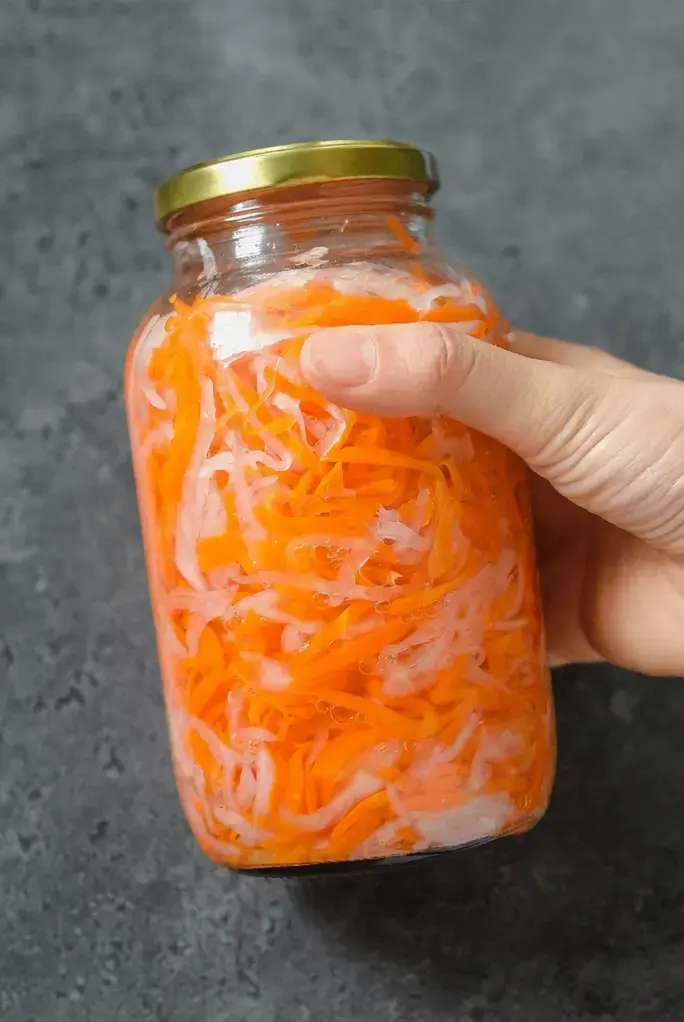
Vietnamese pickled daikon radish and carrots, known as đồ chua, are a tangy, slightly sweet and crunchy staple you can prepare in under an hour, then let time do the rest of the work. They pair beautifully with bun cha bowls, bánh mì, and countless other Vietnamese dishes where a bright hit of acidity is welcome.
These pickles come together in about 45 minutes total, with 15 minutes of prep and a 30 minute soak, and they yield one large jar that keeps the crunch for days.
I personally enjoy a 50 50 ratio of carrots and radish for these pickled vegetables but in Vietnam, there are usually way more radish than carrots.
The ratio here is flexible, so adjust it to your taste or to whatever ingredients you have on hand.
I like an even split of carrots and radish for color and flavor balance, though in Vietnam the pickles usually lean heavily toward radish. Feel free to shift the balance either way.
PREPARING THE VEGETABLES
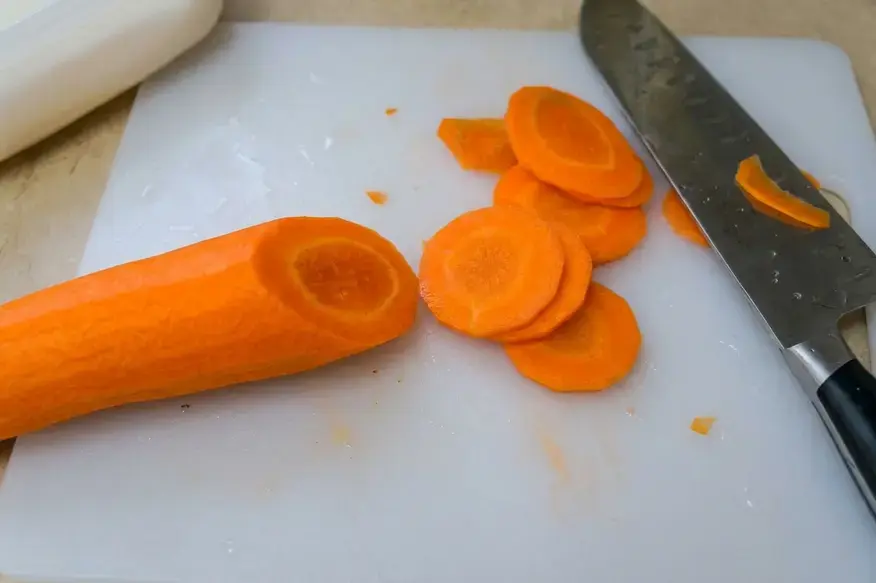
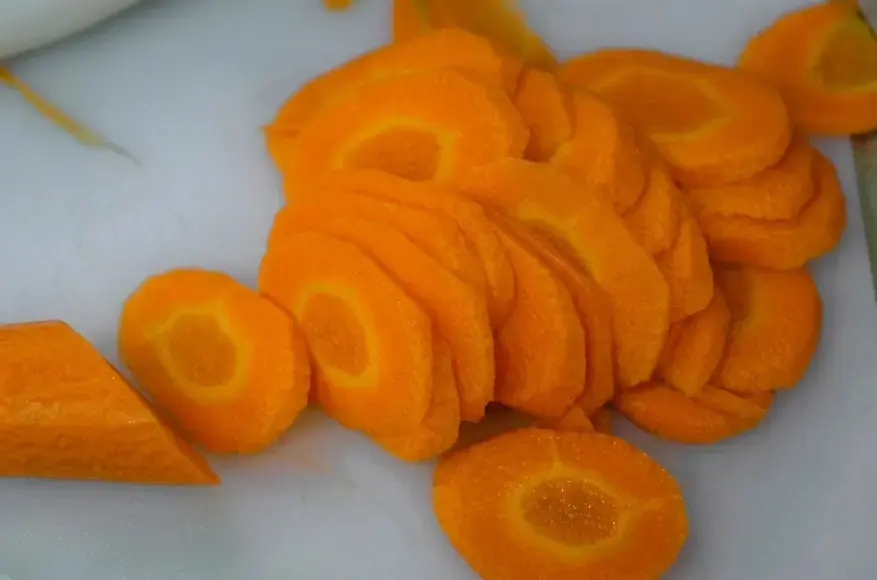
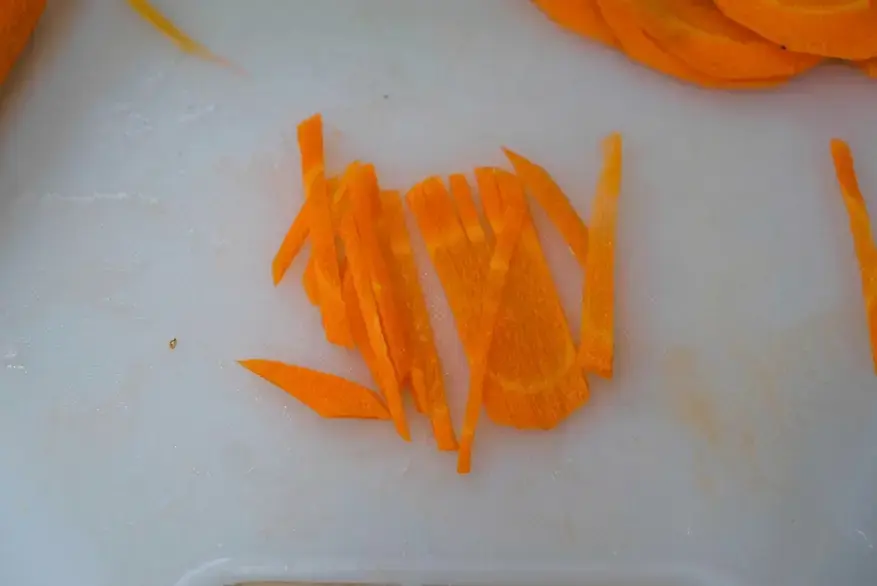
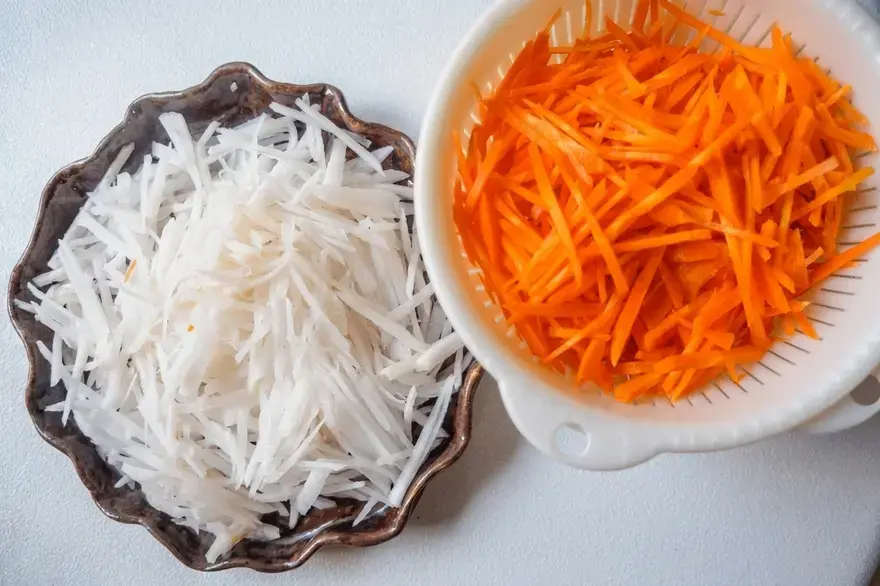
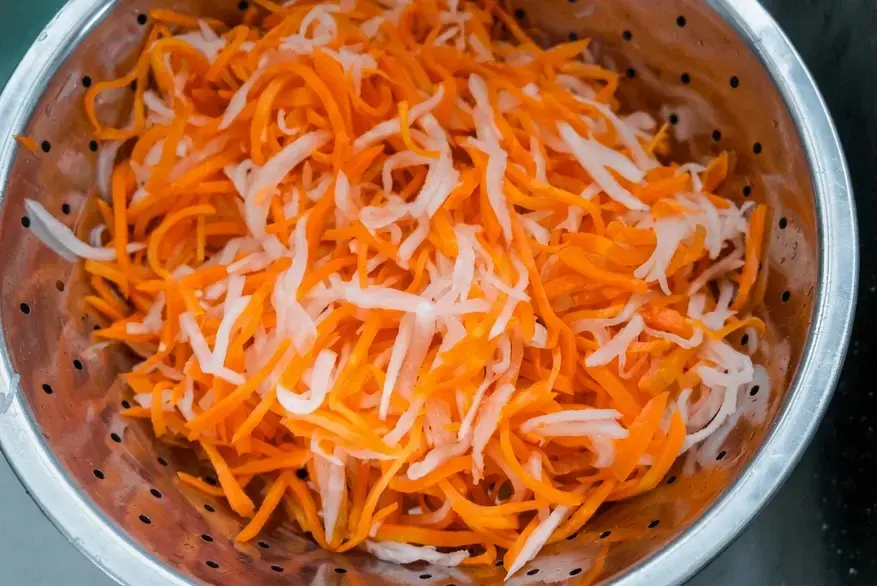
Peel the daikon radish and carrots, then slice them thin and turn them into matchsticks. A mandolin slicer makes quick work of this, but a sharp knife works just as well if you slice each vegetable diagonally into thin pieces about 1/4 inch thick, then cut those slices into matchstick sized strips.
Uniform pieces matter here. When everything is the same thickness, every bite picks up the brine evenly and stays pleasantly crisp.
PICKLING LIQUID
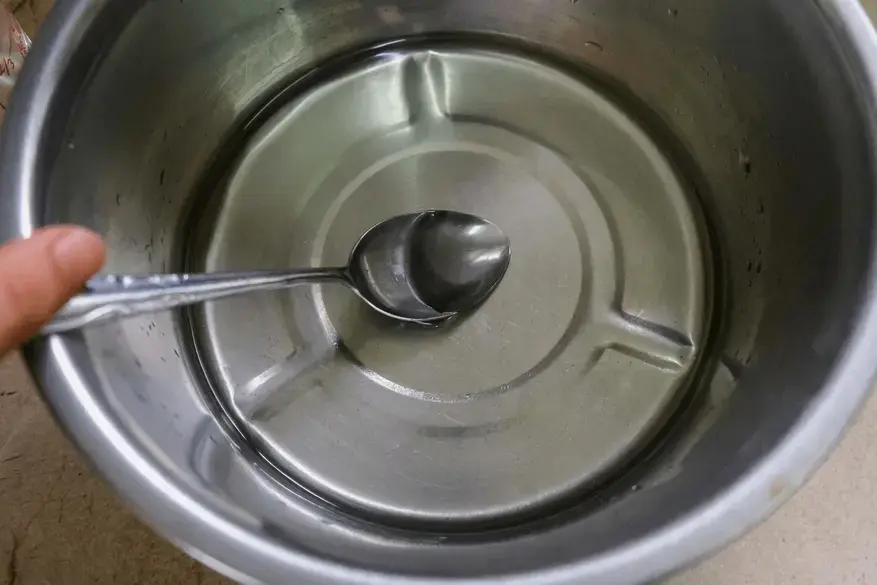
While you work on the vegetables, make the pickling liquid. Dissolve the cane sugar in boiling hot water first, then stir in the vinegar. Taste and adjust the sweetness or sourness to your liking, then set the liquid aside to cool completely before it ever touches the vegetables.
Hot brine over raw veggies will soften them, so patience pays off. Let the liquid cool fully for the best crunch.
Meanwhile, salt the vegetables. Place the sliced radish and carrot in a large strainer with a catch basin, add a heaping tablespoon of salt, and mix well so every piece is coated.
Leave them to sit for at least 30 minutes; excess liquid will seep out during this time, which is exactly why you want a container that can catch it.
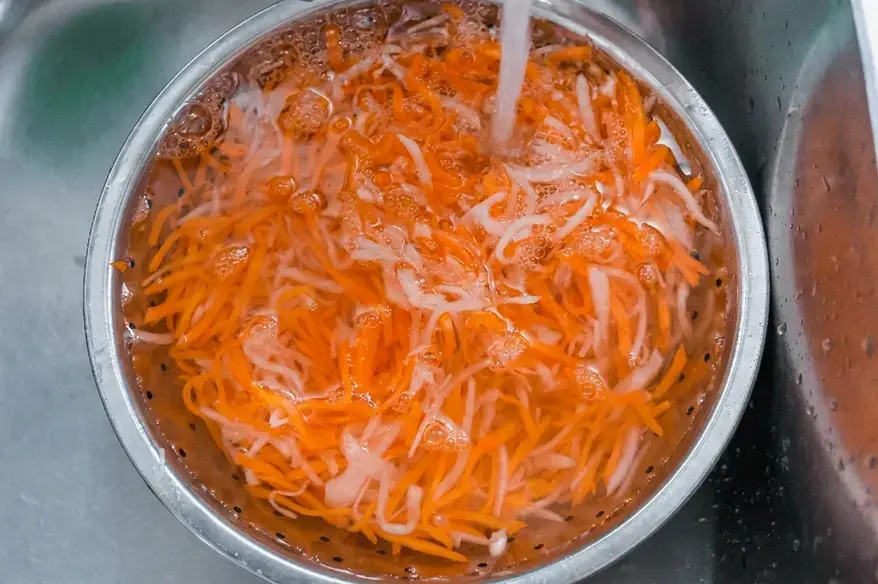
Once the soak is done, run the vegetables under water 2 to 3 times to wash out the salt.
Drain the vegetables from the water before adding to the jar with the pickling liquid.
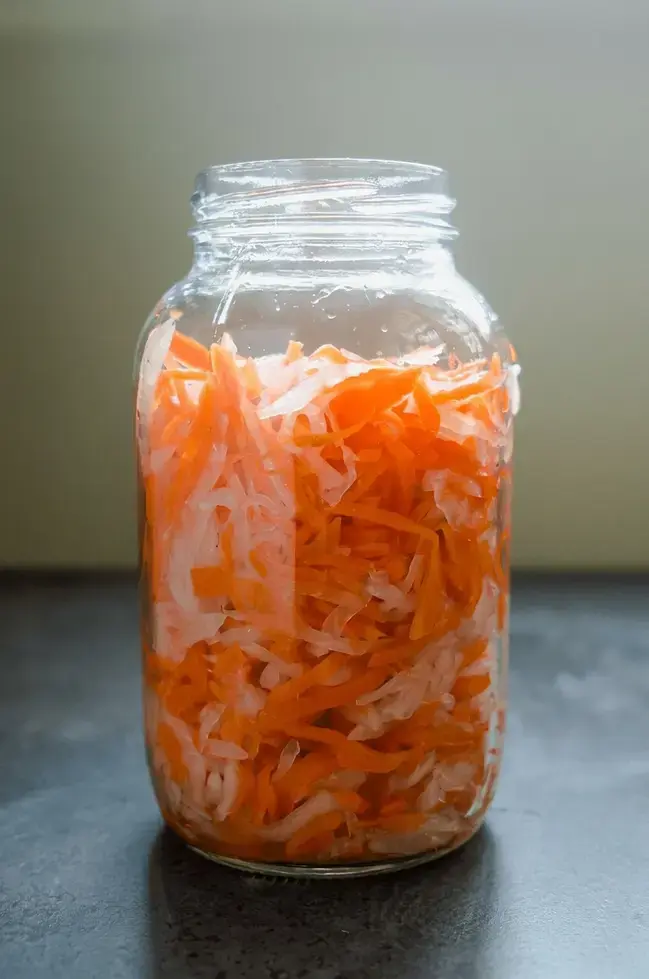
Drain the rinsed vegetables and gently squeeze out the excess liquid, then transfer them to a jar and compress them carefully. Pour in the cooled pickling liquid until the vegetables are completely submerged. If they are not fully covered, add 2 to 3 tablespoons of extra water.
Seal the jar well and give it a good shake if you added extra water. Leave the jar at room temperature so the pickling process can happen.
I left mine out for 24 hours before moving it to the refrigerator, but keep in mind this timing depends on your room temperature, which is usually around 30C where I live.
In a cooler kitchen, you might give it a little more time before refrigerating.
These pickles shine alongside barbecue and grilled meats, tucked into a crusty baguette, or scattered over a bowl of noodles. That crunch and acidity lift just about everything they touch.
I also recommend using these for:
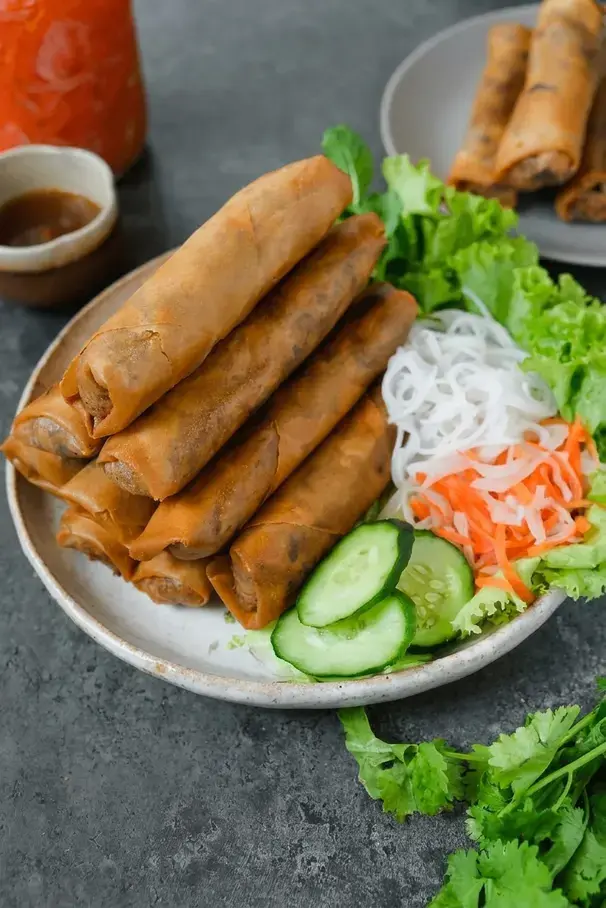
Beyond bánh mì and bun cha, đồ chua adds a delicious crunch and acidity to two of my favorite dishes.
Try them in Cha Gio Chay, Vietnamese fried vegetarian spring rolls, or in Bun Cha Gio Chay, a Vietnamese noodle bowl topped with those same crispy rolls. The pickles cut through the richness and keep every bite fresh and lively.
You can pin this image:
Saving this recipe for later is easy. Pin it to your recipe board so the next time you assemble bánh mì or noodle bowls at home, a jar of crisp, tangy đồ chua is only 45 minutes away.
FAQs
What is the best vinegar to use for Vietnamese pickled daikon and carrots?
Rice vinegar is the traditional choice for đồ chua because of its mild, slightly sweet acidity. Distilled white vinegar is a common and accessible substitute that provides a cleaner, sharper flavor. Either one works well in the pickling liquid.
How can I keep my pickled daikon and carrots crunchy?
To keep your pickled vegetables crunchy, first toss the sliced daikon and carrots with salt and let them sit for 30 minutes. This draws out excess moisture. Rinse the salt off, squeeze the vegetables dry, and then pack them into a jar with the cooled pickling liquid.
What is the correct ratio of daikon to carrots for đồ chua?
The author of the canonical recipe uses a 50-50 ratio, calling for 250 grams each of daikon radish and carrot. In Vietnam, the pickles usually contain significantly more radish than carrot. You can adjust the ratio to your personal preference or what you have available.
How long does homemade đồ chua last in the refrigerator?
Properly stored in the refrigerator with the vegetables completely submerged in the pickling liquid, đồ chua can last for several weeks to a few months. The flavors will continue to meld over time. If the liquid becomes cloudy or develops off-odors, the pickles should be discarded.
Vietnamese Pickled Vegetables (Đồ Chua) Vietnamese pickled daikon radish and carrots, known as đồ chua, are a tangy, slightly sweet and crunchy staple you can prepare in under an hour, then let time do the rest of the work. They pair beautifully with bun cha bowls, bánh mì, and countless other Vietnamese dishes where a bright hit of acidity is welcome.
Total Time:45 min
Yield:1 large jar 1x
Ingredients
Scale
Veggies 250 g daikon radish, peeled and sliced into matchsticks 250 g carrot, peeled and sliced into matchsticks 1 heaping tbsp salt
Pickling Liquid 1 cup boiling hot water 6 tbsp cane sugar 4 tbsp vinegar
Additional Liquid 2–3 tbsp water, extra if needed
Instructions
Veggies 1-In a large strainer with a catch: In a large strainer with a catch basin, place the sliced radish and carrot. Add in the salt and mix well to coat the veggies in the salt. 2-Leave to sit for at least 30: Leave to sit for at least 30 minutes to remove some of the liquid from the veggies.
Pickling Liquid 3-Meanwhile, prepare the pickling liquid by mixing: Meanwhile, prepare the pickling liquid by mixing together the hot water and sugar until the sugar has dissolved. Mix in the vinegar. Feel free to adjust to your desired sweetness and sourness levels. Leave this mixture to completely cool.
Pickling the Veggies 4-After leaving the veggies to sit, run: After leaving the veggies to sit, run it through water 2-3 times to wash out the salt. 5-Drain the veggies from the water and: Drain the veggies from the water and carefully squeeze to remove the excess liquid. 6-Transfer the veggies into the jar: Transfer the veggies into the jar. Carefully compress into the jar. 7-Pour the liquid into the jar to: Pour the liquid into the jar to completely submerge the veggies. If the veggies aren’t submerged, feel free to add 2-3 tbsp more water to completely submerge. 8-Seal the bottle well then give the: Seal the bottle well then give the bottle a good shake (if you added more water)
Storage 9-You can leave the jar in room: You can leave the jar in room temperature to allow it to pickle. I left mine for 24 hours before placing it in the refrigerator. Note that this can depend on your room temperate. The room temperature here is usually at 30C.
Last Step:
Please leave a rating and comment letting us know how you liked this recipe! This helps our business to thrive and continue providing free, high-quality recipes for you.