
YAKITORI MENUS
When I first walked into a yakitori ya in Tokyo, I was amazed by the sheer variety on the menu. Yakitori, which simply means grilled chicken skewers, is so much more than just thigh meat. In Japan, restaurants celebrate the whole bird, offering an incredible range of cuts that each bring a unique texture and flavor. This tradition goes back centuries and reflects a deep respect for ingredients.
Here are some of the most common yakitori menu items you will encounter:
| Name | Cut / Description | Typical Seasoning |
|---|---|---|
| Negima | Alternating pieces of chicken thigh and green onion | Tare or shio |
| Momo | Boneless chicken thigh | Tare or shio |
| Mune | Chicken breast (leaner) | Often tare |
| Sasami | Chicken tenderloin | Shio or wasabi |
| Tsukune | Minced chicken meatballs, often with cartilage | Tare (with egg yolk dip) |
| Bonjiri | Tail (very fatty, rich) | Shio |
| Kawa | Crispy chicken skin | Shio |
| Tebasaki | Chicken wings | Shio (recommended) |
| Rebah | Chicken liver | Tare (recommended) |
| Hatsu | Chicken heart | Tare (recommended) |
| Sunagimo | Gizzard (chewy, earthy) | Shio or tare |
| Nankotsu | Soft cartilage (crunchy) | Shio |
For home cooks, I recommend starting with momo (thigh) and negima (thigh and scallion). They are forgiving, juicy, and absolutely delicious. If you are curious about other skewered chicken recipes, you might also enjoy our Grilled Teriyaki Chicken Skewers for a different twist on grilled chicken.
Jump to:
- YAKITORI MENUS
- Yakitori Flavour
- Yakitori Skewers
- Yakitori Grill
- FAQs
- What is yakitori?
- What cuts of chicken are used in yakitori?
- How do you make authentic yakitori sauce (tare)?
- What is the difference between shio and tare yakitori?
- How long does it take to grill yakitori skewers?
- Can you cook yakitori without a charcoal grill?
Yakitori Flavour
The beauty of yakitori Japanese skewered chicken lies in its simplicity. You can season it in two main ways: tare (a sweet soy glaze) or shio (just salt). I often switch between them depending on my mood and the cut I am grilling.
Tare is the classic sweet and savory sauce that gives yakitori its signature lacquered look. To make it at home, you just need:
- Soy sauce
- Mirin
- Sugar
- (Optional) Sake for depth
Simmer these together for about 5 minutes until the mixture thickens and reduces by one third. The result is a glossy, umami rich glaze that caramelizes beautifully over charcoal. I always make extra because it freezes well. Leftover tare can be boiled, cooled, and frozen for later use.
Shio yakitori, on the other hand, lets the natural chicken flavor shine. All you do is sprinkle a fine salt over the skewers before and during grilling. It is especially good with fatty cuts like skin (kawa), wings (tebasaki), and tail (bonjiri). Liver and heart, however, are better with tare because the sweetness balances their mineral notes.
If you want to try a different approach to grilled chicken, our Teriyaki Chicken Skewers use a similar sauce but a different technique.
Yakitori Skewers
Choosing the right skewer is more important than you might think. Traditional bamboo skewers come in three main types, each suited to different ingredients:
- Marugushi (round, 3mm diameter), the most common, about 15, 18 cm long. Perfect for most cuts.
- Hiragushi (flat), prevents the meat from spinning when you turn them.
- Teppogushi (gun shaped, square), holds minced mixtures like tsukune more securely.
No matter which you choose, soak the bamboo skewers in water for at least 30 minutes before grilling. This simple step keeps the wood from catching fire on the charcoal.

For even cooking, cut your chicken thigh into 2.5 cm (1 inch) cubes. If you are making negima, cut the green onion stems into 3 cm (1 1/8 inch) pieces. Thread five chicken pieces for a momo skewer, or three chicken pieces alternating with two green onion pieces for negima. Do not marinate the chicken ahead of time, just baste during grilling to avoid a burnt, sugary exterior.
Yakitori Grill
A dedicated yakitori grill is a long, narrow charcoal grill about 10 cm (4 inches) wide, designed to hold the skewers horizontally over the heat. The stones lining the charcoal bed radiate heat evenly. If you do not have one, do not worry. A hibachi grill or even a standard BBQ grill (not a flat plate) works well. Avoid flat griddle plates because the dripping tare sauce will burn and create bitter smoke.
If you are cooking indoors, an oven broiler is a fantastic alternative. Place a rack over a foil lined baking sheet to catch drips. Preheat the broiler on high and cook the skewers close to the element, turning and basting as you would on a grill. For a truly authentic charcoal experience, binchotan charcoal is traditional, but regular charcoal or gas will still give you great results.
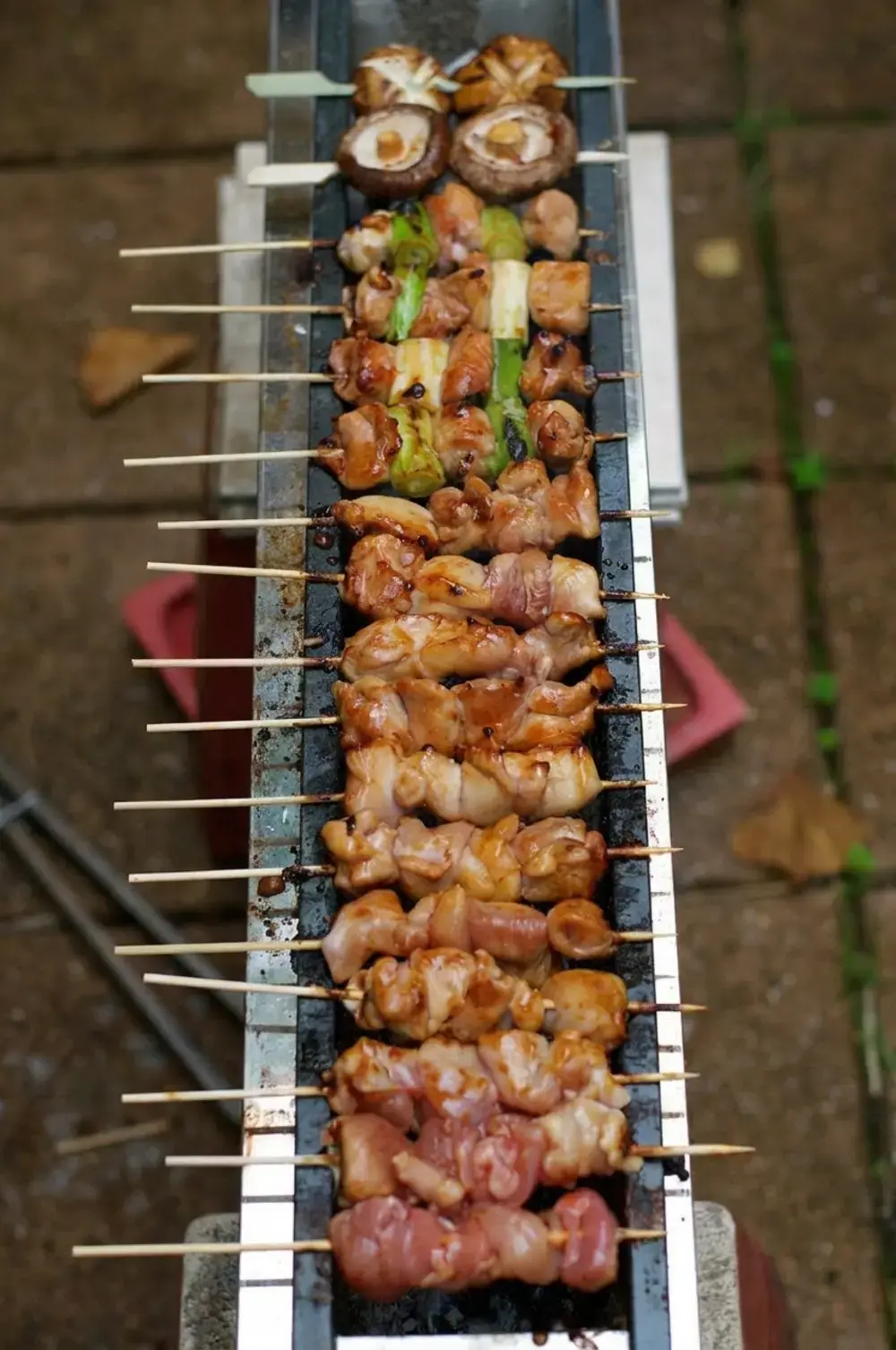
Grilling tip: Start with medium high heat. Cook the first side for 3, 4 minutes, flip and baste, cook 3 minutes, then flip and baste again for a final 30 seconds. This builds layers of flavor without burning the tare.