

Why You’ll Love This Flaky Salmon Salad
This Flaky Salmon Salad is one of those recipes that feels simple enough for a busy weeknight, yet special enough to serve for lunch with friends. It brings together tender baked salmon, crisp vegetables, and a creamy lemon dressing for a fresh, satisfying meal that never feels boring.
- Easy to make: The salmon bakes in about 16 to 18 minutes, and the rest of the recipe comes together with simple chopping and stirring. That makes this Flaky Salmon Salad a great fit for home cooks who want something fast without giving up flavor.
- Good for you: Salmon brings protein, healthy fats, and important nutrients to the table. If you want a light meal that still keeps you full, this salad is a smart choice for lunch or dinner. For more salmon nutrition facts, you can also read this helpful salmon benefits guide from Cleveland Clinic.
- Flexible for different eaters: You can serve it on lettuce, in a sandwich, or with crackers. It also works well with yogurt or sour cream if you want a lighter dressing, which makes it easy to fit different tastes and goals.
- Bright, fresh flavor: Smoked paprika, lemon, dill, chives, and crunchy vegetables give this salad a lively taste. The creamy dressing ties everything together without making it heavy.
When a recipe gives you creamy texture, crisp crunch, and fresh lemon flavor all in one bowl, it is hard not to make it again.
This is the kind of meal that feels useful on busy days, but still fun to eat. If you enjoy fresh, simple dishes like this, you may also like our loaded baked potato soup recipe for another comforting, easy option.
Jump to:
- Why You’ll Love This Flaky Salmon Salad
- Essential Ingredients for Flaky Salmon Salad
- Salmon
- Dressing
- Salad
- Special dietary options
- How to Prepare the Perfect Flaky Salmon Salad: Step-by-Step Guide
- First Step: Preheat and prepare the pan
- Second Step: Bake the salmon until flaky
- Third Step: Cool and flake the salmon
- Fourth Step: Prep the vegetables and herbs
- Fifth Step: Mix the dressing
- Final Step: Combine and serve chilled
- Recipe Snapshot
- Dietary Substitutions to Customize Your Flaky Salmon Salad
- Protein and Main Component Alternatives
- Vegetable, Sauce, and Seasoning Modifications
- Mastering Flaky Salmon Salad: Advanced Tips and Variations
- Pro cooking techniques
- Flavor variations
- Presentation tips
- Make-ahead options
- How to Store Flaky Salmon Salad: Best Practices
- Refrigeration
- Freezing
- Reheating
- Meal prep considerations
- Nutritional Information for Flaky Salmon Salad
- FAQs: Frequently Asked Questions About Flaky Salmon Salad
- How do you make salmon flaky for salad?
- Can you use canned salmon in flaky salmon salad?
- What ingredients go into flaky salmon salad?
- How long does homemade salmon salad last in the fridge?
- Is flaky salmon salad healthy?
- Flaky Salmon Salad
- Ingredients
- Instructions
- Last Step:
- Notes
- Nutrition
- Did you make this recipe?
Essential Ingredients for Flaky Salmon Salad
Everything in this recipe has a job to do. The salmon brings the main protein, the dressing adds creaminess and tang, and the vegetables give you crunch and color. Below is a structured ingredient list with exact measurements so you can gather everything before you start.
Salmon
- 1 1/4 pounds salmon filet
- 1/2 tablespoon olive oil
- 1 teaspoon smoked paprika
- Kosher salt, to taste
- Freshly ground black pepper, to taste
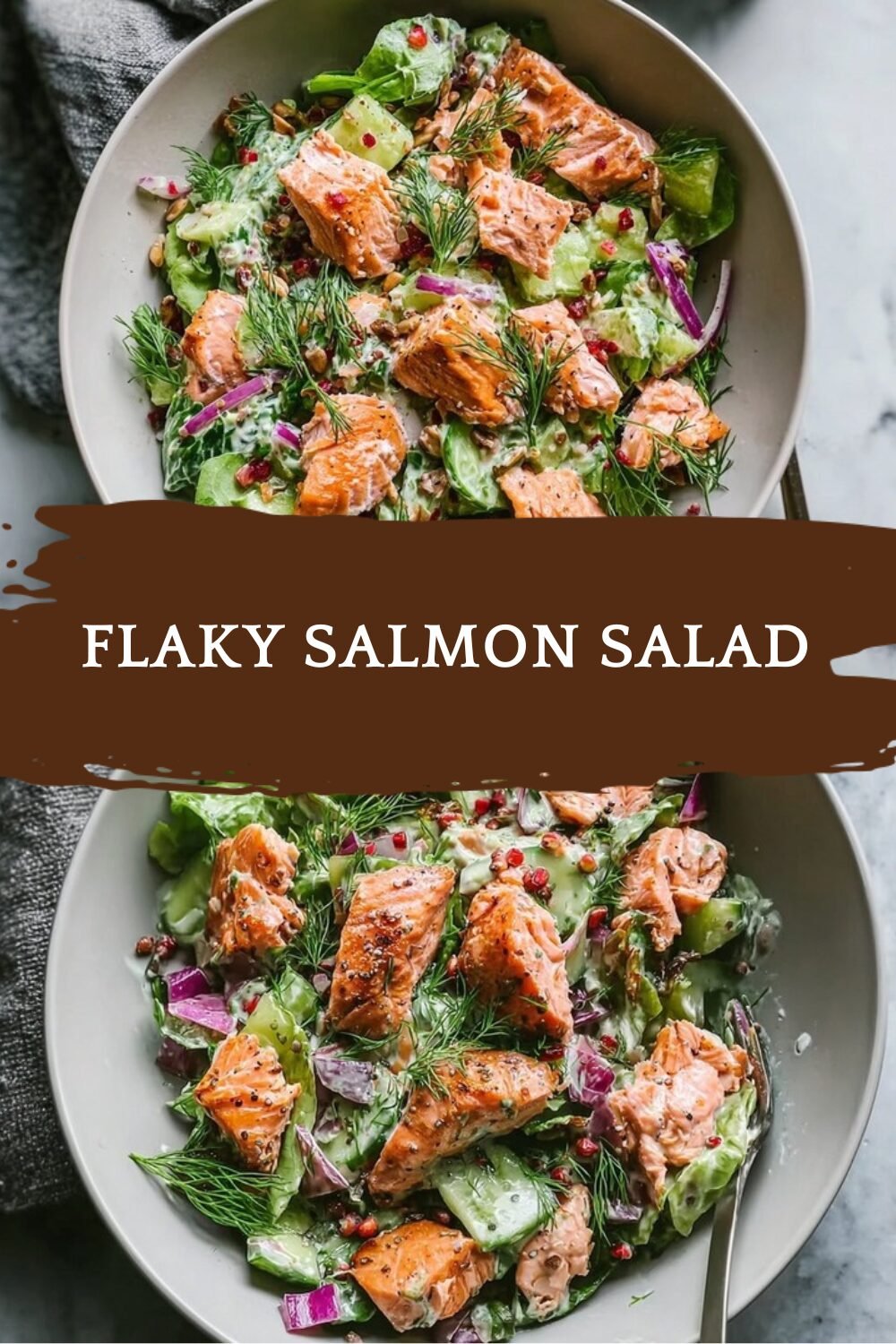
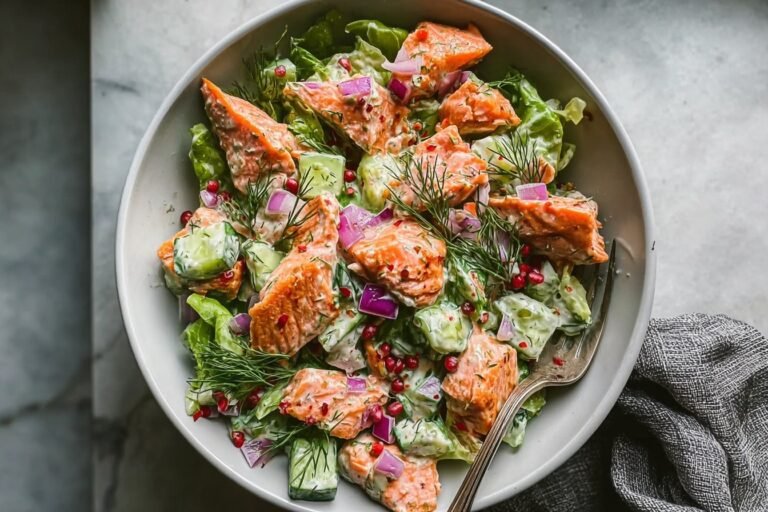
The salmon should bake until it flakes easily, giving you those big, soft pieces that make this salad so good. Fresh salmon works best if you want chunky flakes with a tender texture.
Dressing
- 1/3 cup mayonnaise
- 1/2 lemon, zested and juiced
- 2 teaspoons Dijon mustard
- 1 garlic clove, minced
- Kosher salt, to taste
- Freshly ground black pepper, to taste
This creamy lemon dressing gives the salad its bright, slightly sharp flavor. The mustard and garlic add depth, while the lemon keeps it lively.
Salad
- 1/2 small red onion, finely diced
- 3 large radishes, grated
- 2 stalks celery, small diced
- 2 tablespoons finely chopped fresh dill
- 2 tablespoons finely chopped fresh chives
The vegetables bring crunch, freshness, and color to every bite. Radishes add a peppery snap, celery adds crisp texture, and the herbs make the whole bowl taste garden fresh.
Special dietary options
- Vegan: Replace salmon with chickpeas or hearts of palm, and use vegan mayonnaise for the dressing.
- Gluten-free: This recipe is naturally gluten-free as written. Serve it with lettuce cups or gluten-free bread if desired.
- Low-calorie: Swap mayonnaise for plain Greek yogurt or a mix of yogurt and sour cream for a lighter version.
How to Prepare the Perfect Flaky Salmon Salad: Step-by-Step Guide
This recipe comes together in a few simple stages. First, you bake the salmon. Then, while it cools, you prep the vegetables and whisk the dressing. After that, everything gets mixed together gently so the salmon stays in nice, chunky pieces.
First Step: Preheat and prepare the pan
Set your oven to 375°F. Line a baking sheet with parchment paper, which makes cleanup easier and keeps the salmon from sticking. This is one of the easiest ways to keep the process smooth, especially if you are cooking on a busy weeknight.
Place the salmon filet on the prepared baking sheet. Drizzle it with 1/2 tablespoon olive oil, then season it with 1 teaspoon smoked paprika, kosher salt, and freshly ground black pepper. The paprika adds a gentle smoky flavor that works beautifully with the creamy salad base.
Second Step: Bake the salmon until flaky
Bake the salmon for 16 to 18 minutes, or until it flakes easily with a fork. The exact time can depend on the thickness of your filet, so smaller pieces may need a little less time. You want the fish cooked through but still moist and tender.
If you are cooking for someone who prefers a softer texture, check the salmon a minute early. Overbaking can dry it out, so it is better to pull it once it flakes cleanly. For another simple protein dinner idea, you might like our balsamic lemon chicken recipe.
Third Step: Cool and flake the salmon
Once the salmon is done, remove it from the oven and let it cool. Chill it for 5 to 10 minutes so it is easier to handle. Then use a fork to gently flake the salmon into large chunks.
Try not to break it into tiny pieces. Big flakes give the salad a more appealing texture and make every bite feel richer. This is also the reason fresh salmon is often better than canned for this recipe.
Fourth Step: Prep the vegetables and herbs
While the salmon cools, finely dice 1/2 small red onion, grate 3 large radishes, and small dice 2 stalks celery. Chop 2 tablespoons fresh dill and 2 tablespoons fresh chives. These ingredients add crunch and freshness that balance the creamy dressing.
If the raw onion tastes too sharp for your liking, you can soak it in cold water for a few minutes, then drain it well. That small trick softens the flavor without losing the crunch.
Fifth Step: Mix the dressing
In a bowl, combine 1/3 cup mayonnaise, the zest and juice of 1/2 lemon, 2 teaspoons Dijon mustard, and 1 minced garlic clove. Add kosher salt and freshly ground black pepper to taste. Stir until the dressing is smooth and creamy.
The lemon brightens the mayonnaise, while the mustard gives the dressing a slight tang. The garlic adds a mild bite that keeps the salad from tasting flat.
Final Step: Combine and serve chilled
Add the flaked salmon, onion, radishes, celery, dill, and chives to a large bowl. Pour the dressing over the top and stir gently until everything is coated. Be careful not to overmix, or the salmon will lose its chunky texture.
Serve the salad chilled on its own, over lettuce, or tucked into a sandwich. It also tastes great with crackers or spooned into a wrap. If you like easy meal ideas for lunch prep, you may also enjoy our chicken rice casserole recipe.
Recipe Snapshot
| Detail | Time or Amount |
|---|---|
| Prep time | 15 minutes |
| Cook time | 20 minutes |
| Chill time | 10 minutes |
| Total time | 45 minutes |
| Servings | About 4 |
| Calories per serving | 361 |

Dietary Substitutions to Customize Your Flaky Salmon Salad
Protein and Main Component Alternatives
Salmon is the star of this dish, but there are a few ways to adapt it if you need something different. Fresh salmon gives you the best flaky texture, but canned salmon can work in a pinch if you drain it well and remove any skin or bones. It is a good choice for fast lunches, though the texture will be softer.
If you want a different protein altogether, cooked flaked trout or leftover baked white fish can be used in a similar way. For a plant-based version, chickpeas, cannellini beans, or chopped hearts of palm can stand in for the fish and still give you a satisfying bite.
Vegetable, Sauce, and Seasoning Modifications
The vegetables are easy to change based on what you have. If radishes are not your thing, try grated turnip or jicama for a similar crunch. Celery can be kept for texture, or swapped for diced cucumber if you want a cooler, softer crunch.
For the herbs, parsley, basil, or tarragon can replace the dill or chives. If you want a lighter dressing, replace some or all of the mayonnaise with yogurt or sour cream. You can also add extra lemon juice for a brighter taste. Want another warm, savory recipe to keep in your rotation? Try our cacio e pepe chicken thighs recipe.
Mastering Flaky Salmon Salad: Advanced Tips and Variations
Once you have made this salad once, it gets easy to make it your own. A few small changes can give you a different flavor or texture without adding much work.
Pro cooking techniques
Use fresh salmon if possible, because it gives you larger, more attractive flakes than canned fish. Parchment paper is worth using too, since it keeps the fish from sticking and makes cleanup quick. If your filet is smaller or thinner, check it a few minutes early so it does not dry out.
Let the salmon cool before mixing it with the dressing. That small pause helps the flakes stay intact and keeps the mayo-based dressing from thinning too much.
Flavor variations
You can adjust the flavor in many simple ways. Add a little more Dijon for extra tang, or use more lemon zest if you like a brighter, fresher taste. For a more herb-forward salad, increase the dill and chives or swap in parsley and basil.
If you enjoy a little sweetness, some finely diced apple can add a pleasant crunch. If you want a brinier flavor, capers or chopped pickles can be stirred in. These small touches can make the salad feel new each time.
Presentation tips
For a pretty serving bowl, keep some of the salmon in large flakes on top and scatter extra dill or chives over the surface. Serve it on crisp lettuce leaves for a fresh lunch plate, or pile it into toasted bread for a satisfying sandwich. A lemon wedge on the side also makes it look bright and inviting.
Make-ahead options
You can bake the salmon ahead of time and chill it until you are ready to mix. The vegetables can also be chopped earlier in the day and stored separately. For best texture, mix the salad shortly before serving, especially if you want the celery and radishes to stay crisp.
If you are cooking for a packed week, doing the salmon and chopping ahead can save you time without making the meal feel rushed.
How to Store Flaky Salmon Salad: Best Practices
Storing this salad the right way helps keep the flavor fresh and the texture pleasant. Because it contains fish and mayonnaise, it should stay chilled and covered when not being served.
Refrigeration
Store the salad in an airtight container in the fridge for 3 to 4 days. For the best texture, stir it gently before serving because the dressing may settle. If you are packing lunch, use a sealed container and keep it cold until mealtime.
Freezing
You can freeze the salad for up to 3 months, though the texture may soften after thawing. If you plan to freeze it, place it in a freezer-safe container and leave a little room at the top. Thaw it in the fridge overnight before serving.
Reheating
This salad is meant to be eaten cold, so reheating is not needed. In fact, warming it can change the texture of the mayonnaise and make the fish less pleasant. If the salmon was frozen separately, you can thaw it in the fridge and then mix it with fresh dressing.
Meal prep considerations
For meal prep, keep the salmon, vegetables, and dressing separate until you are ready to eat. That way, the vegetables stay crisp and the salad does not get watery. If you are planning more lunches for the week, you might also enjoy another make-ahead idea like our anti-inflammatory turmeric chicken rice recipe.
Nutritional Information for Flaky Salmon Salad
Each serving of this salad gives you a balanced mix of protein, fat, and very few carbohydrates. It is filling enough to work as lunch, but still light enough to fit into many eating styles.
| Nutrient | Per Serving |
|---|---|
| Calories | 361 |
| Carbohydrates | 4 g |
| Protein | 29 g |
| Total fat | 25 g |
| Saturated fat | 4 g |
| Polyunsaturated fat | 12 g |
| Monounsaturated fat | 7 g |
| Trans fat | 0.04 g |
| Cholesterol | 86 mg |
| Sodium | 227 mg |
| Potassium | 820 mg |
| Fiber | 1 g |
| Sugar | 1 g |
| Vitamin A | 491 IU |
| Vitamin C | 11 mg |
| Calcium | 40 mg |
| Iron | 2 mg |
These numbers make it a strong choice for anyone looking for a protein-rich meal with a satisfying texture and fresh ingredients. For more general guidance on omega-3 fats, the NIH omega-3 fact sheet is a useful resource.
FAQs: Frequently Asked Questions About Flaky Salmon Salad
How do you make salmon flaky for salad?
Can you use canned salmon in flaky salmon salad?
What ingredients go into flaky salmon salad?
How long does homemade salmon salad last in the fridge?
Is flaky salmon salad healthy?
Flaky Salmon Salad
🐟 Indulge in flaky, omega-3-rich salmon for a protein-packed meal that supports heart health and muscle repair.
🥗 This vibrant salad is easy to prep, versatile for lunches, and bursts with fresh, herby flavors.
- Total Time: 45 minutes
- Yield: 4 servings
Ingredients
– 1 1/4 pounds salmon filet
– 1/2 tablespoon olive oil
– 1 teaspoon smoked paprika
– Kosher salt, to taste
– Freshly ground black pepper, to taste
– 1/3 cup mayonnaise
– 1/2 lemon, zested and juiced
– 2 teaspoons Dijon mustard
– 1 garlic clove, minced
– Kosher salt, to taste
– Freshly ground black pepper, to taste
– 1/2 small red onion, finely diced
– 3 large radishes, grated
– 2 stalks celery, small diced
– 2 tablespoons finely chopped fresh dill
– 2 tablespoons finely chopped fresh chives
Instructions
1-First Step: Preheat and prepare the pan. Set your oven to 375°F. Line a baking sheet with parchment paper, which makes cleanup easier and keeps the salmon from sticking. This is one of the easiest ways to keep the process smooth, especially if you are cooking on a busy weeknight. Place the salmon filet on the prepared baking sheet. Drizzle it with 1/2 tablespoon olive oil, then season it with 1 teaspoon smoked paprika, kosher salt, and freshly ground black pepper. The paprika adds a gentle smoky flavor that works beautifully with the creamy salad base.
2-Second Step: Bake the salmon until flaky. Bake the salmon for 16 to 18 minutes, or until it flakes easily with a fork. The exact time can depend on the thickness of your filet, so smaller pieces may need a little less time. You want the fish cooked through but still moist and tender. If you are cooking for someone who prefers a softer texture, check the salmon a minute early. Overbaking can dry it out, so it is better to pull it once it flakes cleanly. For another simple protein dinner idea, you might like our balsamic lemon chicken recipe.
3-Third Step: Cool and flake the salmon. Once the salmon is done, remove it from the oven and let it cool. Chill it for 5 to 10 minutes so it is easier to handle. Then use a fork to gently flake the salmon into large chunks. Try not to break it into tiny pieces. Big flakes give the salad a more appealing texture and make every bite feel richer. This is also the reason fresh salmon is often better than canned for this recipe.
4-Fourth Step: Prep the vegetables and herbs. While the salmon cools, finely dice 1/2 small red onion, grate 3 large radishes, and small dice 2 stalks celery. Chop 2 tablespoons fresh dill and 2 tablespoons fresh chives. These ingredients add crunch and freshness that balance the creamy dressing. If the raw onion tastes too sharp for your liking, you can soak it in cold water for a few minutes, then drain it well. That small trick softens the flavor without losing the crunch.
5-Fifth Step: Mix the dressing. In a bowl, combine 1/3 cup mayonnaise, the zest and juice of 1/2 lemon, 2 teaspoons Dijon mustard, and 1 minced garlic clove. Add kosher salt and freshly ground black pepper to taste. Stir until the dressing is smooth and creamy. The lemon brightens the mayonnaise, while the mustard gives the dressing a slight tang. The garlic adds a mild bite that keeps the salad from tasting flat.
6-Final Step: Combine and serve chilled. Add the flaked salmon, onion, radishes, celery, dill, and chives to a large bowl. Pour the dressing over the top and stir gently until everything is coated. Be careful not to overmix, or the salmon will lose its chunky texture. Serve the salad chilled on its own, over lettuce, or tucked into a sandwich. It also tastes great with crackers or spooned into a wrap. If you like easy meal ideas for lunch prep, you may also enjoy our chicken rice casserole recipe.
Last Step:
Please leave a rating and comment letting us know how you liked this recipe! This helps our business to thrive and continue providing free, high-quality recipes for you.Notes
🐟 Opt for fresh salmon to achieve large, chunky flakes instead of canned.
🥛 Substitute mayonnaise with yogurt or sour cream for a lighter version.
🕒 Use parchment paper for easy cleanup and store leftovers in an airtight container for 3-4 days.
- Prep Time: 15 minutes
- Chill: 10 minutes
- Cook Time: 20 minutes
- Category: Salad
- Method: Oven-Baked
- Cuisine: American
- Diet: Pescatarian
Nutrition
- Serving Size: 1 serving
- Calories: 361 calories
- Sugar: 1 gram
- Sodium: 227 milligrams
- Fat: 25 grams
- Saturated Fat: 4 grams
- Unsaturated Fat: 19 grams
- Trans Fat: 0 grams
- Carbohydrates: 4 grams
- Fiber: 1 gram
- Protein: 29 grams
- Cholesterol: 86 milligrams