

What Is Easy Apple Kimchi?
Easy Apple Kimchi is a bright, no cook Korean side dish that brings together crisp apples, a touch of warmth from gochugaru chili flakes, and a gentle savory depth from fish sauce.

It belongs to the fresh kimchi family called geotjeori, which means you can eat it right away without waiting for fermentation. In just 20 minutes you get a sweet spicy, lightly salted mixture that tastes like a fruit forward slaw with a kick.
The recipe uses Fuji or Honeycrisp apples cut into bite size chunks, tossed with green onion, yellow onion, garlic, ginger, and a small amount of plum syrup to balance the flavors.
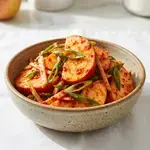
Because it skips traditional cabbage and a long brine, it stays exceptionally light and juicy, making it a playful introduction to Korean banchan for anyone who loves crisp fresh produce.
Jump to:
- What Is Easy Apple Kimchi?
- Easy Apple Kimchi Ingredients
- How to Make Easy Apple Kimchi
- Tips, Variations, Serving, and Storage
- Sweetness and the Plum Syrup Balance
- No Peel Approach and Fruit Washing
- Serving Ideas
- Storage and Food Safety
- A Few Extra Tips
- Time, Yield, and Nutrition
- Frequently Asked Questions
- What apples work best for Easy Apple Kimchi?
- Do I need to peel the apples?
- Can I eat Easy Apple Kimchi immediately?
- How long does Easy Apple Kimchi keep?
- Apple Kimchi
- Ingredients
- Instructions
- Last Step:
- Nutrition
- Did you make this recipe?
Easy Apple Kimchi Ingredients
Here is the complete list of ingredients as published in the source recipe, measured to deliver balanced sweet spicy results for about ten servings.
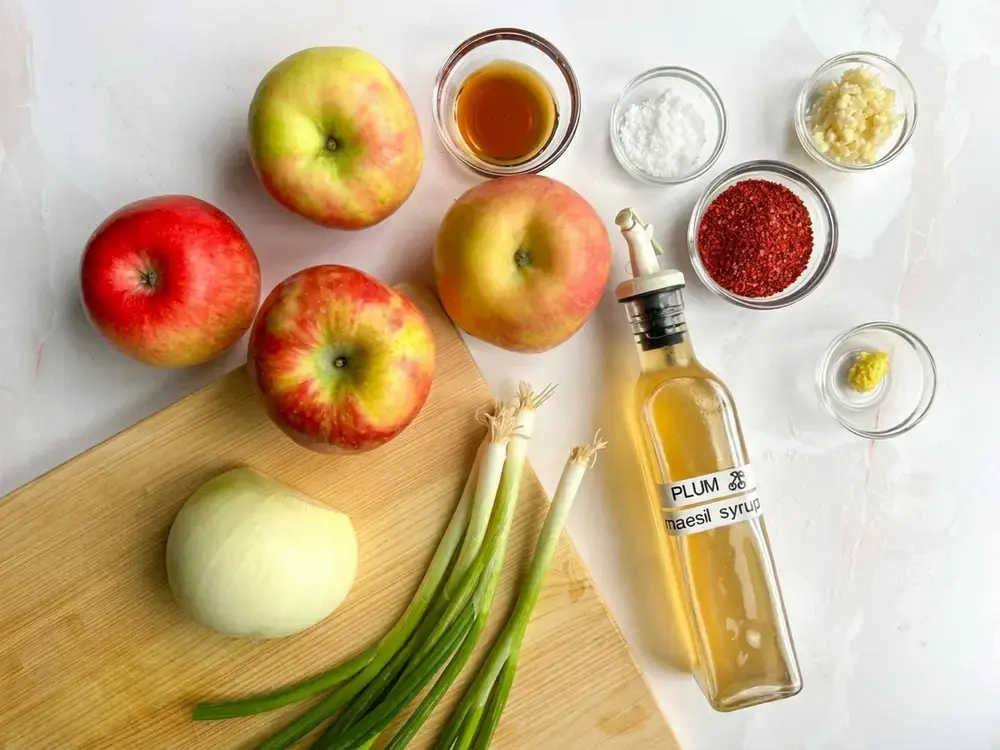
- 2 lb Fuji apples (Honeycrisp also work well)
- 1/2 each yellow onion
- 4 each green onions
- 1/2 Tbsp Korean solar sea salt (cheonilyeom)
- 2.5 Tbsp Korean chili powder (gochugaru)
- 1 Tbsp anchovy sauce or fish sauce
- 1 Tbsp garlic, chopped
- 0.25 tsp ginger, grated or chopped fine
- 1 tsp green plum syrup (maesil cheong), or a small sprinkle of sugar
Korean solar sea salt has a clean mineral taste that seasons without harshness. Gochugaru gives the signature red color and a fruity, medium heat, while the anchovy sauce adds umami. The green plum syrup tames any sharpness and rounds out the sweetness.
If you cannot find maesil cheong, the recipe suggests a little sugar as a substitute, start with a tiny pinch and adjust cautiously after tasting.
How to Make Easy Apple Kimchi
This recipe comes together entirely in one large mixing bowl and takes about 15 minutes of prep plus 5 minutes of gentle mixing. Follow these steps in order for the best texture and even seasoning.
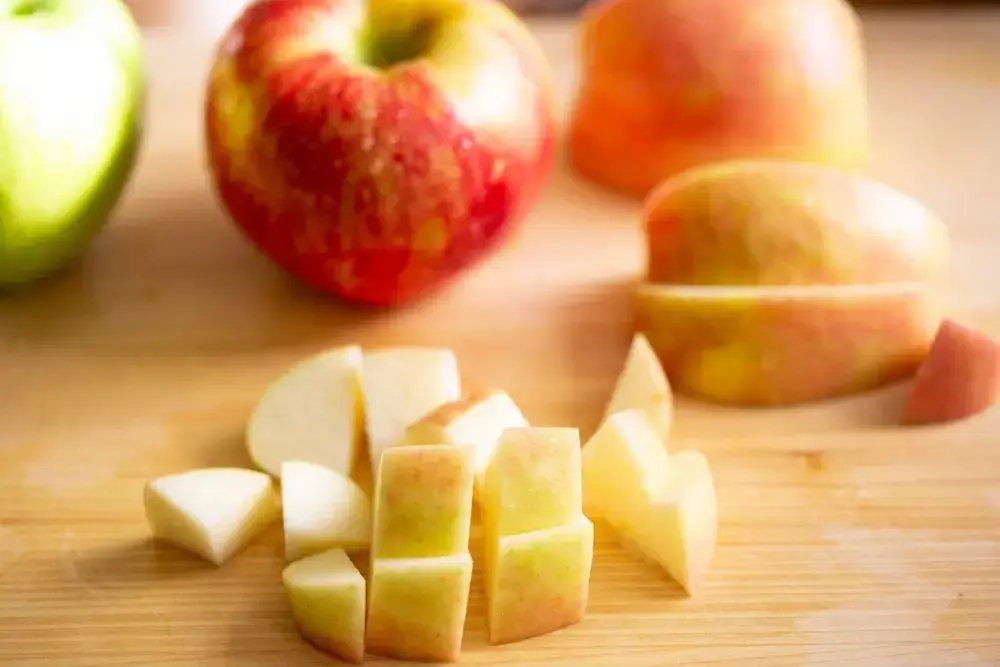
- Prepare the apples. Wash the apples thoroughly under cool running water. Core them and cut into bite size pieces. A good approach is to quarter each apple, then slice each quarter into smaller chunks. If you are using organic apples with thin skin, there is no need to peel. For conventionally grown fruit, follow the FDA guide to selecting and serving produce safely: rinse while rubbing the skin under running water, and pat dry.
- Cut the onions. Slice the yellow onion into roughly 3/4 inch cubes. Trim the green onions and cut them into 1.5 inch lengths. Keeping the pieces similar in size helps everything coat evenly.
- Mince the aromatics. Chop the garlic finely and either grate the ginger or chop it very fine. Prepping these before you start tossing keeps the process quick.
- Season the fruit and vegetables. Place the apples, yellow onion, and green onions in a large bowl. Sprinkle the Korean solar sea salt over everything and toss gently with your hands or a wide spoon. The salt will start drawing a little moisture out of the apples, which creates a light natural dressing.
- Add the chili powder. Sprinkle the gochugaru evenly over the apples and onions, then toss again until all the pieces take on a soft red tint.
- Finish with the flavorings. Add the chopped garlic, grated ginger, fish sauce, and green plum syrup. Mix everything gently but thoroughly. The apple chunks should be coated with the seasoning paste, and the juices should look lightly pink and glossy.
- Serve or store. This kimchi is ready to enjoy right away. For a deeper, slightly tangier taste, transfer it to a clean airtight container and refrigerate. The flavor will mellow and mature over a few days.
Tips, Variations, Serving, and Storage
Because this apple kimchi has a light, fruit driven profile, it is incredibly flexible at the table. I first made it on a whim before a small Thanksgiving gathering, and it has since become the unexpected star that guests ask about every year.
Its crisp sweetness cuts through rich roasted turkey and buttery mashed potatoes, almost like a spicy apple slaw. That said, it also feels completely at home with a spread of Korean dishes.
Sweetness and the Plum Syrup Balance
The biggest thing to watch is the natural sugar level of your apples. The source recipe uses 1 teaspoon of plum syrup as a starting point, but you may need to tweak it slightly depending on what is in your fruit bowl.
When I used exceptionally sweet Fuji apples one autumn and added about 1.5 teaspoons of plum syrup, the result tasted a bit too candy like when fresh.
A different batch with moderately sweet Honeycrisp apples and exactly 1 teaspoon of plum syrup was right on target: bright, gently sweet, and spicy. Taste a piece of apple before you start.
If it already tastes dessert sweet, stick to 1 teaspoon of syrup or even a tiny pinch of sugar. If the apples are more tart, you can inch up toward 1½ teaspoons, but go slowly.
| Apple Variety | Typical Sweetness | Suggested Plum Syrup (maesil cheong) |
|---|---|---|
| Fuji (very sweet) | High | 1 tsp (or start with ½ tsp) |
| Honeycrisp (balanced sweet tart) | Medium high | 1 tsp (works well as stated) |
| Fuji/Granny Smith mix (anecdotal) | Balanced with tang | Try 1 tsp; adjust next time |
A note about the Granny Smith idea: The original recipe comment section includes a home cook who shared that she loves a 50/50 mix of Granny Smith and Fuji apples for extra tang.
This is a fun variation to try if you have both on hand, but it is not part of the tested canonical recipe, so expect a punchier sourness.
No Peel Approach and Fruit Washing
Leaving the peel on saves time and adds a subtle chew. The source suggests this works well for thin skinned, organic apples.
If your apples have a thicker skin or a waxy coating, you can peel them, but there is no need to remove every scrap of peel. Just be sure to rinse all apples before cutting.
The CDC and FDA recommend rubbing firm produce under running water and drying with a clean cloth or paper towel. That simple step removes surface dirt and possible bacteria without needing soap.
Serving Ideas
This is where the recipe really shines as a bridge between Korean and American tables. Try it as a side dish alongside:
- Roasted turkey or roast chicken, especially for Thanksgiving or Friendsgiving
- Pan seared pork chops or roast beef
- Warm grain bowls with brown rice, a fried egg, and a spoonful of gochujang
- Korean BBQ chicken or bulgogi, where the crisp kimchi cools the palate
- Simple grilled fish or tofu with steamed rice
Because the apple chunks stay crunchy, they also make a terrific topping for tacos or banh mi style sandwiches. If you have leftovers after a holiday meal, tuck some into a turkey sandwich the next day for a spicy sweet bite.
For a well rounded Korean dinner, pair this apple kimchi with a batch of Korean BBQ chicken. The smoky, caramelized chicken and the bright, cold kimchi create a contrast that feels like a restaurant meal at home.
Storage and Food Safety
Because this is a fresh, no cook preparation, proper chilling is important. Transfer the apple kimchi to a clean, nonreactive container, glass jars or BPA free plastic with a tight lid work well. Press the mixture down lightly so the juices rise a bit over the solids, much like you would with sauerkraut.
Refrigerate immediately. The source recommends enjoying it within 7 to 10 days. During that time the flavors will deepen, and a gentle tangy note will develop as the natural sugars and salt interact.
If at any point you see mold, detect a rotten or off odor, or notice a slimy texture, discard the batch. As the FDA food storage safety guidance reminds us, refrigerated foods should not be left out at room temperature for more than two hours.
Always use clean utensils when scooping out a serving to avoid introducing bacteria.
For a quick safety checklist, the CDC fruit and vegetable safety steps sum it up well: wash produce, separate raw meats, cook to proper temperatures, and refrigerate promptly. Apply those habits here, and you will have a safe, vibrant side dish all week.
Do not treat this recipe as a shelf stable canned good. It stays in the refrigerator only.
A Few Extra Tips
- Fish sauce substitute: If you do not eat seafood, you can use a light soy based alternative, but the taste will shift away from the original profile. The recipe is not vegan because of the fish sauce, so any plant based swap will give a different result.
- Spice level: The 2.5 tablespoons of gochugaru deliver a gentle warmth rather than aggressive heat. If you want more fire, add a small pinch of gochugaru at a time after tasting.
- Onion texture: Cutting the yellow onion into 3/4 inch cubes keeps it from dominating the apples. Smaller dice would soften too much and lose the crisp contrast.
Time, Yield, and Nutrition
The source recipe card provides the following specifics for easy meal planning.
- Preparation time: 15 minutes
- Cooking time: 5 minutes
- Total time: 20 minutes
- Yield: 10 servings
Nutrition facts per serving, based on the source calculation:
- Calories: 56 kcal
- Carbohydrates: 14 g
- Protein: 1 g
- Fat: 0.4 g
- Saturated fat: 0.1 g
- Fiber: 3 g
- Sugar: 10 g
- Sodium: 170 mg
Values are approximate and come from the original recipe author’s analysis. Vitamin and mineral data beyond what is listed here are not provided in the source.
Frequently Asked Questions
The source uses 2 pounds of Fuji apples and says Honeycrisp also works well. A reader mentioned Fuji/Granny Smith mix is anecdotal, not part of the canonical recipe.“,”visible”:true},{“id”:”faq question 1784564316939 1″,”title”:”Do I need to peel the apples?”,”content”:”The source says peeling is unnecessary when the apples have thin skin and are organic. Regardless of peeling, FDA guidance says to rinse all apples thoroughly under running water before cutting.
“,”visible”:true},{“id”:”faq question 1784564316939 2″,”title”:”Can I eat Easy Apple Kimchi immediately?”,”content”:”Yes. After mixing the apples, onions, gochugaru, garlic, ginger, fish sauce, and plum syrup, the source says it can be eaten right away or refrigerated to ripen over the next few days.
“,”visible”:true},{“id”:”faq question 1784564316939 3″,”title”:”How long does Easy Apple Kimchi keep?”,”content”:”Refrigerate it immediately in a clean container. The source recommends consuming it within 7 to 10 days; discard it sooner if it develops mold, a rotten odor, or other clear spoilage.
“,”visible”:true}]}, >What apples work best for Easy Apple Kimchi?
The source uses 2 pounds of Fuji apples and says Honeycrisp also works well. A reader mentioned Fuji/Granny Smith mix is anecdotal, not part of the canonical recipe.
Do I need to peel the apples?
The source says peeling is unnecessary when the apples have thin skin and are organic. Regardless of peeling, FDA guidance says to rinse all apples thoroughly under running water before cutting.
Can I eat Easy Apple Kimchi immediately?
Yes. After mixing the apples, onions, gochugaru, garlic, ginger, fish sauce, and plum syrup, the source says it can be eaten right away or refrigerated to ripen over the next few days.
How long does Easy Apple Kimchi keep?
Refrigerate it immediately in a clean container. The source recommends consuming it within 7 to 10 days; discard it sooner if it develops mold, a rotten odor, or other clear spoilage.
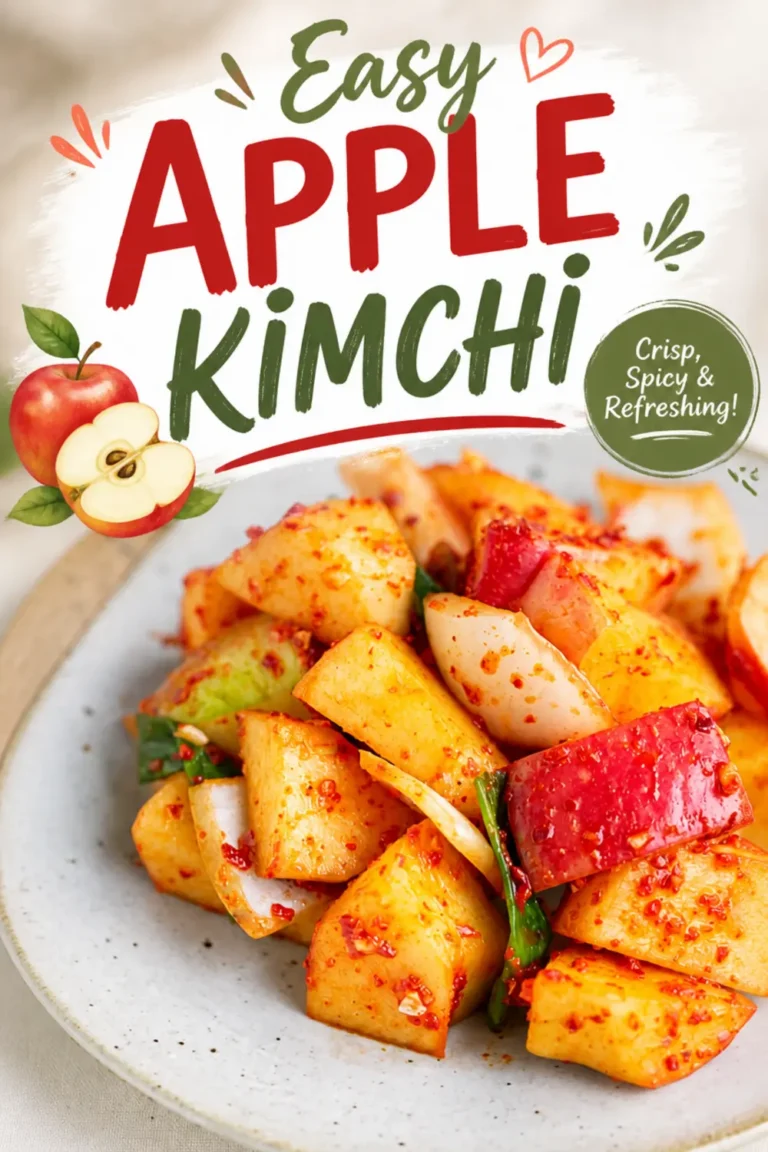
Apple Kimchi
What Is Easy Apple Kimchi? Easy Apple Kimchi is a bright, no cook Korean side dish that brings together crisp apples, a touch of warmth from gochugaru chili flakes, and a gentle savory depth from fish sauce.
- Total Time: 20 min
- Yield: 10 1x
Ingredients
2 lb fuji apples, Honeycrisp also work well
1/2 each yellow onion
4 each green onions
1/2 Tbsp Korean solar sea salt (cheonilyeom)
2.5 Tbsp Korean chili powder (Gochugaru)
1 Tbsp anchovy sauce or fish sauce
1 Tbsp garlic, chopped
0.25 tsp ginger, grated or chopped fine
1 tsp green plum syrup (maesil cheong), or sprinkle little bit of sugar
Instructions
1-Wash, core and cut apples into bite: Wash, core and cut apples into bite size pieces. I usually cut into quarters then into smaller pieces. No need to peel if using thin skin and organic apples. See picture.
2-Cut onions into 3/4 inch cubes: Cut onions into 3/4 inch cubes. Cut green onions into 1.5 inch length pieces.
3-Chop garlic and ginger or grate ginger: Chop garlic and ginger or grate ginger.
4-In a large bowl, add apples, onions: In a large bowl, add apples, onions and green onions. Then sprinkle Korean solar sea salt (Cheonilyeom) and toss.
5-Sprinkle red chili powder (gochugaru) to apples: Sprinkle red chili powder (gochugaru) to apples and onions, toss again.
6-Add garlic, ginger, fish sauce and plum: Add garlic, ginger, fish sauce and plum syrup the gently mix everything.
7-That’s it: That’s it! Eat it right away or refrigerate and enjoy over the next few days as it gets ripened.
Last Step:
Please leave a rating and comment letting us know how you liked this recipe! This helps our business to thrive and continue providing free, high-quality recipes for you.- Prep Time: 15 min
- Cook Time: 5 min
- Method: no_cook
Nutrition
- Calories: 56
- Sugar: 10
- Sodium: 170
- Fat: 0.4
- Saturated Fat: 0.1
- Carbohydrates: 14
- Fiber: 3
- Protein: 1