

What Is Traditional Ghraybeh?
Ghraybeh is a cherished Middle Eastern shortbread cookie, and once you taste its buttery, crumbly texture you will understand why it has been passed down through generations. The cookie has a lightly crisp exterior that gives way to a tender, melt in your mouth center.
I first tried ghraybeh at a friend’s Eid gathering years ago, and I remember being amazed that something so simple could feel so luxurious. The dough calls for just three base ingredients: all purpose flour, powdered sugar, and unsalted butter.
No eggs, no leaveners, nothing fussy. A single pistachio or almond is pressed into the top of each cookie before baking, adding a gentle crunch and a beautiful jewel like decoration that makes the whole tray festive.
These cookies are a hallmark of holiday tables across the Levant. Whether you call them ghraybeh, graybeh, or ghoraybeh, they are a constant during Ramadan, Eid, and family celebrations.

I often bake them when I want to bring a bit of that warm tradition into my own kitchen. The fragrance of butter and very lightly toasted nuts fills the house and instantly makes the day feel special.
Unlike many American shortbreads, ghraybeh is egg free and uses powdered sugar instead of granulated sugar, which contributes to the delicate texture. This recipe stays true to the Middle Eastern shortbread cookies I love, with no shortcuts that sacrifice authenticity.
When you place a ghraybeh cookie on a serving plate, it looks almost like a little gem. The nut perched in the center is not only decorative but also adds a subtle flavor that complements the buttery dough.
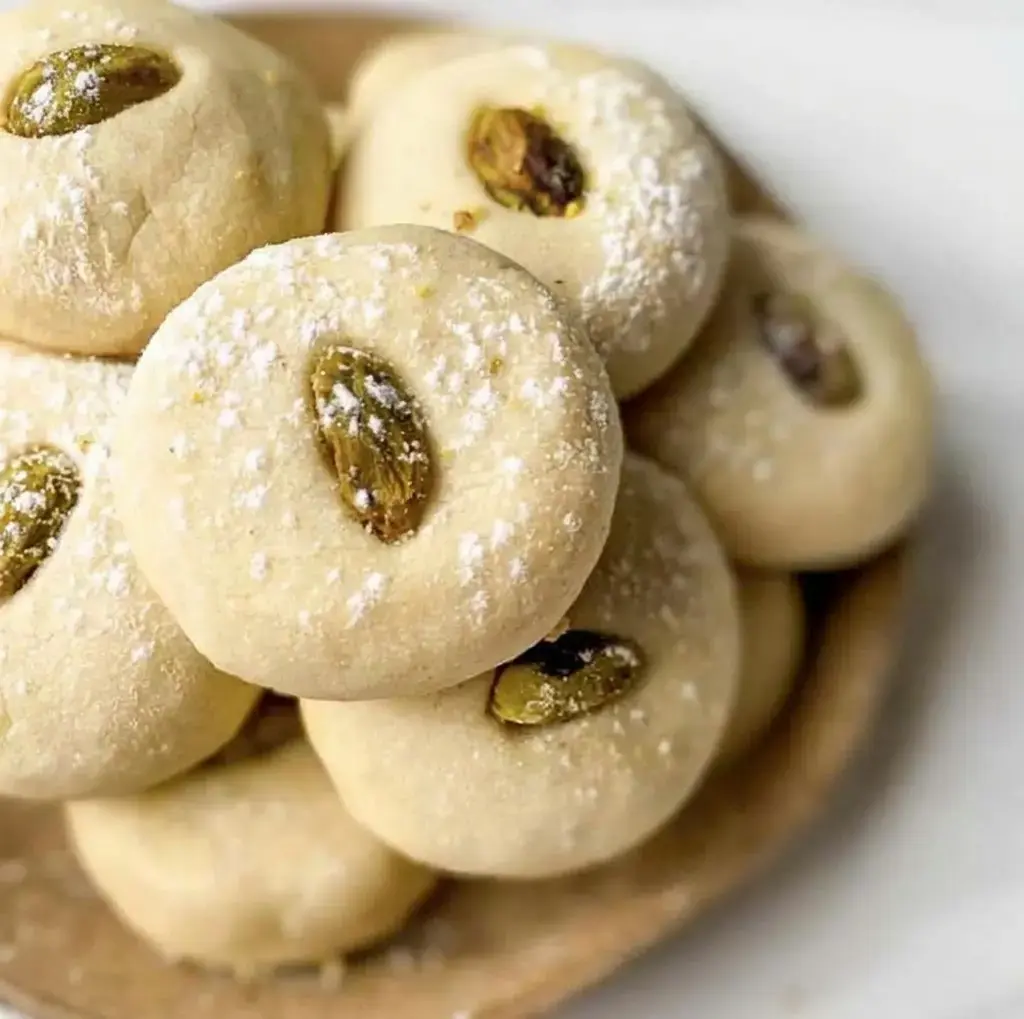
I have found that children especially enjoy helping to press the nuts into the dough balls, and it becomes a lovely kitchen activity before a holiday.
The cookies are traditionally served alongside Arabic coffee or strong black tea, and they hold their own on a dessert platter next to other sweets like maamoul.
I keep a batch sealed on the counter during Ramadan to offer guests who stop by, and somehow the cookies disappear quickly every time.
If you have never tried baking Middle Eastern sweets, ghraybeh is a wonderful place to start. The ingredient list is short, the technique is straightforward, and the result feels like a true taste of heritage.
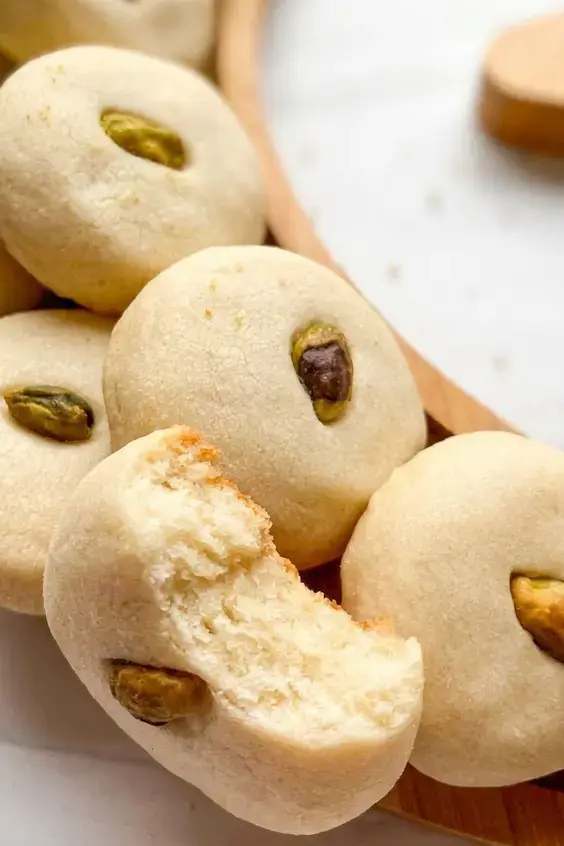
Many recipes have tiny variations across Syria, Lebanon, and Palestine, but this version captures the essential character that makes ghraybeh beloved.
I promise your kitchen will smell incredible, and you will be rewarded with a cookie that seems far more elegant than its four ingredients suggest.
Do not be intimidated by the idea of a traditional traditional ghraybeh cookie recipe; the dough is forgiving and the process moves quickly once the butter is softened.
Jump to:
- What Is Traditional Ghraybeh?
- Why This Four Ingredient Cookie Works
- Ingredients
- How to Make Ghraybeh
- Cream the Butter and Sugar
- Add the Flour
- Chill and Shape
- Bake and Cool
- Tips for the Best Ghraybeh
- Storage and Make Ahead Notes
- Frequently Asked Questions
- What makes Traditional Ghraybeh Middle Eastern Shortbread Cookies different from regular shortbread?
- How do I get the perfect melt-in-your-mouth texture for Ghraybeh cookies?
- How long do Ghraybeh cookies last and how should I store them?
- Can I customize Traditional Ghraybeh with different toppings or flavors?
- Ghraybeh (Middle Eastern Shortbread Cookie)
- Ingredients
- Instructions
- Last Step:
- Did you make this recipe?
Why This Four Ingredient Cookie Works
When I tell people that this cookie relies on only four ingredients they often look skeptical, but the magic of ghraybeh is in the balance.
High quality unsalted butter, powdered sugar, all purpose flour, and a single nut come together to make something that tastes like far more work than it actually requires.
The recipe yields about 20 cookies, and from start to finish you will spend around 90 minutes, with a full hour of that being hands off chilling time.
That means you can whip up the dough while dinner is cooking, pop it in the fridge, and bake fresh cookies before you even wash the plates.
Room temperature butter is the hero here. The butter must be soft enough to cream easily with a spatula yet still hold its shape; if it becomes oily or melted, the dough will spread too much and you will lose that signature crumbly texture.
I have tested this many times and I can tell you that cold butter from the fridge never incorporates smoothly, while melted butter turns the dough into a greasy mess.
The powdered sugar dissolves fully into the butter, adding sweetness without any graininess, which is key to the melt in your mouth feel.
Once the flour is added, the dough turns into something that resembles pie dough: slightly crumbly at first, but capable of coming together into a smooth ball with a little patient handling.
The simplicity of ghraybeh also makes it a fantastic recipe to teach someone who is new to baking. My teenage niece made these last Ramadan and she was so proud of the results.
Because there are no eggs or complicated leaveners, you do not have to worry about overmixing or collapsing. The nut on top is both a decoration and a gentle flavor accent; a pistachio brings an earthy, slightly sweet note, while an almond adds a classic, clean crunch.
I love that the cookie itself is perfectly fine without any topping, but the nut turns it into something you would happily serve to guests.
If you are looking for a cookie that feels special without requiring a trip to a specialty store, this is it.
Ingredients
These are the only items you need to gather. I recommend pulling the butter out of the fridge about an hour before you plan to start so it can come to the ideal soft, but still firm state.
Measure everything with standard American cups; the flour should be spooned into the cup and leveled off, not scooped directly from the bag, to keep the cookies tender.
| Ingredient | Quantity | Notes |
|---|---|---|
| All purpose flour | 2 cups | Spooned and leveled; do not use self rising flour. |
| Powdered sugar (confectioners’ sugar) | 1 cup | Sift if it appears lumpy to keep the dough smooth. |
| Unsalted butter, room temperature | 2 sticks (226 grams total) | Soft enough to press a finger into but still holds its shape; unsalted is important for flavor control. |
| Whole pistachios or almonds | 20 pieces | Raw or lightly toasted, whichever you prefer; the nut is pressed into each cookie before baking. |
| Powdered sugar for garnish | Optional | Dust over cooled cookies for a festive snowy look. |
That really is all. I have seen some recipes that call for a splash of rose water or orange blossom water, and while those can be lovely additions, I wanted to give you a clean base that lets the butter taste shine.
If you decide to experiment later, a tiny drop of floral water can lend a beautiful aroma, but the classic version needs nothing else.
Make sure your butter is truly unsalted; salted butter throws off the delicate balance and can make the cookies taste a little too savory.
I also find that whole nuts give a prettier finish than chopped ones, and they are less likely to fall off during baking if you press them in gently but firmly.
How to Make Ghraybeh
The steps are simple, and I will walk you through each one so you feel confident. The most important thing is to respect the chilling time and to handle the dough with care. Do not rush, and remember that the cookies will still taste wonderful even if they flatten a little the first time.
Cream the Butter and Sugar
Take your soft room temperature butter and place it in a large mixing bowl. Using a rubber spatula, start working the butter until it is smooth and creamy. Then add the cup of powdered sugar and continue mixing.
You are not trying to whip air into it like a cake; you just want the two ingredients to become one uniform, silky mixture.
The butter should be soft when pressed but still hold its shape; if it looks shiny or has started to melt, pop the bowl into the fridge for a few minutes to firm it up again.
I like to scrape down the sides of the bowl with the spatula as I go to make sure no pockets of sugar hide at the bottom.
Add the Flour
Now add one cup of all purpose flour and use the same spatula to fold it into the butter mixture. The dough will start to look dry and crumbly, and that is perfectly normal.
When most of that first cup is incorporated, add the second cup of flour. At this point, I abandon the spatula and use my hands to bring everything together.
It will feel impossible for a minute, but keep pressing and folding the dough against the side of the bowl, and soon it will form a cohesive disk. You want a dough that resembles pie dough: smooth, pliable, and not sticky.
If your kitchen is warm, you might need to work quickly to get it into a ball. The warmth of your hands will help the butter hold the flour, so do not give up.
Chill and Shape
Wrap the disk of dough tightly in plastic wrap and refrigerate it for at least one hour. This is not optional. Chilling firms up the butter, which helps the cookies keep their shape during baking and contributes to that delicate crumbly texture.
I have made the mistake of skipping this step when I was short on time, and the cookies spread into flat pancakes (still delicious, but not the traditional look).
Once the hour is up, remove the dough from the fridge. It will feel hard, but as soon as you start working with it the warmth of your hands will soften it.
Grab about one tablespoon of dough and roll it between your palms into a smooth ball. Flatten the top slightly, but leave the cookie with some height; you are aiming for a shape that is more of a thick disc than a flat coin.
Place it on a parchment lined baking sheet. Gently press one whole pistachio or almond into the center, just deep enough so half the nut sits inside and half peeks out. Space the cookies a couple of inches apart because they will spread a little.
Repeat with the remaining dough, reshaping any scraps together until you have used all of it.
Bake and Cool
Preheat your oven to 350°F with a rack in the middle position. Slide the baking sheet onto the middle rack and bake for 15 to 20 minutes maximum. You are looking for the bottoms to be just lightly browned; the tops will stay very pale.
Some ovens have hot spots, so if you notice uneven browning you can try baking on the bottom rack for 15 minutes and then moving the sheet to the top rack for 5 minutes.
I set a timer for 12 minutes and then check every few minutes after that. It is better to underbake slightly than to let the cookies get too dark.
When the timer goes off, take the tray out of the oven and set it on a wire rack. Do not touch the cookies yet. They are incredibly fragile while hot and will crumble if you try to move them.
Let them cool completely on the baking sheet. Once they are at room temperature, you can use a fine mesh sieve to dust a little powdered sugar over the tops if you like.
The snowy sugar makes them look like little jewels dusted with snow, perfect for a holiday platter. Then carefully transfer the cookies to a serving plate or storage container.
Tips for the Best Ghraybeh
Over the years I have learned a few things that make the difference between good ghraybeh and unforgettable ghraybeh. First, always use unsalted butter and make certain it is at true room temperature, which means soft but not greasy.
If you press a fingertip into the butter, it should leave an indent without turning into a puddle. I have not tested this recipe with ghee, Crisco, or shortening, so I cannot guarantee the texture if you make those swaps.
The dough relies on butter’s melting point to create those fine, crumbly layers, and alternatives could behave differently.
Do not skip the one hour chilling period. I know it is tempting to rush, but chilled dough spreads less and gives you that characteristic crisp shell surrounding a tender interior.
When you shape the cookies, leave a little height; the cookies will settle slightly during baking, so if you flatten them completely they can end up too thin.
I like to make the balls about the size of a walnut before I gently press the top.
For families with kids who are allergic to nuts or simply prefer a nut free version, you can skip the pistachio or almond entirely and still have a beautiful, delicate cookie.
Another option I have used when baking for children is to press a few colorful sprinkles into the top before baking; the sprinkles stay put and the kids love the festive look.
And while the nut decoration is traditional, the optional dusting of powdered sugar after cooling adds a lovely final touch that reminds me of maamoul cookies. The cookies also pair beautifully with a cup of Earl Grey tea or strong Arabic coffee.
If you enjoy buttery shortbread generally, you might also love my recipe for homemade butter cookies, which take a similar simple approach.
When I am baking for a large gathering, I sometimes double the batch and keep the second disk of dough in the fridge for up to two days before baking.
The cold dough is easy to slice and shape, and it frees up my oven on the day of the party. Remember, this dough does not contain eggs, so it is quite forgiving about resting.
However you customize your ghraybeh, keep the heart of the recipe: tender butter, a gentle touch of powdered sugar, and that unmistakable melt in your mouth texture.
Storage and Make Ahead Notes
One of the things I appreciate most about ghraybeh is how long they stay fresh. Because they are rich and egg free, they have a natural shelf stability that many cookies lack.
Once the cookies are completely cooled, store them in an airtight container at room temperature. I use a simple cookie tin or a plastic container with a tight fitting lid.
Keep the container in a cool, dry spot away from direct sunlight or any heat source, and the cookies will maintain their delicate texture for two to three weeks. I have kept them even longer, but they never last that long in my house!
The first couple of days after baking, you will notice that the outside stays lightly crisp while the inside remains tender and crumbly. Over time, the texture may soften slightly, but the flavor deepens in a lovely way.
I do not recommend freezing the baked cookies because the texture can become mealy and they lose that signature crisp outer layer. However, you can freeze the raw dough very successfully.
Wrap it tightly in plastic wrap, then in a layer of foil, and freeze for up to three months. Thaw the dough overnight in the refrigerator, then proceed with shaping and baking as usual.
This is a great strategy if you want to have fresh ghraybeh on hand for last minute guests during Ramadan or Eid.
Frequently Asked Questions
What makes Traditional Ghraybeh Middle Eastern Shortbread Cookies different from regular shortbread?
How do I get the perfect melt-in-your-mouth texture for Ghraybeh cookies?
How long do Ghraybeh cookies last and how should I store them?
Can I customize Traditional Ghraybeh with different toppings or flavors?
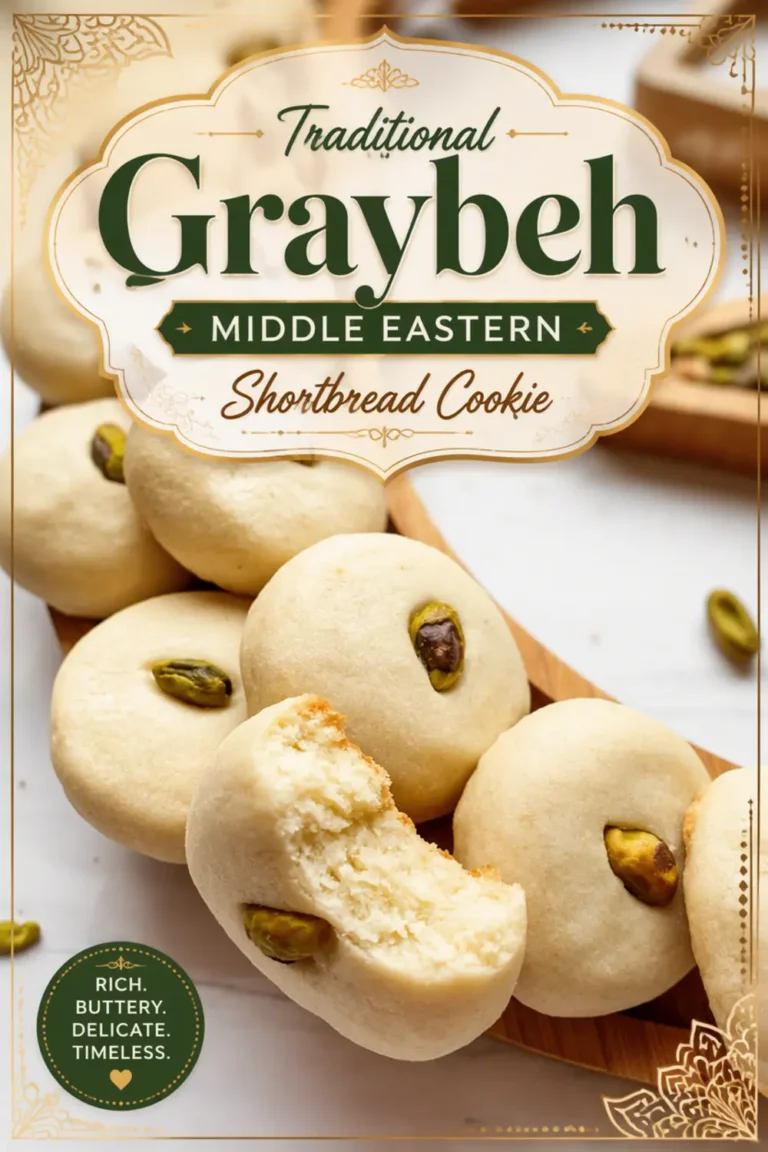
Ghraybeh (Middle Eastern Shortbread Cookie)
What Is Traditional Ghraybeh? Ghraybeh is a cherished Middle Eastern shortbread cookie, and once you taste its buttery, crumbly texture you will understand why it has been passed down through generations.
- Total Time: 90 min
- Yield: 20 cookies 1x
Ingredients
2 cups All Purpose Flour
1 cup Powdered Sugar
2 sticks Unsalted Room Temperature Butter, 113 grams for each stick of butter. You will need a total of 226 Grams.
20 whole pieces Pistacho or Almond
Powdered Sugar Garnish
Instructions
1-First, mix the butter with the powdered: First, mix the butter with the powdered sugar using a rubber spatula. You want to cream the both together until they are combined nicely.
2-Then, add 1 cup of flour at: Then, add 1 cup of flour at a time. Use the same spatula to mix it all together. When folding in the second cup, mix with your hands in order to have everything well incorporated. It should resemble pie dough. You want to be able to shape a disk or ball out of the dough. Don’t be discouraged if the dough appears crumbly; keep working with it until it all comes together because it will!
3-Wrap the dough in plastic wrap and: Wrap the dough in plastic wrap and place in the fridge to chill for at least 1 hour. This is imperative.
4-Once you take out the dough, it: Once you take out the dough, it should be hard to touch but it will be easier to mold once the heat of your hands come in contact.
5-Grab 1 tbsp size piece of dough: Grab 1 tbsp size piece of dough and shape like a small ball and slightly flatten the top. Make sure it is smooth. Add 1 piece of pistachio or almond on top by gently pressing it down half way. Place on a parchment lined baking tray.
6-Keep repeating this step until there is: Keep repeating this step until there is no longer any dough. Make sure there is a few inches of space between the cookies.
7-Bake in a 350 F oven for: Bake in a 350 F oven for 15-20 minutes max. The bottom should be lightly browned. Bake at the middle rack all throughout or the bottom rack for 15 min then the top rack for 5 minutes.
8-Allow the cookies to cool before touching: Allow the cookies to cool before touching or they can break. If they flatten a little bit, that is fine because it is a butter based cookie but in order to prevent flatenning; make sure the butter was room temp. to start with and the dough chilled properly.
9-Sprinkle some powedered sugar on top if: Sprinkle some powedered sugar on top if you would like and enjoy!
Last Step:
Please leave a rating and comment letting us know how you liked this recipe! This helps our business to thrive and continue providing free, high-quality recipes for you.- Prep Time: 0 min
- Cook Time: 0 min
- Method: baked