What Is Chicken Parmigiana?
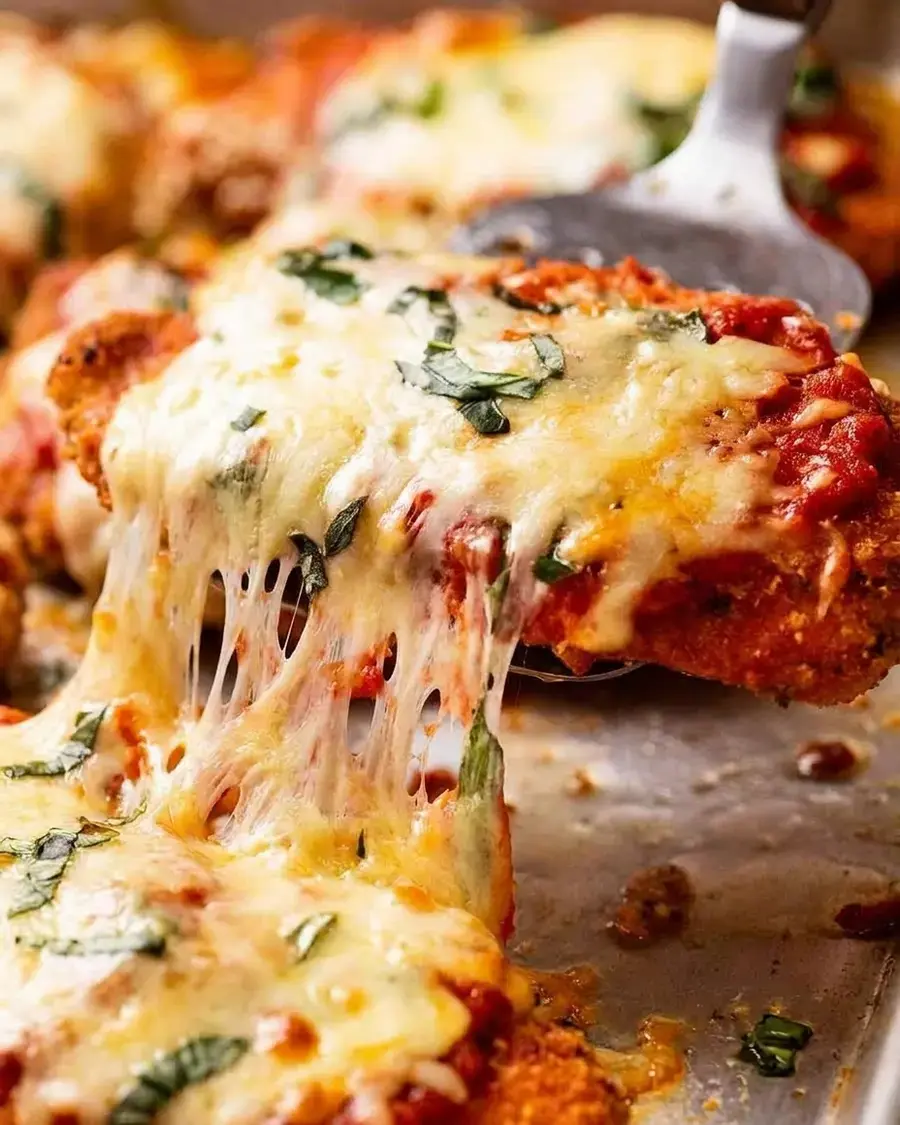
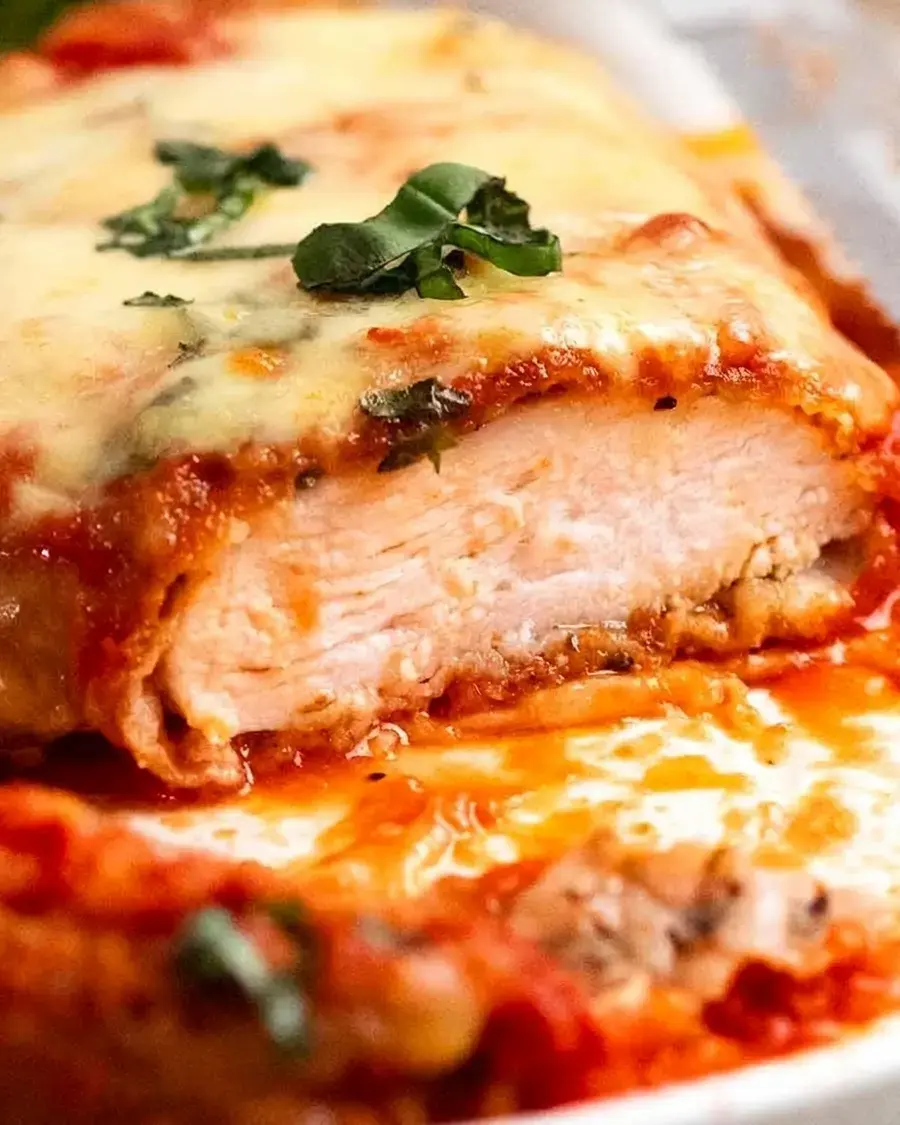
Chicken Parmigiana, known as Chicken Parmesan in the United States, combines thin crumbed chicken with tomato sauce, basil, mozzarella, and Parmesan. The method aims for juicy chicken, a crisp coating, and a short final bake that melts the cheese without overcooking the meat.
Seasoning is added in layers. The chicken is dry brined first, the egg dredge and panko mixture are separately seasoned, and the sauce carries garlic, onion, herbs, and optional chile. Covering only the center with sauce protects the crisp ends.

Jump to:
- What Is Chicken Parmigiana?
- Part 1: Dry Brine Ingredients
- How to Dry Brine the Chicken
- Part 2: Parmigiana Sauce Ingredients
- How to Make Parmigiana Sauce
- Part 3: Crumbing Ingredients
- Flour Layer
- Egg Dredge
- Panko Crumb
- How to Crumb Chicken Parmigiana
- Part 4: Frying or Baking
- Part 5: Top and Bake
- What to Serve With Chicken Parmigiana
- Technique and Safety Notes
- Why This Method Protects the Crust
- Frequently Asked Questions
- What is Chicken Parmigiana?
- Why is the chicken dry brined?
- How do I keep Chicken Parmigiana crisp?
- Can Chicken Parmigiana be baked instead of fried?
- What temperature should the chicken reach?
Part 1: Dry Brine Ingredients
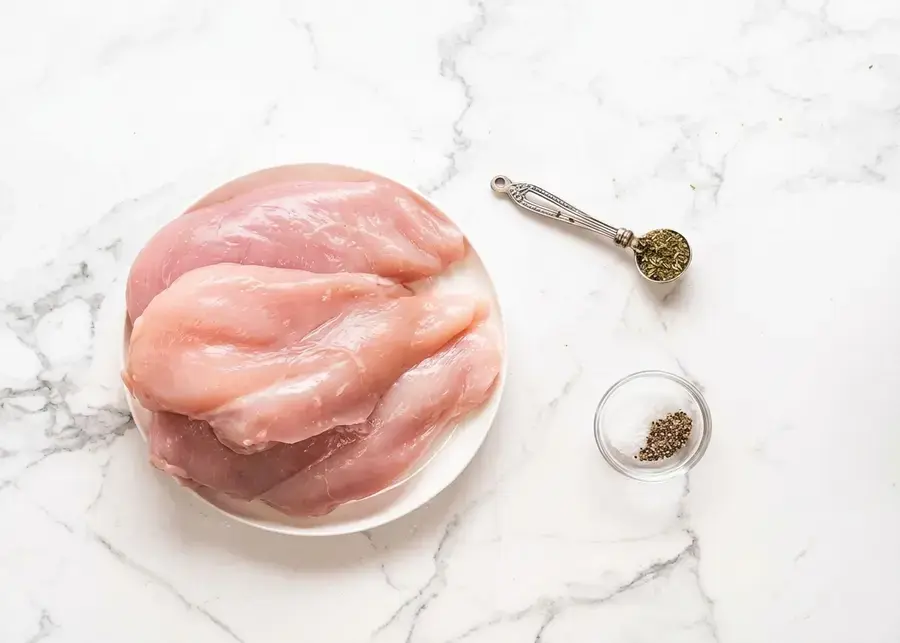
- 3 chicken breasts, 300 g or 10 ounces each: halve them horizontally to form six thin pieces.
- 1 teaspoon cooking or kosher salt: use 3/4 teaspoon if using table salt.
- 1/2 teaspoon black pepper
- 1/2 teaspoon Italian mixed herbs
The thin schnitzel-style pieces allow the short dry brine to season the chicken effectively. Similar thickness also makes the later frying stage more predictable.
How to Dry Brine the Chicken
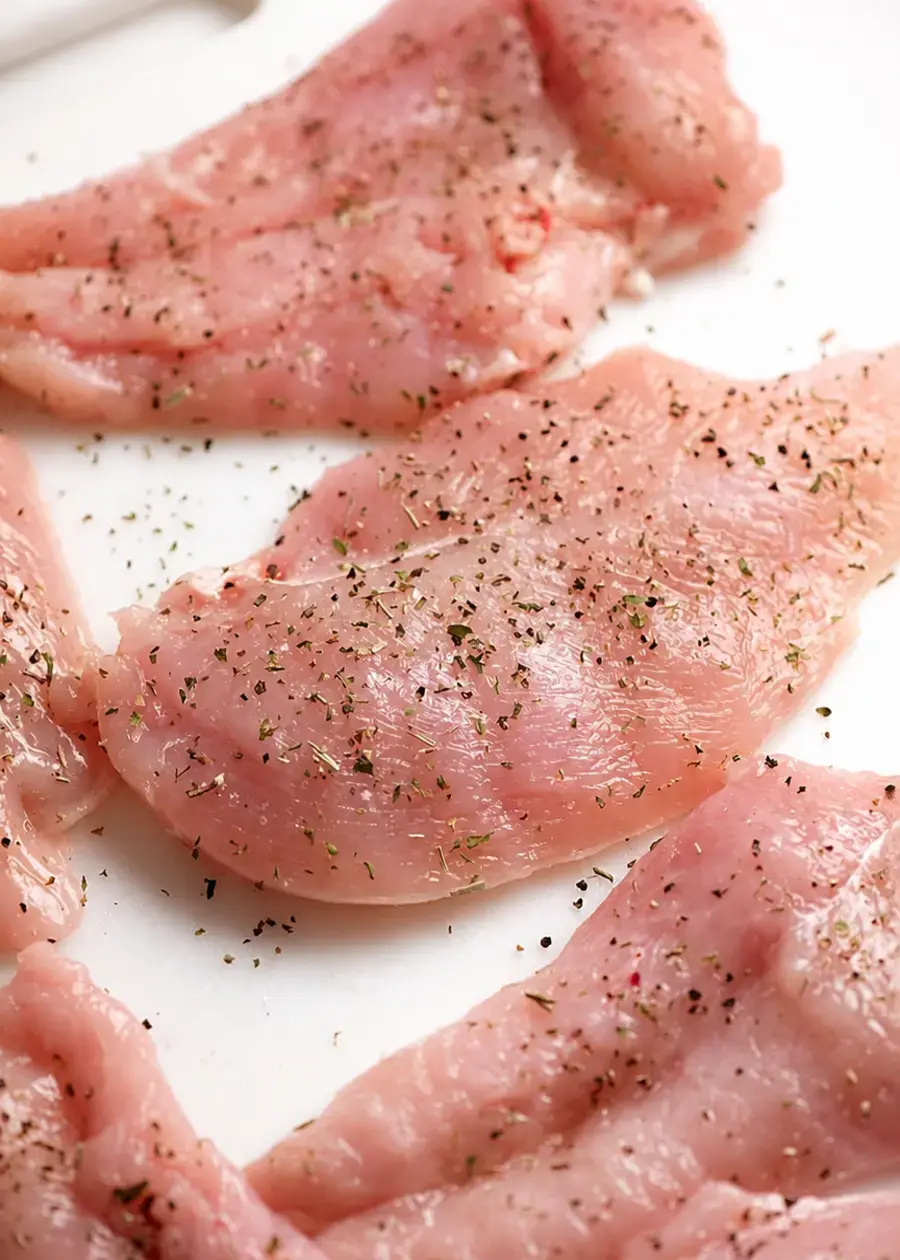
Slice each chicken breast horizontally to create two thin pieces. Sprinkle both sides with the salt, black pepper, and Italian mixed herbs, distributing the seasonings across all six portions.
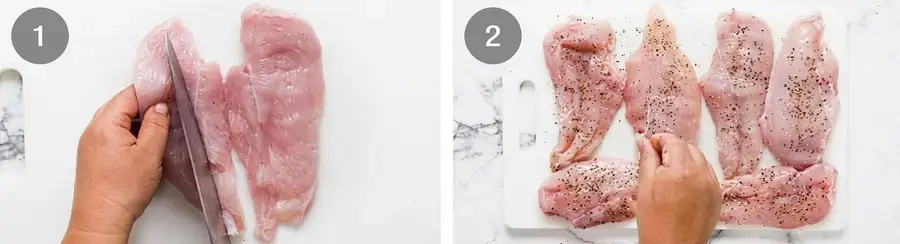
Place the seasoned chicken in the refrigerator for 30 minutes. Keep it refrigerated throughout the brining period and prepare the sauce and breading stations while the chicken rests.
Part 2: Parmigiana Sauce Ingredients
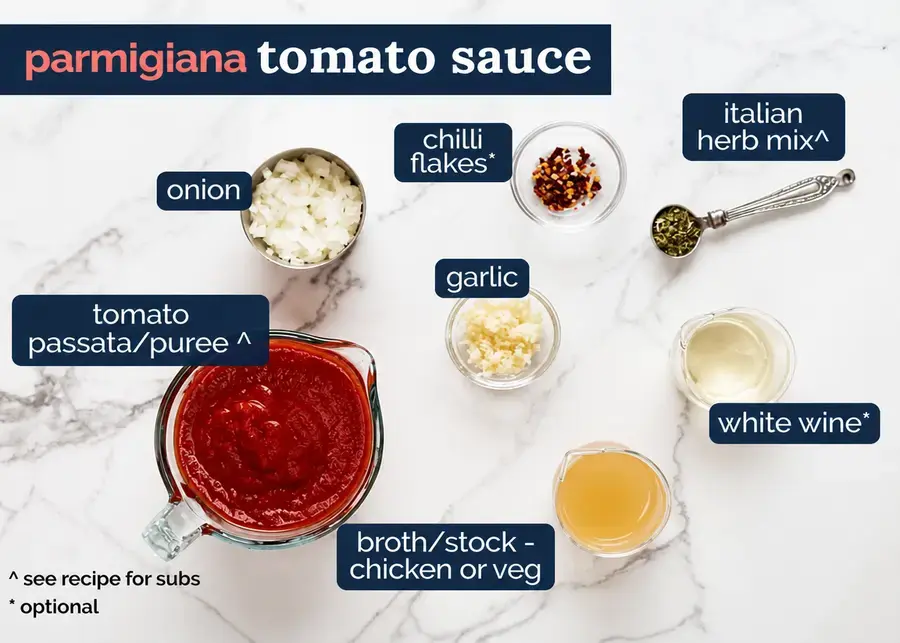
- 1 tablespoon olive oil
- 2 garlic cloves, finely minced
- 1/4 cup onion or eschallots, very finely chopped
- 1/4 teaspoon red pepper flakes, optional
- 1/4 teaspoon Italian mixed herbs
- 1/4 cup white wine, optional
- 400 g or 14 ounces tomato passata
- 1/2 cup chicken stock, broth, or water
- 1/4 teaspoon each salt and black pepper
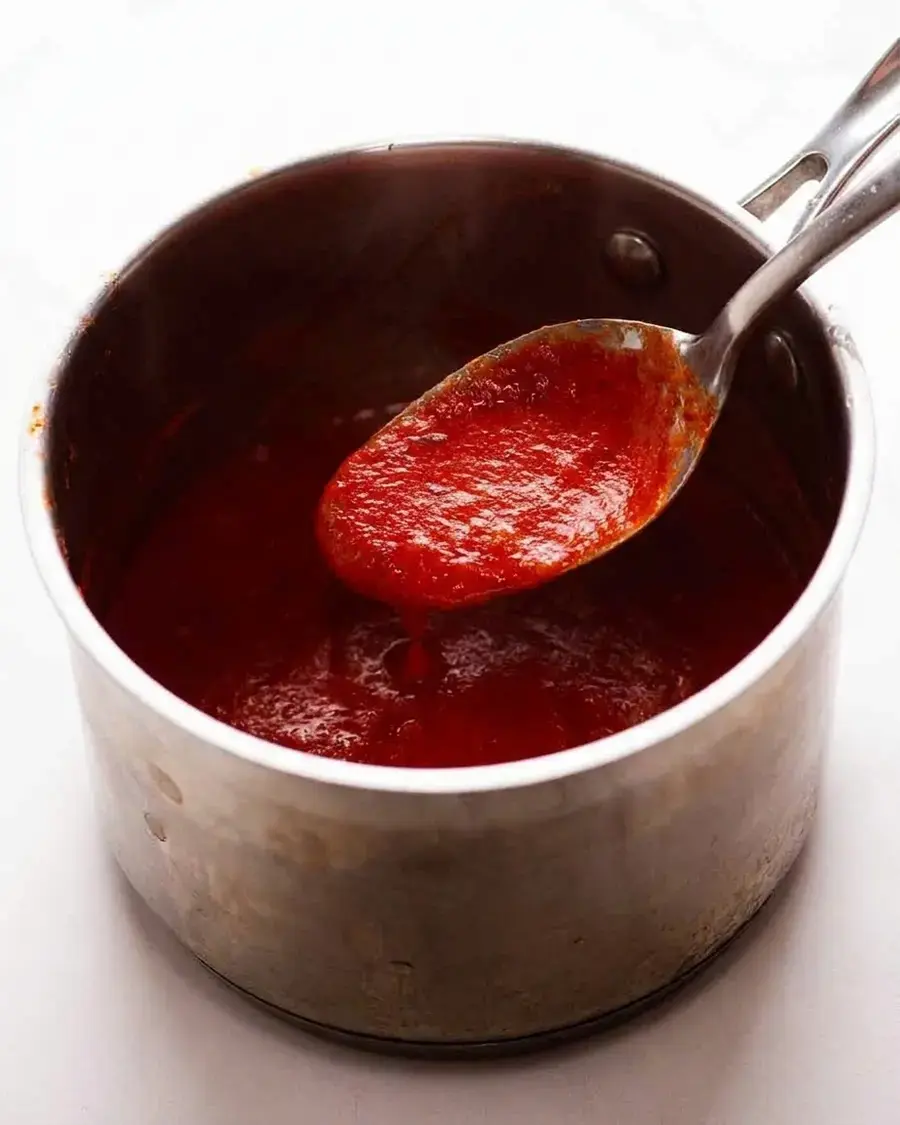
Passata creates a smooth sauce without tomato chunks. The finished consistency needs to be thick enough to sit on the crumbed chicken while remaining loose enough to spoon.
How to Make Parmigiana Sauce
Heat the olive oil in a saucepan over medium heat. Add the minced garlic and finely chopped onion or eschallots, then cook for three minutes until the onion becomes translucent.
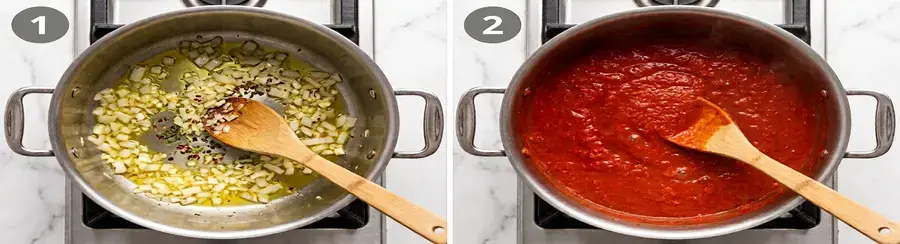
Add the optional red pepper flakes and Italian mixed herbs. Stir for 15 seconds. Pour in the optional white wine, increase the heat, and simmer rapidly until most of the liquid evaporates and the wine aroma is gone.
Add the passata, chicken stock, salt, and pepper. Cover and simmer on low for 10 minutes, until thickened but still saucy. Keep the finished sauce covered and warm.
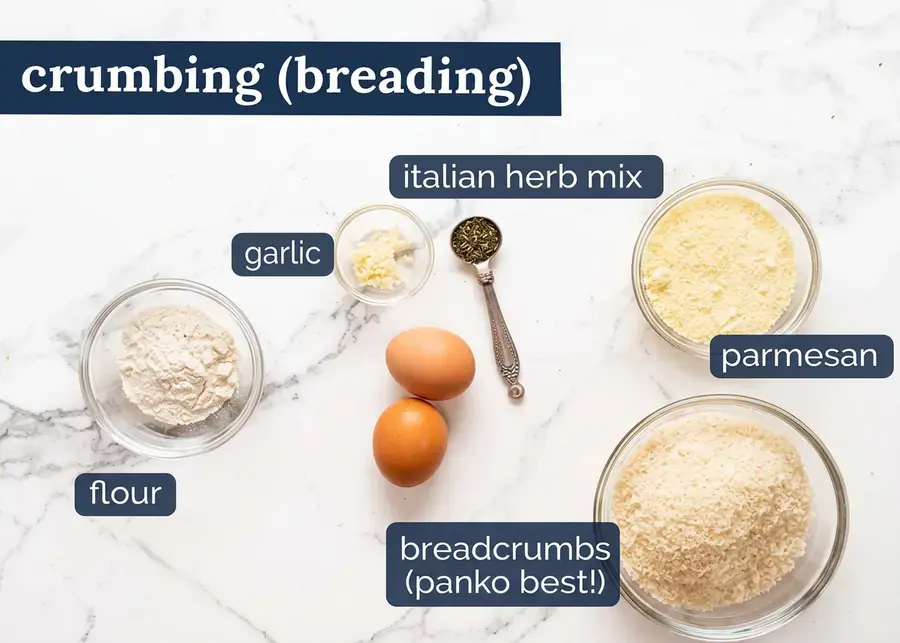
Part 3: Crumbing Ingredients
Flour Layer
- 1/3 cup plain or all-purpose flour
Egg Dredge
- 2 eggs
- 1 garlic clove, minced with a garlic press
- 1/4 teaspoon each salt and pepper
- 1/4 teaspoon Italian mixed herbs
Panko Crumb
- 1 1/2 cups panko breadcrumbs
- 1/2 cup finely grated Parmesan
- 1/2 teaspoon salt
- 1/4 teaspoon black pepper
Panko creates a coarser, crisper coating than ordinary fine crumbs. Parmesan adds savory flavor throughout the crust rather than appearing only in the final cheese layer.
How to Crumb Chicken Parmigiana
Spread the flour in one shallow bowl. Whisk the eggs, garlic, salt, pepper, and Italian herbs in a second bowl. Mix panko, Parmesan, salt, and pepper in a third shallow bowl or pan.
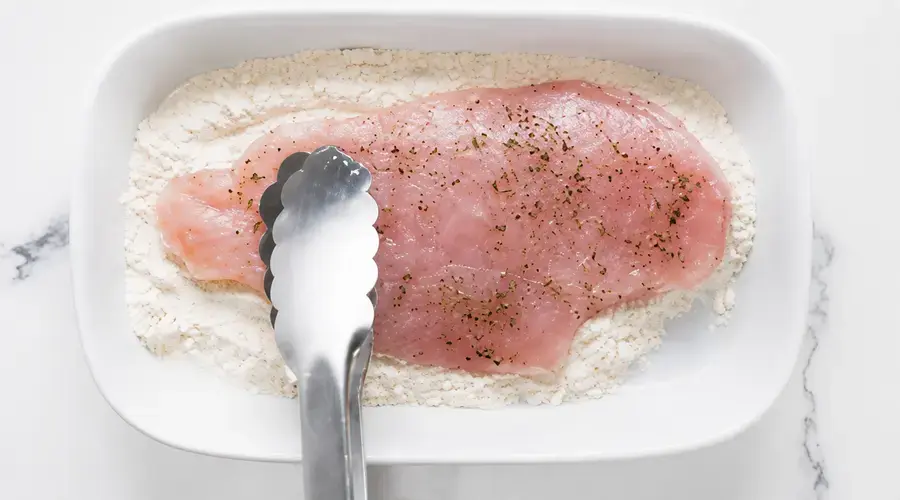
Press both sides of one chicken piece into the flour and shake off the excess. Coat it in the egg dredge, allowing extra egg to drip back into the bowl.
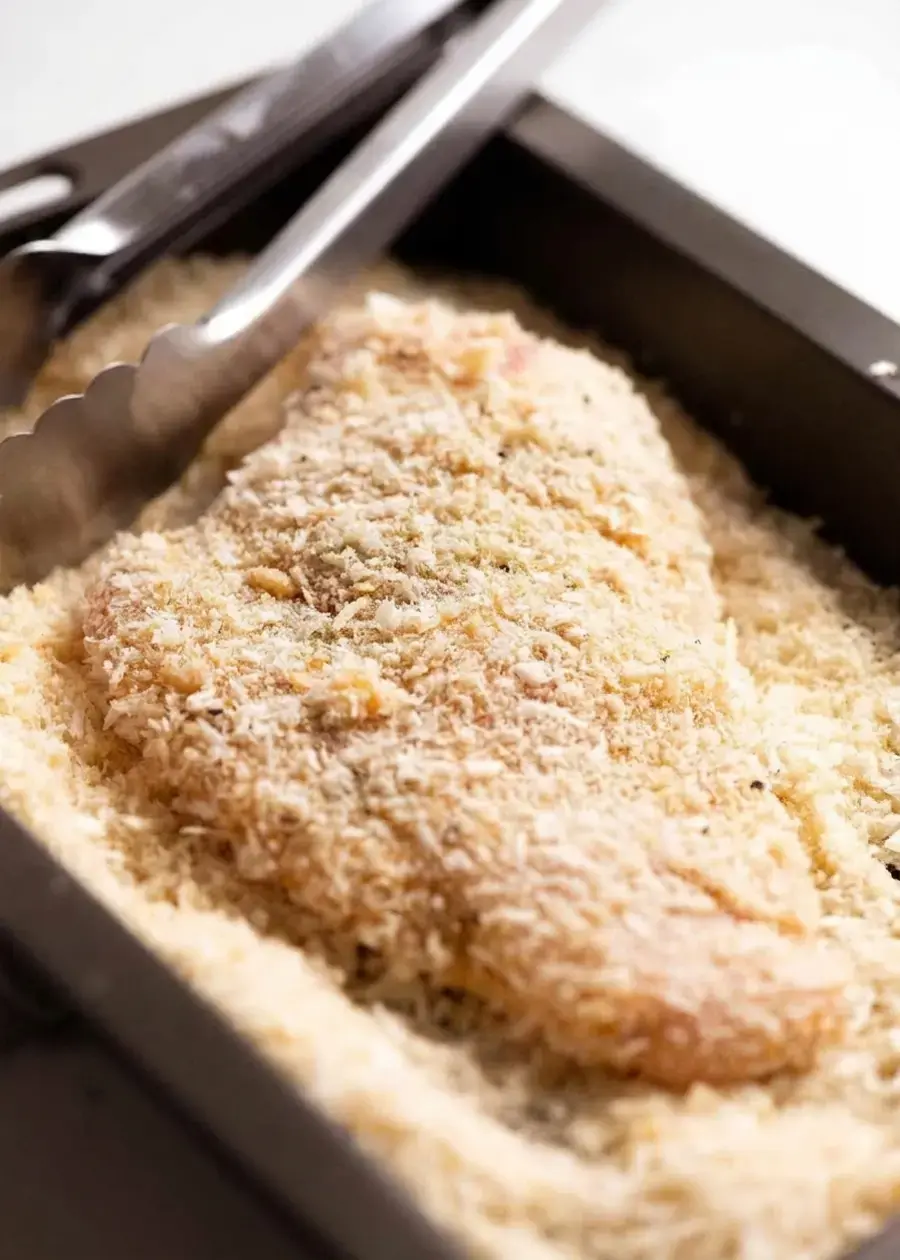
Place the chicken in the panko mixture and press firmly so the crumbs adhere. Transfer it to a plate and repeat the flour, egg, and crumb sequence for every remaining piece.
Part 4: Frying or Baking
For shallow frying, use 2 cups olive oil, vegetable oil, or canola oil. Line a tray with paper towels and place a wire rack on top before heating the oil.
Pour 1.5 to 2 cm, about 2/3 inch, of oil into a skillet. Heat over medium-high heat to 180°C/350°F. Carefully add only two or three chicken pieces at a time.
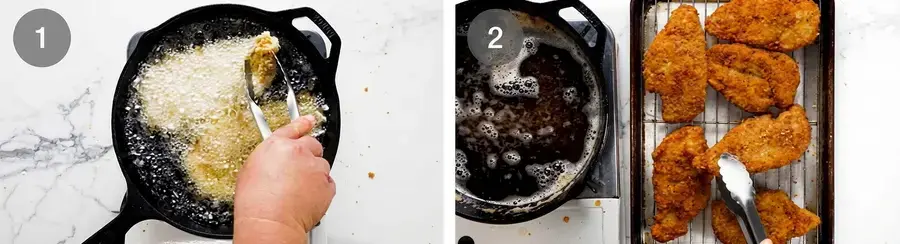
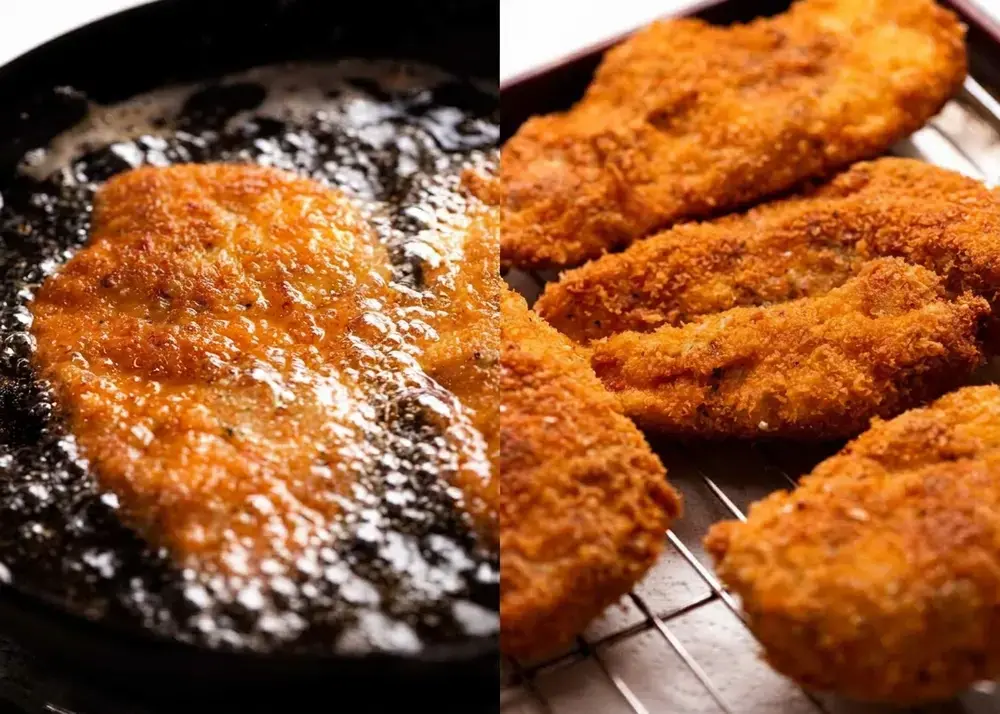
Cook the first side for two minutes until golden. Turn carefully and cook the second side for 1 1/2 minutes. Transfer to the rack and repeat with the remaining chicken.
For the source’s baked alternative, use pre-toasted breadcrumbs, oil spray, and a 200°C/390°F oven for 15 minutes. Follow the complete source note for preparing the crumbs and coating before baking.
Part 5: Top and Bake
- 10 basil leaves, roughly chopped: use a pinch of dried basil or omit if necessary.
- 2 cups shredded mozzarella, or enough slices to cover
- 3/4 cup finely grated Parmesan
- 1 tablespoon extra virgin olive oil
- 5 basil leaves, roughly chopped, for the finish
Preheat the oven to 180°C/350°F. Place the cooked chicken pieces on a tray and spoon about 1/3 cup sauce over each one, covering roughly 80 percent while leaving the ends exposed.
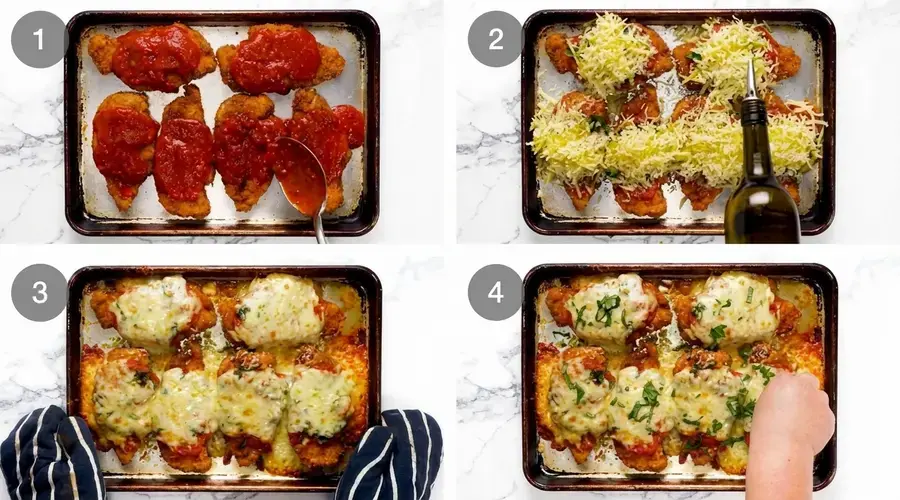
Scatter the first portion of basil over the sauce. Add mozzarella in generous mounds, sprinkle with Parmesan, and drizzle the extra virgin olive oil over the cheese.
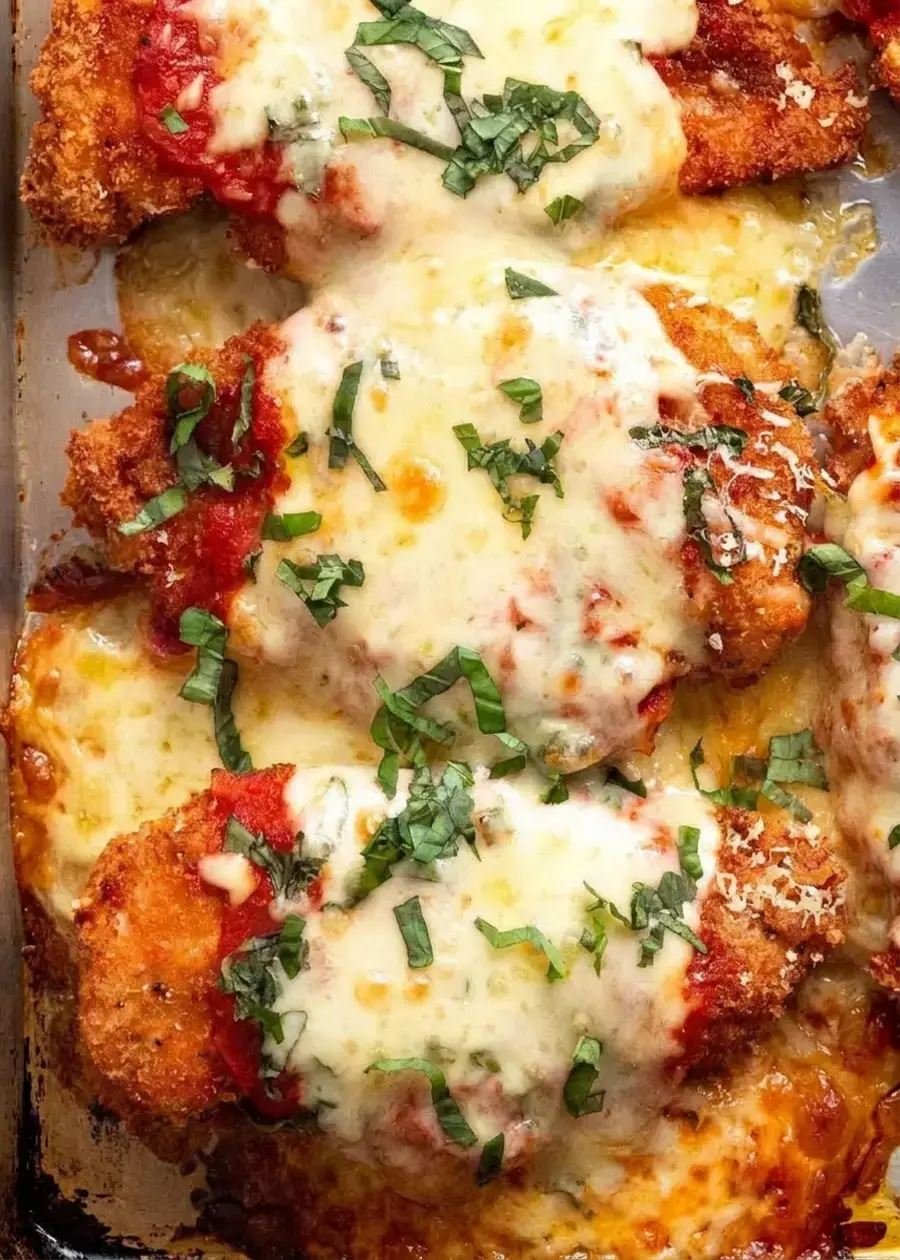
Bake for 15 minutes, until the cheese melts and develops a few brown spots. Do not extend the bake unnecessarily because the chicken has already been fried and can overcook.
Remove the tray, add the remaining basil if desired, and serve immediately. Offer leftover warm tomato sauce separately rather than covering the remaining crisp edges.
What to Serve With Chicken Parmigiana
A plain leafy salad with balsamic dressing balances the rich breading, tomato sauce, and cheese. Roasted or simply cooked vegetables provide another lighter direction without changing the Chicken Parmigiana itself.
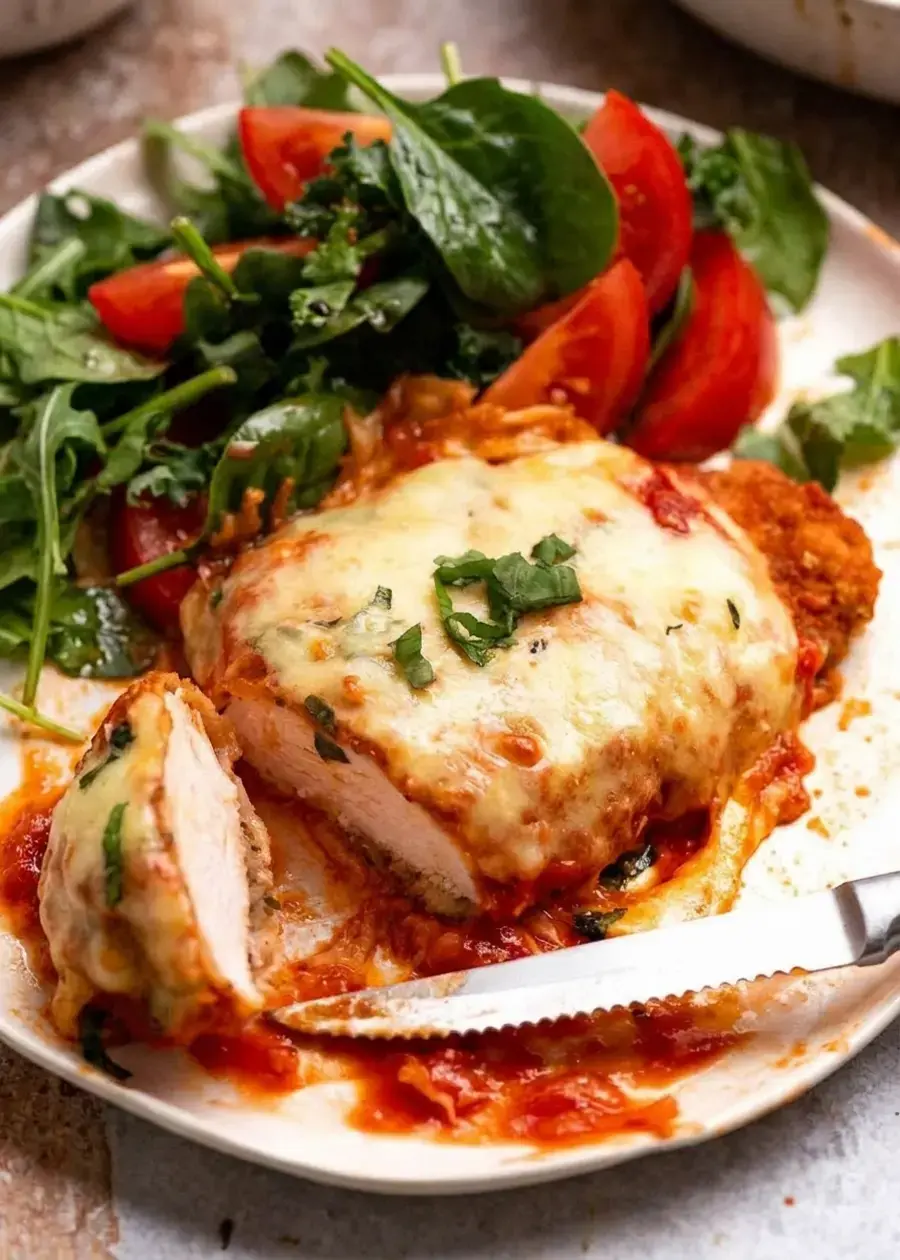
For a larger Italian-style meal, the source suggests focaccia or garlic bread. Serve bread beside the chicken so diners can use extra sauce without placing additional moisture on the crisp coating.
Technique and Safety Notes
Uniform chicken thickness supports even cooking, while a dry surface helps the flour, egg, and crumbs adhere. The precise flour-to-egg-to-panko order should not be rearranged.
Measure the oil temperature before frying and avoid crowding the skillet. A rack keeps the underside from sitting directly on absorbent paper, helping steam escape while the remaining pieces cook.
Check the thickest part of the chicken with a food thermometer and confirm 165°F (74°C). Exterior browning and melted cheese are quality cues, not substitutes for a safe poultry temperature.
Why This Method Protects the Crust
Dry brining happens before breading, so seasoning reaches the chicken rather than relying on the outer coating alone. The thin pieces also cook quickly during the shallow-frying stage and need only a short period under the cheese.
The rack is important after frying because it lets air move beneath the crust. Placing hot chicken flat on paper can trap steam against the underside, while the elevated rack supports drainage without enclosing the crumbs.
Thick sauce and partial coverage work together. A watery sauce would spread across the breading, while covering only the center preserves exposed edges. The basil, mozzarella, Parmesan, and olive oil remain concentrated over the sauced area.
The final 15-minute bake is for melting and browning the cheese, not cooking raw chicken from the beginning. Keeping that purpose clear prevents an unnecessarily long oven stage that could dry the already fried pieces.
Frequently Asked Questions
What is Chicken Parmigiana?
Chicken Parmigiana, also called Chicken Parmesan, is crumbed chicken topped with thick tomato sauce, basil, mozzarella, and Parmesan, then baked briefly until the cheese melts and develops a few brown spots.
Why is the chicken dry brined?
The thin chicken pieces are seasoned with salt, pepper, and Italian mixed herbs, then refrigerated for 30 minutes. This seasons the meat before the flour, egg, crumbs, sauce, and cheese add their separate layers.
How do I keep Chicken Parmigiana crisp?
Drain the fried chicken on a rack, cover only about 80 percent of each piece with sauce, and leave the ends exposed. Bake for only 15 minutes so the chicken does not overcook and the entire crust is not steamed under sauce.
Can Chicken Parmigiana be baked instead of fried?
Yes. The source provides a baked alternative using pre-toasted breadcrumbs, oil spray, and a 200°C/390°F oven for 15 minutes. Follow the complete source note for preparing those crumbs before coating the chicken.
What temperature should the chicken reach?
Chicken must reach 165°F (74°C) in its thickest part, checked with a food thermometer. Browning, crisp crumbs, and melted cheese do not confirm that poultry is safely cooked.