

What Is Dosirak?
Dosirak (도시락) is the Korean word for lunchbox, and it also describes the packed meal inside that box. The version I am sharing here is a quick old fashioned dosirak built around short grain rice, egg coated Spam, a separately fried egg, kimchi sauteed with onion, Korean seasoned seaweed flakes, and a sprinkle of optional sesame seeds.
The whole idea is convenience. You pack rice in roughly two thirds of the container, tuck the cooked toppings around it, snap the lid shut, and shake the box.

The ingredients break up against each other and turn into something that looks a lot like bibimbap. It is not bibimbap though. Dosirak is a distinct packed meal that uses whatever protein, kimchi, and leftover banchan you already have on hand.
For readers who are new to the term, bap (밥) means cooked rice, and banchan (반찬) refers to the small side dishes that come with a Korean meal. A classic dosirak gathers a scoop of bap with a few pieces of banchan so the lunchbox holds a balanced meal in one container.
Jump to:
- What Is Dosirak?
- The History and Tradition of Dosirak
- Dosirak Ingredients and Substitutions
- How to Make a Dosirak Korean Lunch Box
- Expert Tips for the Best Texture
- Dosirak Variations and Side Dishes
- Storage and Reheating
- Dosirak FAQ
- What does dosirak mean?
- Do I need a traditional metal dosirak box?
- Can I make dosirak ahead?
- What can replace Spam?
- Why should I cook the kimchi until the liquid evaporates?
- Is dosirak the same as bibimbap?
- Recipe Time, Yield, and Nutrition
- Easy 10-min. Dosirak Korean Lunch Box
- Ingredients
- Instructions
- Last Step:
- Nutrition
- Did you make this recipe?
The History and Tradition of Dosirak
Dosirak has a nostalgic place in Korean food memory. Decades ago, students carried small metal lunchboxes to school and set them on warm classroom heaters in the morning. By lunchtime, the rice was still warm and ready to eat.
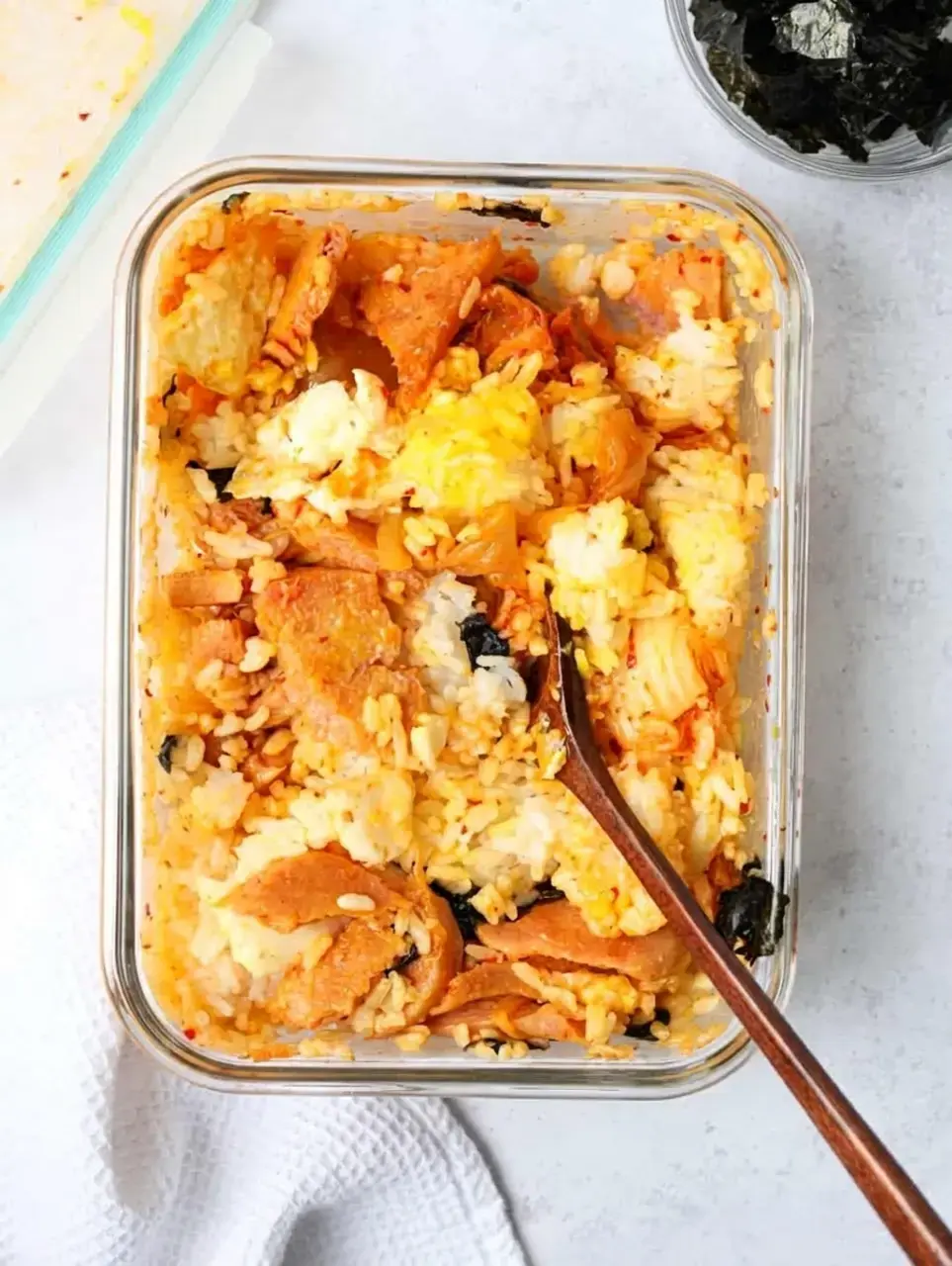
When the lunch bell rang, kids would poke at the rice and toppings with a spoon, close the lid, and give the box a few firm shakes.
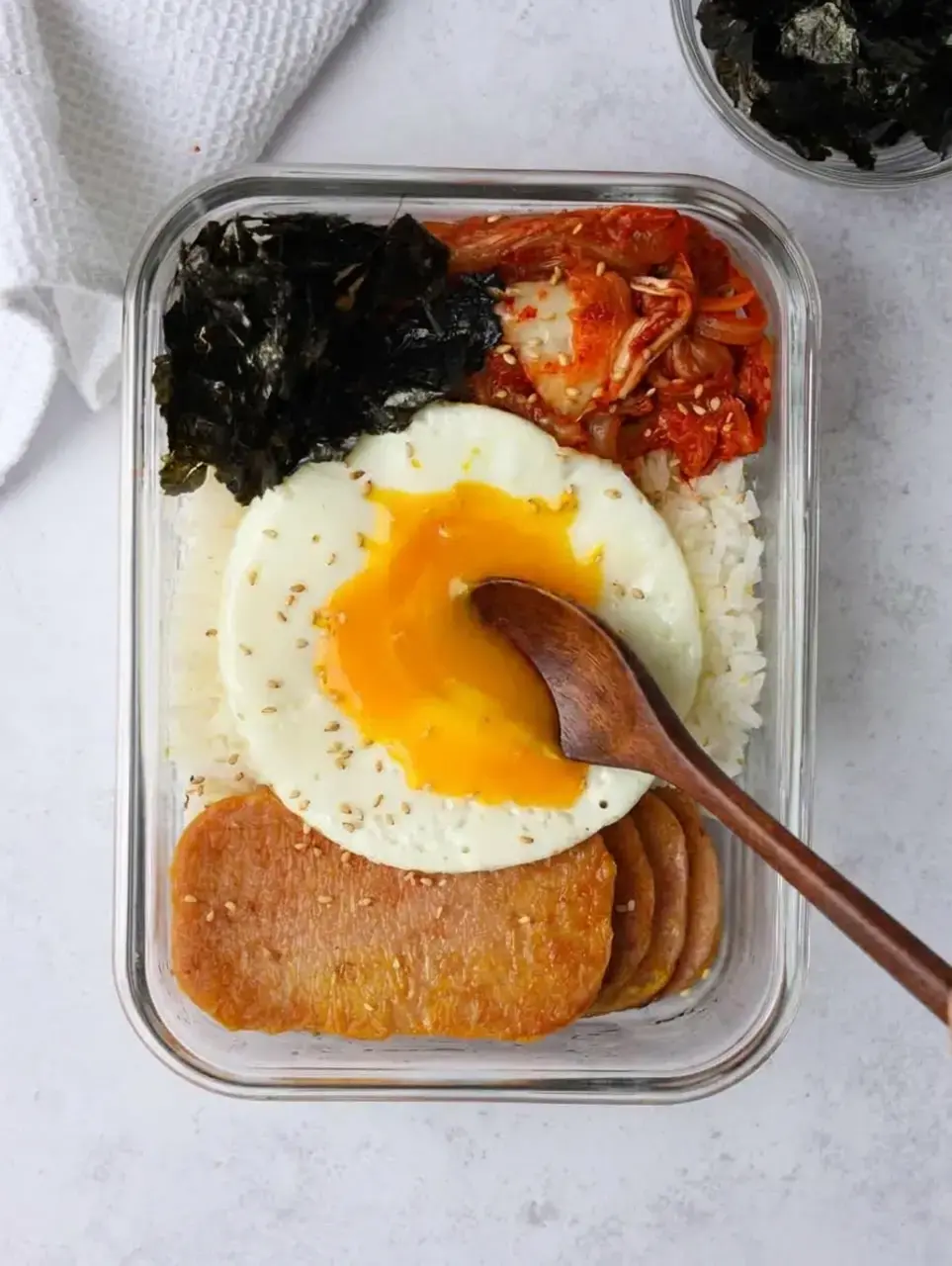
The components broke apart, the egg yolk mixed into the rice, and the whole thing turned into a saucy, satisfying meal. This shaking ritual is what most people picture when they think of an old style Korean lunch box.
Every household packed a slightly different combination. A familiar lineup included rice, a slice of egg coated sausage or Spam, fried kimchi with onion, a fried egg, and dried seaweed. That kind of home packed lunchbox is still what many Korean home cooks mean when they say yennal dosirak, or old style dosirak.
Dosirak Ingredients and Substitutions
For one lunchbox, gather the following. The source recipe card is the authority for every quantity, so try to keep these numbers as written.
- 2 cups cooked short grain rice (long grain white rice also works)
- 1/2 can Spam, sliced into 4 pieces
- 2 large eggs, divided
- 2 teaspoons vegetable or another neutral high smoke point oil
- 1/4 cup chopped well fermented kimchi
- 1/4 cup thinly sliced onion
- 1/3 cup Korean seasoned seaweed flakes, crushed seaweed snack, or nori strips
- 1/2 teaspoon sesame seeds, optional
Short grain rice holds the seasonings best and gives the closest texture to a traditional Korean packed lunch, but long grain white rice is a fine stand in for busy weeknights. The Spam can be replaced with sliced sausage or ham using the same 2 minutes per side cook time.
Kimchi should be well fermented and sour, not fresh and crunchy, so it breaks down during cooking. Nori strips, crushed gim, or seasoned seaweed flakes all work, so pick the one you already buy. Spam is a canned cooked meat product that is widely available in the United States and gives the recipe its signature savory flavor.
How to Make a Dosirak Korean Lunch Box
- Pack the warm cooked rice into about two thirds of the lunchbox. Press it down lightly and leave room for the toppings.
- Beat one egg in a shallow bowl. Dip each Spam slice in the egg, then fry in 1 teaspoon of oil over medium heat for about 2 minutes per side, until lightly golden.
- Add the remaining 1 teaspoon of oil to the pan. Saute the onion over medium high heat for about 1 minute, add the kimchi, and keep cooking until the onion softens and most of the kimchi liquid has evaporated.
- Fry the second egg over low heat, sunny side up or over easy, so the yolk stays runny.
- Arrange the Spam, kimchi and onion, fried egg, seaweed flakes, and optional sesame seeds over the rice.
- Use a spoon to break the egg yolk and break up the larger pieces.
- Close the lid tightly and shake the box for a few seconds.
- Open and eat right away.
The whole process is genuinely a 10 minute Korean lunch, which makes this dish a strong pick for busy parents, students, and working professionals.
Expert Tips for the Best Texture
A great dosirak is all about texture. Pull the Spam off the heat as soon as it turns lightly golden so the inside stays juicy. If it browns too fast, lower the heat.
Keep cooking the kimchi and onion until most of the liquid has cooked off. Excess moisture is the fastest way to make the rice soggy and the seaweed limp, so be patient with this step.
The separate egg is yours to choose. Sunny side up, over easy, scrambled, or poached all work, as long as the yolk is soft enough to coat the rice once you shake the box. Do not skip the seasoned seaweed if you can help it.
The crispy flakes add a salty, umami crunch that balances the rich Spam and creamy egg yolk.
Finally, break up the components with a spoon before closing the lid. A few firm shakes will not break apart a solid pile of rice, so loosen it first for an evenly mixed bite.
Dosirak Variations and Side Dishes
Once you know the base method, dosirak is easy to customize. The source recipe lists several additions that you can swap in or out depending on what you have.
- Tuna mixed with a spoonful of Kewpie mayonnaise, a popular yennal dosirak filling.
- Cocktail or mini sausages for an even faster Spam style bite.
- Radish kimchi, green onion kimchi, yellow pickled radish, or pickled burdock for extra crunch.
- Soy sauce, sesame oil, or gochujang drizzled over the rice before shaking.
- Bulgogi beef, rolled omelet, Korean spinach, seasoned bean sprouts, or zucchini fritters to bulk up the protein or vegetables.
You can also serve the lunchbox alongside other banchan and Korean dishes for a bigger meal. The source suggests cucumber salad, braised potatoes, japchae, pajeon, soft tofu stew, kimchi potato pancakes, or Spam kimbap. For more ideas, see our homemade kimchi recipe and our quick fresh kimchi geotjeori for banchan inspiration.
Storage and Reheating
Leftover dosirak keeps well in an airtight container in the refrigerator for up to 4 days. For packed lunches, keep the box chilled in an insulated bag until you are ready to reheat or eat.
To reheat, microwave the assembled meal for 2 to 3 minutes until hot all the way through, or tip the contents into a pan and warm over medium heat for a few minutes, stirring gently.
The source does not recommend freezing the complete dosirak because the rice, egg, and seaweed do not all freeze and thaw well. If you want to prep ahead, store the components separately and assemble just before serving.
Dosirak FAQ
Dosirak means lunchbox in Korean and refers to the packed meal inside. It usually combines cooked rice with several side dishes.“,”visible”:true},{“id”:”faq question 1784824247435 1″,”title”:”Do I need a traditional metal dosirak box?”,”content”:”No. A rectangular glass or plastic lunch container works just as well for a homemade dosirak. Anything with a tight fitting lid that lets you shake the meal is fine.
“,”visible”:true},{“id”:”faq question 1784824247435 2″,”title”:”Can I make dosirak ahead?”,”content”:”Yes. Store it airtight in the refrigerator for up to 4 days and reheat it in the microwave or in a pan before serving.
“,”visible”:true},{“id”:”faq question 1784824247435 3″,”title”:”What can replace Spam?”,”content”:”The source allows sausage or ham in place of Spam. Tuna mixed with mayonnaise, bulgogi, rolled omelet, or simple Korean vegetable sides also make good additions.
“,”visible”:true},{“id”:”faq question 1784824247435 4″,”title”:”Why should I cook the kimchi until the liquid evaporates?”,”content”:”Removing the kimchi liquid prevents the rice and toppings from turning soggy once you close and shake the box.
“,”visible”:true},{“id”:”faq question 1784824247435 5″,”title”:”Is dosirak the same as bibimbap?”,”content”:”No. Both can be mixed before eating, but dosirak is a packed lunch built from rice and selected side dishes, while bibimbap is a bowl dish with rice, vegetables, egg, optional meat, and gochujang.
“,”visible”:true}]}, >What does dosirak mean?
Dosirak means lunchbox in Korean and refers to the packed meal inside. It usually combines cooked rice with several side dishes.
Do I need a traditional metal dosirak box?
No. A rectangular glass or plastic lunch container works just as well for a homemade dosirak. Anything with a tight fitting lid that lets you shake the meal is fine.
Can I make dosirak ahead?
Yes. Store it airtight in the refrigerator for up to 4 days and reheat it in the microwave or in a pan before serving.
What can replace Spam?
The source allows sausage or ham in place of Spam. Tuna mixed with mayonnaise, bulgogi, rolled omelet, or simple Korean vegetable sides also make good additions.
Why should I cook the kimchi until the liquid evaporates?
Removing the kimchi liquid prevents the rice and toppings from turning soggy once you close and shake the box.
Is dosirak the same as bibimbap?
No. Both can be mixed before eating, but dosirak is a packed lunch built from rice and selected side dishes, while bibimbap is a bowl dish with rice, vegetables, egg, optional meat, and gochujang.
Recipe Time, Yield, and Nutrition
This dosirak recipe makes 1 lunchbox. The source lists 2 minutes of preparation, 8 minutes of cooking, and 10 minutes total.
| Detail | Amount |
|---|---|
| Servings | 1 lunchbox |
| Prep time | 2 minutes |
| Cook time | 8 minutes |
| Total time | 10 minutes |
The full nutrition panel from the source is preserved here on a per serving basis for one lunchbox.
| Nutrient | Amount per serving |
|---|---|
| Calories | 1,195 kcal |
| Carbohydrates | 122 g |
| Protein | 45 g |
| Fat | 56 g |
| Saturated fat | 20 g |
| Polyunsaturated fat | 6 g |
| Monounsaturated fat | 27 g |
| Trans fat | 0.04 g |
| Cholesterol | 493 mg |
| Sodium | 2,686 mg |
| Potassium | 1,039 mg |
| Fiber | 1 g |
| Sugar | 2 g |
| Vitamin A | 568 IU |
| Vitamin C | 3 mg |
| Calcium | 88 mg |
| Iron | 9 mg |
The sodium number is high for a single meal, which is worth keeping in mind for readers who watch their salt intake. Drink water alongside the meal and balance it with lower sodium dishes during the rest of the day.
For more on this style of cooking, the original recipe is published at Christie at Home, and a second take on dosirak lunchbox ideas is available at Stellan Spice.
Print
Easy 10-min. Dosirak Korean Lunch Box
What Is Dosirak? Dosirak (도시락) is the Korean word for lunchbox, and it also describes the packed meal inside that box.
- Total Time: 10 min
- Yield: 1 lunch box 1x
Ingredients
2 cups cooked short grain rice
½ can spam, sliced into 4 pieces
2 large eggs, one for dipping spam and one to fry on its own
2 teaspoon vegetable oil
¼ cup kimchi, chopped
¼ cup onion, thinly sliced
⅓ cup Korean seaweed flakes
½ teaspoon sesame seeds, garnish
Instructions
1-Pack your cooked rice with a rice: Pack your cooked rice with a rice paddle or spatula into two-thirds of the lunch box leaving some space at the top and one the side for the other ingredients.
2-In a bowl, beat one of the: In a bowl, beat one of the eggs. Then lightly grease a large pan with vegetable oil on medium heat. Dip each slice of spam into the beaten egg and fry on both sides until light golden brown, about 2 minutes per side. Remove the cooked spam and place where there is an empty space of your lunch box.
3-In the same pan set over medium: In the same pan set over medium high heat, lightly grease with oil. Fry your sliced onions until translucent and softened. Then add chopped kimchi and mix with onions. Cook until the liquids have evaporated. Once cooked, packed the kimchi and onions over the rice into one corner of the lunchbox. Reserve some room for the seasoned seaweed flakes.
4-In the same pan over low heat,: In the same pan over low heat, lightly grease with oil. Then fry your egg sunny side up or easy-over with a runny yolk. Place the cooked egg over the center of your rice.
5-Place Korean seaweed flakes next to the: Place Korean seaweed flakes next to the kimchi and garnish with sesame seeds over your kimchi and fried egg.
6-Break up the individual lunchbox components with: Break up the individual lunchbox components with a spoon. Cover with the lid. Give it a very good shake until the components mix together. Open and enjoy!
Last Step:
Please leave a rating and comment letting us know how you liked this recipe! This helps our business to thrive and continue providing free, high-quality recipes for you.- Prep Time: 2 min
- Cook Time: 8 min
- Method: stovetop
Nutrition
- Calories: 1195 kcal
- Sugar: 2 g
- Sodium: 2686 mg
- Fat: 56 g
- Saturated Fat: 20 g
- Carbohydrates: 122 g
- Fiber: 1 g
- Protein: 45 g
- Cholesterol: 493 mg