

What Is Fresh Kimchi Geotjeori?
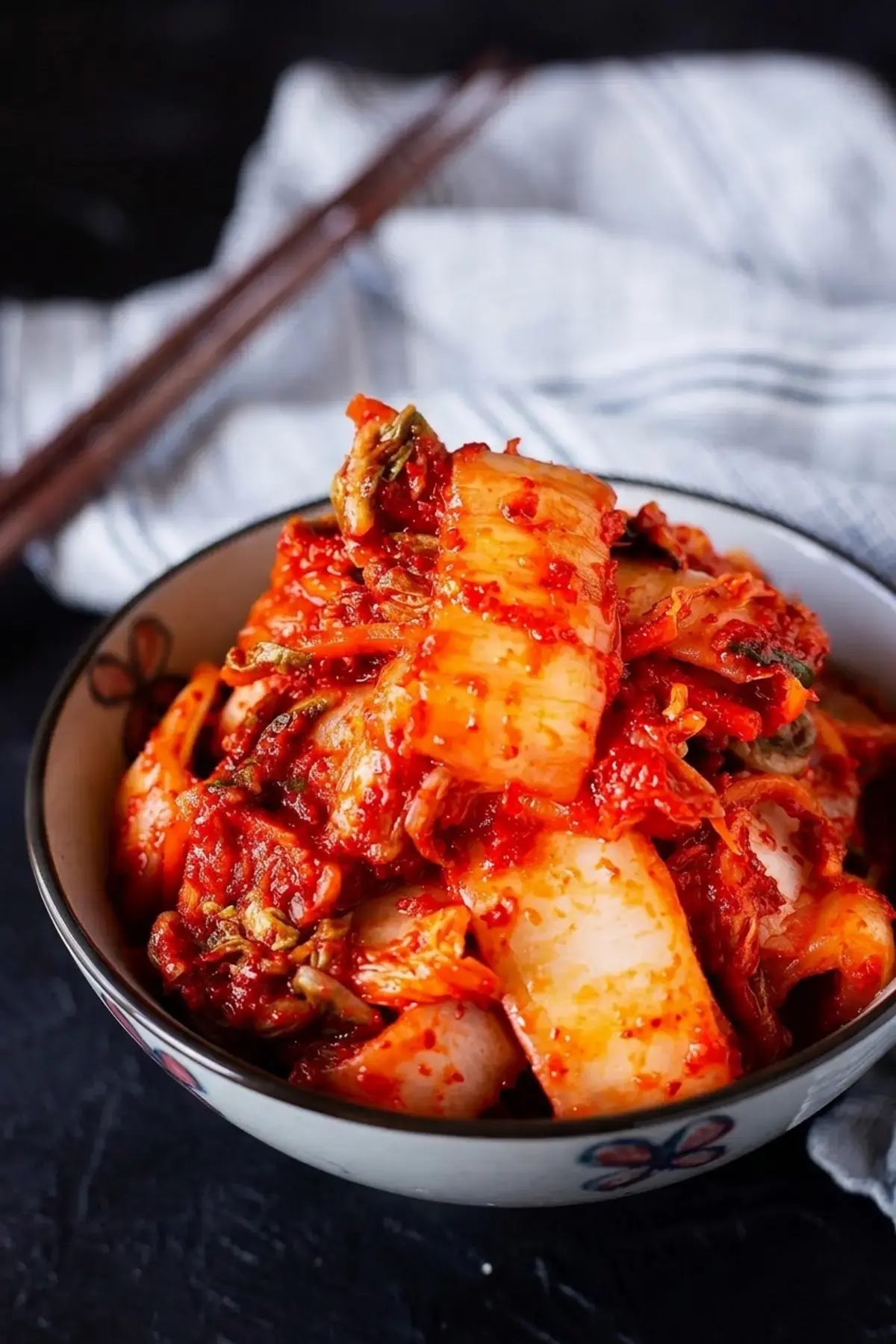
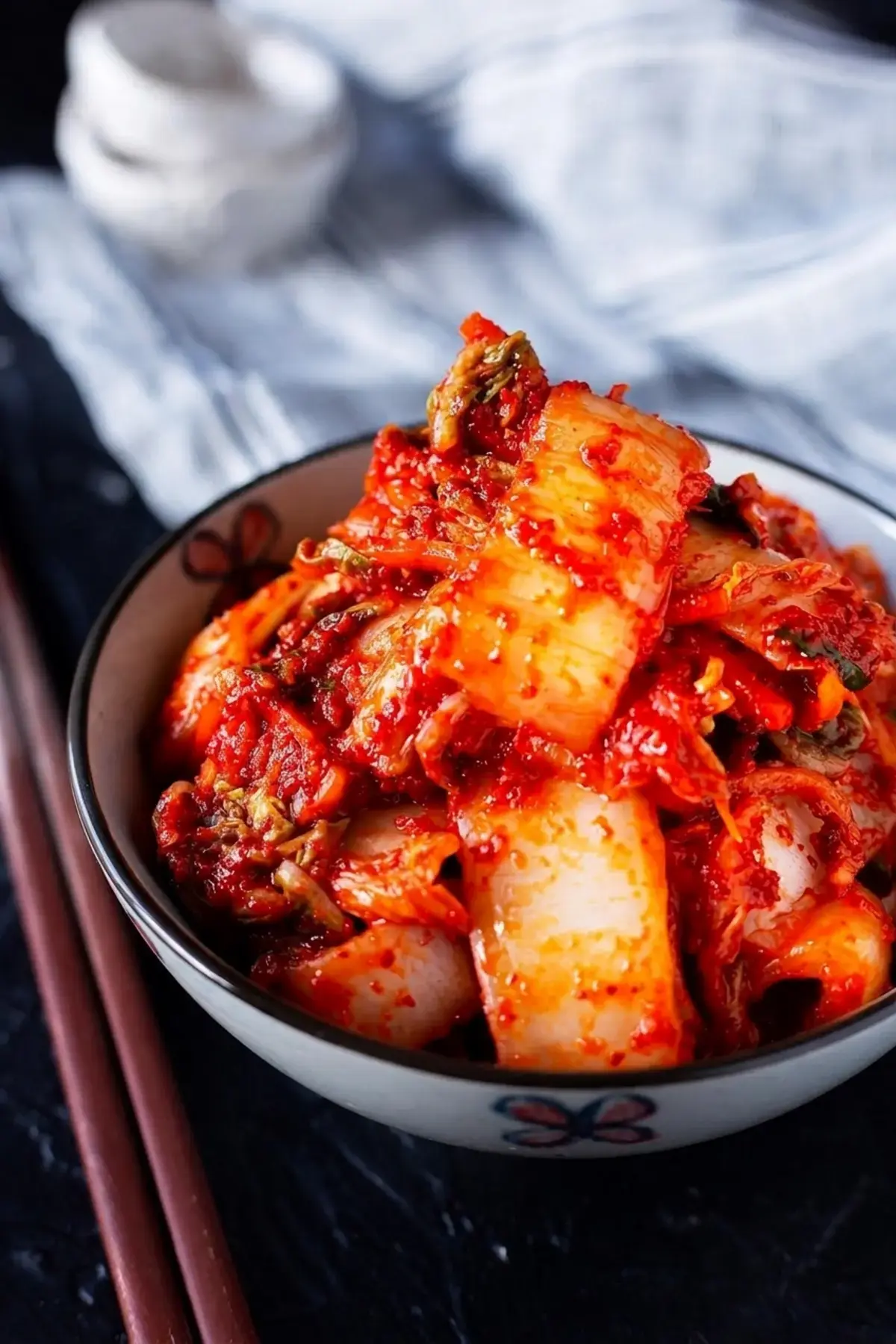
Fresh kimchi, called geotjeori, is made to be eaten without required fermentation. It combines salted napa cabbage with a savory, spicy paste while the cabbage still retains fresh sweetness. That profile distinguishes it from sour, fully fermented kimchi.
The recipe salts, rinses, and squeezes chopped cabbage before coating it with a blended apple, onion, garlic, ginger, salted shrimp, fish sauce, rice, and gochugaru mixture. Shredded carrot, daikon, and Asian chives add color and texture.

Jump to:
- What Is Fresh Kimchi Geotjeori?
- Fresh Kimchi Geotjeori Ingredients
- Cabbage and Salt
- Kimchi Paste
- Shredded Vegetables
- How to Make Fresh Kimchi Geotjeori
- Cut the Napa Cabbage
- Wash and Salt
- Check the Salt Level
- Rinse and Squeeze
- Blend the Kimchi Paste
- Add the Remaining Gochugaru
- Mix in the Vegetables
- Coat the Cabbage
- Pack or Serve Fresh
- Tips and Substitutions
- Use Taste to Guide Salting
- Prevent Watery Kimchi
- Replace the Cooked Rice
- Organize the Mixing Sequence
- Preserve the Fresh Character
- Keep Salting and Seasoning in Balance
- Frequently Asked Questions
- Does fresh kimchi need fermentation?
- How do I know when the cabbage is salty enough?
- Why must the cabbage be squeezed after rinsing?
- Can I replace the cooked white rice?
- When is the remaining gochugaru added?
Fresh Kimchi Geotjeori Ingredients
Cabbage and Salt
- 1 head napa cabbage, about 2 1/2 to 3 pounds
- About 1/4 cup salt, for salting
Kimchi Paste
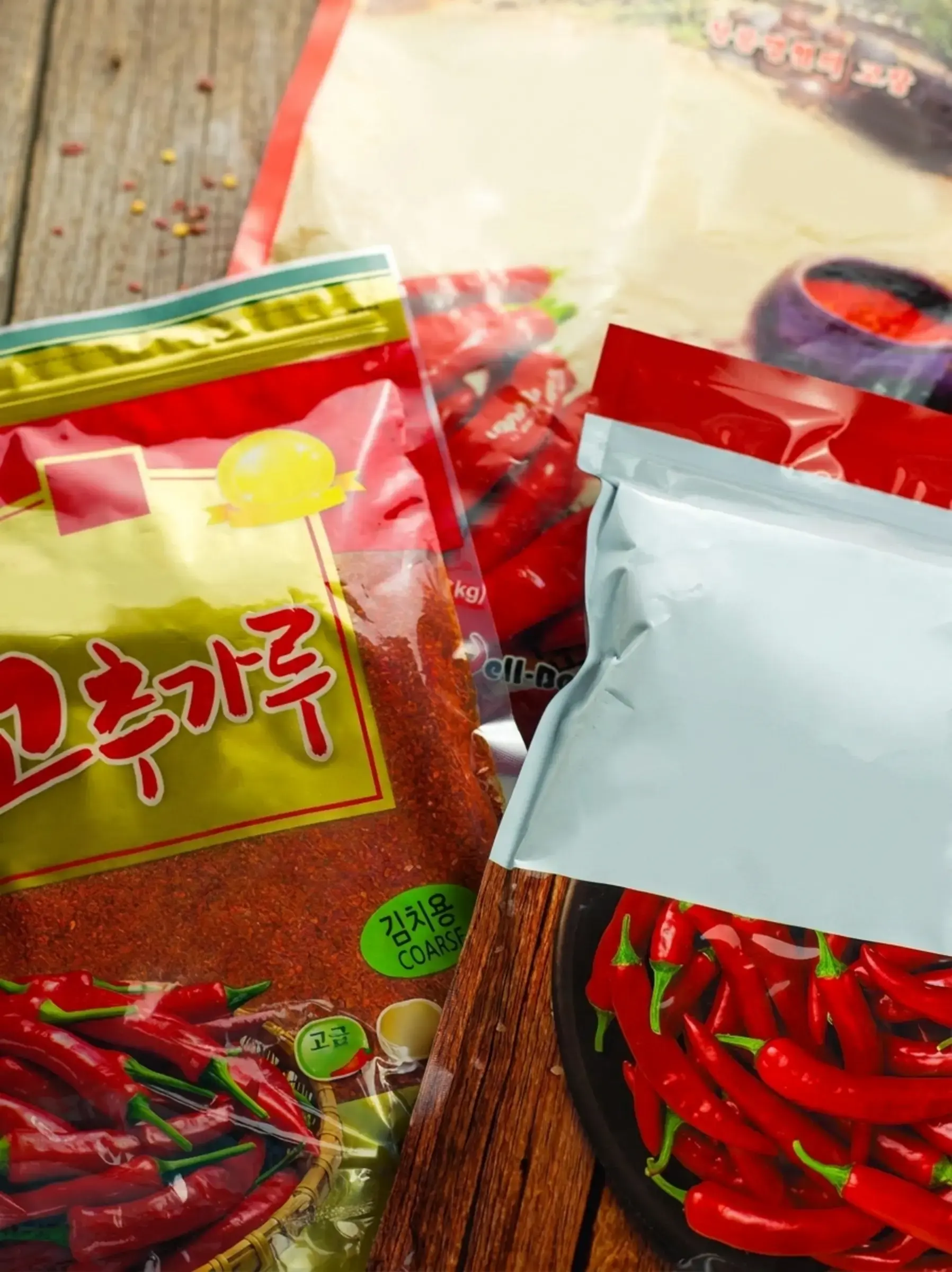
- 1 cup coarse gochugaru, divided
- 1/2 medium yellow onion, large dice
- 1/2 apple, large dice: Fuji, Honeycrisp, or Gala is specified.
- 10 cloves garlic
- 1-inch knob ginger, peeled and roughly sliced
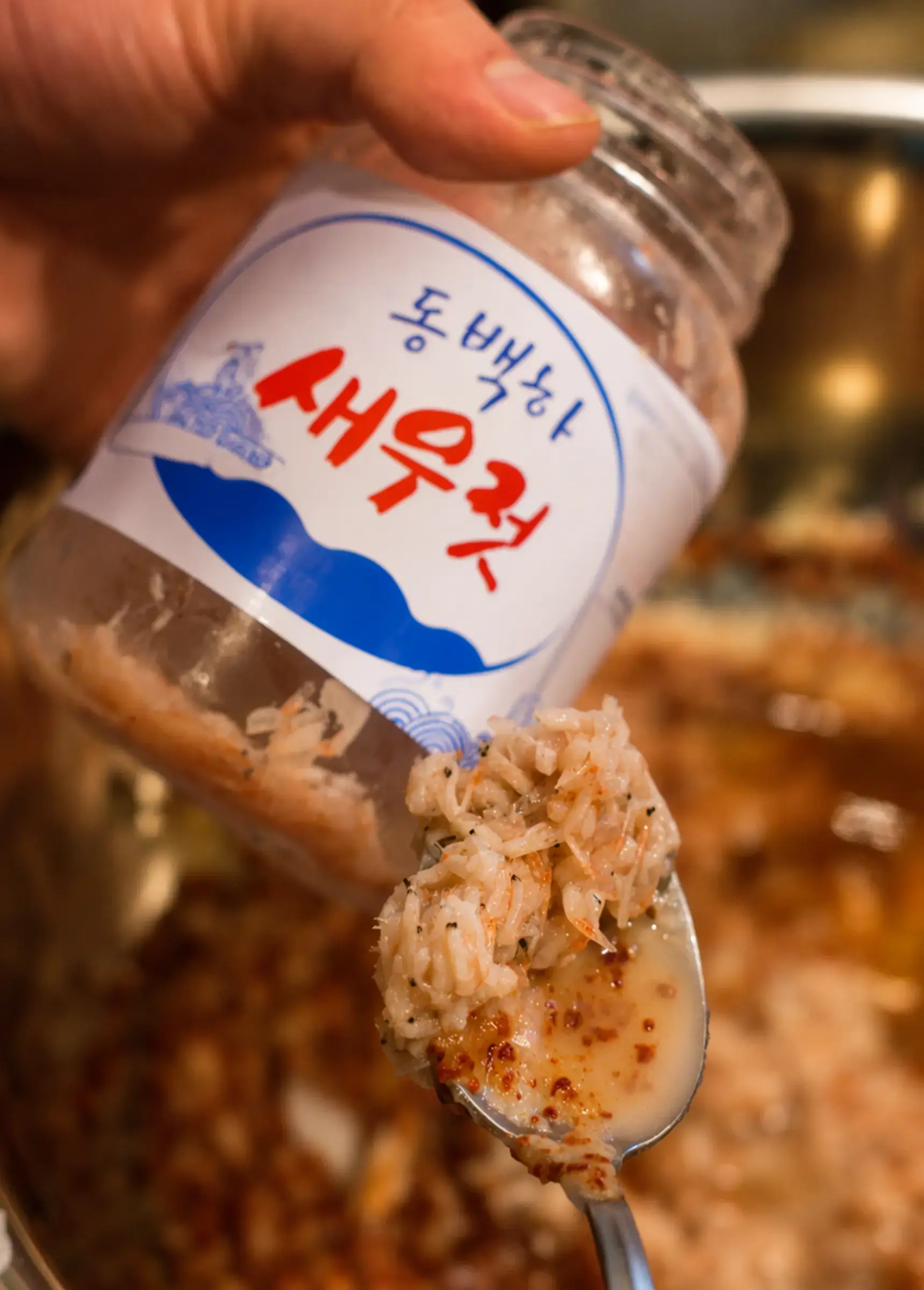
- 2 tablespoons saeujeot, Korean fermented salted shrimp
- 2 tablespoons fish sauce
- 2 tablespoons cooked white rice
- 1/2 cup hot water
Shredded Vegetables
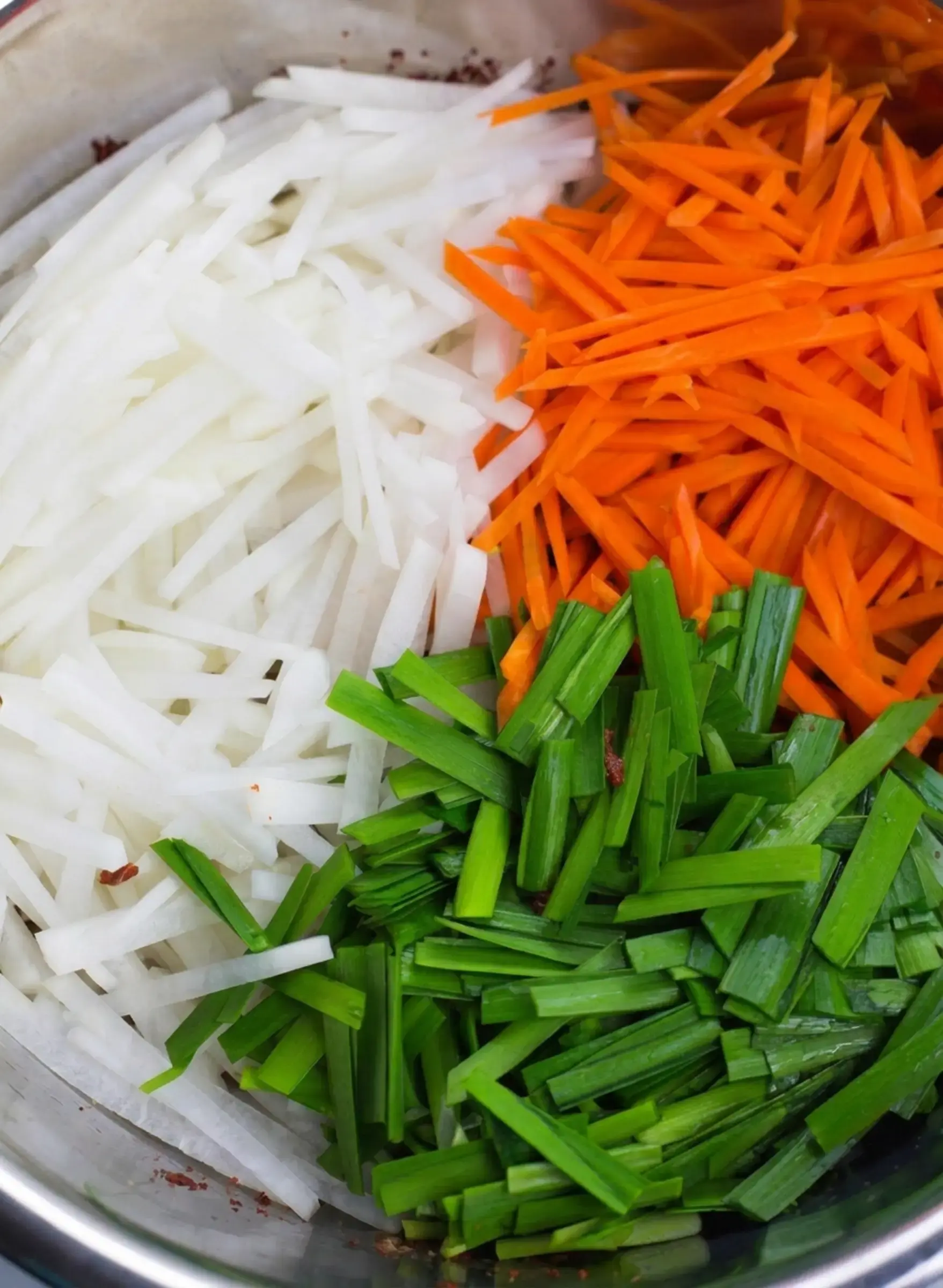
- 1 medium carrot, peeled and shredded
- 1 small daikon radish, about 1 pound, peeled and shredded
- 2 ounces buchu, cut into 1-inch pieces: buchu is also known as Asian chives.
How to Make Fresh Kimchi Geotjeori
Cut the Napa Cabbage
Remove any undesirable outer leaves. Quarter the cabbage lengthwise, cut the core from each quarter, and roughly chop the leaves and stalks into 1/2-inch to 1-inch pieces.
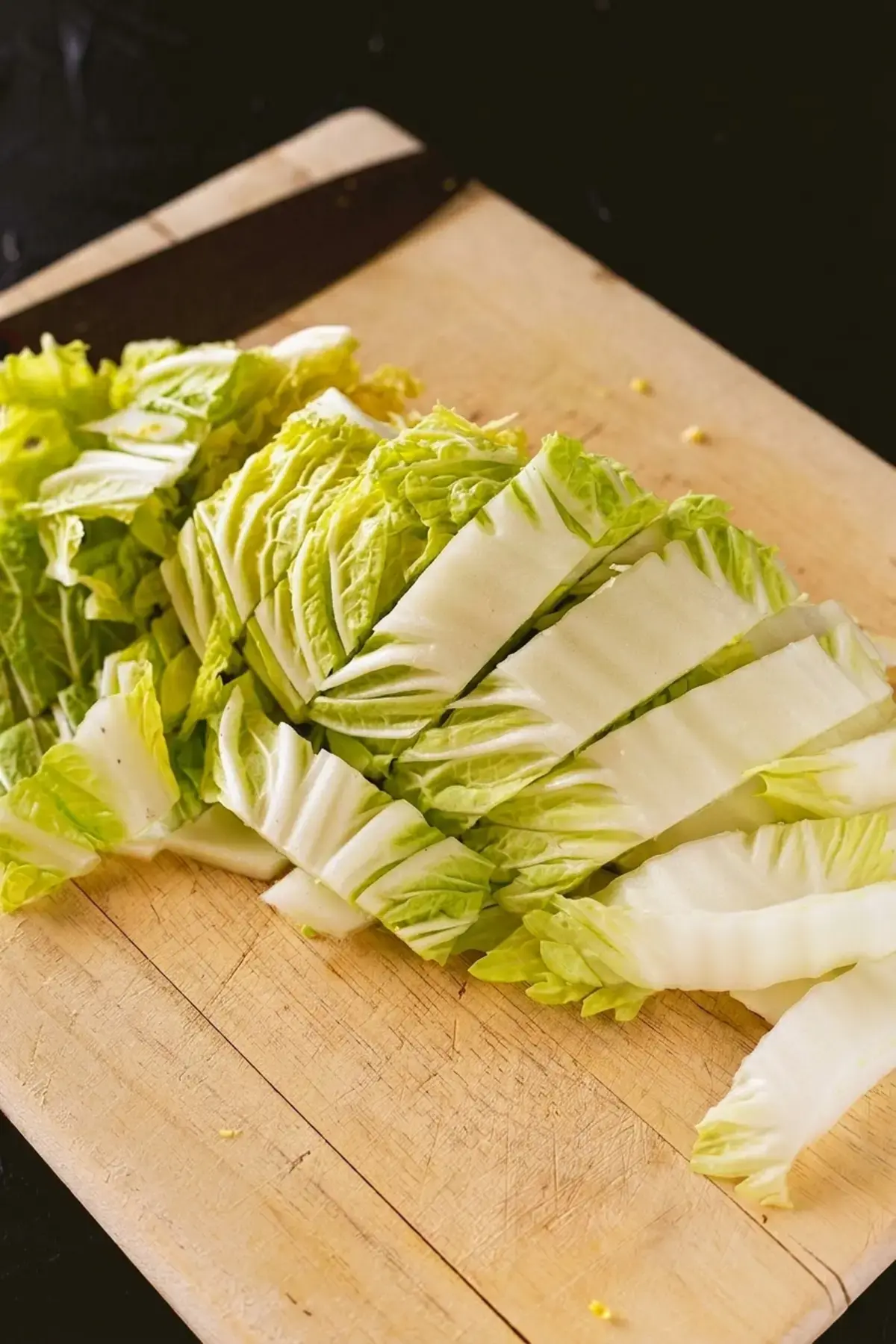
Keeping the pieces within that range creates a practical mixture of leafy and crisp stalk sections. Transfer all chopped cabbage to an area where it can be washed thoroughly.
Wash and Salt
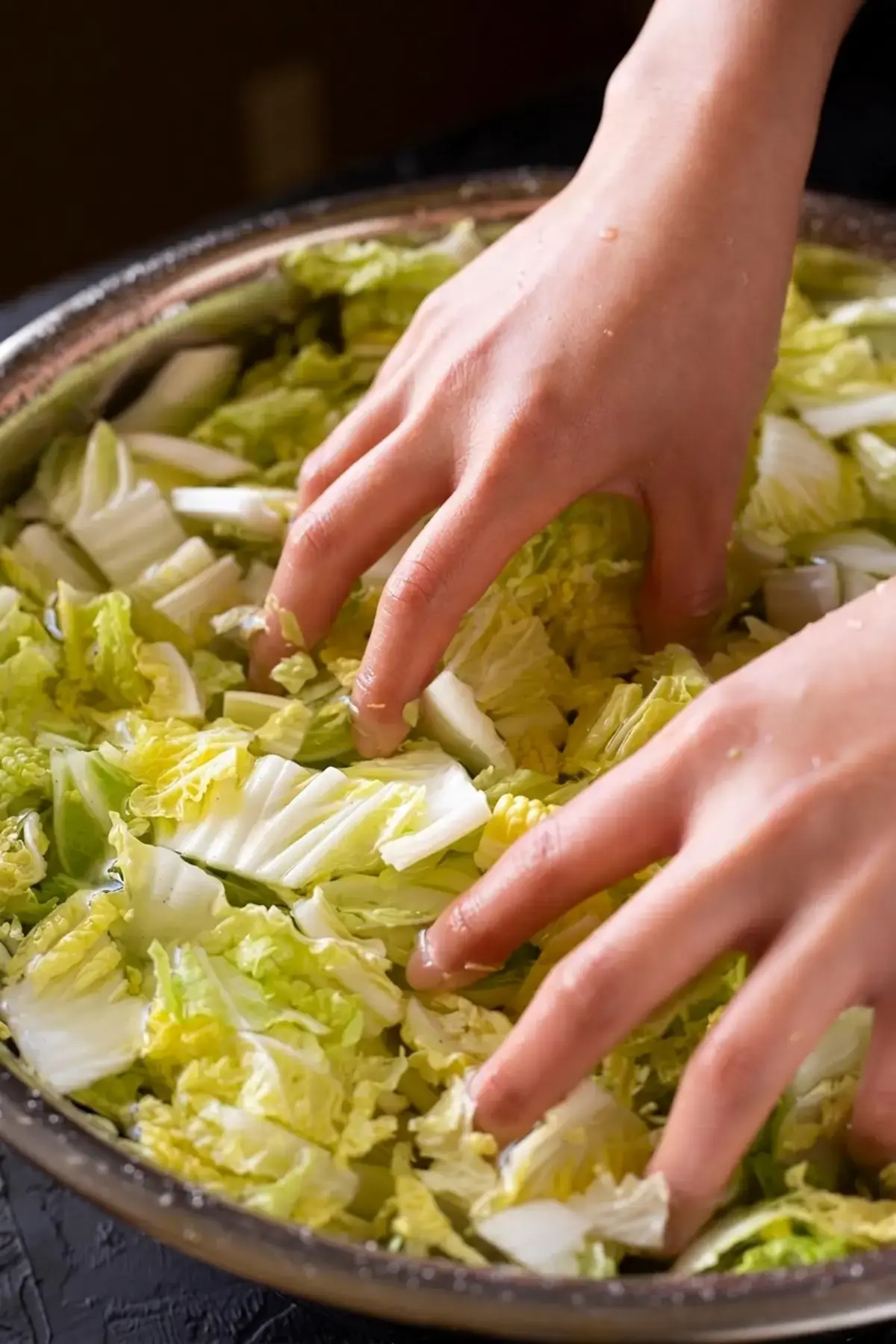
Wash the cabbage in cool water two to three times to remove sand or dirt. Drain it, place it in a large bowl, and sprinkle a generous amount of the salting salt over the cabbage.
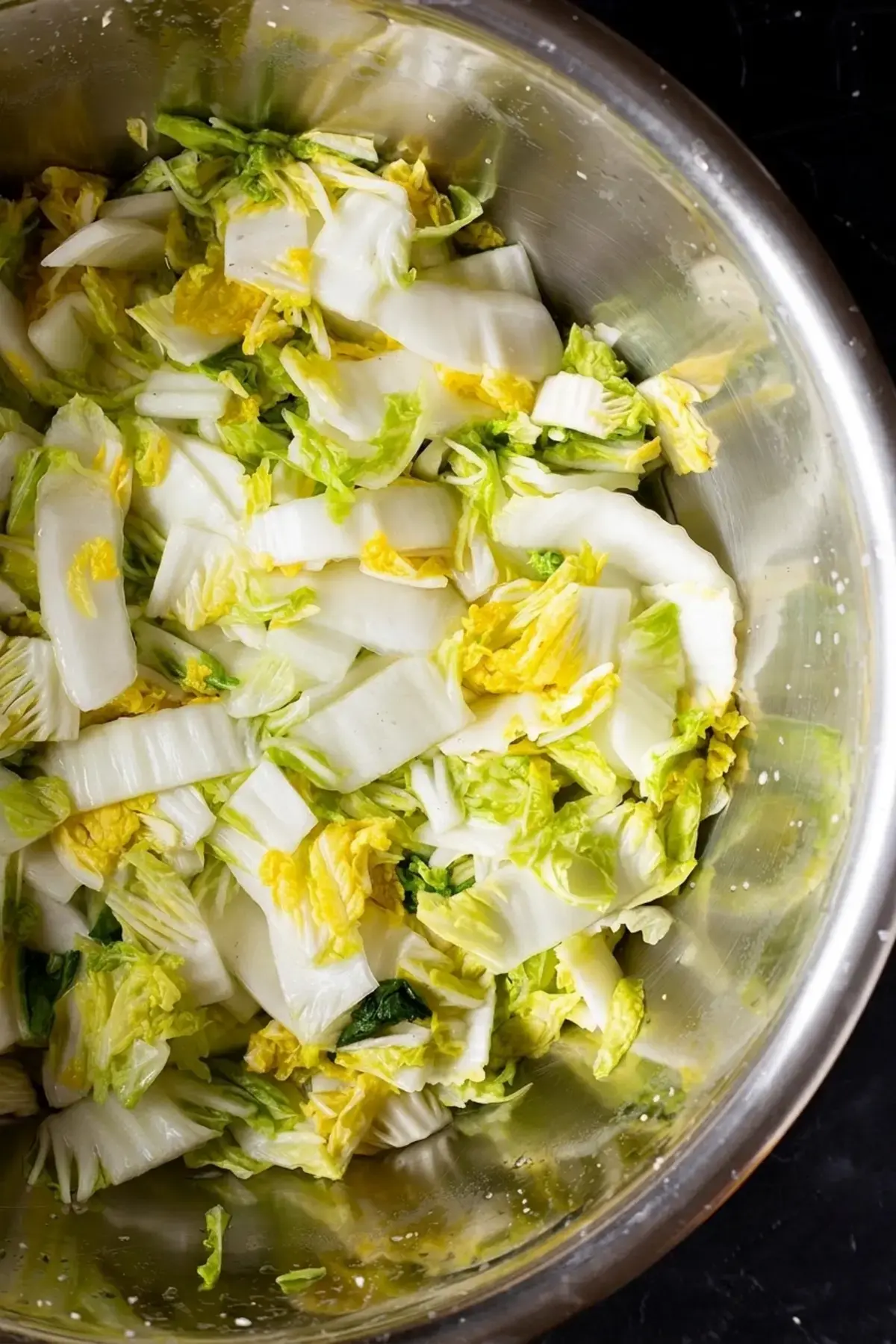
Toss between additions so the salt reaches the different layers. The source explains that more salt shortens the salting process, while less salt requires a longer period. Follow the cabbage’s texture and taste rather than inventing a fixed duration.
Check the Salt Level
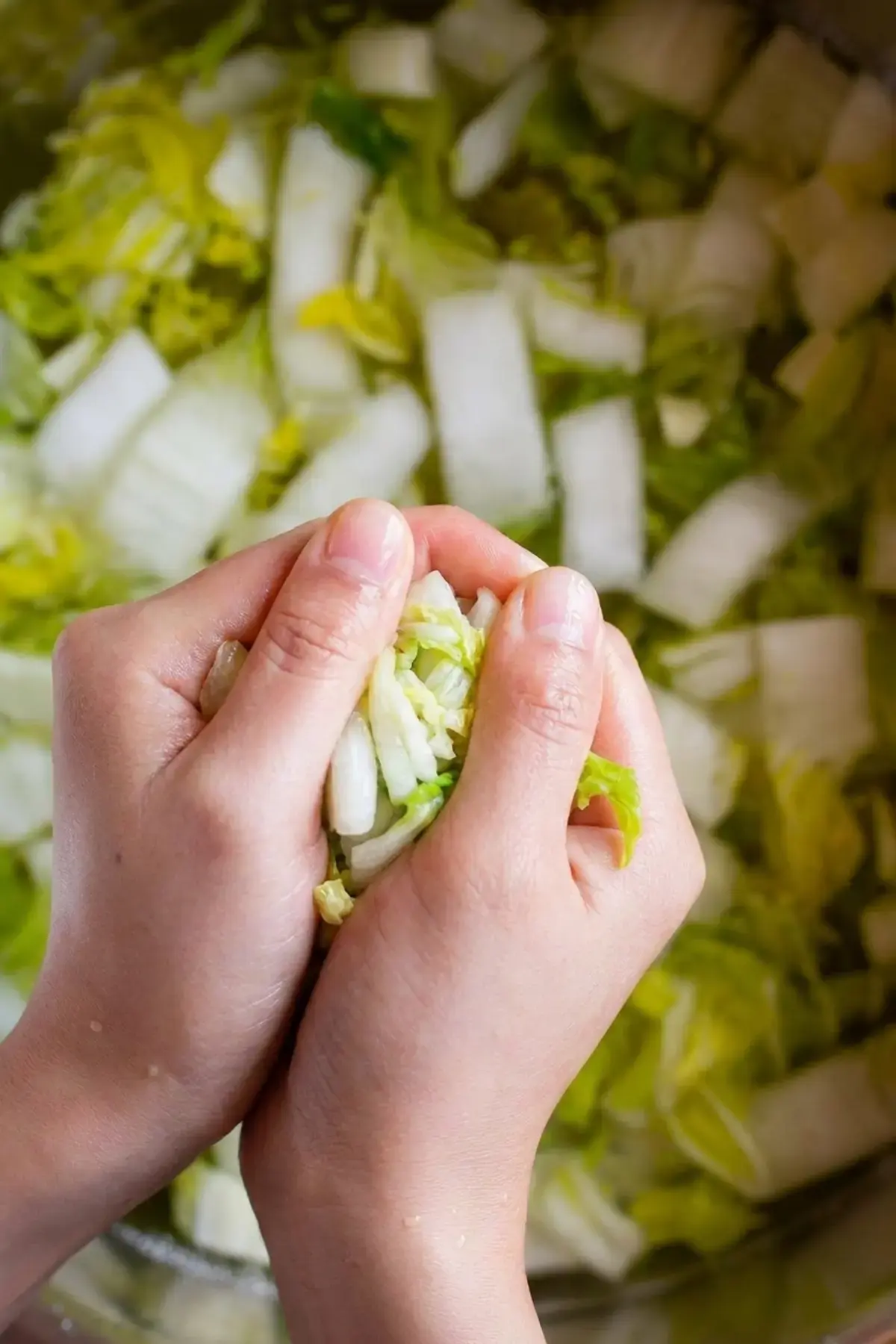
After the documented salting stages, rinse one piece of cabbage stalk under fresh water. Squeeze out its excess water and taste it. If it is not salty enough for your preference, turn the cabbage and continue salting.
Remember that saeujeot and fish sauce will add saltiness to the paste. Once the cabbage tastes right, drain it and begin the full rinse.
Rinse and Squeeze
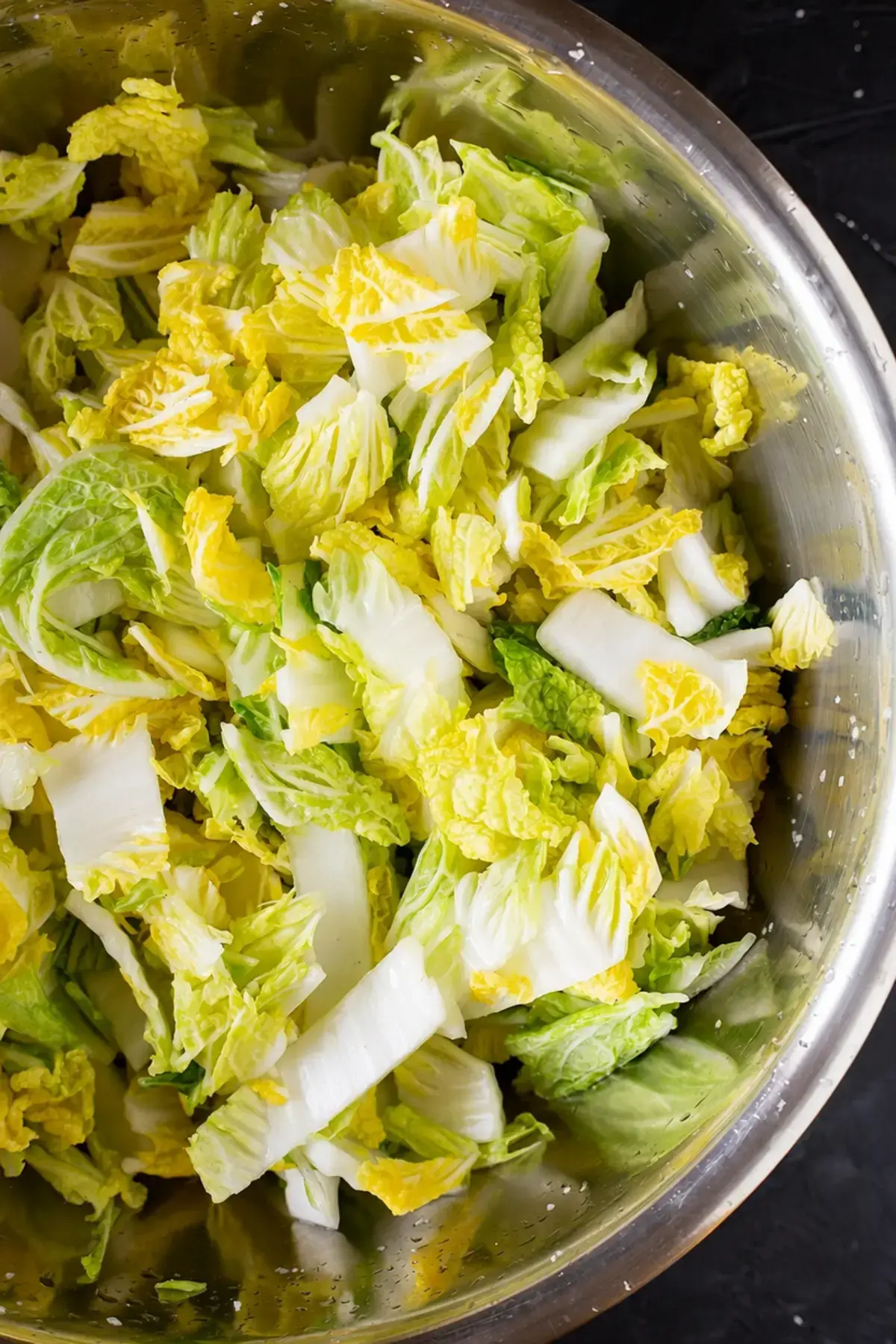
Rinse the salted cabbage under cool, fresh water two to three times to remove excess salt. Gently squeeze out water after each rinse, then squeeze more firmly after the last rinse.
This removal of water is important because wet cabbage can dilute the paste and make the finished kimchi watery. Set the drained cabbage aside while completing the seasoning mixture.
Blend the Kimchi Paste
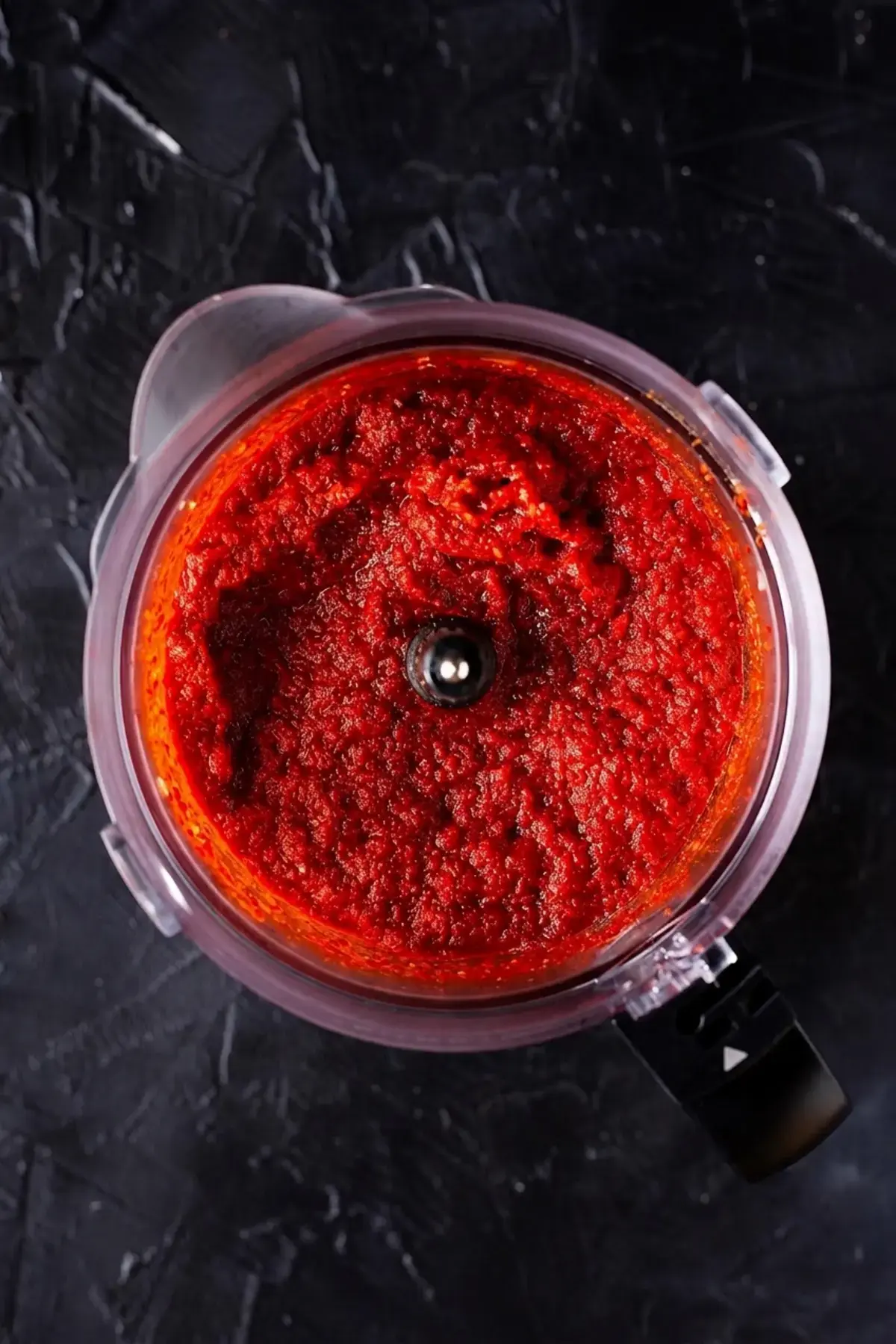
While the cabbage salts, place the paste ingredients in a blender, except for the remaining 1/2 cup gochugaru. Include the first portion of gochugaru, onion, apple, garlic, ginger, saeujeot, fish sauce, cooked white rice, and hot water.
Blend until the ingredients form a well-combined paste. It does not need to be completely smooth. Transfer the mixture to a large bowl.
Add the Remaining Gochugaru
Add the reserved 1/2 cup gochugaru to the blended paste and mix until incorporated. Dividing the pepper flakes in this way preserves the exact source sequence rather than placing the full cup in the blender.
Mix in the Vegetables
Add the shredded carrot, shredded daikon, and one-inch buchu pieces to the paste. Mix the vegetables and seasoning thoroughly, then keep the bowl ready for the drained cabbage.
Distribute the long shredded pieces throughout the paste so they do not remain in separate clumps. This makes the final cabbage-coating step more even.
Coat the Cabbage
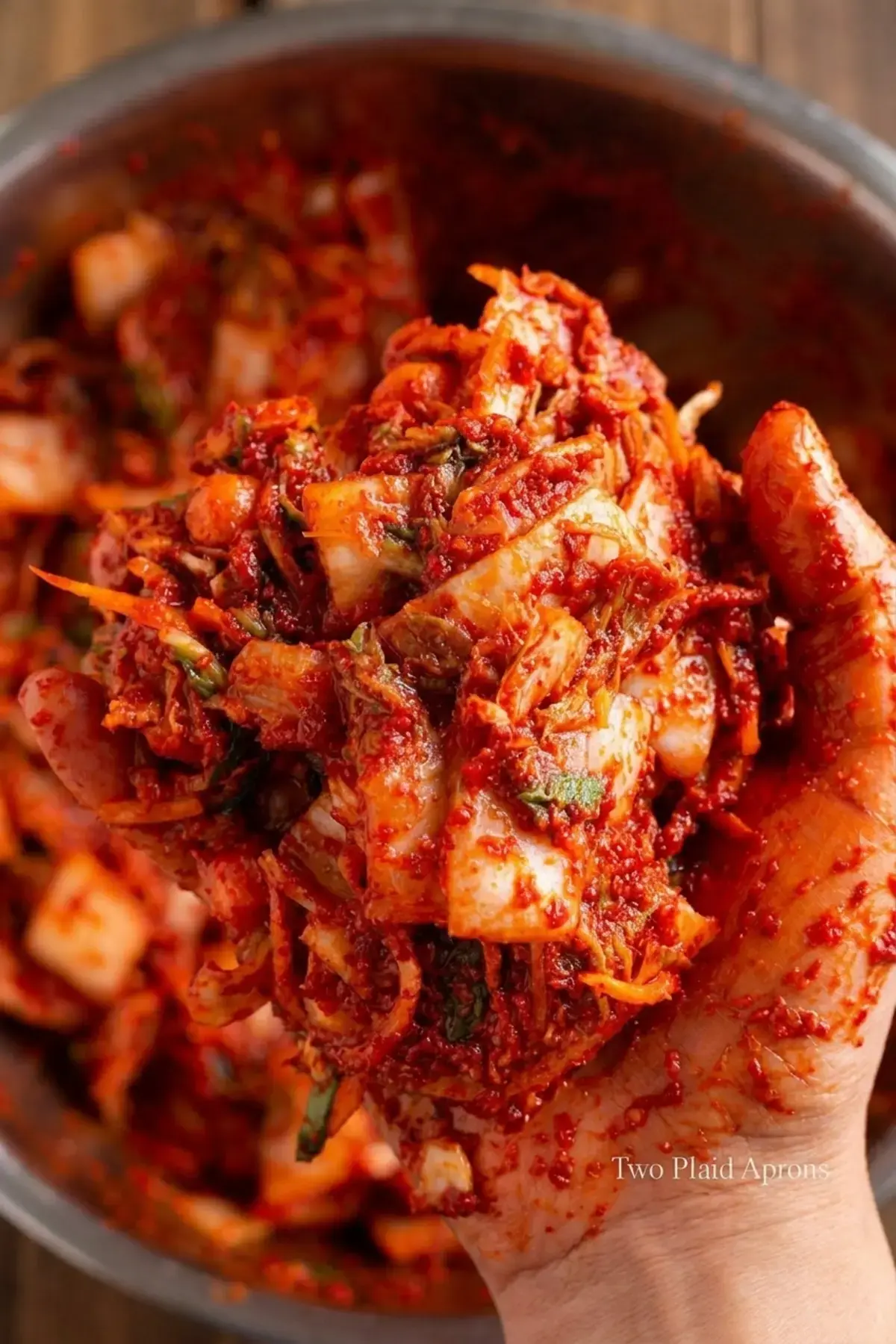
Add the salted, rinsed, and squeezed napa cabbage to the bowl. Mix until every piece is well coated with paste and the shredded vegetables are spread throughout.

Turn the cabbage from the bottom of the bowl toward the top to reach pale inner pieces as well as leafy sections. Stop once the seasoning looks evenly distributed.
Pack or Serve Fresh
Enjoy the geotjeori fresh for up to seven days, as stated by the source. If leftovers remain, pack them tightly in a clean jar for storage and fermentation.
The flavor changes as fermentation develops, so the freshly mixed version and later jarred kimchi will not taste identical. The defining goal of this recipe is the savory spice and light sweetness of fresh cabbage.
Tips and Substitutions
Use Taste to Guide Salting
The amount of salt affects how quickly the cabbage changes, but personal preference determines the stopping point. Always rinse the test piece before tasting it. Consider the saltiness of the paste before deciding to extend salting.
Prevent Watery Kimchi
Drain thoroughly and squeeze after every rinse. The last squeeze should remove most excess water without destroying the cabbage. A drier surface gives the paste better contact and preserves its intended thickness.
Replace the Cooked Rice
Cooked white rice thickens the paste and helps it adhere. When no cooked rice is available, combine two to three tablespoons regular or glutinous rice flour with 1/2 cup water. Cook until thick and slightly translucent, then cool to lukewarm before use.
Organize the Mixing Sequence
Prepare the paste while the cabbage is salting so the two components are ready at the same point. Keep the reserved 1/2 cup gochugaru visibly separate from the blender ingredients. This prevents the divided quantity from being added at the wrong stage.
Shred the carrot and daikon, and cut the buchu, before the drained cabbage enters the paste bowl. Mixing these vegetables into the paste first creates a seasoned network that can be folded through the cabbage more consistently.
Use a bowl large enough to turn the chopped cabbage without spilling seasoning. Add the cabbage only after its final rinse and firm squeeze. Work from the bottom upward until stalk pieces, leaves, carrot, radish, and chives all show an even coating.
Preserve the Fresh Character
Geotjeori is ready after mixing and does not depend on a fermentation wait. Serve the amount intended for the fresh experience, then pack leftovers tightly in a clean jar if you want them to continue changing. Keep the fresh and fermented stages conceptually separate.
Keep Salting and Seasoning in Balance
The cabbage test should happen only after rinsing salt from an individual stalk piece and squeezing away the water. Taste that cleaned sample, then remember that saeujeot and fish sauce will add further seasoning when the paste is applied.
Once the preferred cabbage level is reached, complete all rinses and remove excess water carefully. This creates the surface needed for the apple, onion, garlic, ginger, rice, gochugaru, and seafood seasonings to cling evenly.
Geotjeori can be eaten as soon as mixing is complete. Packing leftovers tightly in a clean jar begins a different stage in which the fresh sweetness and savory spice gradually change through fermentation.
Frequently Asked Questions
Does fresh kimchi need fermentation?
No. Geotjeori is intended to be eaten fresh, without required fermentation. The source says it may be enjoyed fresh for up to seven days, while leftovers can be packed tightly in a clean jar to ferment.
How do I know when the cabbage is salty enough?
Rinse a stalk piece, squeeze out excess water, and taste it. Continue salting if needed, remembering that the kimchi paste also contains salty ingredients.
Why must the cabbage be squeezed after rinsing?
Removing excess rinse water prevents the finished kimchi from becoming watery and helps the paste cling to the cabbage. Squeeze gently after each rinse and more firmly after the last one.
Can I replace the cooked white rice?
Yes. Cook two to three tablespoons of regular or glutinous rice flour with 1/2 cup water until thick and slightly translucent, then cool it to lukewarm before blending it into the paste.
When is the remaining gochugaru added?
Blend the paste ingredients with only half of the divided gochugaru. Transfer the paste to a large bowl, mix in the remaining 1/2 cup, and then add the optional shredded vegetables.