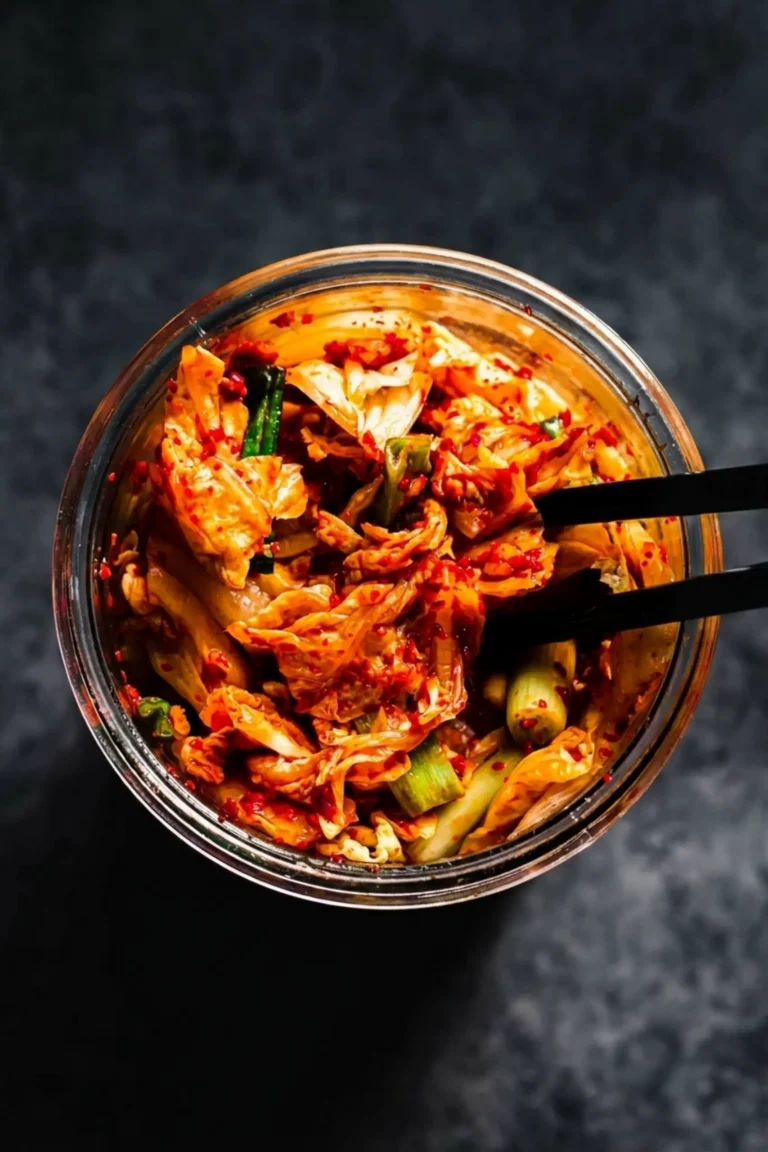
You may have seen it spelled both ways, and I used to wonder the same thing. The proper Korean spelling is kimchee, while kimchi comes from the Japanese romanization. In the United States, kimchi is the most common spelling, so either will get you the right dish. This traditional Korean side dish is made from fermented vegetables, most often napa cabbage and daikon radish. It’s a national staple in Korea, served as banchan (side dish) alongside meals. I love using it not just as a side, but also in fried rice, quesadillas, tacos, and Korean beef bowls. It’s incredibly versatile!
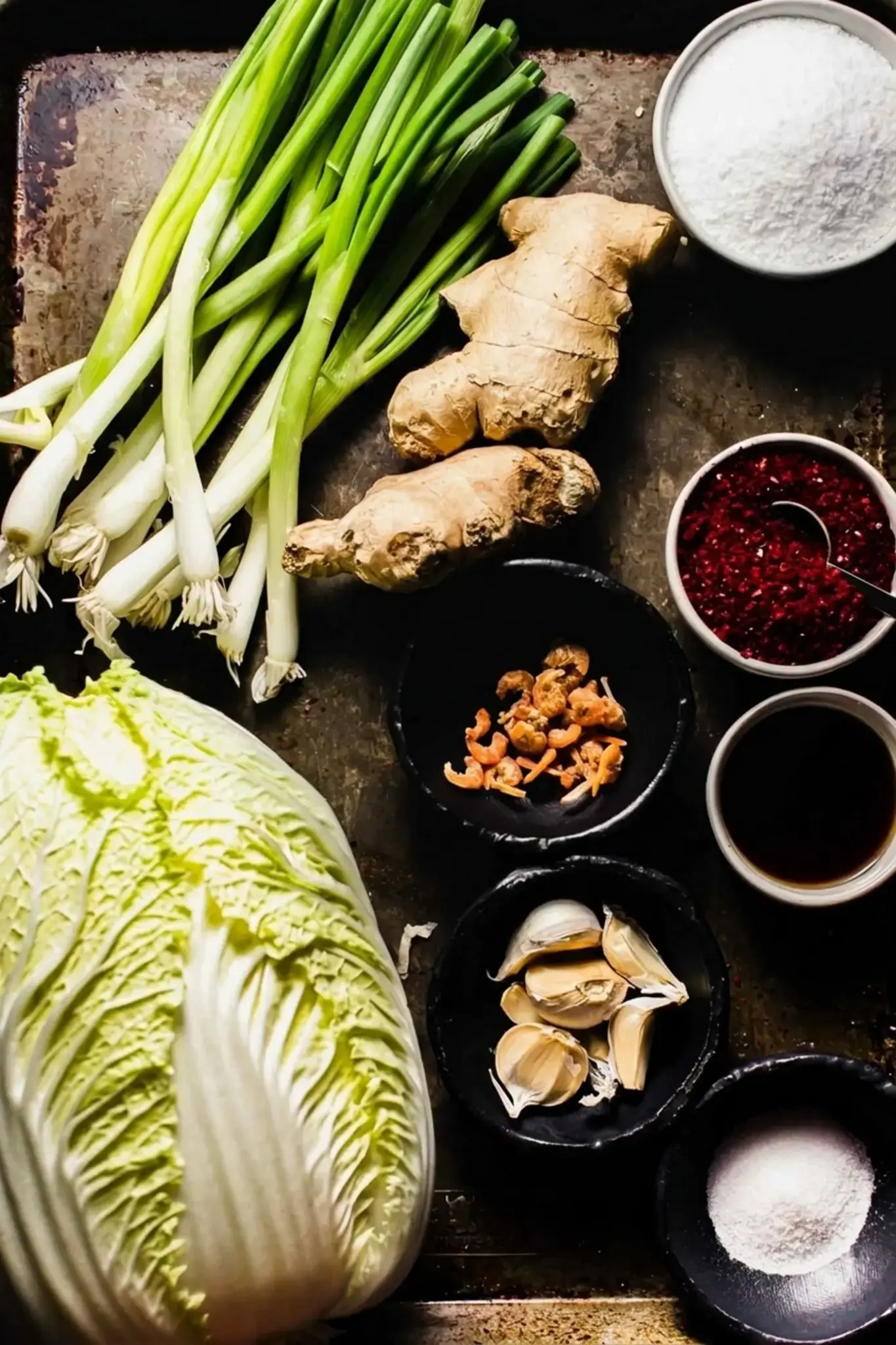
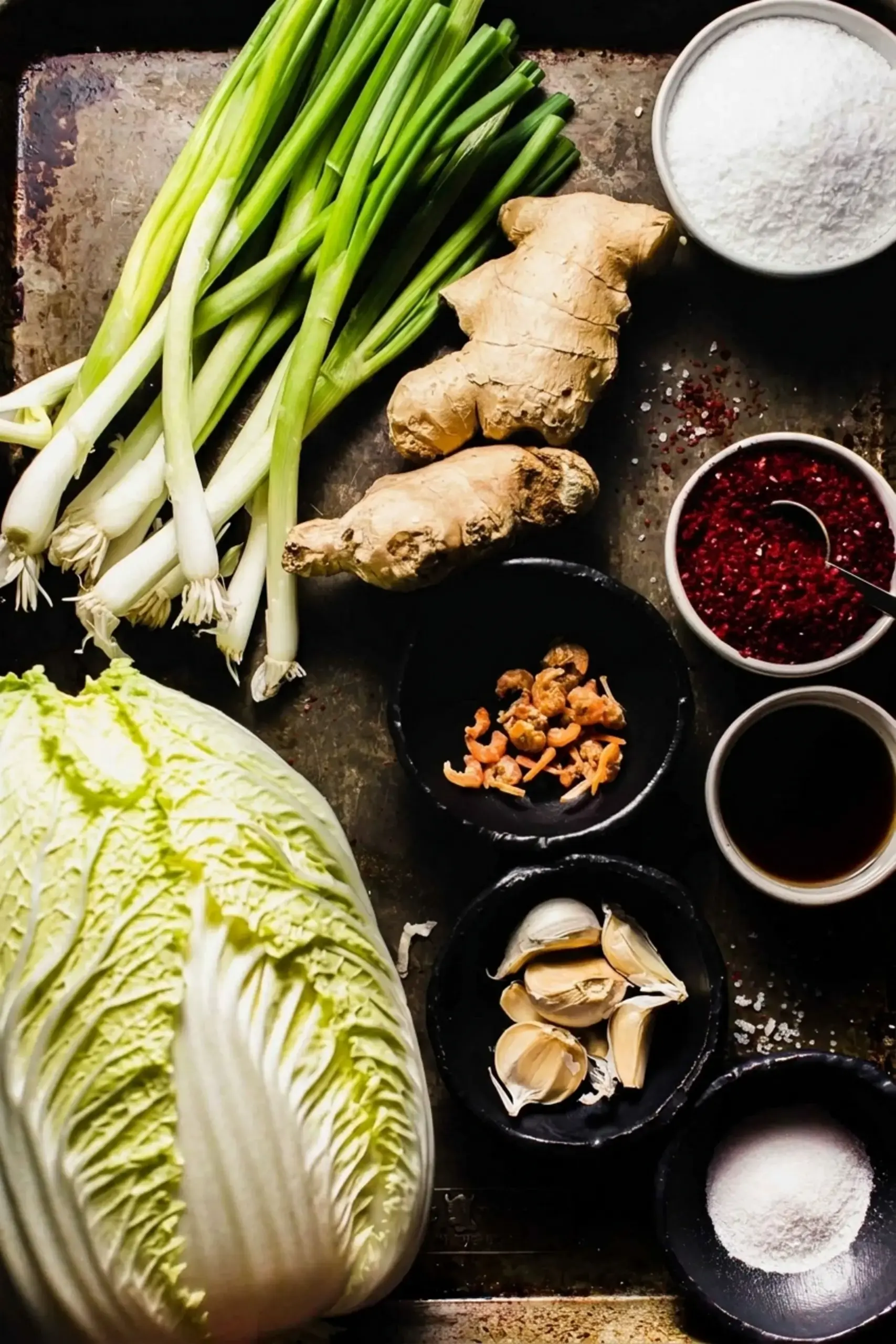
The beauty of homemade kimchi is that the ingredient list is straightforward, and each one plays a key role. Here’s what you’ll need for a classic batch:
You can find gochugaru, fish sauce, and salted shrimp at Asian markets or order them online. Many stores now carry these in the international aisle.
How to make it
Making kimchi at home is a rewarding process, but plan ahead, the whole fermentation takes about a week before the flavor really shines.
Refrigerated kimchi keeps for about one month.
Here’s how I do it step by step.
Cut the cabbage
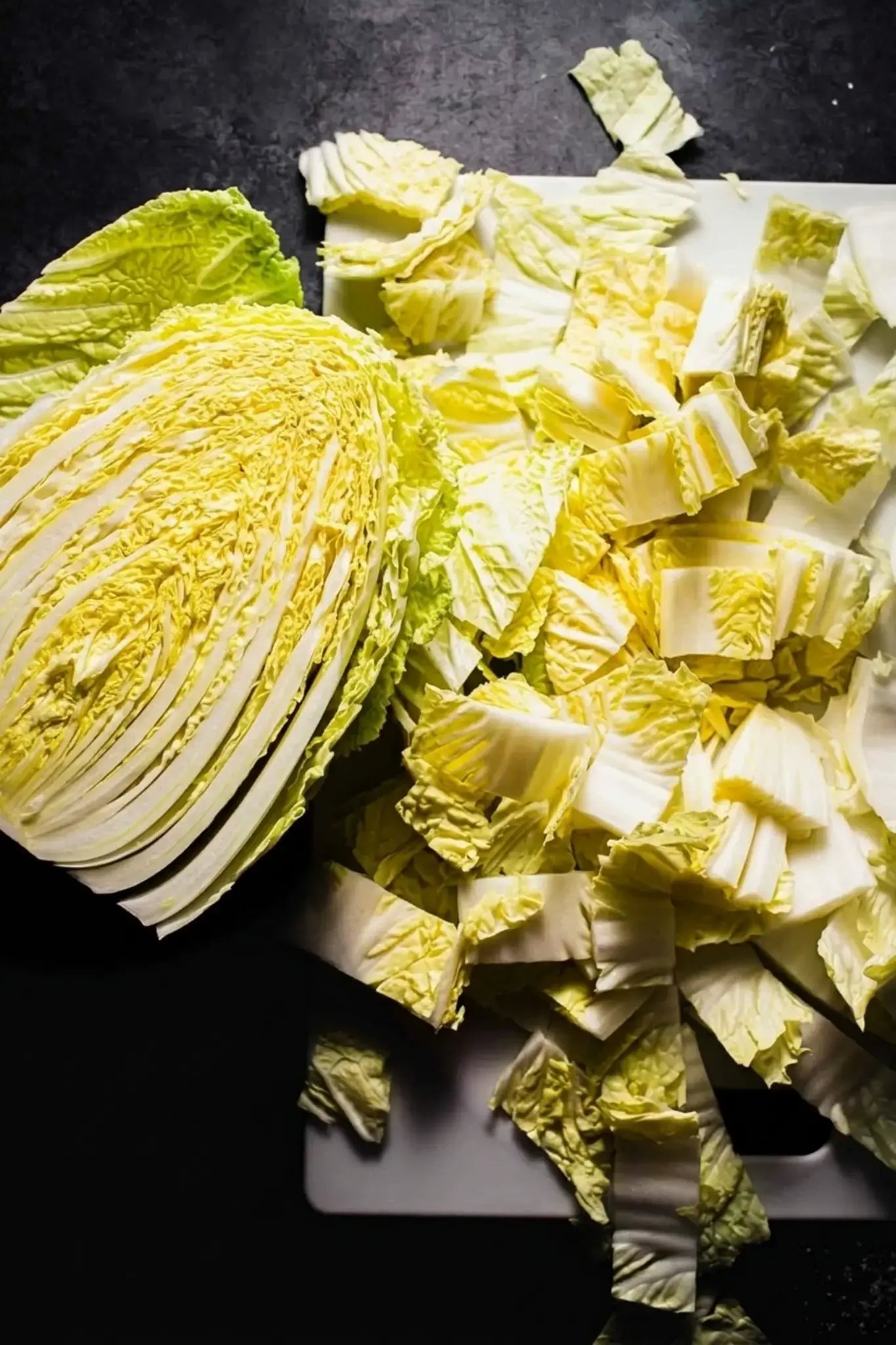
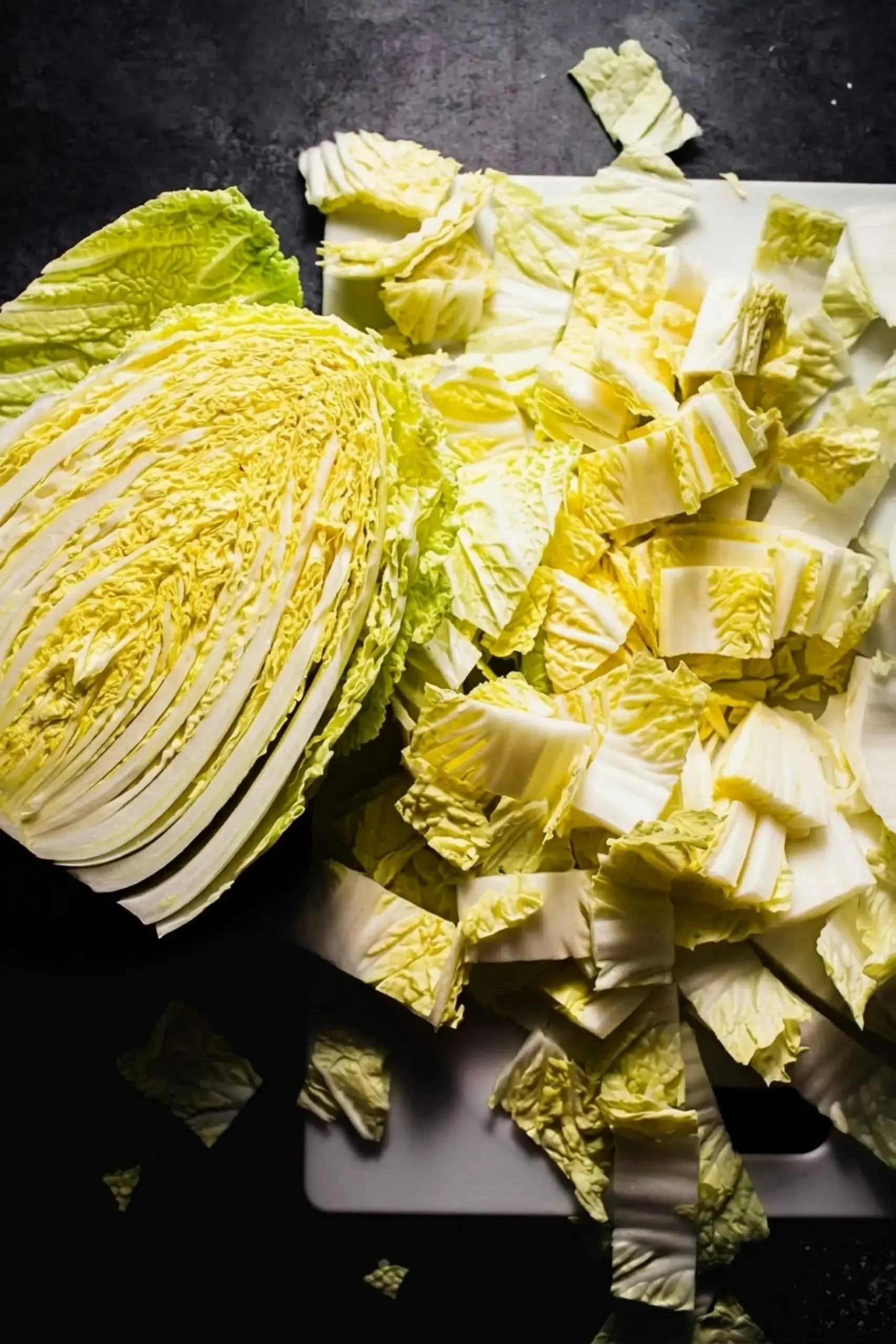
Start by cutting the napa cabbage in half lengthwise, then slice crosswise into 2 inch bite sized pieces. Discard the tough root end. This size makes it easy to eat and ensures the salt penetrates evenly.
Salt and soak the cabbage
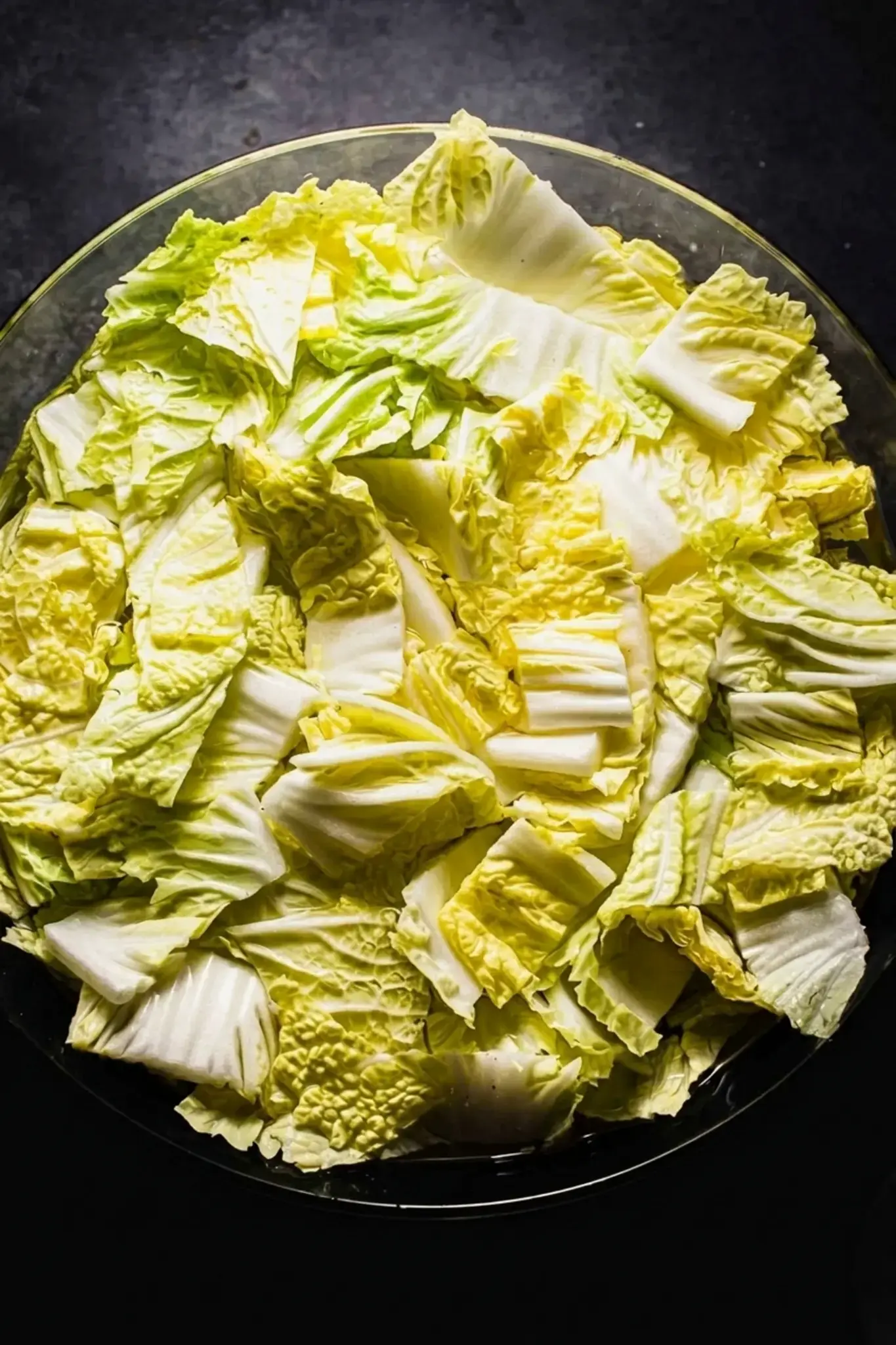
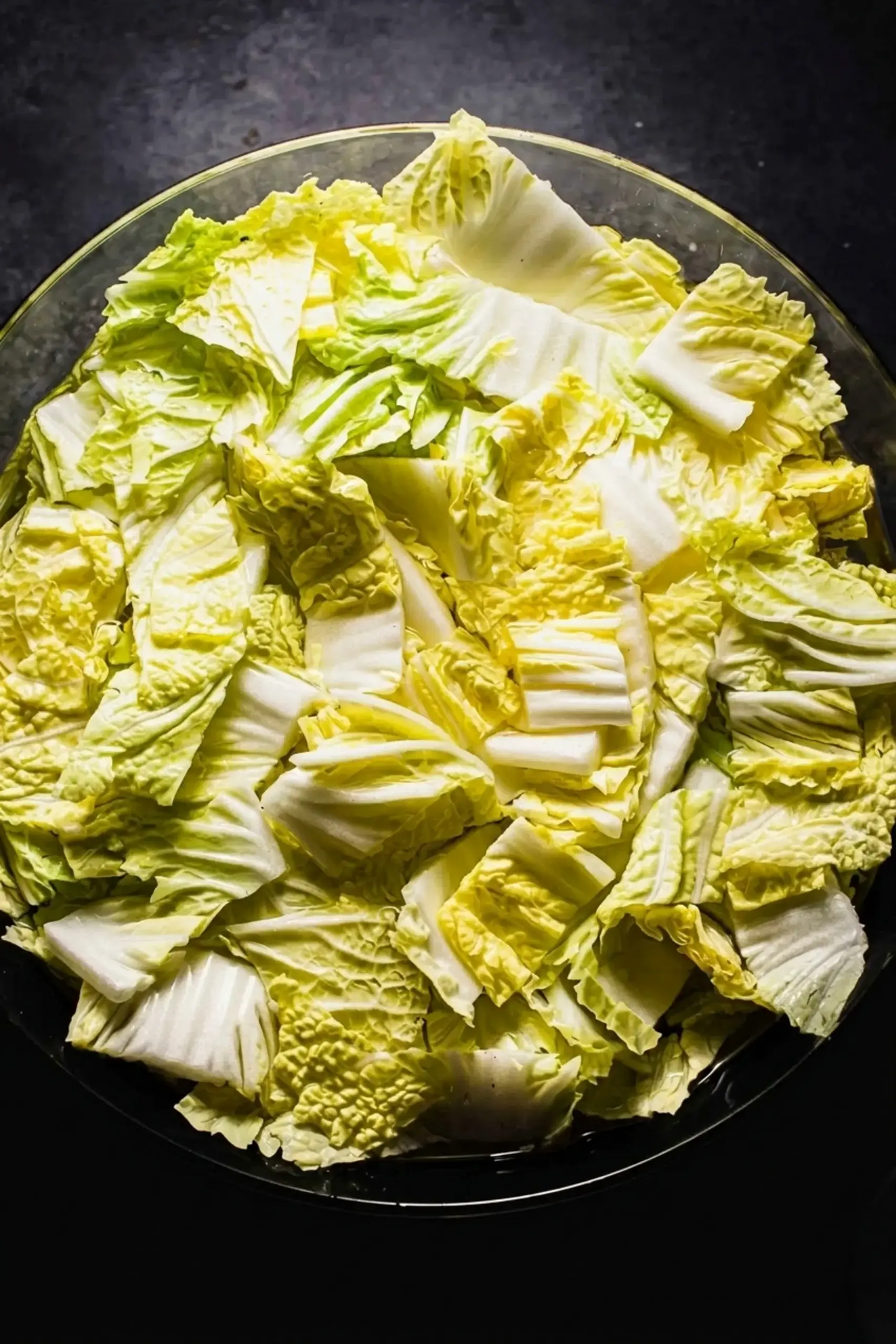
Toss the cabbage pieces with plenty of coarse sea salt until they’re well coated.
Cover with cold water and let them sit at room temperature for at least 12 hours, up to 24.
This draws out moisture and softens the leaves.
After soaking, drain the cabbage, rinse it well to remove excess salt, and gently squeeze out the water.
Don’t squeeze too hard, you want the leaves to stay intact.
Add remaining ingredients
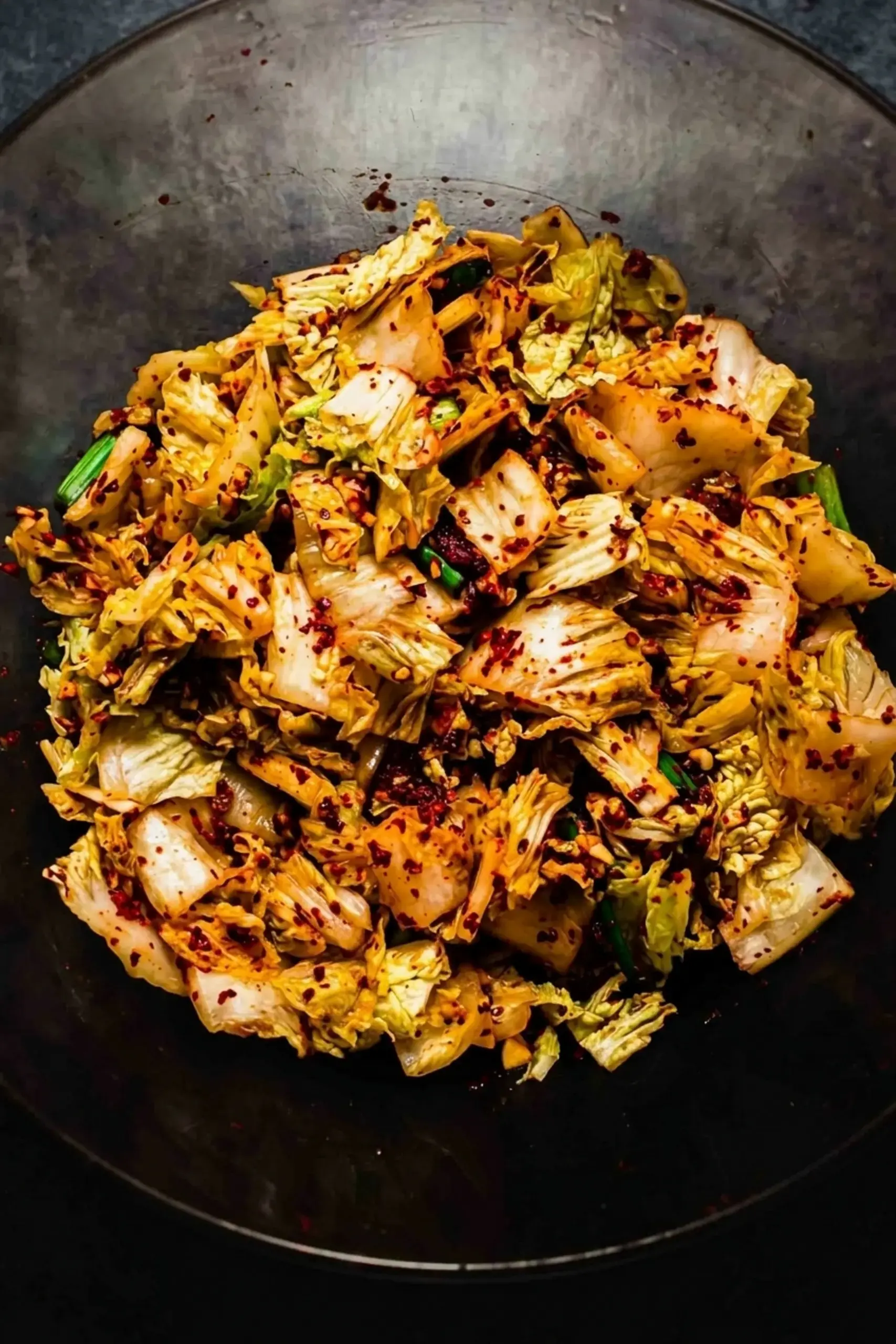
In a large bowl, combine the scallions, gochugaru, fish sauce, minced ginger, minced garlic, dried shrimp, and sugar. Add the drained cabbage and toss thoroughly until every piece is coated. The paste should be vibrant and fragrant. I always sneak a tiny taste at this point, the raw heat is intense but exciting.
Ferment
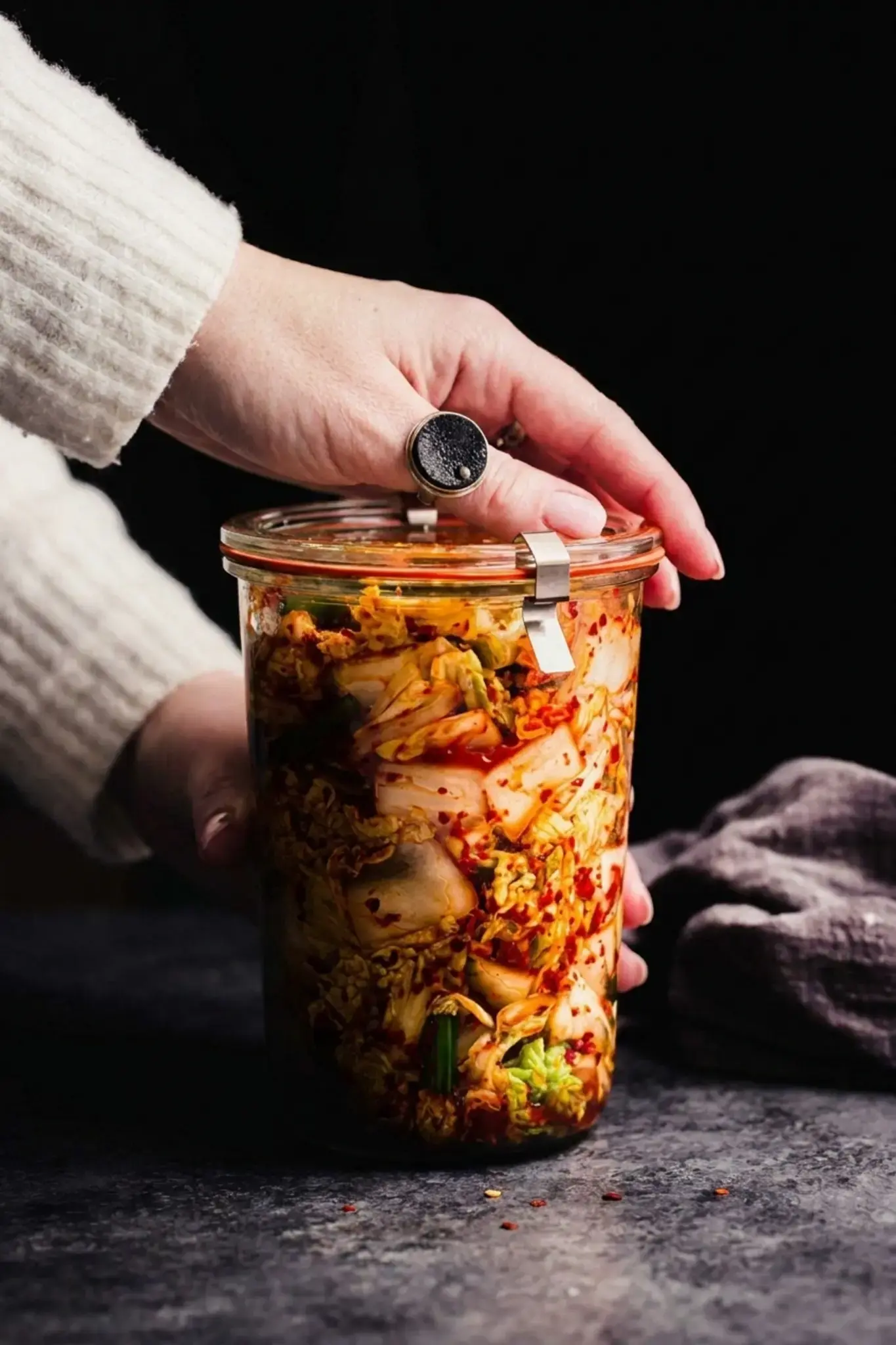
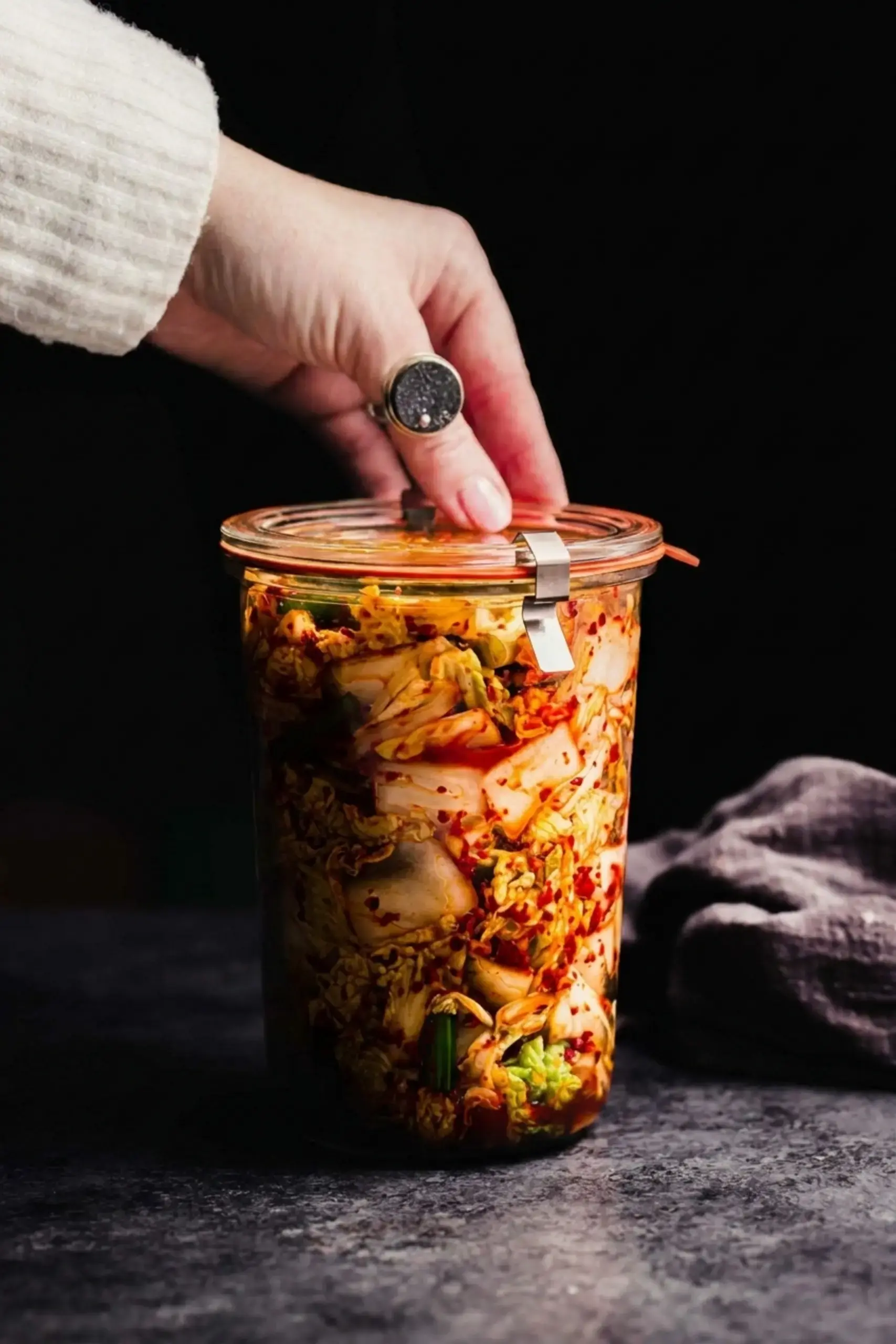
Pack the mixture tightly into a clean glass jar with a tight fitting lid. Press down so the brine rises and covers the cabbage. Seal the jar and let it ferment in a cool, dark place at 50 70°F for about 24 hours. You’ll see bubbles, that’s the lactic acid bacteria at work. Burp the jar once a day by opening the lid to release pressure. After 24 hours, move it to the refrigerator. Wait at least 48 hours before eating, but the best flavor develops after about 1 week. Store for up to 1 month; discard if it becomes overly sour or mushy.
Always use glass or food grade stainless steel for fermenting. Plastic can absorb odors and affect the taste.
Optional add ins
Once you’ve mastered the basic kimchi, feel free to customize. I often add about 8 ounces of daikon radish cut into matchsticks, 8 ounces of shredded carrots, or a few extra minced garlic cloves. These add texture and sweetness. You can also experiment with a handful of Asian chives or a sliced pear for a hint of fruitiness.
Add in
Amount
Prep
Daikon radish
About 8 oz
Cut into matchsticks
Carrots
About 8 oz
Shredded
Minced garlic
To taste
Extra cloves
FAQs
What is kimchi?
Kimchi is a traditional Korean side dish made from salted and fermented vegetables, most commonly napa cabbage and Korean radish, seasoned with chili pepper (gochugaru), garlic, ginger, and fish sauce. It is a staple in Korean cuisine and known for its probiotic benefits.
What is the difference between kimchi and kimchee?
Kimchi and kimchee refer to the same fermented vegetable dish. Kimchee is an older romanization of the Korean word, while kimchi is the modern standard spelling used by the National Institute of Korean Language and most English language publications today.
How healthy is kimchi?
Kimchi is very healthy. It is low in calories and rich in vitamins, fiber, and beneficial lactic acid bacteria that support gut health. It also contains antioxidants and may help with digestion and immune function.
How do you make kimchi at home?
Start by salting napa cabbage for a few hours until wilted. Rinse and drain. Make a paste from gochugaru (Korean red pepper flakes), garlic, ginger, fish sauce, and sugar. Mix with chopped radish, scallions, and carrots. Coat each cabbage leaf with the paste, pack into a jar, and ferment at room temperature for 1 to 5 days before moving to the refrigerator.
How long does homemade kimchi last?
Homemade kimchi can last several months in the refrigerator. It continues to ferment slowly, becoming more sour over time. For best flavor, eat within 3 to 6 months. If mold appears, discard the batch.
Does kimchi need to be refrigerated?
Yes, after initial fermentation at room temperature, kimchi should be stored in the refrigerator to slow down fermentation and maintain its quality. Refrigerated kimchi stays fresh for months.
🥬 A bold, probiotic-rich Korean staple that transforms humble cabbage into a tangy, spicy condiment with endless uses.
🌶️ Make it at home with simple ingredients and unlock deep, complex flavor after a week of hands-off fermentation.
Total Time:3 days 30 minutes
Yield:1 quart
Ingredients
Napa cabbage, sliced into 2 inch pieces
Coarse sea salt or kosher salt
Sugar, a touch
Scallions
Fresh ginger and garlic
Korean red pepper powder (kochukaru or gochugaru)
Fish sauce
Dried shrimp (saeujeot)
Instructions
1-Cut the cabbage: Cut the napa cabbage in half lengthwise, then slice crosswise into 2-inch pieces, discarding the tough root end.
2-Salt and soak the cabbage: Toss the cabbage with coarse sea salt, cover with cold water, and let sit 12–24 hours; then drain, rinse, and gently squeeze out excess water.
3-Add remaining ingredients: Combine scallions, gochugaru, fish sauce, minced ginger, minced garlic, dried shrimp, and sugar; toss with the drained cabbage until evenly coated.
4-Ferment: Pack tightly into a clean glass jar, press down until brine covers cabbage, seal, and ferment at 50–70°F for 24 hours, burping daily; refrigerate at least 48 hours (best after 1 week) and use within 1 month.
Last Step:
Please leave a rating and comment letting us know how you liked this recipe! This helps our business to thrive and continue providing free, high-quality recipes for you.
Notes
🫙 Always use glass or food-grade stainless steel for fermenting; plastic can absorb odors and affect the taste.
⏳ The best flavor develops after about 1 week of refrigeration, so plan ahead for the most complex taste.
🥕 Customize with optional add-ins like daikon radish matchsticks, shredded carrots, or extra garlic cloves for added texture and sweetness.