

Expert Tips
This kimchi udon recipe comes together fast, and a few small moves make it taste even better at home. Frozen udon noodles give you the best chewy texture and only need a quick dip in simmering water, while aged kimchi brings more tang and depth than fresh. Reach for the jar in the back of your fridge for the most flavorful stir fry.
- Use frozen udon for the best chewy bite and quick cooking.
- Cook the kimchi down so it loses extra liquid and the flavor concentrates.
- Adjust the sauce at the end with more gochujang for heat, kimchi juice for tang, soy sauce for salt, or sugar for sweetness.
- Add sesame oil off the heat so the nutty aroma stays bright.
I usually pull the udon straight from the freezer, run it under warm water for a few seconds to loosen the block, then drop it in the simmering water for about a minute. That trick saves you from overcooking the noodles and keeps them springy for the final toss.
Jump to:
- Expert Tips
- Storage Instructions
- Pairing Suggestions
- FAQ
- What is the best kimchi to use?
- Is kimchi udon spicy?
- What type of udon should I use?
- Spicy Tuna Crispy Rice (Nobu Copycat)
- Hawaiian Spam Musubi
- Japanese Cake Roll
- Join Our Community
- Kimchi Udon
- Ingredients
- Instructions
- Last Step:
- Nutrition
- Did you make this recipe?
Storage Instructions
You can store any leftover kimchi udon noodles in an airtight container in the refrigerator for up to 5 days, and the flavors actually deepen overnight. Let the noodles cool to room temperature first, then transfer them to a sealed container and slide it into the fridge.
To reheat, sprinkle a few drops of water over the noodles and microwave covered until hot. Alternatively, add 1 tablespoon of oil to a skillet over medium high heat and stir fry the udon until warmed through. A splash of water refreshes the sauce and keeps the noodles from drying out.
I do not recommend freezing this dish. The udon turns mushy once thawed, and the kimchi loses its bright crunch. If you want to plan ahead, store the sauce and the noodles separately and combine them right before serving for the best texture.
Pairing Suggestions
You can serve these Korean stir fried udon noodles on their own or with the following pairing suggestions to build a bigger plate. A simple protein on the side turns this quick kimchi udon into a complete dinner, and a few Korean side dishes bring color and contrast to the meal.
- Proteins: beef bulgogi, chicken bulgogi, galbi jim (braised short ribs).
- Side dishes (banchan): kongnamul muchim (soybean sprout salad), gamja jorim (braised potatoes), haemul pajeon (seafood pancake), gyeran mari (rolled egg), eomuk bokkeum (fish cake stir fry), oi muchim (spicy cucumber salad).
- Soups for a heartier meal: tteok mandu guk (rice cake and dumpling soup), budae jjigae (army stew), soondubu jjigae (soft tofu stew).
On the busiest weeknights, a fried egg on top and a small bowl of miso soup is all you really need next to a hot plate of kimchi udon.
FAQ
For any recipe where the kimchi gets cooked, such as kimchi jjigae, kimchi rice balls, kimchi fried rice, or this kimchi udon, aged kimchi is the best choice. The fermentation deepens the flavor, so it stands up to high heat without going flat or sour. Look for napa cabbage kimchi that has been aged at least a few weeks in the fridge, and chop it roughly before it hits the pan.“,”visible”:true},{“id”:”faq question 1784345942729 1″,”title”:”Is kimchi udon spicy?”,”content”:”This recipe is mildly spicy thanks to gochujang, the fermented Korean red pepper paste that gives the sauce its color and gentle warmth. If you love extra heat, add another half tablespoon of gochujang. If you want a milder bowl, cut the gochujang in half and let the kimchi juice do the flavor work instead.
“,”visible”:true},{“id”:”faq question 1784345942729 2″,”title”:”What type of udon should I use?”,”content”:”Fresh or frozen udon noodles give you the best thick and chewy texture. Frozen udon is what most home cooks in the United States will find at Asian markets and larger grocery stores, and it only takes about a minute in simmering water. You can also use dried udon noodles as an alternative, just cook them according to the package until just tender before adding them to the pan.
“,”visible”:true}]}, >What is the best kimchi to use?
For any recipe where the kimchi gets cooked, such as kimchi jjigae, kimchi rice balls, kimchi fried rice, or this kimchi udon, aged kimchi is the best choice. The fermentation deepens the flavor, so it stands up to high heat without going flat or sour. Look for napa cabbage kimchi that has been aged at least a few weeks in the fridge, and chop it roughly before it hits the pan.
Is kimchi udon spicy?
This recipe is mildly spicy thanks to gochujang, the fermented Korean red pepper paste that gives the sauce its color and gentle warmth. If you love extra heat, add another half tablespoon of gochujang. If you want a milder bowl, cut the gochujang in half and let the kimchi juice do the flavor work instead.
What type of udon should I use?
Fresh or frozen udon noodles give you the best thick and chewy texture. Frozen udon is what most home cooks in the United States will find at Asian markets and larger grocery stores, and it only takes about a minute in simmering water. You can also use dried udon noodles as an alternative, just cook them according to the package until just tender before adding them to the pan.
Spicy Tuna Crispy Rice (Nobu Copycat)
If you love the crispy rice bites from your favorite sushi restaurant, this Nobu copycat brings that same restaurant vibe to your home kitchen. Crispy golden rice squares get topped with a creamy spicy tuna mix and a slice of avocado for cool contrast.

It is a fun appetizer to serve alongside a cozy bowl of kimchi udon, especially when friends are over and you want a small bite before the main. Keep the rice cold before frying so it gets that signature crunch without soaking up too much oil.
Hawaiian Spam Musubi
Spam musubi is a true Hawaiian comfort food, layered with grilled spam, fluffy sushi rice, and a slick of sweet soy glaze, then wrapped in a strip of nori. It travels well, feeds a crowd, and balances the bold, saucy flavors of kimchi udon on the plate.

If you have never made it before, start with a small spam block, shape the rice with a musubi mold or a clean tuna can, and brush the glaze on right at the end so the rice does not get soggy. It is the kind of snack that disappears fast at any gathering.
Japanese Cake Roll
A light Japanese cake roll, the kasutera style sponge, is a sweet finish to a spicy noodle dinner. The sponge is airy and barely sweet, which makes it the perfect canvas for fresh whipped cream, ripe strawberries, or a thin layer of red bean paste.
Roll it up while it is still warm using a clean kitchen towel dusted with powdered sugar, and let it cool fully before slicing. One thin slice after a big bowl of kimchi udon is the right portion, trust me.
Join Our Community
If this spicy kimchi udon made its way into your weeknight rotation, I would love to hear about it. Drop a comment below with your favorite toppings, swap ideas, or the side dish you served it with. New recipes go up every week, so subscribe to the email list or follow along on social media so you never miss a cozy dinner idea. Cooking should feel like a small joy, and sharing what you make at home makes the meal even better.
Print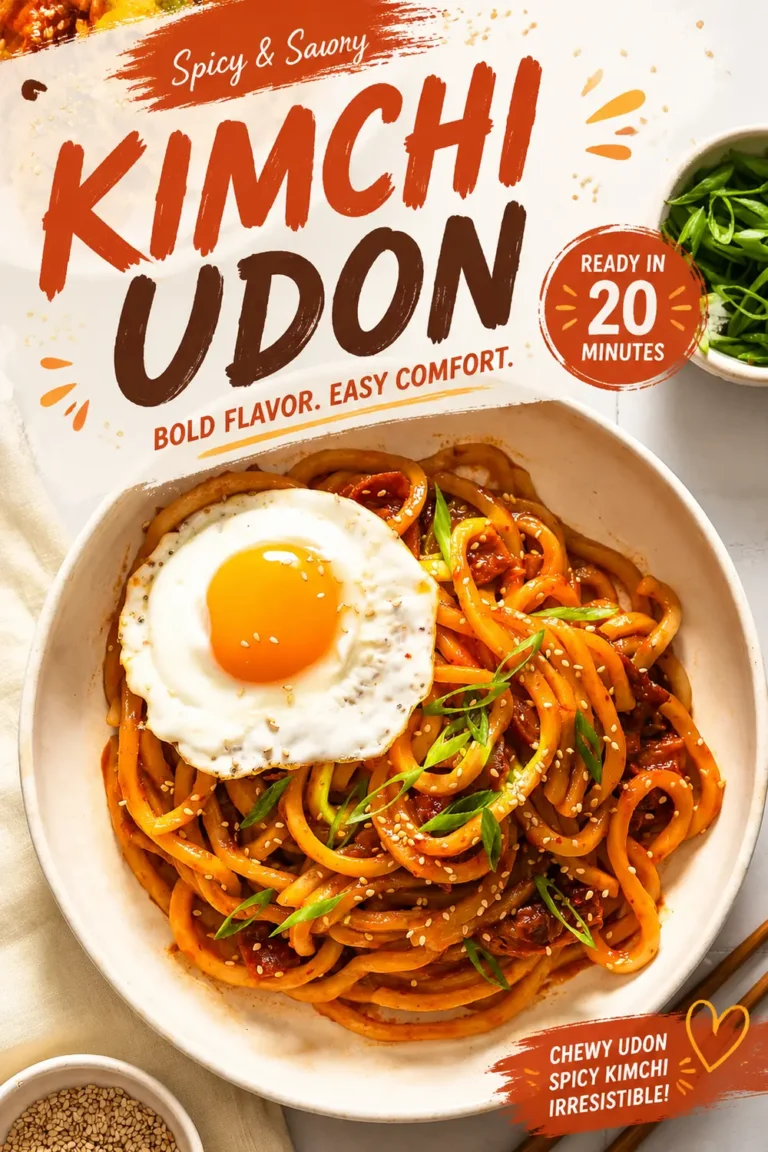
Kimchi Udon
Expert Tips This kimchi udon recipe comes together fast, and a few small moves make it taste even better at home. Frozen udon noodles give you the best chewy texture and only need a quick dip in simmering water, while aged kimchi brings more tang and depth than fresh.
- Total Time: 15 min
- Yield: 3 servings 1x
Ingredients
Main Ingredients
8 oz bacon, thick cut
1 lb frozen udon
1 cup kimchi, chopped (200 g)
2 tablespoons kimchi juice
1 ½ tablespoon gochujang
1 ½ tablespoon soy sauce
½ tablespoon fish sauce
½ tablespoon sugar
¼ cup water
½ tablespoon sesame oil, to finish
Garnish
1–2 fried eggs
2 teaspon sesame seeds
2 stalks green onion, sliced
Instructions
1-Prepare the udon: Prepare the udon. Heat a pot of hot water until it reaches a simmer. Cook the udon until just softened, about 1 minute or according to the package instructions.
2-Cook the bacon: Cook the bacon. In a skillet over medium heat, cook the bacon on both sides until golden brown and crispy. Transfer to a paper towel-lined plate and set aside.
3-Cook the kimchi: Cook the kimchi. Heat 1 tablespoon of cooking oil in a medium skillet over medium heat until hot. Add the chopped kimchi and cook until just wilted about 1-2 minutes.
4-Add sauce: Add sauce. In a small mixing bowl, add the kimchi juice, gochujang, soy sauce, fish sauce, sugar, and water and mix until combined. Pour into the skillet and cook for 2-3 minutes until the sauce thickens and reduces.
5-Add bacon and udon: Add bacon and udon. Add the bacon and udon noodles and toss together until the noodles are evenly coated. Remove from heat and finish with sesame oil.
6-Serve: Serve. Serve in individual bowls and garnish with a fried egg, sesame seeds, and green onion. Enjoy!
Last Step:
Please leave a rating and comment letting us know how you liked this recipe! This helps our business to thrive and continue providing free, high-quality recipes for you.- Prep Time: 5 min
- Cook Time: 10 min
- Method: stovetop
Nutrition
- Calories: 916
- Sugar: 18g
- Sodium: 3340mg
- Fat: 39g
- Saturated Fat: 11g
- Carbohydrates: 110g
- Fiber: 9g
- Protein: 36g
- Cholesterol: 104mg