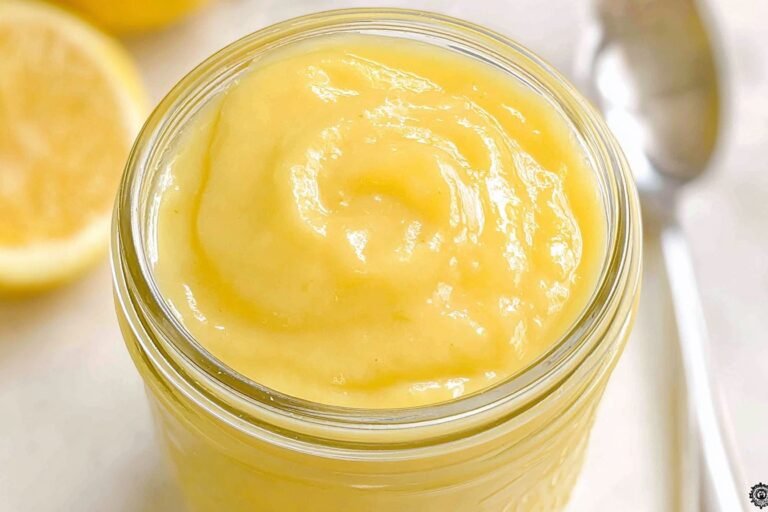
Ingredients
– 4 large egg yolks for building the creamy base
– 2/3 cup sugar for balancing tartness
– 1 tablespoon lemon zest for adding fresh citrus aroma
– 1/3 cup lemon juice for providing tangy flavor
– 1/8 teaspoon salt for rounding out the taste
– 6 tablespoons unsalted butter for creating smooth, glossy finish
Instructions
1-First Step: Set up the double boiler. Fill the bottom of a double boiler with 1 to 2 inches of water and bring it to a simmer. If you do not have a double boiler, place a heatproof glass bowl over a saucepan with simmering water. Make sure the bowl does not touch the water. This gentle heat keeps the eggs from cooking too quickly, which is the secret to a smooth lemon curd filling. For the best flavor, use a non-metal bowl such as glass or stainless steel. Acidic lemon juice can react with some metal pans and create a metallic taste. That little detail matters a lot when the recipe has so few ingredients.
2-Second Step: Mix the base ingredients. In the top pot or heatproof bowl, combine the egg yolks, granulated sugar, lemon zest, fresh lemon juice, and salt. Whisk until everything looks well blended. The mixture will be thin at first, but that is exactly what you want. If you are making the thicker version, use 2 whole egg yolks plus 1 whole egg instead of the 4 yolks. This version is handy when you want a firmer curd for tart shells or layered cakes. Either way, fresh lemon juice is the star, so skip bottled juice and use the real thing.
3-Third Step: Cook slowly and whisk constantly. Place the bowl over the simmering water and whisk constantly for about 10 minutes. Keep the mixture moving so it does not curdle or stick to the sides. The texture should gradually change from watery to thick and creamy, similar to hollandaise sauce. You are looking for about 170 degrees Fahrenheit on a thermometer. This is the moment where patience pays off. If the heat feels too low and the mixture is not thickening, increase the heat slightly while continuing to whisk. Still, do not rush it. High heat can scramble the eggs and ruin the smooth finish.
4-Fourth Step: Add the butter. Once the curd thickens, remove it from the heat right away. Add the softened butter pieces one at a time and whisk until each piece melts fully into the mixture. This step gives the lemon curd its glossy look and rich mouthfeel. Take your time here. The butter should blend smoothly, not sit in little greasy pools. If you want a lighter texture, you can whisk a little less butter in, but the full amount gives the best classic result.
5-Fifth Step: Strain and cool. For an ultra-smooth finish, pour the curd through a fine-mesh sieve into a clean jar or bowl. This removes any tiny bits of cooked egg zest or stray curds. While this step is optional, it is very helpful if you want a polished finish for cakes, tarts, or fancy brunch dishes. Cover the surface directly with plastic wrap so a skin does not form as it cools. Then refrigerate it for about 1 hour, or until fully thickened. The total time is about 1 hour and 15 minutes, including cooling.
6-Sixth Step: Serve and enjoy. Once chilled, your lemon curd is ready to use. Spoon it into tart shells, spread it on toast, dollop it on cheesecake, or swirl it into yogurt. It also works beautifully as a filling for bars, cupcakes, and layer cakes. If you are a baking enthusiast, this is one of those recipes that earns a permanent spot in your kitchen routine. For more dessert inspiration, take a look at creative lemon curd dessert ideas that show just how flexible this tangy filling can be.
Last Step:
Please leave a rating and comment letting us know how you liked this recipe! This helps our business to thrive and continue providing free, high-quality recipes for you.Notes
🍋 Always use fresh lemons for vibrant flavor – bottled juice lacks the essential oils in zest.
🔥 Whisk vigorously and constantly over gentle simmering water to avoid curdling or scrambling.
❄️ Plastic wrap pressed on the surface prevents a tough skin; stores up to 2 weeks in fridge.
- Prep Time: 5 minutes
- Chill: 1 hour
- Cook Time: 10 minutes
- Category: Desserts
- Method: Stovetop
- Cuisine: British
- Diet: Vegetarian
Nutrition
- Serving Size: 1 tablespoon
- Calories: 73 kcal
- Sugar: 7 g
- Sodium: 23 mg
- Fat: 5 g
- Saturated Fat: 3 g
- Unsaturated Fat: 2 g
- Trans Fat: 0 g
- Carbohydrates: 7 g
- Fiber: 0 g
- Protein: 1 g
- Cholesterol: 55 mg