
Why You’ll Love This Quick Pickled Vegetables Recipe
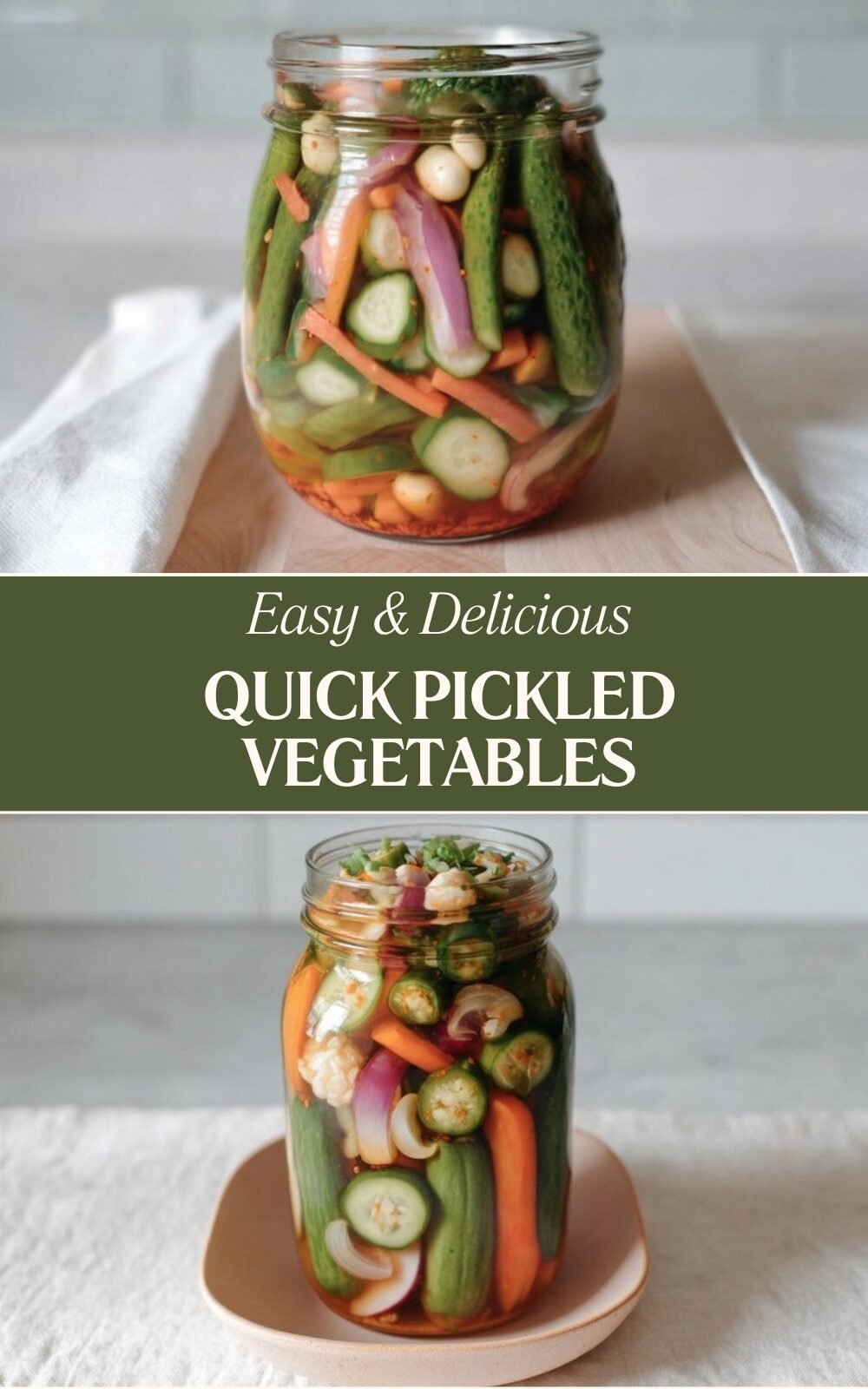
Quick Pickled Vegetables are one of those happy little kitchen tricks that make everyday meals feel fresh and fun. With a simple vinegar brine, a handful of vegetables, and just a short chill time, you get a bright, crunchy side that wakes up so many dishes. If you love big flavor with very little effort, this recipe is going to feel like a win.
Easy to make
This is a true low-stress recipe. You do not need canning gear, special jars, or a long wait. Just slice, pack, pour, and chill. It is perfect for busy parents, students, and working professionals who want something fast.
Good for everyday eating
These pickled veggies can fit into a lot of eating styles. They are naturally vegetarian, and they can also work for vegan and gluten-free meals. They add color and crunch without weighing down your plate.
So versatile
Quick Pickled Vegetables can top tacos, grain bowls, sandwiches, burgers, salads, and rice bowls. They also make a smart snack straight from the fridge when you want something tangy and crisp.
Big flavor in a small batch
The mix of white distilled vinegar, rice vinegar or apple cider vinegar, garlic, jalapeños, peppercorns, and mustard seeds gives you that classic pickle taste with a little personality. It is bright, salty, slightly sweet, and just spicy enough to keep each bite interesting.
These quick pickles bring a fresh crunch to the table in hours, not weeks, which is exactly why home cooks keep coming back to them.
If you enjoy simple side dishes that can sit next to a cozy dinner like this homemade Cajun seasoning recipe, these pickled vegetables will fit right in. They add that punchy, sharp bite that makes meals feel more complete.
For a little nutrition context, some readers like checking sources such as this article on pickled cucumbers to better understand how pickled vegetables can fit into a balanced routine.
Jump to:
- Why You’ll Love This Quick Pickled Vegetables Recipe
- Easy to make
- Good for everyday eating
- So versatile
- Big flavor in a small batch
- Essential Ingredients for Quick Pickled Vegetables
- Vegetables
- Brine
- Why each ingredient matters
- Special dietary options
- How to Prepare the Perfect Quick Pickled Vegetables Step by Step
- First step: prep the vegetables
- Second step: pack the jar
- Third step: make the brine
- Fourth step: pour and cover
- Fifth step: cool and chill
- Final step: serve and enjoy
- Dietary Substitutions to Customize Your Quick Pickled Vegetables
- Protein and main component alternatives
- Vegetable, sauce, and seasoning modifications
- Mastering Quick Pickled Vegetables with Simple Tips and Fun Variations
- Pro cooking techniques
- Flavor variations
- Presentation tips
- Make-ahead options
- How to Store Quick Pickled Vegetables
- Refrigeration
- Freezing
- Reheating
- Meal prep considerations
- FAQs: Frequently Asked Questions About Quick Pickled Vegetables
- What are quick pickled vegetables?
- How do you make quick pickled vegetables?
- Do quick pickled vegetables need sugar in the brine?
- How long do quick pickled vegetables last in the fridge?
- How should you store quick pickled vegetables?
- Quick Pickled Vegetables
- Ingredients
- Notes
- Nutrition
- Did you make this recipe?
Essential Ingredients for Quick Pickled Vegetables
The ingredient list is short, but every item plays a role. Fresh vegetables bring crunch, while the brine gives the tangy flavor and the right amount of salt. Below is a clear ingredient list with the exact measurements you need.
Vegetables
- 1 medium carrot, peeled and cut into coins or matchsticks
- 1/4 head cauliflower, cut into small florets
- 1/2 large red onion, thinly sliced
- 1 medium pickling cucumber, peeled and cut into coins or thinly sliced
- 3 to 4 jalapeños, sliced, with seeds removed if very hot
- 2 to 3 cloves garlic, smashed and sliced
- 2 teaspoons whole peppercorns, optional
- 2 teaspoons whole mustard seeds, optional
Brine
- 1 cup white distilled vinegar
- 1/4 cup rice vinegar or apple cider vinegar
- 1 1/4 cups water
- 2 teaspoons sea salt
- 1 tablespoon sugar
Why each ingredient matters
| Ingredient | What it does |
|---|---|
| Carrot | Adds sweetness and a nice bite |
| Cauliflower | Soaks up the brine well and stays crunchy |
| Red onion | Brings color and sharp flavor |
| Pickling cucumber | Gives the classic pickle texture |
| Jalapeños | Add heat and a fresh pepper flavor |
| Garlic | Deepens the savory taste |
| Peppercorns and mustard seeds | Add classic pickle spice, especially if you like bold flavor |
| Vinegar, water, salt, sugar | Create the brine that preserves and seasons the vegetables |
Special dietary options
- Vegan: This recipe is already vegan as written.
- Gluten-free: All listed ingredients are naturally gluten-free, but always check your vinegar label if you are sensitive.
- Low-calorie: Skip the sugar or reduce it slightly if you want a sharper, less sweet brine.
How to Prepare the Perfect Quick Pickled Vegetables Step by Step
First step: prep the vegetables
Start by washing all your vegetables well. Peel the carrot and cucumber, then slice them into coins or thin strips so they pickle quickly and evenly. Cut the cauliflower into small florets, thinly slice the red onion, and slice the jalapeños. If your peppers are very hot, remove the seeds before slicing. Smash and slice the garlic cloves so they can release more flavor into the brine.
Try to keep the pieces similar in size. That helps everything pickle at the same pace. If some pieces are much thicker than others, the thinner ones will be ready first while the thicker ones stay too firm.
Second step: pack the jar
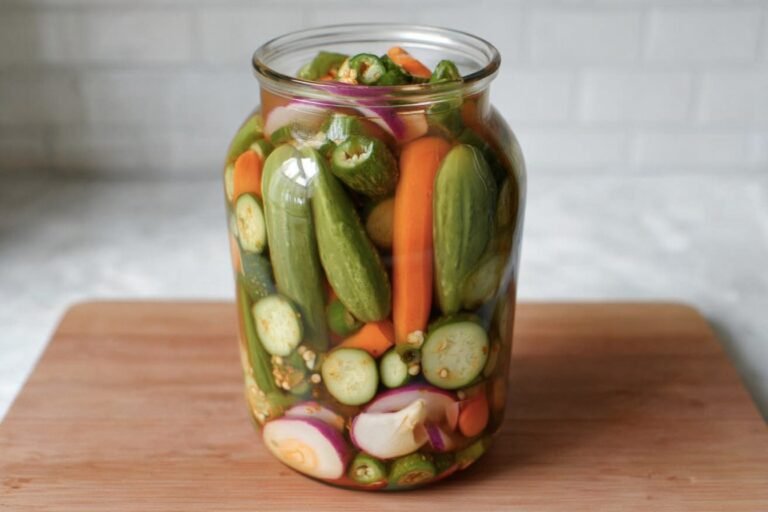
Use a clean glass jar or another food-safe container. A wide-mouth jar works best because it makes packing much easier. Add the carrot, cauliflower, red onion, cucumber, jalapeños, garlic, and, if you are using them, the whole peppercorns and mustard seeds. Tuck the vegetables in snugly, but do not mash them down too hard. You want enough room for the brine to flow through every layer.
If you like a prettier look, place some of the red onion near the glass so the jar has color from the outside. It makes the finished pickles look extra inviting.
Third step: make the brine
In a small saucepan, combine 1 cup white distilled vinegar, 1/4 cup rice vinegar or apple cider vinegar, 1 1/4 cups water, 2 teaspoons sea salt, and 1 tablespoon sugar. Warm the mixture over medium heat and stir until the salt and sugar dissolve. You do not need a hard boil. A gentle heating is enough. In fact, keeping the brine just hot enough to dissolve the seasonings helps the vegetables stay crisp.
The smell will be sharp and bright, and that is exactly what you want. If you love a fruitier flavor, apple cider vinegar gives a softer note. If you want a cleaner, sharper bite, rice vinegar works beautifully too.
Fourth step: pour and cover
Carefully pour the hot brine over the vegetables in the jar. Make sure the vegetables are fully covered. If needed, press them down gently with a spoon to release any air pockets. Leave a little space at the top of the jar so the brine can settle without spilling over.
If the vegetables float, that is normal at first. After a short rest in the fridge, they usually settle down into the liquid. If you have a small fermentation weight or a clean piece of cabbage leaf, you can use it to keep everything submerged.
Fifth step: cool and chill
Let the jar sit at room temperature until it is no longer steaming hot. Then seal it and place it in the refrigerator. The vegetables will start tasting pickled after about 2 hours, but they usually taste best after overnight chilling. That extra time gives the brine a chance to move into the vegetables and balance the flavor.
This is a great make-ahead recipe for busy weeks. You can prep it in the evening and use it the next day for lunch, dinner, or snacking.
Final step: serve and enjoy
Once chilled, taste a piece of each vegetable. The cucumber will be crisp and tangy, the onion will mellow a little, and the cauliflower will be pleasantly snappy. Serve the pickled vegetables cold as a side dish, on sandwiches, over tacos, or beside rich meals that need a bright contrast.
For a heartier meal pairing, they taste great alongside loaded baked potato soup, where their sharp bite cuts through the creamy texture in such a satisfying way.
Best tip: the longer the vegetables sit in the fridge, the more flavor they take on. Just do not wait too long if you love extra crunch.

Dietary Substitutions to Customize Your Quick Pickled Vegetables
Protein and main component alternatives
While this recipe is all about vegetables, you can still build the rest of your meal around different proteins or mains depending on your needs. These pickles work especially well with grilled chicken, rice bowls, roasted fish, tofu, or beans. They also brighten rich comfort foods like casseroles and stews.
If you are serving a crowd, put the jar on the table next to something hearty like chicken rice casserole or a warm grain dish. The contrast makes the meal feel more balanced and lively.
Vegetable, sauce, and seasoning modifications
You can swap in other vegetables if you want to use what you already have. Try radishes, green beans, bell peppers, or thin-sliced fennel. If you want a sweeter brine, add a little more sugar. If you want a sharper profile, reduce the sugar or use only white distilled vinegar.
For spice lovers, add chili flakes, extra jalapeños, or a few sliced serrano peppers. For a softer flavor, skip the peppercorns and mustard seeds. If you need a lower-sodium version, reduce the sea salt a bit, but keep enough salt in the brine for flavor and balance.
You can also change the vinegar mix based on what you like. Apple cider vinegar brings a gentle fruit note, while rice vinegar keeps things mellow and clean. That flexibility is one reason Quick Pickled Vegetables work for so many people, from diet-conscious eaters to food lovers who want to play with flavors.
Mastering Quick Pickled Vegetables with Simple Tips and Fun Variations
Pro cooking techniques
For the best texture, cut your vegetables as evenly as possible. Thin slices pickle faster, while chunkier pieces need a little more time. If you want a very crisp result, chill the vegetables before pickling and use a warm brine instead of a boiling one. That helps reduce softening.
Clean jars matter too. Use washed, dry glass jars so the brine stays clear and the vegetables keep well in the fridge. If you are packing a large batch, divide the vegetables into smaller jars so each one gets enough brine coverage.
Flavor variations
You can easily change the flavor profile with a few simple tweaks. Add fresh dill for a classic deli-style taste. Toss in coriander seeds for a citrusy note. Use more garlic if you want a bolder savory bite. If you like sweet-and-spicy pickles, keep the sugar and add extra jalapeño slices.
For a more colorful jar, add thin strips of red bell pepper. For a more earthy bite, try sliced radishes. A mix of textures makes the jar more interesting and gives you a better bite every time.
Presentation tips
Serve the vegetables in a small bowl with a spoon so people can add them easily to plates. If you are setting out a snack board, place the jar near crackers, cheeses, olives, and sliced meats. The bright colors of the carrot, onion, and jalapeño make the whole spread look cheerful.
They are also lovely on top of simple dinners. If you want another easy savory meal idea, try them beside garlic steak tortellini for a fun mix of rich and tangy flavors.
Make-ahead options
This recipe is a lifesaver for weekly meal prep. Make a jar on Sunday and use it through the week for quick lunches and fast dinners. It is a small step that makes a big difference when you are short on time. You can also double the brine and make two jars at once if your household goes through pickles quickly.
Quick pickled vegetables are one of the easiest ways to add brightness to a meal without turning on the oven for long.
How to Store Quick Pickled Vegetables
Refrigeration
Store your Quick Pickled Vegetables in airtight glass jars in the refrigerator. Keep the vegetables fully submerged in brine at all times. They will stay best for about 3 to 4 weeks, though the crunch is usually at its peak in the first 1 to 2 weeks. Always use a clean spoon when serving so the jar stays fresh longer.
Freezing
Freezing is not a great choice for this recipe. The vegetables lose their crisp texture once thawed, and the brine can separate. Since quick pickles are meant to stay fresh and crunchy, the fridge is the better home for them.
Reheating
Do not reheat quick pickled vegetables. They are meant to be served cold or at room temperature. Warming them will soften the texture and mute the bright flavor. If the brine is very cold from the fridge, you can let the jar sit out for a few minutes before serving.
Meal prep considerations
If you are making a batch for lunches or packed meals, portion the pickles into small containers so they are easy to grab. Keep them sealed and chilled until needed. They are perfect for busy school lunches, work lunches, and travel snacks when packed in a leak-proof container.
FAQs: Frequently Asked Questions About Quick Pickled Vegetables
What are quick pickled vegetables?
How do you make quick pickled vegetables?
Do quick pickled vegetables need sugar in the brine?
How long do quick pickled vegetables last in the fridge?
How should you store quick pickled vegetables?
Quick Pickled Vegetables
🥬 Vibrant, crunchy quick pickled veggies – gut-friendly probiotics and endless flavor for healthy eating!
🫙 No-cook hassle: ready in hours to top salads, bowls, or charcuterie with zesty tang.
- Total Time: 2 hours 20 minutes
- Yield: 1 quart (8-10 servings)
Ingredients
– 1 medium carrot for adding sweetness and a nice bite
– 1/4 head cauliflower for soaking up the brine well and staying crunchy
– 1/2 large red onion for bringing color and sharp flavor
– 1 medium pickling cucumber for giving the classic pickle texture
– 3 to 4 jalapeños for adding heat and a fresh pepper flavor
– 2 to 3 cloves garlic for deepening the savory taste
– 2 teaspoons whole peppercorns (optional) for adding classic pickle spice, especially if you like bold flavor
– 2 teaspoons whole mustard seeds (optional) for adding classic pickle spice, especially if you like bold flavor
– 1 cup white distilled vinegar for creating the brine that preserves and seasons the vegetables
– 1/4 cup rice vinegar or apple cider vinegar for creating the brine that preserves and seasons the vegetables
– 1 1/4 cups water for creating the brine that preserves and seasons the vegetables
– 2 teaspoons sea salt for creating the brine that preserves and seasons the vegetables
– 1 tablespoon sugar for creating the brine that preserves and seasons the vegetables
Notes
🥒 Use firm, fresh veggies for the best crunch and texture.
🌶️ Adjust jalapenos or add red pepper flakes to control spice level.
🫙 Shake jar daily to distribute flavors evenly during pickling.
- Prep Time: 15 minutes
- Pickling Time: 2 hours
- Cook Time: 5 minutes
- Category: Condiment
- Method: Pickling
- Cuisine: Fusion
- Diet: Vegan
Nutrition
- Serving Size: 1/4 cup
- Calories: 20 kcal
- Sugar: 3g
- Sodium: 300mg
- Fat: 0g
- Saturated Fat: 0g
- Unsaturated Fat: 0g
- Trans Fat: 0g
- Carbohydrates: 5g
- Fiber: 1g
- Protein: 0.5g
- Cholesterol: 0mg