
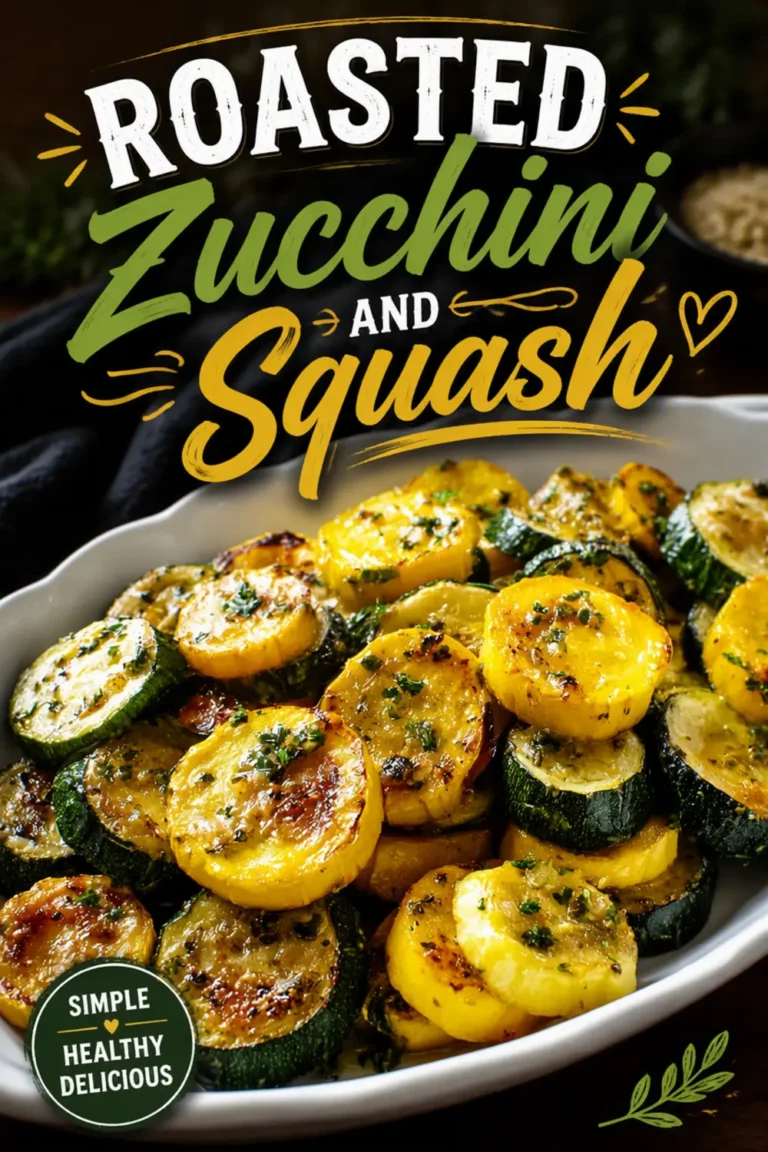
Roasted Zucchini and Squash
I learned the hard way on a busy Tuesday night when I threw slices of zucchini and yellow squash onto one pan, barely leaving any room, and ended up with a pale, limp pile that nobody at the table touched. The problem was simple: crowding.
When those pieces touch or overlap, the moisture they release gets trapped, and the whole tray steams instead of roasting. You lose the browning, the caramelized edges, and that light crispness that makes roasted vegetables worth eating.
The fix is just as simple. Put the slices in a single layer with breathing room around each round, and let the oven at a solid 425 degrees Fahrenheit do the rest.
This recipe is the one I fall back on when I need a side dish that looks like I tried, but in reality the oven did all the heavy lifting.
Two medium zucchini, two medium yellow squash, a handful of seasonings, and a hot baking sheet. That is the foundation, and when you follow it right, every batch comes out golden at the edges and tender in the center.
I have made this for weeknight grilled chicken, for company dinners, and once for a potluck where I barely had time to change out of my work clothes. Every time, someone asks what I did to get that color.
The answer is always the same: half inch slices, one layer, hot oven, and no peeking for the first ten minutes. That is the rhythm of the recipe. It works because it respects the moisture in these vegetables.
Zucchini and squash hold a lot of water, and if you give the heat enough space to evaporate it, you get roasting instead of steaming.
There is no magic trick or secret ingredient here. It comes down to a confident cook who knows that a good side dish does not need a long ingredient list. It needs heat, space, and timing.
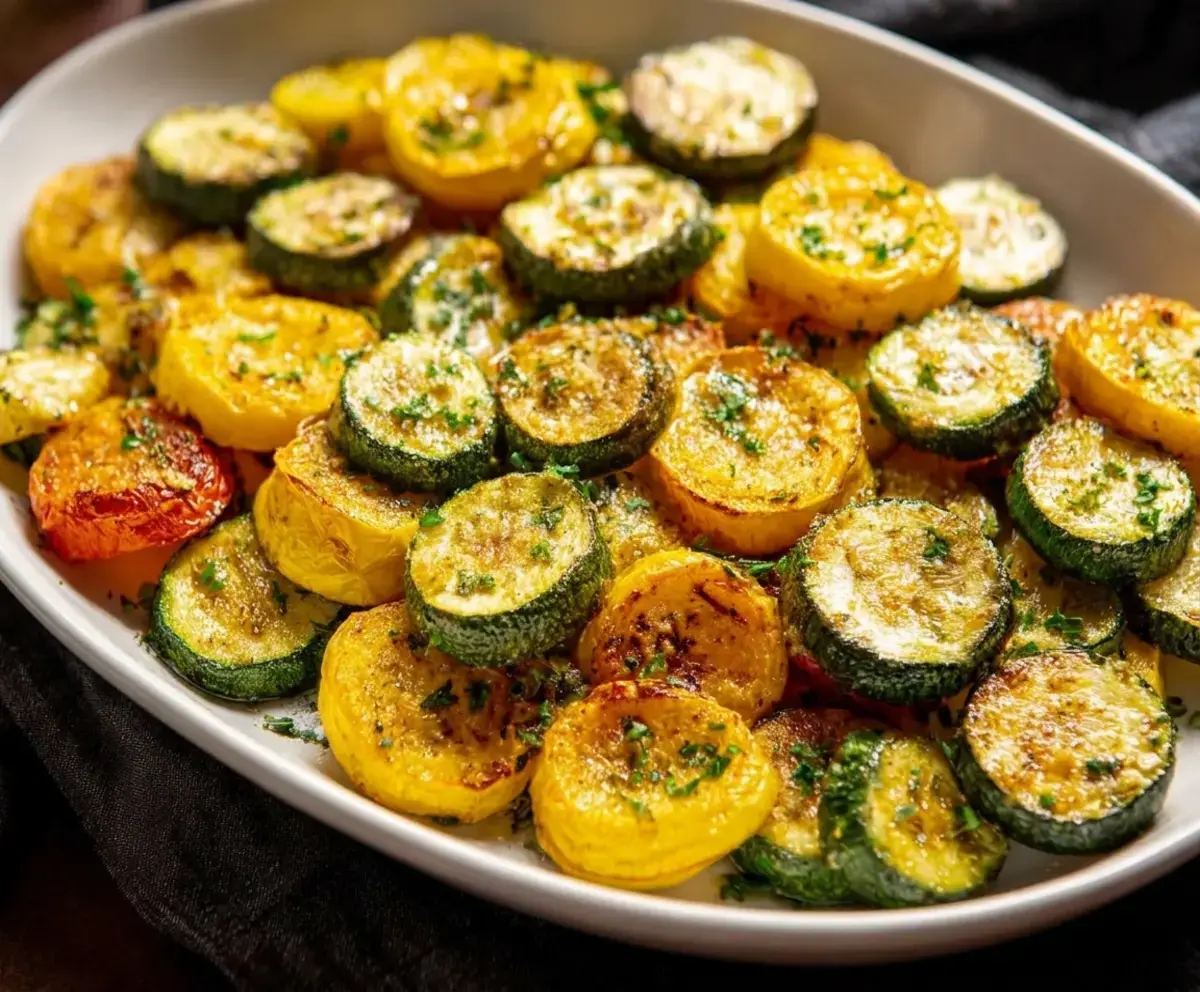
You will taste oregano, thyme, garlic, and olive oil woven into each slice, with fresh parsley right at the end for a clean finish. The vegetables themselves stay the star, just a little crisper at the edges than you expected.
Pan crowding is what ruins roasted vegetables. When the slices are touching or overlapping, the moisture they release has nowhere to go and they steam instead of roast.
If you are new to roasting squash, start here. It is forgiving enough that your first batch will be good, and your second batch will be the one you make without a recipe. All you need is the confidence to spread the vegetables out and trust the oven.
Jump to:
- Roasted Zucchini and Squash
- The One Thing That Matters Most
- Ingredient Notes
- Serving Ideas
- FAQs
- What is the best temperature to roast zucchini and squash?
- Why are my roasted zucchini soggy?
- How do I get golden edges on roasted zucchini and squash?
- Can I add Parmesan cheese to roasted zucchini and squash?
- Roasted Zucchini and Squash
- Ingredients
- Instructions
- Last Step:
- Nutrition
- Did you make this recipe?
The One Thing That Matters Most
If I could write one rule on every oven door in every home kitchen, it would be this: do not crowd the pan. I mean it literally. Space between the slices is not a suggestion; it is the difference between a golden side dish and a steamed vegetable pile that tastes like warm water.
When you lay out zucchini and squash rounds and they overlap even slightly, the steam released from one piece bathes the next. That moisture pools in the narrow gaps and cools the surface just enough that browning never starts.
Instead of caramelization, you get a pale, soft texture. It is edible, sure, but it is not what you signed up for. The edges stay flabby.
The garlic never toasts. The olive oil just sits there without doing its job.
Now spread those same slices across two baking sheets with parchment underneath, every round standing alone, and the transformation happens in minutes. The hot dry air in a 425 degree oven hits every exposed surface. Water evaporates fast.
The natural sugars in the squash begin to concentrate and brown at the edges. The oil helps conduct heat and keeps the seasoning stuck to the flesh. By the time you flip halfway through, you will already see color starting to build.

I have done the side by side test at home when I was short on time and thought I could squeeze everything onto one tray. The crowded tray came out soggy, as always.
The spaced out tray came out with those golden brown edges my family fights over. The lesson stuck. Now I keep two large baking sheets ready any time I roast watery vegetables. Extra cleanup is worth the result.
The second part of this rule is oven preheat. You need the oven fully at 425 degrees Fahrenheit before the tray goes in. Do not slide the pan into a warming oven and hope it catches up.
The first blast of heat sets the browning in motion. A lukewarm start gives the moisture a head start, and you end up steaming before roasting ever begins. Give the oven a solid fifteen minutes to hit its mark, then commit.
That is the one two punch: space on the pan and a hot oven from the start.
Ingredient Notes
I have tested enough batches to know that small ingredient choices cascade into big differences on the plate. Here is what matters for roasted zucchini and squash, broken down so you can make the recipe your own without losing the soul of it.
Zucchini and yellow squash. Slice them to a consistent half inch thickness. Thinner slices cook faster and go limp before any real browning happens. Thicker slices stay raw in the middle while the outside chars.
Half an inch gives you a tender center and a golden edge in the same window of time. I use a sharp chef’s knife and eyeball it, but if you want precision, a mandoline set to half an inch works well. Just keep the slices uniform so the whole batch finishes together.
Olive oil. Three tablespoons coat four servings without greasiness. Every piece needs a light coating to prevent sticking and enable browning, but you are not deep frying here.
I toss the slices in a large bowl rather than drizzling oil on the tray, because the bowl toss gets every surface covered. Missed spots on the tray method mean pale patches, and that bothers me more than an extra bowl to wash.
Garlic. Fresh minced garlic can burn at 425 degrees Fahrenheit if it sits exposed on top of the slices. I toss it thoroughly so it ends up tucked under or between the rounds, where the squash shields it from direct heat.
If you are nervous about burnt garlic flecks, garlic powder is a safer alternative. You lose a little of that fresh sharpness, but you gain an even roasted flavor with zero risk of bitter black specks.
I use fresh when I am paying attention, and powder when I am distracted by kids or phone calls.
Dried oregano and thyme. Dried herbs hold up to high heat without scorching. Fresh herbs are delicate and burn quickly at 425 degrees, turning bitter instead of fragrant. Save the fresh stuff for after roasting.
I keep a jar of dried oregano and thyme on the counter for exactly this kind of dish. They bloom in the hot oil and perfume the whole tray without turning to ash.
Salt and pepper. Season generously before roasting. The salt draws a little surface moisture that evaporates quickly at high heat, and the pepper adds warmth. I season by eye and taste the raw mix of oil and herbs before tossing.
It should taste slightly overseasoned raw, because roasting mellows it. If it tastes perfect raw, it will be underseasoned on the plate.
Fresh parsley. Chopped parsley at the end is a garnish, not an afterthought. It adds a quick green brightness that cuts through the roasted depth. I chop it right before serving so it stays perky. If you forget it, the dish still works, but the parsley turns a good tray of roasted vegetables into something that feels finished.
Parmesan (optional). The original recipe does not require it, but I sometimes scatter grated Parmesan over the tray for the last five minutes of roasting. It melts into a salty, nutty crust that clings to the edges.
Do this only if you have spaced the slices well, because moisture from crowded vegetables will turn the cheese gummy instead of crisp. A light sprinkle is plenty.
Zucchini and yellow squash: Slice to a consistent half inch thickness. Thinner slices cook faster and go limp.
Serving Ideas
Roasted zucchini and squash slides onto the plate next to almost anything, and I have paired it with enough mains to know a few combinations that sing louder than others.
The most natural fit is right next to grilled chicken or a piece of fish with a simple lemon butter finish.
The roasted edges of the vegetables echo the char from the grill, and the tender centers soak up any juices that wander over from the protein.
On summer evenings when the grill is already hot, I toss the vegetables in the oven and pull them out just as the chicken rests. Dinner lands on the table with color and contrast.
Pasta is another path I take often. Toss the roasted vegetables into hot pasta with a little extra olive oil and a handful of grated Parmesan. The oil picks up the herb flavors from the squash, and the cheese bridges everything.
I add a crack of black pepper and call it a ten minute meal when I have leftover roasted vegetables in the fridge. It works with spaghetti, penne, or whatever box is open.
For a quick lunch, I heap the vegetables over a bowl of rice and top it with a fried egg.
The yolk breaks over the warm squash and creates a sauce that needs nothing else, maybe a dash of hot sauce if the day calls for it. I have eaten this standing at the kitchen counter more times than I can count.
Brunch gets a boost when you fold the roasted slices into a frittata. Whisk eggs with a splash of milk, pour over the vegetables in an oven safe skillet, and bake until set. The roasted flavor stays distinct inside the eggs, and you get a frittata that tastes planned instead of improvised.
These vegetables also work alongside anything off the grill: burgers, sausages, skewers, even a simple grilled cheese sandwich when you want a vegetable on the plate that does not fight the main dish. The seasoning is neutral enough to play backup, but the golden edges give it enough personality to stand alone if you eat them straight from the tray.
Works as a side dish alongside grilled chicken, fish, pasta, or anything off the grill. Also good stirred into pasta with a little olive oil and Parmesan, folded into a frittata, or served over rice with a fried egg on top for a quick lunch.
FAQs
What is the best temperature to roast zucchini and squash?
Why are my roasted zucchini soggy?
How do I get golden edges on roasted zucchini and squash?
Can I add Parmesan cheese to roasted zucchini and squash?
Roasted Zucchini and Squash
Roasted Zucchini and Squash I learned the hard way on a busy Tuesday night when I threw slices of zucchini and yellow squash onto one pan, barely leaving any room, and ended up with a pale, limp pile that nobody at the table touched. The problem was simple: crowding.
- Total Time: 35 min
- Yield: 4 1x
Ingredients
Ingredients
2 medium zucchini, sliced into 1/2-inch rounds
2 medium yellow squash, sliced into 1/2-inch rounds
3 tbsp olive oil
2 cloves garlic, minced
1 tsp dried oregano
1 tsp dried thyme
salt
black pepper
2 tbsp fresh parsley, chopped (for garnish)
Instructions
Method
1-Preheat oven to 425°F (220°C): Preheat oven to 425°F (220°C). Line one or two large baking sheets with parchment paper.
2-In a large bowl, combine zucchini and: In a large bowl, combine zucchini and yellow squash. Drizzle with olive oil and add garlic, oregano, thyme, salt, and pepper. Toss until every piece is evenly coated.
3-Spread in a single layer across the: Spread in a single layer across the baking sheet, making sure pieces are not touching. Use two pans if needed.
4-Roast for 20 to 25 minutes, flipping: Roast for 20 to 25 minutes, flipping halfway through, until edges are golden and vegetables are tender.
5-Transfer to a serving plate and garnish: Transfer to a serving plate and garnish with fresh parsley. Serve warm.
Last Step:
Please leave a rating and comment letting us know how you liked this recipe! This helps our business to thrive and continue providing free, high-quality recipes for you.- Prep Time: 10 min
- Cook Time: 25 min
- Method: bake
Nutrition
- Calories: 130