

Why You’ll Love This Homemade Salmon Sashimi
If you have been curious about making Homemade Salmon Sashimi at home, this recipe gives you a simple, calm way to do it with clear safety steps. It is made for busy home cooks, students, parents, and anyone who wants fresh flavor without a lot of fuss. The process does take time because the salmon needs to freeze for safety, but the hands-on work is quick and easy.
- Easy preparation: This homemade salmon sashimi recipe starts with just fresh salmon, salt, and a freezer bag. Most of the work is waiting time, so the active prep is only about 10 minutes.
- Good nutrition: Salmon brings plenty of protein, healthy fats, and useful minerals. A serving of homemade salmon sashimi can fit well into diet-conscious eating plans.
- Flexible serving style: You can keep it simple with sushi rice, wasabi, and soy sauce, or add cucumber, avocado, lemon, and yuzu aioli for a brighter plate.
- Fresh, clean flavor: When the salmon is handled the right way, homemade salmon sashimi tastes soft, delicate, and rich, with a smooth bite that feels special at home.
For the best results, start with salmon from a reliable source and follow the freezing step carefully before serving it raw.
If you like simple make-at-home recipes, you may also enjoy this refreshing whipped lemonade recipe as a light side for a sashimi meal.
Jump to:
- Why You’ll Love This Homemade Salmon Sashimi
- Essential Ingredients for Homemade Salmon Sashimi
- Main Ingredients
- Special Dietary Options
- How to Prepare the Perfect Homemade Salmon Sashimi: Step-by-Step Guide
- First Step: Dry and salt the salmon
- Second Step: Rinse and dry again
- Third Step: Pack it for freezing
- Fourth Step: Freeze at the right temperature
- Fifth Step: Defrost in the refrigerator
- Sixth Step: Slice and serve
- Seventh Step: Cook the skin if needed
- Eighth Step: Plate and enjoy
- Dietary Substitutions to Customize Your Homemade Salmon Sashimi
- Protein and Main Component Alternatives
- Vegetable, Sauce, and Seasoning Modifications
- Mastering Homemade Salmon Sashimi: Advanced Tips and Variations
- Pro cooking techniques
- Flavor variations
- Presentation tips
- Make-ahead options
- How to Store Homemade Salmon Sashimi: Best Practices
- Refrigeration
- Freezing
- Meal prep considerations
- Nutrition Information for Homemade Salmon Sashimi
- FAQs: Frequently Asked Questions About Homemade Salmon Sashimi
- Homemade Salmon Sashimi
- Ingredients
- Instructions
- Last Step:
- Notes
- Nutrition
- Did you make this recipe?
Essential Ingredients for Homemade Salmon Sashimi
Below is the complete ingredient list for Homemade Salmon Sashimi, using the exact amounts needed for 1 pound of salmon. The ingredients section also includes the storage item and the optional toppings that make serving easier and more fun.
Main Ingredients
- 1 pound fresh salmon – The main ingredient for homemade salmon sashimi. Choose high-quality salmon from a trusted source.
- 1 teaspoon salt – Used to season the salmon lightly before rinsing and freezing.
- 1 freezer bag – Needed for safe freezing and storage.
- Optional: 1 serving yuzu aioli made with olive oil – Adds a creamy, citrusy finish when serving.
- Optional: sushi rice – A classic base for serving the sliced salmon.
- Optional: wasabi – Brings a sharp, traditional bite.
- Optional: soy sauce – Adds salty depth for dipping.
- Optional: 1 lemon – Brightens the plate and pairs well with raw salmon.
- Optional: cucumbers – Adds a cool, crisp crunch.
- Optional: avocado – Gives a soft, creamy side that works well with sashimi.
- Optional: oil for frying the skin – Used only if the salmon skin is left on and you want crispy skin chips.
Special Dietary Options
- Vegan: Use marinated watermelon, king oyster mushrooms, or tomato sashimi style slices if you want a plant-based plate.
- Gluten-free: Choose gluten-free soy sauce or tamari.
- Low-calorie: Serve the sashimi with cucumber ribbons, lemon, and a small amount of yuzu aioli instead of heavier sides.
How to Prepare the Perfect Homemade Salmon Sashimi: Step-by-Step Guide
This homemade salmon sashimi method focuses on safety first, then flavor. The freezing step is important because raw fish needs careful handling. If you are pregnant, or if you have any health concerns, talk with a doctor before eating raw salmon.
First Step: Dry and salt the salmon
Pat the salmon dry with a paper towel. Sprinkle 1 teaspoon salt per pound over the fish, then let it sit for 20 minutes. This gentle salt step helps draw out extra moisture and gives the salmon a cleaner taste.
Second Step: Rinse and dry again
After the 20 minutes are up, rinse the salmon under running water. Pat it dry again with paper towels. This keeps the outside neat before freezing and helps you get a better texture later.
Third Step: Pack it for freezing
Place the salmon in a freezer bag. If you want to avoid freezer burn, use a vacuum-sealed bag or double-bag it before freezing. That small extra step can help the salmon stay in better shape during the long freeze.
For raw salmon, do not rush the freezer time. Safety comes first, and the full freeze period matters.
Fourth Step: Freeze at the right temperature
Freeze the salmon at -4°F (-20°C) for at least 7 days to help kill parasites. This is the longest part of the recipe, but it is also one of the most important parts for raw serving. If your salmon was already pre-frozen, still confirm it has been frozen for 7 or more days and still go through the salt step.
Fifth Step: Defrost in the refrigerator
When the freezing time is done, move the salmon to the refrigerator and let it defrost overnight. Slow thawing helps keep the texture more even and keeps the fish easier to slice the next day.
Sixth Step: Slice and serve
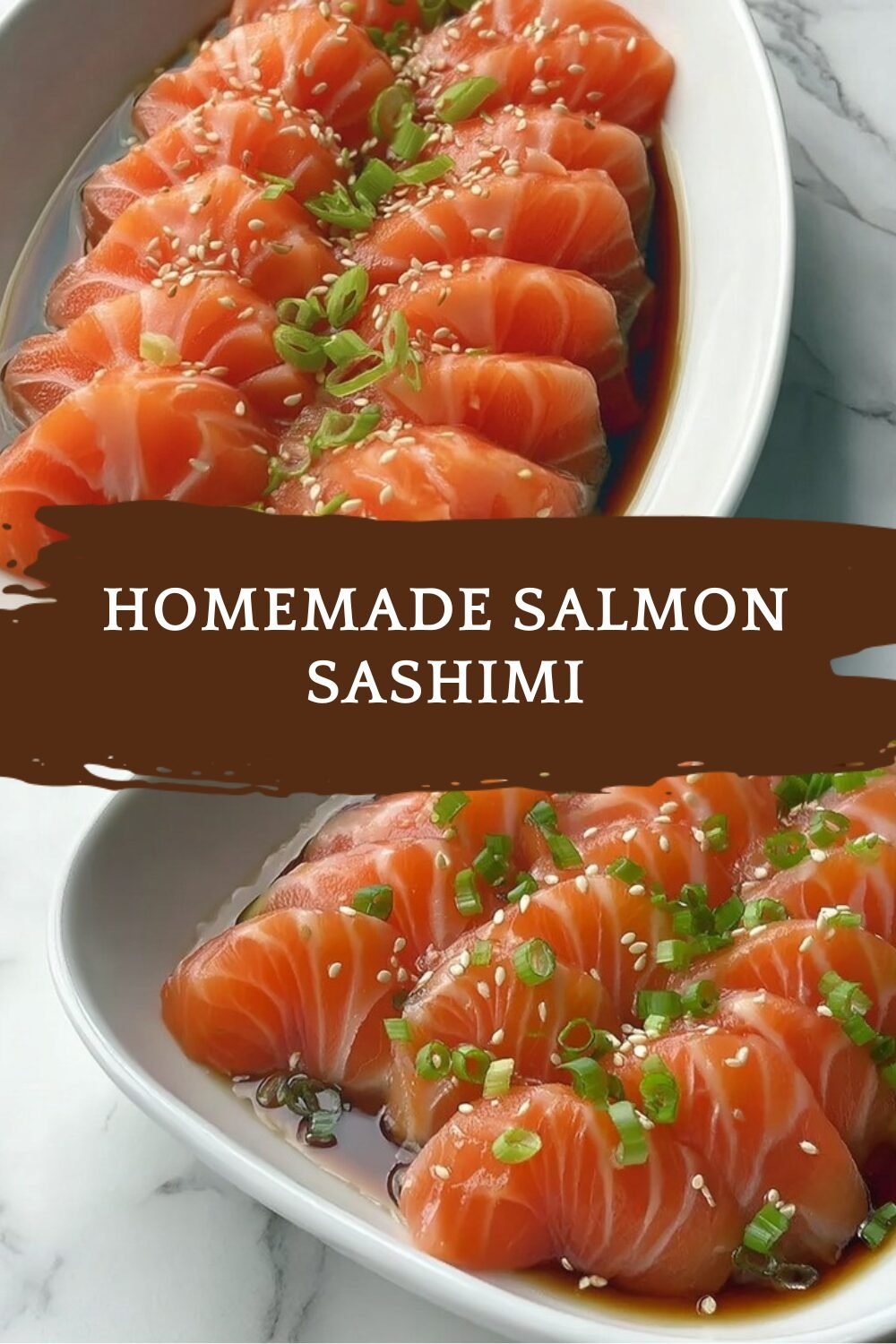
Once the salmon is thawed, pat it dry one more time. Use a sharp knife to thinly slice the fish into clean pieces. Arrange the slices with sushi rice, wasabi, and soy sauce. If you like a softer, richer finish, add yuzu aioli made with olive oil, plus lemon, cucumbers, and avocado.
Seventh Step: Cook the skin if needed
If the salmon skin is still on, you can fry it in oil for 5 to 7 minutes until crispy. This creates crunchy salmon skin chips, which make a fun topping or snack on the side. It is a great way to use the whole piece of fish.
Eighth Step: Plate and enjoy
Serve the sliced salmon right away after cutting. Homemade salmon sashimi tastes best when the texture is fresh and cool. For a beautiful plate, fan out the slices, tuck in cucumber rounds, add avocado, and finish with a small bowl of soy sauce or a drizzle of yuzu aioli.
| Step | Time | Purpose |
|---|---|---|
| Salt and rest | 20 minutes | Builds flavor and draws out moisture |
| Freeze | 7 days minimum | Helps kill parasites |
| Defrost | Overnight | Protects texture and slicing quality |
| Slice and serve | 10 minutes | Finishes the dish for eating |

Dietary Substitutions to Customize Your Homemade Salmon Sashimi
Protein and Main Component Alternatives
If you want a different base, or if raw salmon is not the right fit, there are a few easy swaps. You can use cooked salmon slices, seared salmon, or even sashimi-style vegetables for a plant-based plate. For readers who like fish but want a milder choice, trout can work in some settings, but the same food safety rules still matter.
For people who cannot eat raw fish, a cooked salmon bowl with sushi rice, cucumber, and avocado can still give a similar feel. You get the fresh look and simple meal style without the raw serving step. That makes homemade salmon sashimi style meals more flexible for family dinners.
Vegetable, Sauce, and Seasoning Modifications
Small changes can make the plate fit different diets or taste preferences. Swap soy sauce for tamari if you need gluten-free options. Replace yuzu aioli with a light olive oil and lemon drizzle if you want a brighter, lower-fat finish. Add thin carrots, radish, or snap peas for more crunch.
If you want a lighter meal, skip the rice and serve the salmon with cucumbers and avocado only. If you want more comfort, make a full sushi bowl with rice, sashimi slices, and a little wasabi on the side. This recipe works well for home cooks because it is easy to adjust without losing the fresh sashimi style.
Mastering Homemade Salmon Sashimi: Advanced Tips and Variations
Pro cooking techniques
Start with salmon from a trusted local fish market when possible. That usually gives you more confidence about freshness and source. Farmed salmon from reliable suppliers can also be a smart choice because the risk profile may be lower than some wild options. Always research the origin before serving raw salmon at home.
If the salmon arrives pre-frozen, still follow the salt step and make sure it has been frozen for at least 7 days in total. Keep the fish sealed well during storage, and use vacuum sealing or double-bagging to reduce freezer burn. For the cleanest cuts, chill your knife and work quickly.
Flavor variations
Keep the classic version simple, or add small touches for a different finish. Yuzu aioli made with olive oil gives the salmon a creamy citrus note. Lemon and cucumber bring freshness, while avocado adds richness. If you like texture, crispy salmon skin chips can add a salty crunch.
Presentation tips
For a home-style plate that still feels special, fan the salmon slices across a chilled plate. Add neat piles of cucumber, avocado, and sushi rice. Place wasabi and soy sauce in small dishes nearby. A clean presentation makes homemade salmon sashimi feel restaurant-style without extra work.
Make-ahead options
This recipe is already a great make-ahead choice because the freezing step happens before serving day. You can also prep the rice, slice the cucumbers, and mix the yuzu aioli ahead of time. That makes the final meal fast and easy, which is great for working professionals and busy parents.
Simple tools, careful freezing, and a sharp knife go a long way when making homemade salmon sashimi at home.
How to Store Homemade Salmon Sashimi: Best Practices
Storage matters a lot with raw fish. Keep homemade salmon sashimi in the refrigerator only when it has been fully thawed and you are ready to slice soon. Once cut, serve it quickly for the best texture and flavor.
Refrigeration
If the salmon is still whole and thawed, keep it in the coldest part of the fridge and use it as soon as possible. Avoid leaving raw salmon at room temperature for long. If you are not serving it the same day, stay on the safe side and keep the timing short.
Freezing
For long-term storage, the salmon should be sealed well in a freezer bag, or better yet, vacuum-sealed or double-bagged. Freeze at -4°F (-20°C) for at least 7 days. This step is part of the recipe, not just storage, so do not skip it.
Meal prep considerations
If you want to plan ahead, freeze the salmon first, then thaw it the night before serving. You can also prepare side items like rice, cucumbers, avocado, and yuzu aioli in advance. That way, your homemade salmon sashimi meal comes together quickly when it is time to eat.
Nutrition Information for Homemade Salmon Sashimi
| Nutrient | Per Serving |
|---|---|
| Calories | 161 |
| Protein | 22g |
| Fat | 7g |
| Saturated Fat | 1g |
| Polyunsaturated Fat | 3g |
| Monounsaturated Fat | 2g |
| Cholesterol | 62mg |
| Sodium | 631mg |
| Potassium | 556mg |
| Vitamin A | 45IU |
| Calcium | 14mg |
| Iron | 1mg |
This nutrition profile makes homemade salmon sashimi a strong pick for high-protein eating. It is rich enough to feel satisfying while still staying simple and light.
FAQs: Frequently Asked Questions About Homemade Salmon Sashimi
Print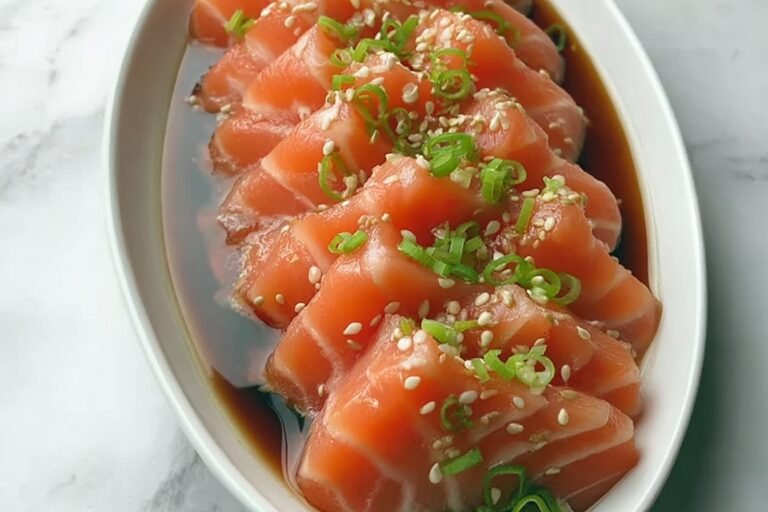
Homemade Salmon Sashimi
🐟 Silky, fresh salmon sashimi packed with omega-3s for heart health and ultimate freshness at home!
🍣 Easy, safe raw prep – restaurant-quality without the price, perfect for sushi nights.
- Total Time: 7 days 10 minutes
- Yield: 4 servings
Ingredients
– 1 pound fresh salmon
– 1 teaspoon salt
– 1 serving yuzu aioli made with olive oil
– sushi rice
– wasabi
– soy sauce
– 1 lemon
– cucumbers
– avocado
– oil for frying the skin
Instructions
1-First Step: Dry and salt the salmonPat the salmon dry with a paper towel. Sprinkle 1 teaspoon salt per pound over the fish, then let it sit for 20 minutes. This gentle salt step helps draw out extra moisture and gives the salmon a cleaner taste.
2-Second Step: Rinse and dry againAfter the 20 minutes are up, rinse the salmon under running water. Pat it dry again with paper towels. This keeps the outside neat before freezing and helps you get a better texture later.
3-Third Step: Pack it for freezingPlace the salmon in a freezer bag. If you want to avoid freezer burn, use a vacuum-sealed bag or double-bag it before freezing. That small extra step can help the salmon stay in better shape during the long freeze.
4-Fourth Step: Freeze at the right temperatureFreeze the salmon at -4°F (-20°C) for at least 7 days to help kill parasites. This is the longest part of the recipe, but it is also one of the most important parts for raw serving. If your salmon was already pre-frozen, still confirm it has been frozen for 7 or more days and still go through the salt step.
5-Fifth Step: Defrost in the refrigeratorWhen the freezing time is done, move the salmon to the refrigerator and let it defrost overnight. Slow thawing helps keep the texture more even and keeps the fish easier to slice the next day.
6-Sixth Step: Slice and serveOnce the salmon is thawed, pat it dry one more time. Use a sharp knife to thinly slice the fish into clean pieces. Arrange the slices with sushi rice, wasabi, and soy sauce. If you like a softer, richer finish, add yuzu aioli made with olive oil, plus lemon, cucumbers, and avocado.
7-Seventh Step: Cook the skin if neededIf the salmon skin is still on, you can fry it in oil for 5 to 7 minutes until crispy. This creates crunchy salmon skin chips, which make a fun topping or snack on the side. It is a great way to use the whole piece of fish.
8-Eighth Step: Plate and enjoyServe the sliced salmon right away after cutting. Homemade salmon sashimi tastes best when the texture is fresh and cool. For a beautiful plate, fan out the slices, tuck in cucumber rounds, add avocado, and finish with a small bowl of soy sauce or a drizzle of yuzu aioli.
Last Step:
Please leave a rating and comment letting us know how you liked this recipe! This helps our business to thrive and continue providing free, high-quality recipes for you.Notes
🛒 Source sushi-grade or farmed salmon from trusted fish markets for safety.
🔪 Always use a sharp knife and slice against the grain for perfect thin slices.
⚠️ Consult a doctor if pregnant; confirm pre-frozen salmon was frozen 7+ days.
- Prep Time: 10 minutes
- Freezing + Defrost Time: 7 days
- Category: Appetizer
- Method: No Cook
- Cuisine: Japanese
- Diet: Pescatarian
Nutrition
- Serving Size: 4 oz
- Calories: 161 kcal
- Sugar: 0g
- Sodium: 631mg
- Fat: 7g
- Saturated Fat: 1g
- Unsaturated Fat: 5g
- Trans Fat: 0g
- Carbohydrates: 0g
- Fiber: 0g
- Protein: 22g
- Cholesterol: 62mg