

What is Kimchi Jjigae?
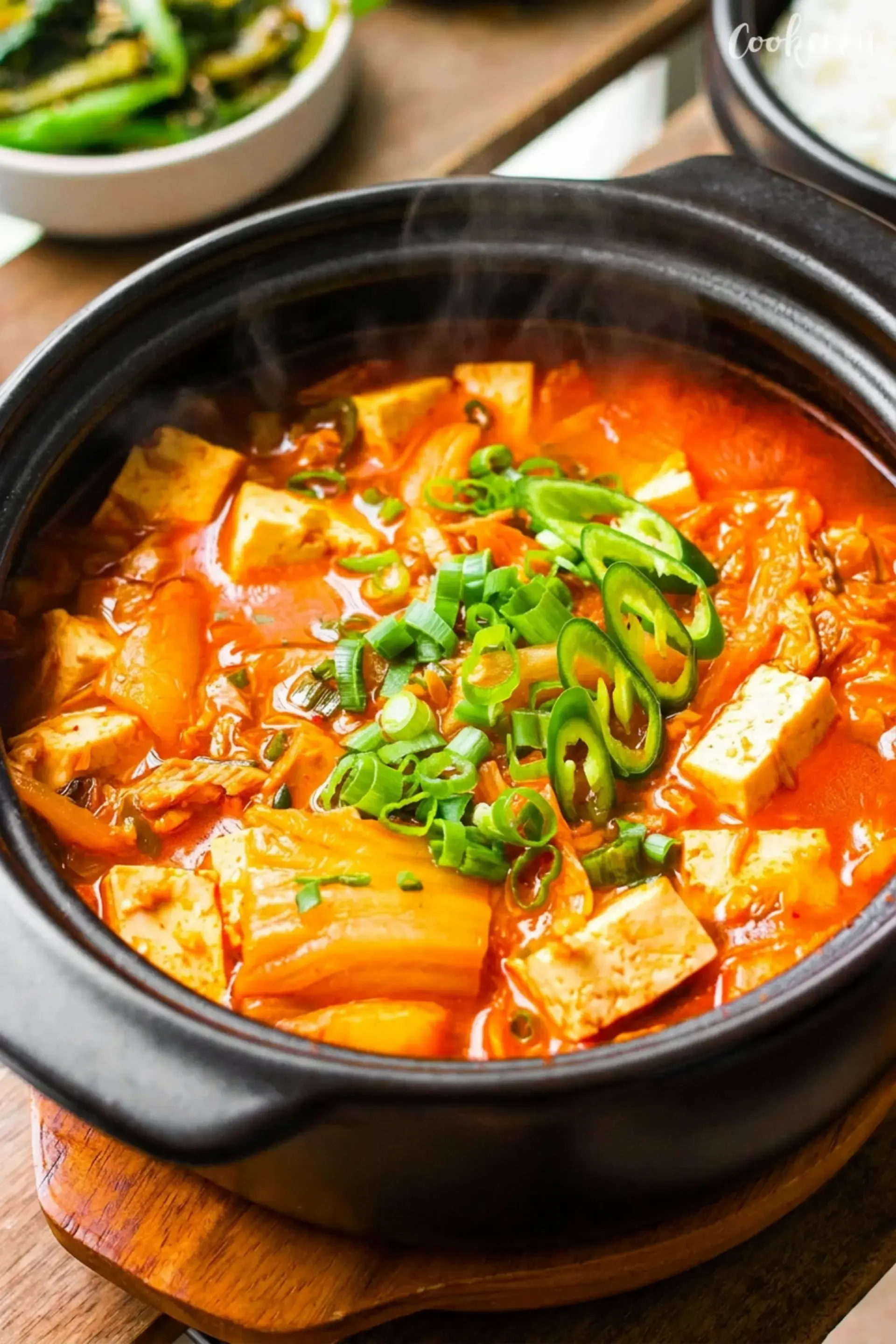
Kimchi Jjigae (pronounced kim chee jjee gay) is a classic Korean stew that holds a special place in Korean home cooking. I love making this dish because it is quick, easy, and filled with rich, comforting flavors. At its heart, this spicy Korean stew is made with aged kimchi, pork, tofu, and gochugaru (Korean chili flakes). The magic happens when you use kimchi that has been fermented for at least 2 to 3 weeks. That sour, tangy kimchi breaks down during simmering and creates a deeply savory broth that warms you from the inside out.

In Korea, Kimchi Jjigae is often served sizzling hot in a traditional earthenware pot called a ttukbaegi. It is a staple comfort food, enjoyed on cold days or as a quick weeknight dinner. What I really appreciate is how versatile this stew is. This recipe uses canned tuna for an easy source of umami, but you can easily swap it for pork belly, Spam, or even beef brisket. If you prefer a vegetarian version, simply omit the meat and add mushrooms like shiitake or king oyster along with extra tofu. The stew comes together in just 20 minutes with everyday ingredients, but the rich, savory broth will make you feel like you’re sitting at a Korean dinner table.
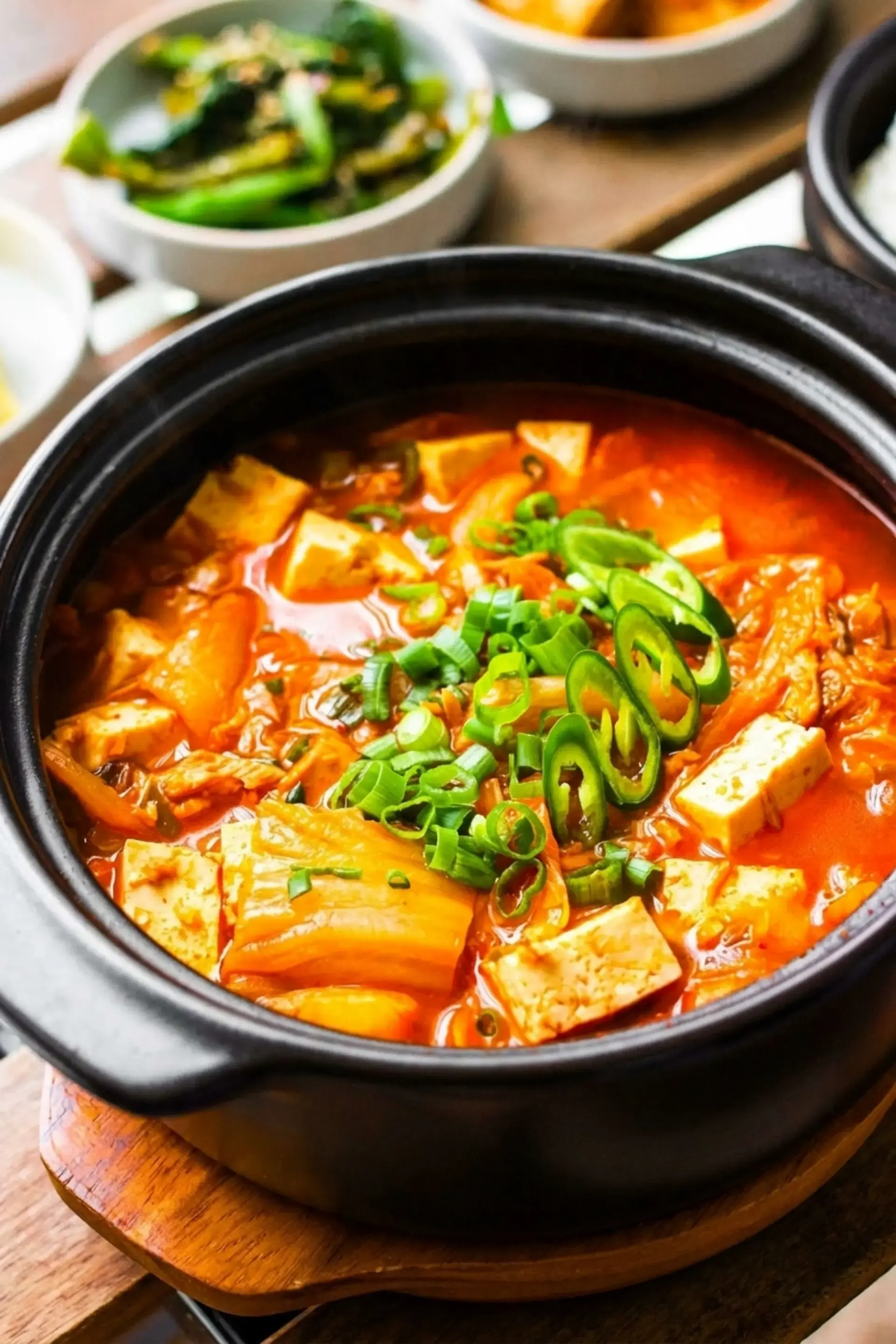
Pro tip: The older and more sour your kimchi, the better your stew will taste. If you only have fresh kimchi, leave it at room temperature overnight to speed up fermentation.
Jump to:
- What is Kimchi Jjigae?
- What do I need to make Kimchi Jjigae?
- How do you serve Kimchi Jjigae?
- Frequently Asked Questions
- What is kimchi jjigae?
- How do you make kimchi jjigae?
- What are the main ingredients in kimchi jjigae?
- Can I use fresh kimchi for kimchi jjigae?
- Is kimchi jjigae healthy?
- What should I serve with kimchi jjigae?
- Kimchi Jjigae
- Ingredients
- Instructions
- Last Step:
- Notes
- Nutrition
- Did you make this recipe?
What do I need to make Kimchi Jjigae?
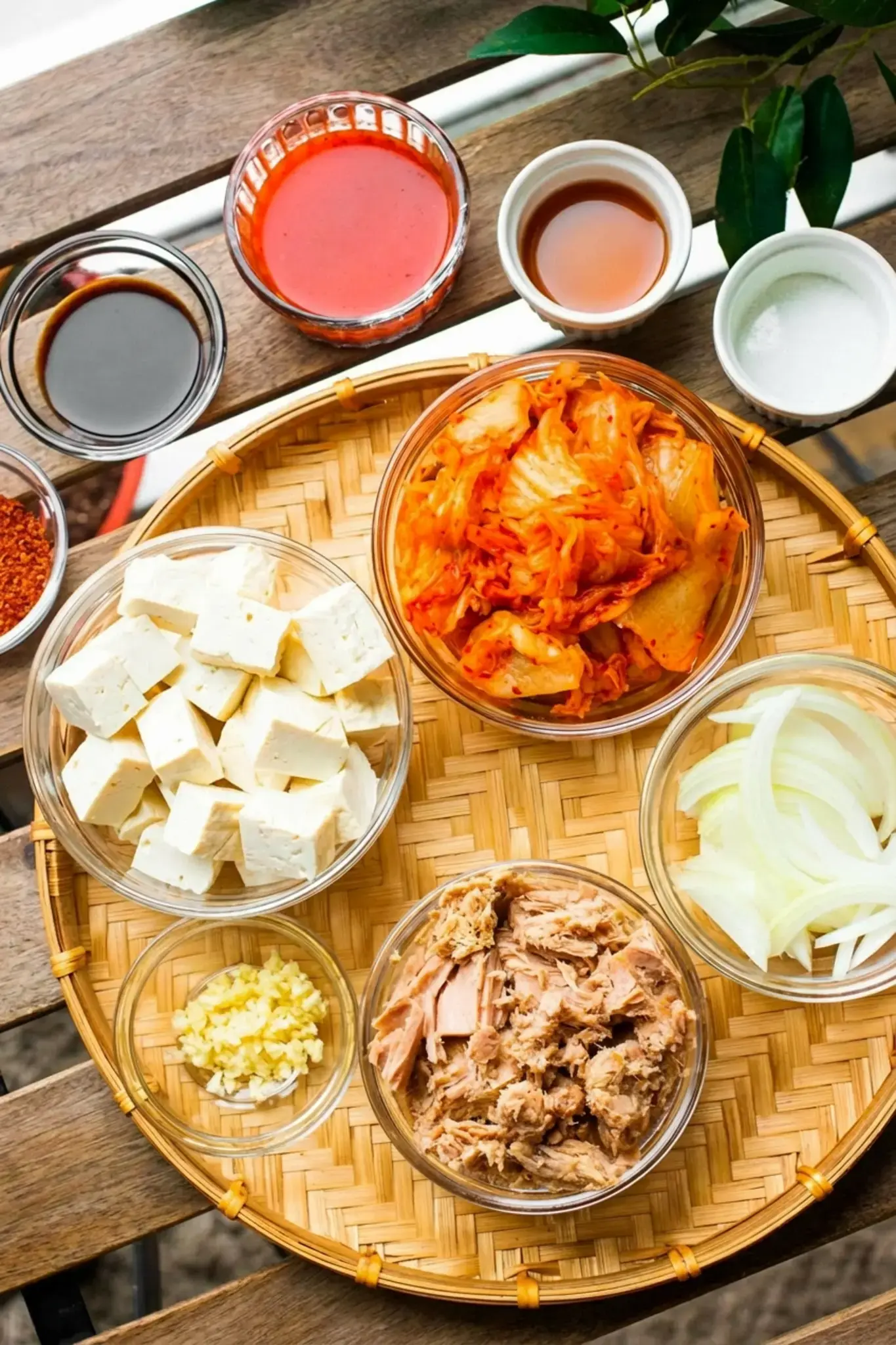
Gathering the right ingredients is the first step to a fantastic Kimchi Jjigae. Here is what you will need for this easy kimchi jjigae recipe. Most of these items are available at regular US grocery stores, especially if you look for Korean brands like Jongga or Bibigo.
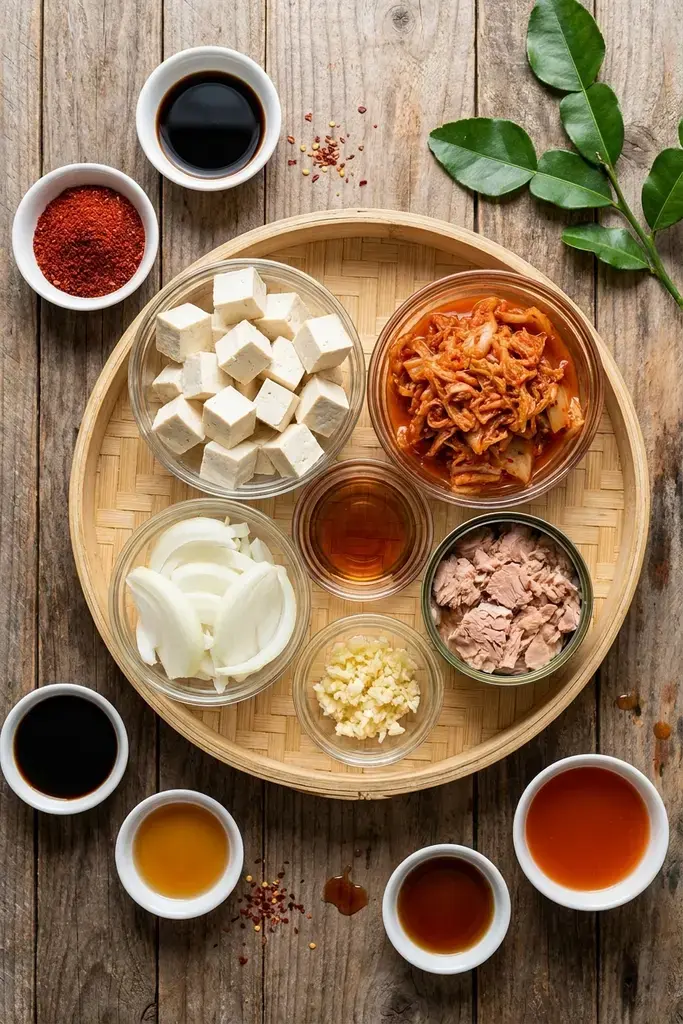
- Aged kimchi (at least 3 weeks old; look for ‘mat kimchi’ cut kimchi in jars)
- Sesame oil (for sautéing)
- Sugar (a small amount balances the sourness)
- Onion and garlic (fresh aromatics)
- Rice water or stock (rice water from the second or third rinse adds richness; anchovy or chicken stock works too)
- Kimchi juice (from the jar; adds extra tang and umami)
- Gochugaru (Korean chili flakes) and gochujang (Korean chili paste, optional for sweeter thicker body)
- Doenjang (Korean soybean paste) or soy sauce (for seasoning)
- Canned tuna (drained, or substitute with pork belly, Spam, or beef brisket)
- Tofu (soft or medium firm, cut into cubes)
- Optional: dashida (Korean soup stock powder) and green onions for garnish
To help you choose the right protein, here is a quick comparison of popular options for kimchi stew:
| Protein | Flavor Profile | Cooking Time | Notes |
|---|---|---|---|
| Pork belly | Rich, fatty, savory | Sauté first, then simmer | Traditional choice; adds depth |
| Canned tuna | Mild, umami, flaky | No pre cooking; add during simmer | Quick and easy; pantry staple |
| Spam | Salty, meaty, firm | Sauté lightly | Popular in Korean home cooking |
| Vegetarian (mushrooms + extra tofu) | Earthy, umami | Simmer mushrooms with broth | Use shiitake or king oyster |
If you are new to Korean cooking, I highly recommend starting with canned tuna. It is affordable, easy to find, and adds wonderful umami without extra effort. For the broth, using rice water (the starchy water from rinsing rice before cooking) is a traditional trick that makes the stew silkier and more flavorful. You can also add a splash of kimchi brine at the end to boost sourness and umami.
To learn more about the main ingredient, check out my guide on What Does Kimchi Taste Like and for making your own from scratch, read Traditional Napa Cabbage Kimchi.
How do you serve Kimchi Jjigae?
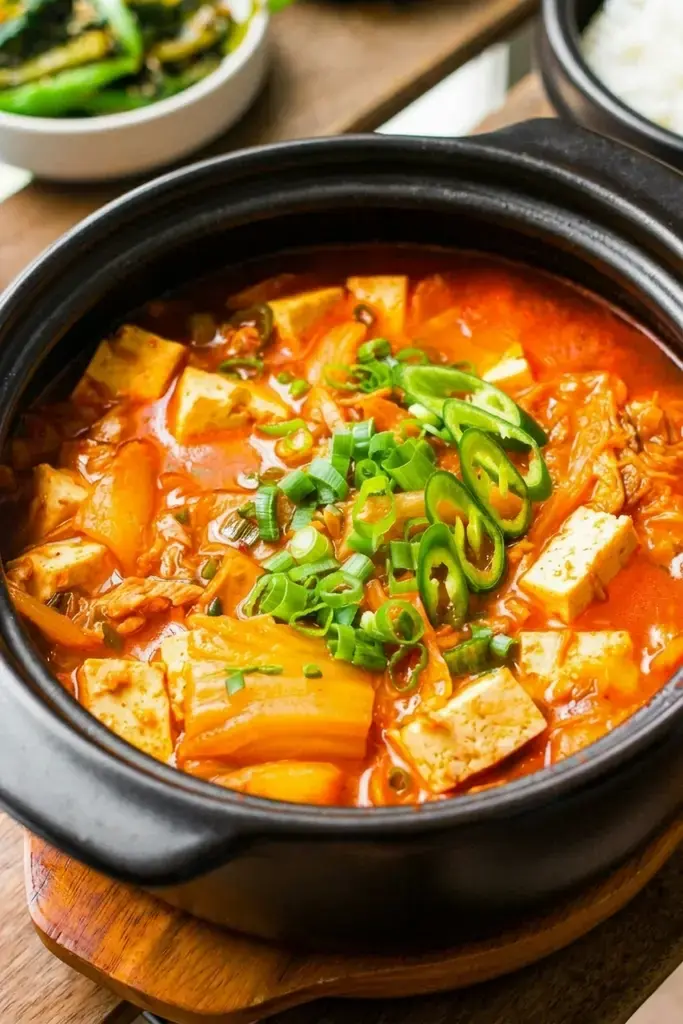
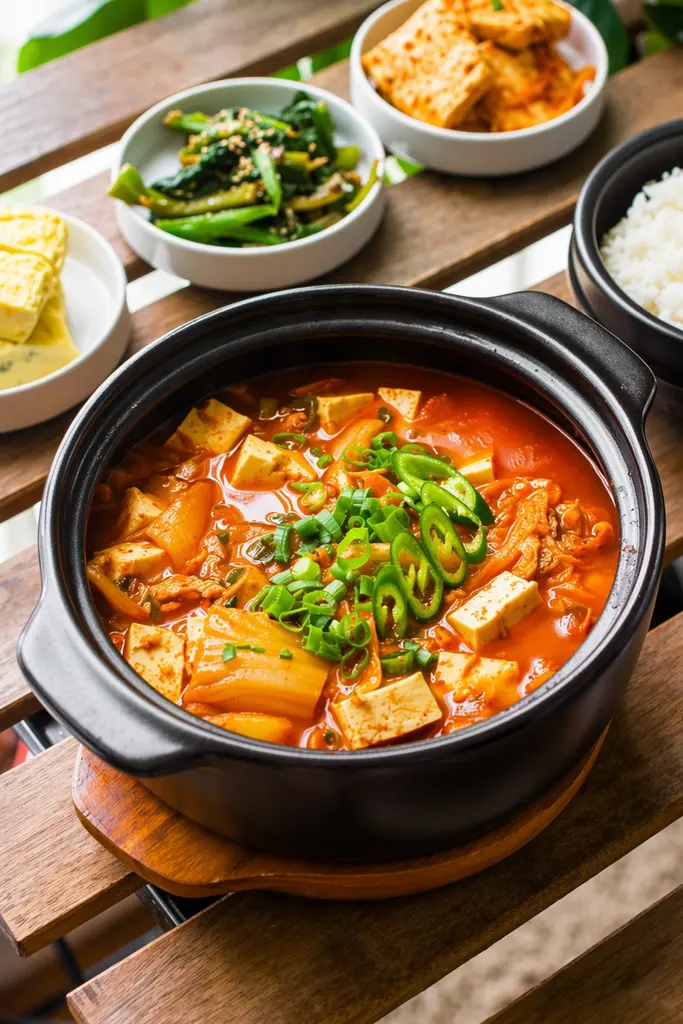
Serving Kimchi Jjigae is all about creating a cozy Korean meal experience. The stew is traditionally cooked and served in a Korean stone pot (ttukbaegi), which keeps it bubbling hot throughout your meal. If you do not have one, any heavy bottom pot like a Dutch oven works perfectly. I love how the stew stays warm even during a long dinner with family.
Kimchi Jjigae is always served with a bowl of steamed rice. The fluffy rice is perfect for soaking up the spicy, tangy broth. To round out the meal, add a few banchan (Korean side dishes). Some classic banchan to pair with kimchi stew include:

- Pickled radish (danmuji) for a crunchy, sweet contrast
- Seasoned spinach (sigeumchi namul) with sesame oil
- Korean cucumber salad (oi muchim) for freshness
You can also enjoy the stew on its own as a hearty soup. Leftovers taste even better the next day because the flavors deepen overnight. Store leftovers in the refrigerator for 3 to 4 days. When reheating, do so gently over low heat to avoid overboiling the tofu, which makes it tough. I often make a double batch so I can enjoy it for lunch the next day.
For more detailed recipes, you can explore the kimchi jjigae recipe Maangchi, the traditional kimchi stew recipe from Korean Bapsang, the easy kimchi jjigae recipe from My Korean Kitchen, or the authentic kimchi jjigae with pork by Seonkyoung Longest.
Frequently Asked Questions
What is kimchi jjigae?
How do you make kimchi jjigae?
What are the main ingredients in kimchi jjigae?
Can I use fresh kimchi for kimchi jjigae?
Is kimchi jjigae healthy?
What should I serve with kimchi jjigae?
Kimchi Jjigae
🔥 A quick and comforting Korean stew that transforms aged kimchi into a rich, spicy broth in just 20 minutes.
🍲 Versatile and pantry-friendly, this bubbling hot stew uses canned tuna for effortless umami and pairs perfectly with steamed rice.
- Total Time: 30 minutes
- Yield: 4 servings 1x
Ingredients
2 cups aged kimchi, cut into bite-sized pieces
1 tablespoon sesame oil
1 teaspoon sugar
1/2 medium onion, sliced
3 cloves garlic, minced
2 cups rice water or anchovy stock
1/4 cup kimchi juice (from the jar)
1 tablespoon gochugaru (Korean chili flakes)
1 teaspoon gochujang (Korean chili paste, optional)
1 teaspoon doenjang (Korean soybean paste) or soy sauce
1 can (5 oz) tuna, drained
1/2 block soft or medium-firm tofu, cut into cubes
2 green onions, sliced (for garnish)
1/2 teaspoon dashida (Korean soup stock powder, optional)
Instructions
1-Sauté the aromatics: Heat sesame oil in a heavy‑bottomed pot over medium heat, then sauté sliced onion and minced garlic until fragrant.
2-Add the kimchi and seasonings: Stir in aged kimchi, gochugaru, gochujang, sugar, and doenjang or soy sauce; cook for 2–3 minutes until the kimchi softens and releases its juices.
3-Pour in the liquids: Add rice water (or anchovy stock) and kimchi juice, stir well, and bring to a rolling boil.
4-Simmer the stew: Reduce heat to medium‑low and simmer uncovered for 15–20 minutes until the broth deepens and the kimchi becomes tender.
5-Add the tuna and tofu: Gently add drained canned tuna and cubed tofu, then simmer for another 3–5 minutes until the tofu is heated through.
6-Garnish and serve: Ladle into serving bowls, top with sliced green onions, and serve immediately with steamed rice.
Last Step:
Please leave a rating and comment letting us know how you liked this recipe! This helps our business to thrive and continue providing free, high-quality recipes for you.Notes
💡 Use kimchi that has been fermented for at least 2 to 3 weeks for the deepest, most authentic flavor. The sourer the kimchi, the richer the broth.
🍚 Save the starchy water from the second or third rinse of rice to use as your broth base. It adds silkiness and body to the stew.
🥘 Leftovers taste even better the next day as the flavors continue to develop. Store in the refrigerator for 3 to 4 days and reheat gently over low heat.
- Prep Time: 10 minutes
- Cook Time: 20 minutes
- Category: Stews, Soups
- Method: Stovetop
- Cuisine: Korean
Nutrition
- Serving Size: 1 bowl
- Calories: 320
- Sugar: 4g
- Sodium: 1150mg
- Fat: 16g
- Saturated Fat: 3.5g
- Unsaturated Fat: 11g
- Trans Fat: 0g
- Carbohydrates: 18g
- Fiber: 3g
- Protein: 24g
- Cholesterol: 28mg