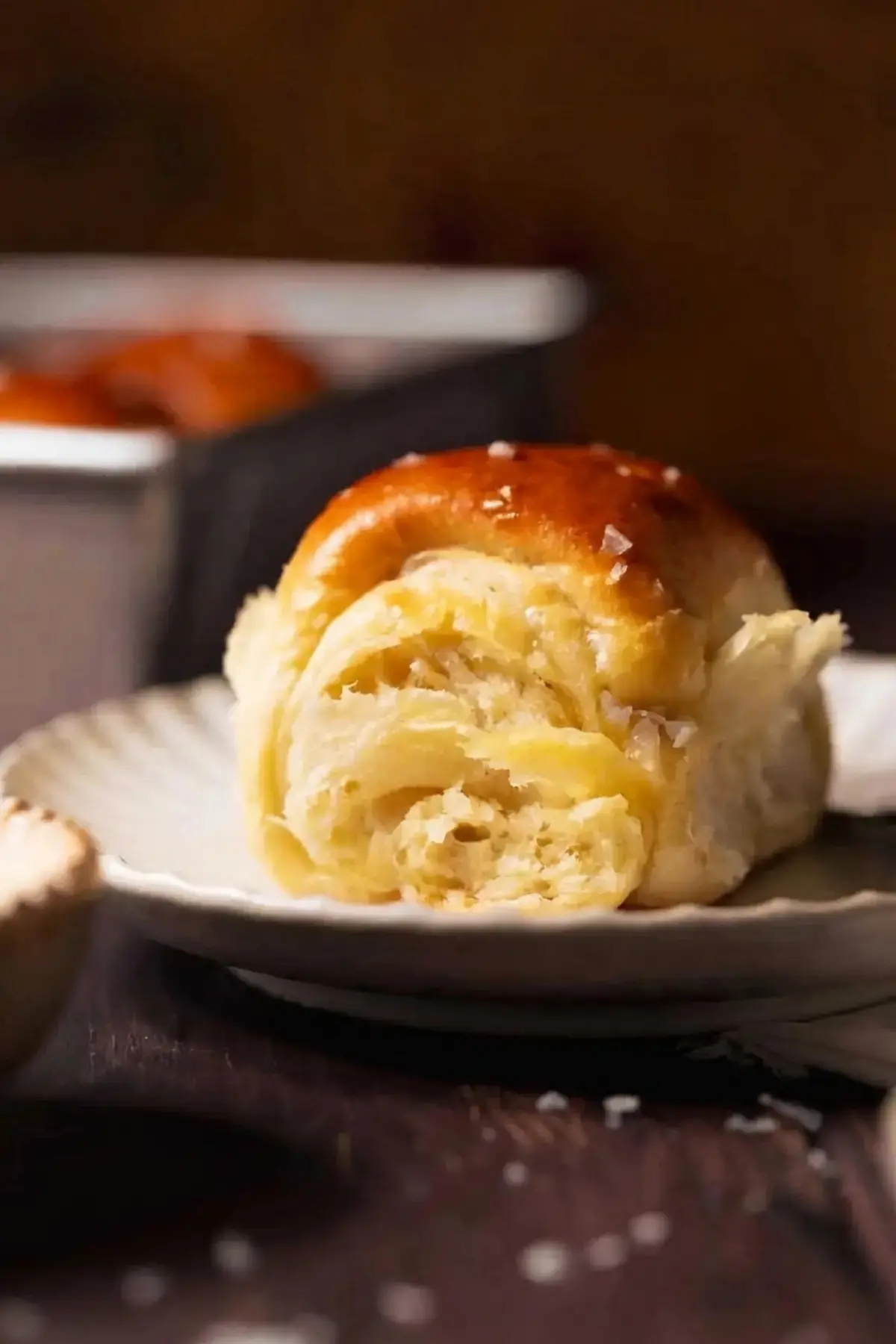
These milk bread dinner rolls are soft and pillowy, with a light, fluffy crumb that comes straight from the tangzhong method. The tops bake up golden, and a final brush of butter leaves them glossy and buttery. Serve them warm and watch how quickly the basket empties.
Tangzhong is the reason these rolls stay soft longer than most other roll recipes. The same technique shows up in the author’s milk bread cinnamon rolls and milk bread donuts, and once you have made it a few times it becomes second nature.
They work with almost any main course, from a simple weeknight dinner to a holiday table. One honest note: tangzhong and the rolling step add time, so these take a little longer than the author’s garlic bread rolls. If you are short on time and want something more savory, try this garlic herb cheese pull apart bread instead.
Full measurements live in the recipe card below, but here is how the process works so nothing surprises you.
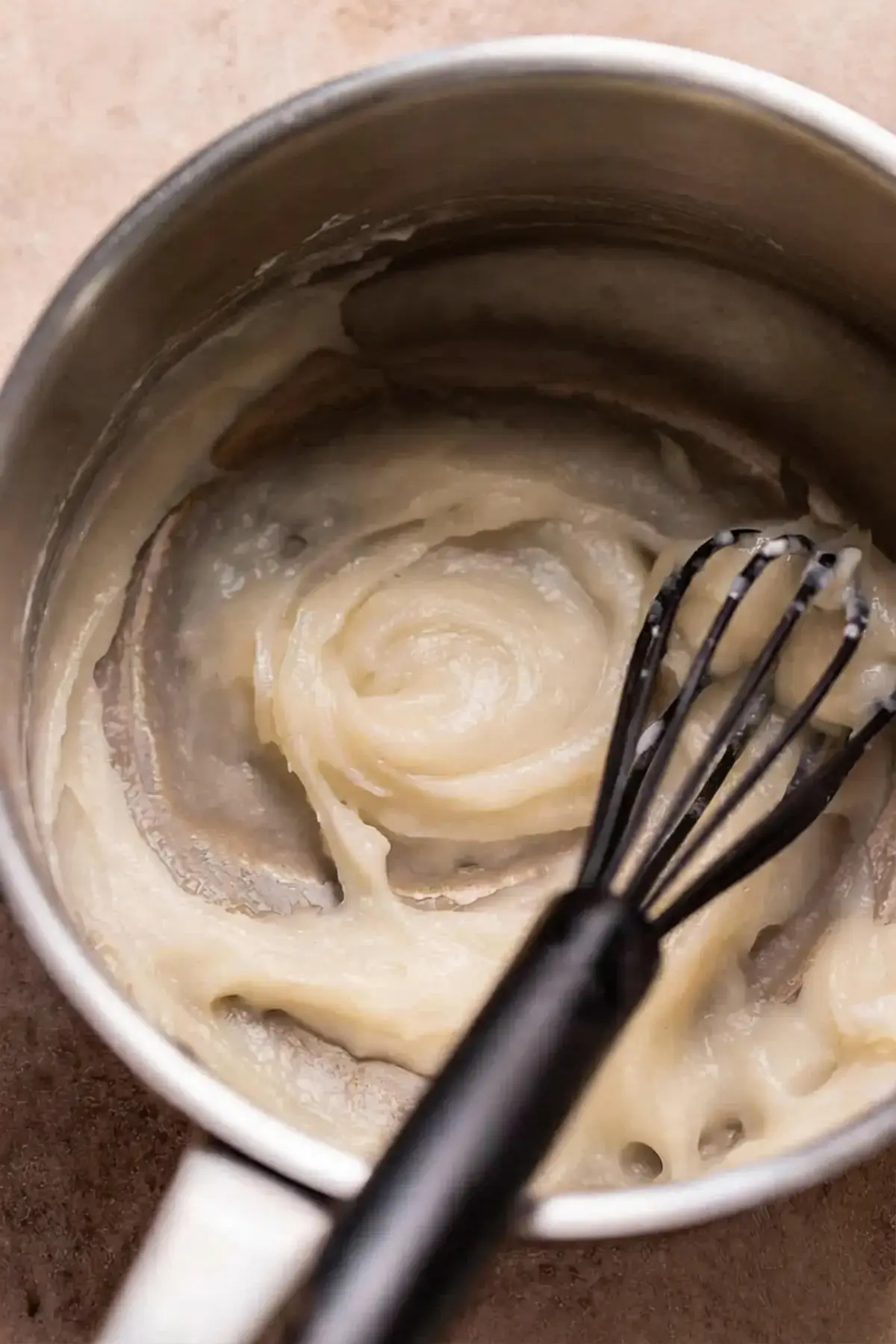
The tangzhong comes first. Whisk the water and bread flour in a small pot and cook over medium heat, whisking constantly, for 2 to 3 minutes, until the mixture becomes a thick, paste like slurry.
Scrape it into a bowl and set it aside while you gather the rest of the ingredients. This one step is what keeps the rolls soft for days.
Next comes the dough. In a stand mixer bowl, combine the bread flour, sugar, yeast and salt. Add the milk, the eggs and the tangzhong, then knead on low speed with the dough hook for 2 minutes, just until a rough ball forms.
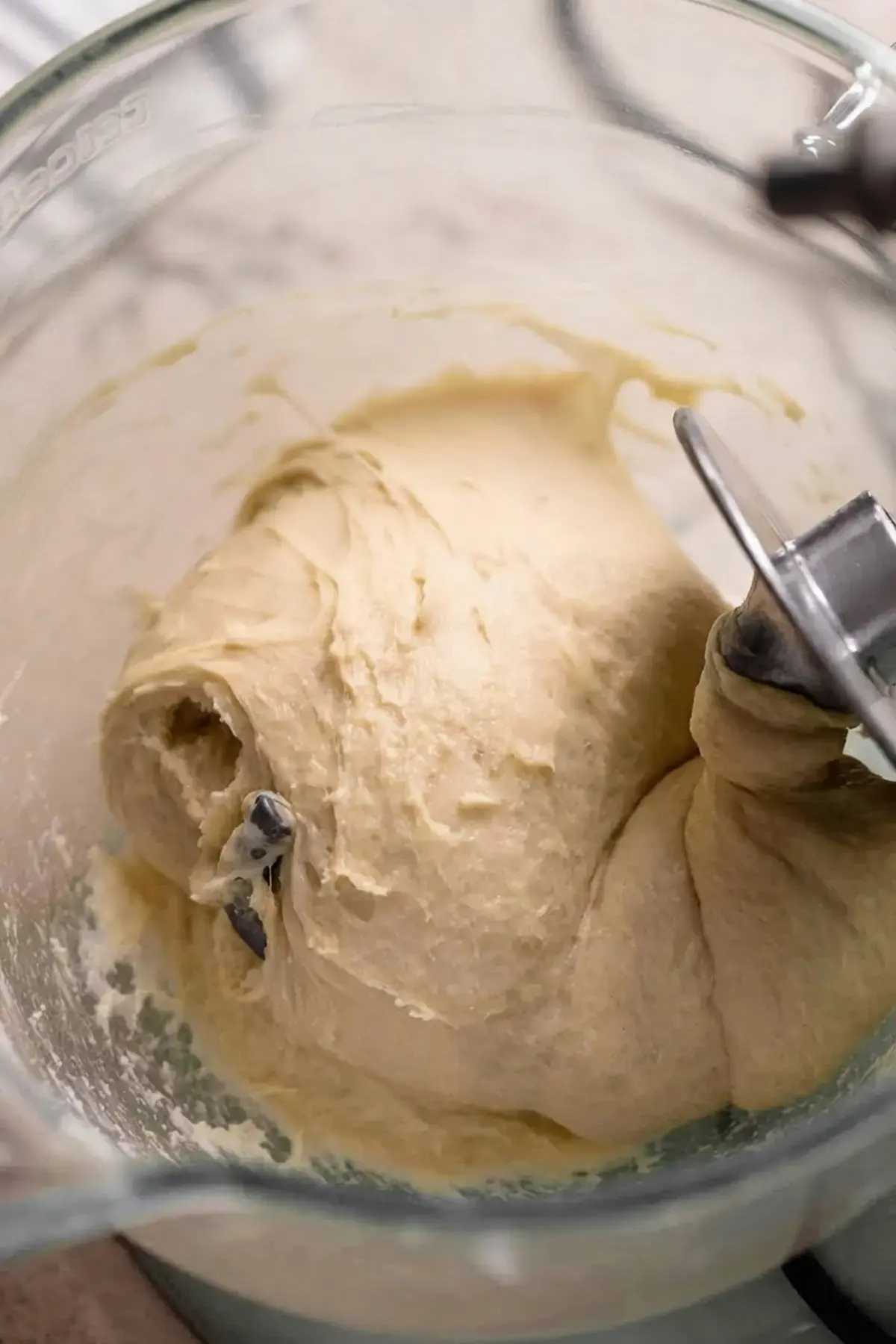
With the mixer still running on low, add the softened butter one tablespoon at a time, letting each addition incorporate fully before the next one goes in. Then keep kneading for another 12 minutes, until the dough looks smooth and elastic and feels tacky.
If it is overly sticky, an extra tablespoon of flour can help.
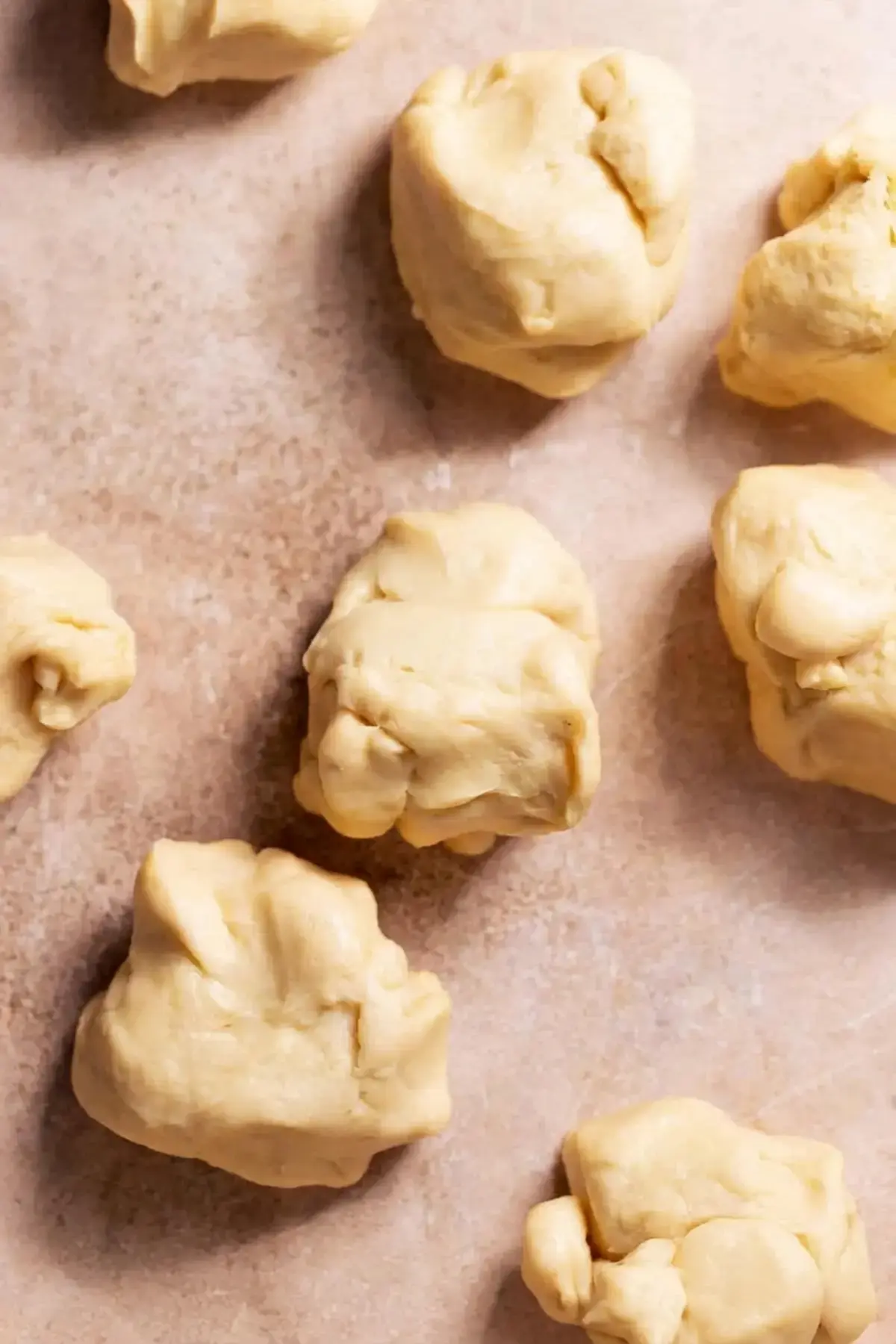
Now portion the dough. Cut, rather than tear, 15 equal pieces. A bench scraper or a knife works well, and a kitchen scale is the easiest way to keep them even at about 83 grams each.
Tearing can break the gluten strands you just spent all that time building. Loosely cover the pieces with plastic wrap while you shape so they do not dry out.
Shaping is where these rolls earn their structure:
Without flouring your work surface, shape each piece into a rough ball.
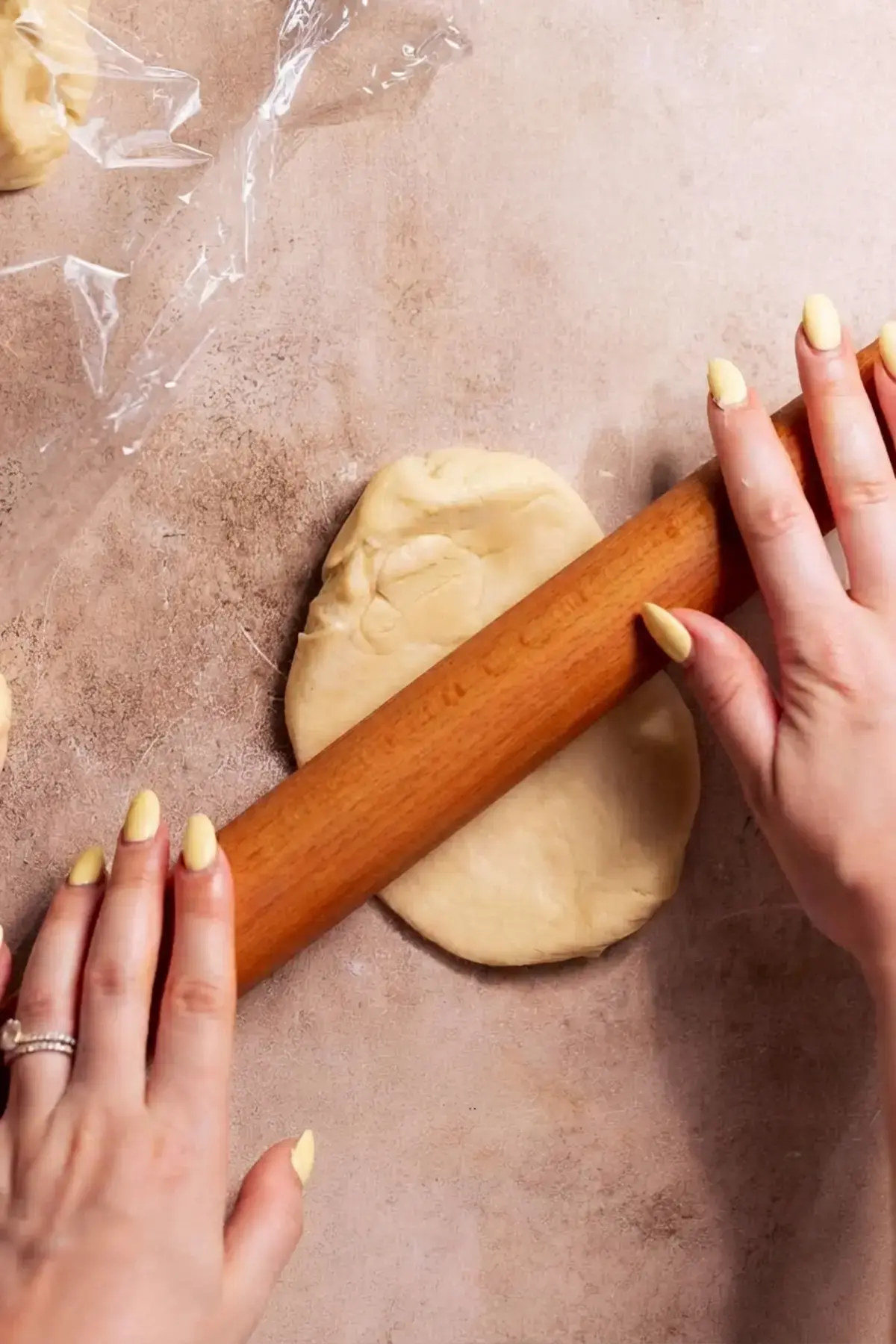
Roll it into a rectangle about 5×6 inches.
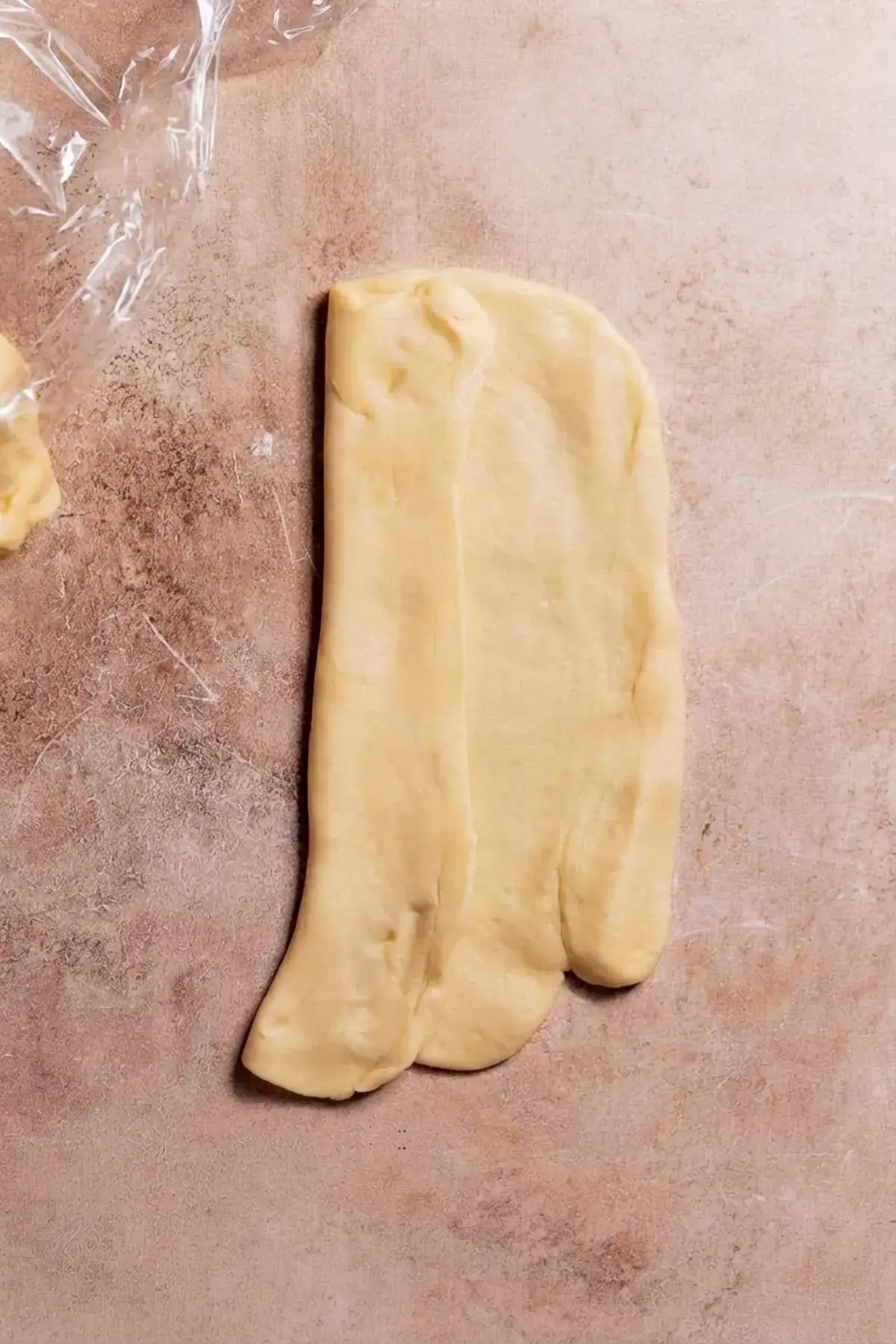
Fold one long side toward the center, then fold the other long side over it.
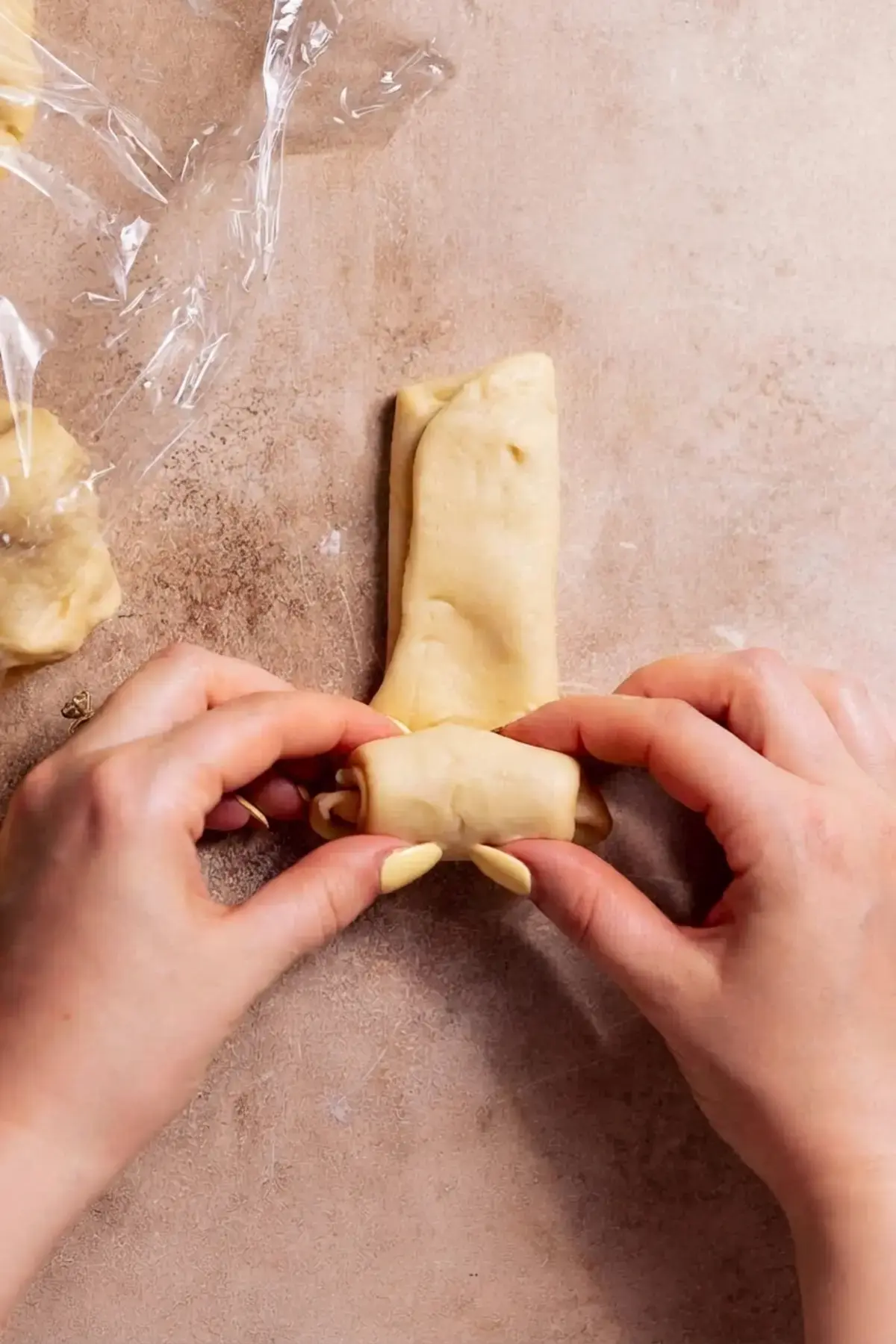
Roll it up from the short end into a log and pinch the seam so it does not unroll.
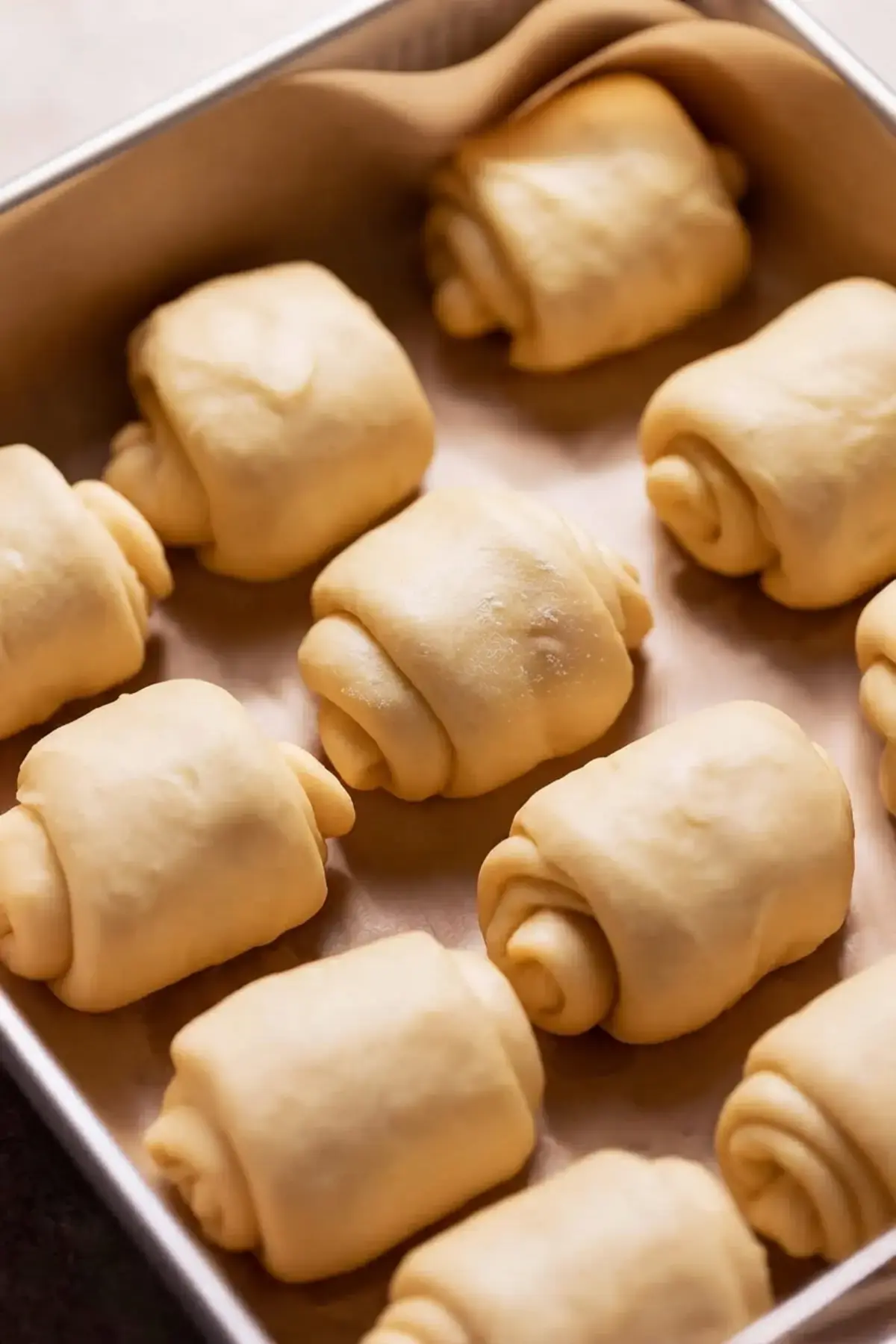
That rolling gives the rolls a more structured shape and encourages the soft, layered interior that sets them apart from basic bread rolls.
Cut the dough, do not tear it. Cutting keeps the gluten strands intact, and those strands are exactly what give you that soft, layered pull in every roll.
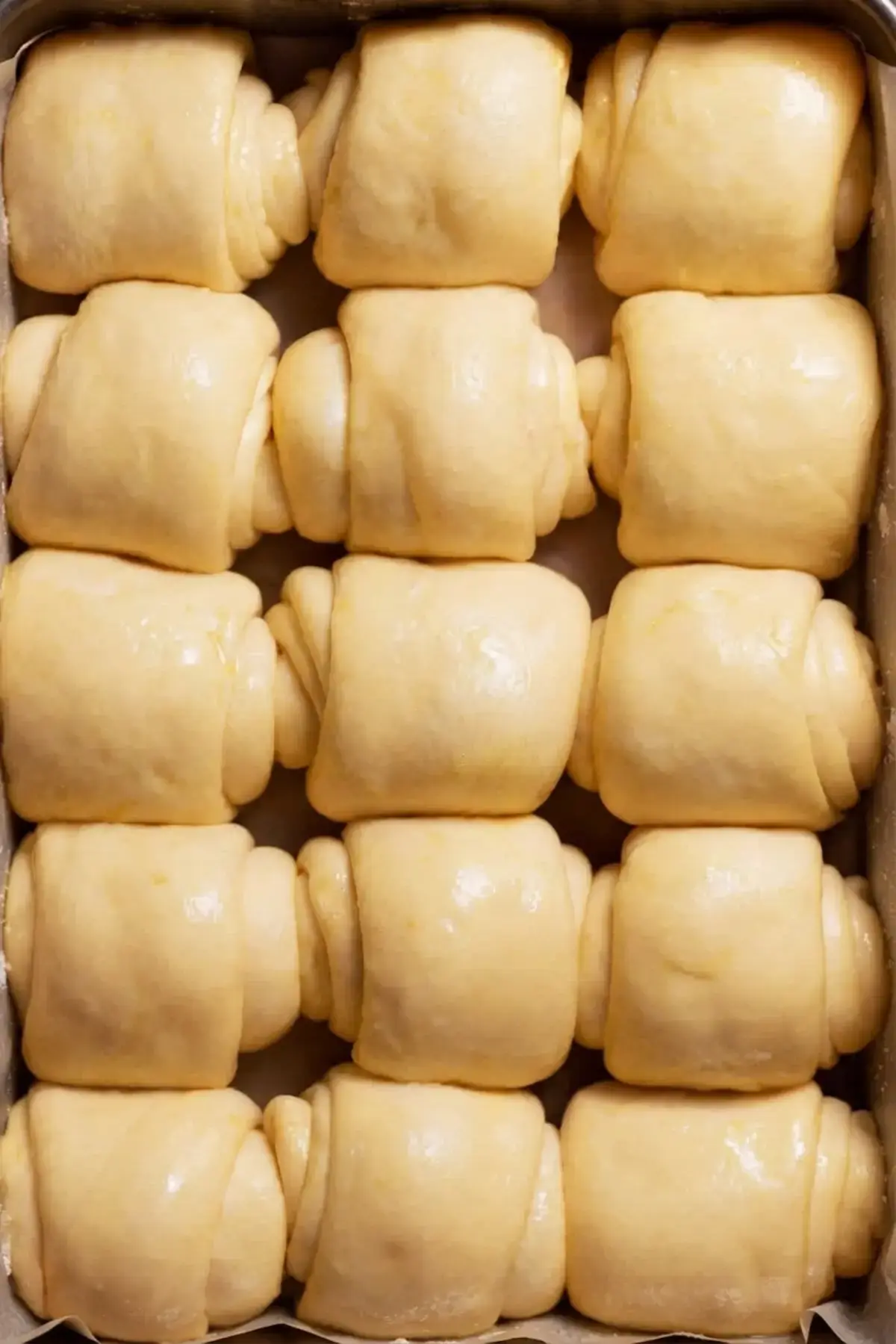
Place the shaped rolls in the prepared 9×13 pan, cover with plastic wrap and leave them to double in size, about 1 1/2 to 2 hours. They are ready when you gently touch the sides and the dough feels light and airy.
Preheat the oven to 350°F (180°C) while they rise. Brush the tops with beaten egg for a golden brown color, then bake until deeply golden brown.
Move the pan to a wire rack, brush the tops immediately with melted butter, add flaky sea salt if you like, and serve warm.
Measure your dry ingredients with care too. Fluff the flour first, spoon it into the cup and level it off rather than scooping the cup straight into the bag. A kitchen scale is the most reliable option. Once you have the tangzhong down, you can put it to work in other enriched doughs, like these homemade cinnamon rolls.
Ingredients
The list is split into two parts, the tangzhong and the yeast dough. Read through both before you start so you are not hunting for the bread flour twice.
For the tangzhong
3/4 cup plus 1 tablespoon water
1/3 cup bread flour
For the yeast dough
5 cups bread flour, measured with care, see the notes below
3 tablespoons granulated sugar
2 1/2 teaspoons instant yeast
1 3/4 teaspoons fine sea salt
3/4 cup whole milk, at room temperature
2 large eggs, at room temperature
The tangzhong from above
9 tablespoons salted European butter, at room temperature
1 large egg, whisked, for brushing the rolls before baking
2 tablespoons salted European butter, melted, for brushing after baking
Instructions
Here is the full method, step by step. Read it once before you begin, then work through it in order.
Prepare the pan. Line a 9×13 baking pan with parchment paper and set it aside.
Make the tangzhong. In a small pot, whisk together the water and the bread flour. Cook over medium heat, whisking constantly, for 2 to 3 minutes, until the mixture becomes a thick, paste like slurry. Scrape it into a bowl and set it aside.
Start the dough. In a stand mixer bowl, mix the bread flour, sugar, yeast and salt. Add the milk, the eggs and the tangzhong. Knead on low speed with the dough hook for 2 minutes, until the dough forms a rough ball.
Add the butter. With the mixer running on low, add the softened butter one tablespoon at a time, letting each addition fully incorporate before adding more. Continue kneading for an additional 12 minutes, until the dough looks smooth and elastic and feels tacky. If the dough is overly sticky, you may need to add an extra tablespoon of flour.
Portion the dough. Divide it into 15 pieces, about 83 grams each. They can sit on your counter, but loosely cover them with plastic wrap so the dough does not dry out while you shape. Cut the pieces with a bench scraper or a knife instead of tearing them.
Shape into logs. Shape each piece into a rough ball, then roll it into a rectangle about 5×6 inches. Fold one long side toward the center, then fold the other long side over it. Roll it up from the short end into a log and pinch the seam to seal. Place it in the baking pan and repeat with the remaining dough. Do not use flour on your work surface.
Optional round rolls. If you prefer a more traditional round dinner roll, use a claw hand to roll each piece on an unfloured surface into a tight, taut ball, then pinch the bottom seam to seal it together. Place it in the prepared baking pan.
Let them rise. Cover the pan with plastic wrap and set it aside to double in size, about 1 1/2 to 2 hours. They are ready when you gently touch the sides and the dough feels light and airy. Meanwhile, preheat the oven to 350°F (180°C).
Brush the tops. Before baking, brush the tops of the rolls with the beaten egg. This is what gives them that deep golden brown color in the oven.
Bake. Bake for 30 to 40 minutes, until the tops are deeply golden brown.
Finish and serve. Remove the pan from the oven and place it on a wire rack. Immediately brush the tops with the melted butter and sprinkle with flaky sea salt if desired. Serve warm.
Notes
Measure your flour properly. This is the top baking tip for these rolls. Do not scoop a measuring cup directly into the flour, because you will pack in far more than the recipe calls for.
Fluff the flour first, spoon it into the measuring cup or spoon, then level it off. A kitchen scale is the most reliable way to get the same result every time.
Storage. Keep the rolls in an airtight container at room temperature for up to 5 days. A short warm up in the oven brings back that just baked softness before you serve them again.
Shape matters. The rolled log shape is what creates those tender layers inside each roll. If you skip it and simply ball up the dough, you still get good rolls, but you lose the pull apart texture that makes this recipe special.
Recipe details
Detail
Value
Prep time
2 hours 30 minutes
Cook time
30 minutes
Total time
3 hours
Servings
15 rolls
Course
Holiday bread or side dish
Cuisine
American
Pan
9×13 baking pan lined with parchment paper
Per serving, the source lists 306 calories, 46 g carbohydrates, 9 g protein, 9 g fat, 5 g saturated fat, 2 g fiber, 3 g sugar, 345 mg sodium and 52 mg cholesterol.
FAQs
What is tangzhong and why does it make milk bread dinner rolls so soft?
Tangzhong is a paste made by cooking flour and water before adding it to the dough. In this recipe, whisk 3/4 cup plus 1 tablespoon water with 1/3 cup bread flour over medium heat for 2 to 3 minutes until it forms a slurry. It gelatinizes the starches so the dough holds more moisture, which keeps the rolls soft, fluffy, and fresh longer.
How should I store milk bread dinner rolls and how long do they stay fresh?
Store baked rolls in an airtight container at room temperature for up to 5 days. Do not refrigerate them, because cold temperatures make the starch recrystallize faster and speed up staling. For longer storage, freeze the baked rolls and reheat them briefly in the oven before serving.
What is the best flour for milk bread dinner rolls?
Bread flour is the best choice and is what this recipe uses: 5 cups in the dough plus 1/3 cup in the tangzhong. Its higher protein content builds the gluten needed to support the milk, eggs, and butter while keeping the rolls light. You can substitute all-purpose flour, but the rolls may be slightly less chewy and more delicate.
Why are my milk bread dinner rolls dense?
Dense rolls usually come from under-proofing, over-flouring the dough, or tearing the dough when portioning it. The dough should be kneaded until smooth, elastic, and tacky, then proofed until doubled in size and the sides feel light and airy. Cut the dough into 15 equal pieces with a bench scraper or knife instead of tearing it, and avoid adding extra flour unless the dough is overly sticky.
Ultra Soft Milk Bread Dinner Rolls These milk bread dinner rolls are soft and pillowy, with a light, fluffy crumb that comes straight from the tangzhong method. The tops bake up golden, and a final brush of butter leaves them glossy and buttery.
Total Time:180 min
Yield:15 servings 1x
Ingredients
Scale
Tangzhong 3/4 cup + 1 tablespoon water 1/3 cup bread flour
Yeast Dough 5 cups bread flour 3 tablespoons granulated sugar 2 1/2 teaspoons instant yeast 1 3/4 teaspoons fine sea salt 3/4 cup whole milk, room temperature 2 large eggs, room temperature Tangzhong, from above 9 tablespoons salted European butter, room temperature 1 large egg, whisked, for brushing 2 tablespoons salted European butter, melted, for after baking
Instructions
1-Line a 9×13 baking pan with parchment: Line a 9×13 baking pan with parchment paper. Set aside. 2-In the small pot, whisk together the: In the small pot, whisk together the water and flour. Cook over medium heat, whisking constantly, for 2-3 minutes until the mixture is a paste-like slurry. Scrape it into a bowl and set it aside. 3-In a stand mixer bowl, mix the: In a stand mixer bowl, mix the flour, sugar, yeast, and salt. Add the milk, eggs, and tangzhong to the bowl. Knead on low speed with the dough hook for 2 minutes, until the dough forms a rough ball. 4-With the mixer running on low, add: With the mixer running on low, add the softened butter one tablespoon at a time, letting it fully incorporate before adding more. Then, continue kneading for an additional 12 minutes, until the dough appears smooth and elastic and feels tacky. *If the dough is overly sticky, you may need to add an extra tablespoon of flour.* 5-Portion the dough into 15 pieces, each: Portion the dough into 15 pieces, each ~83 grams. They are fine to leave on your counter, but I would loosely cover them with plastic wrap to prevent the dough from drying out while you are shaping them. 6-Shape each piece into a rough ball,: Shape each piece into a rough ball, then roll it into a ~5×6-inch rectangle. Fold one long side toward the center, then fold the other long side over it. Roll it up from the short end into a log, then pinch the seam to seal. Place it in the baking pan and repeat with the remaining dough. Do not use flour on your work surface. 7-If you prefer a more traditional round: If you prefer a more traditional round dinner roll: Use a “claw” hand to roll each piece on an unfloured surface into a tight, taught ball, then pinch the bottom seam to seal it together. Place into the prepared baking pan. 8-Cover the pan with plastic wrap and: Cover the pan with plastic wrap and set aside to double in size, about 1.5-2 hours. You’ll know they are ready when you gently touch the sides of the rolls, and the dough feels light and airy. Meanwhile, preheat the oven to 350°F (180°C). 9-Before baking, brush the tops of the: Before baking, brush the tops of the rolls with the beaten egg. 10-Bake for 30-40 minutes, or until the: Bake for 30-40 minutes, or until the tops are deeply golden brown. 11-Once baked, remove the pan from the: Once baked, remove the pan from the oven and place it on a wire rack. Immediately brush the tops with melted butter and sprinkle with flaky sea salt if desired. Serve warm and enjoy!
Last Step:
Please leave a rating and comment letting us know how you liked this recipe! This helps our business to thrive and continue providing free, high-quality recipes for you.