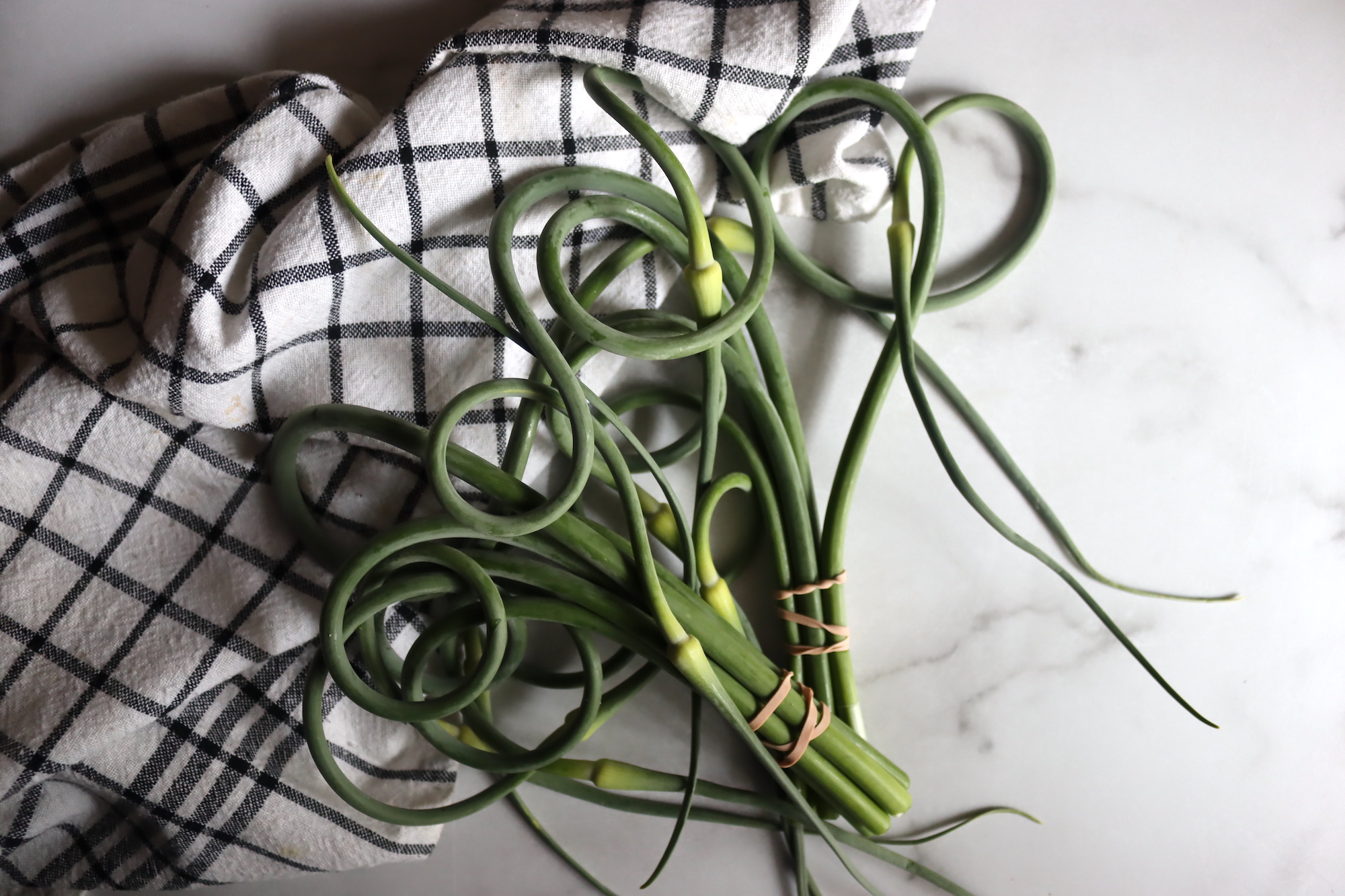
If you ever wander through a farmers market in late spring and spot curly, bright green stalks that look like a cross between a scallion and a coiled ribbon, don’t walk past them.
Those are garlic scapes, and they turn into one of the most delicious, no cook sauces you can make at home.
I remember my first time buying them from a local grower; she handed me a bundle and said, “Make pesto with these, you’ll never throw them away again.” She was right.
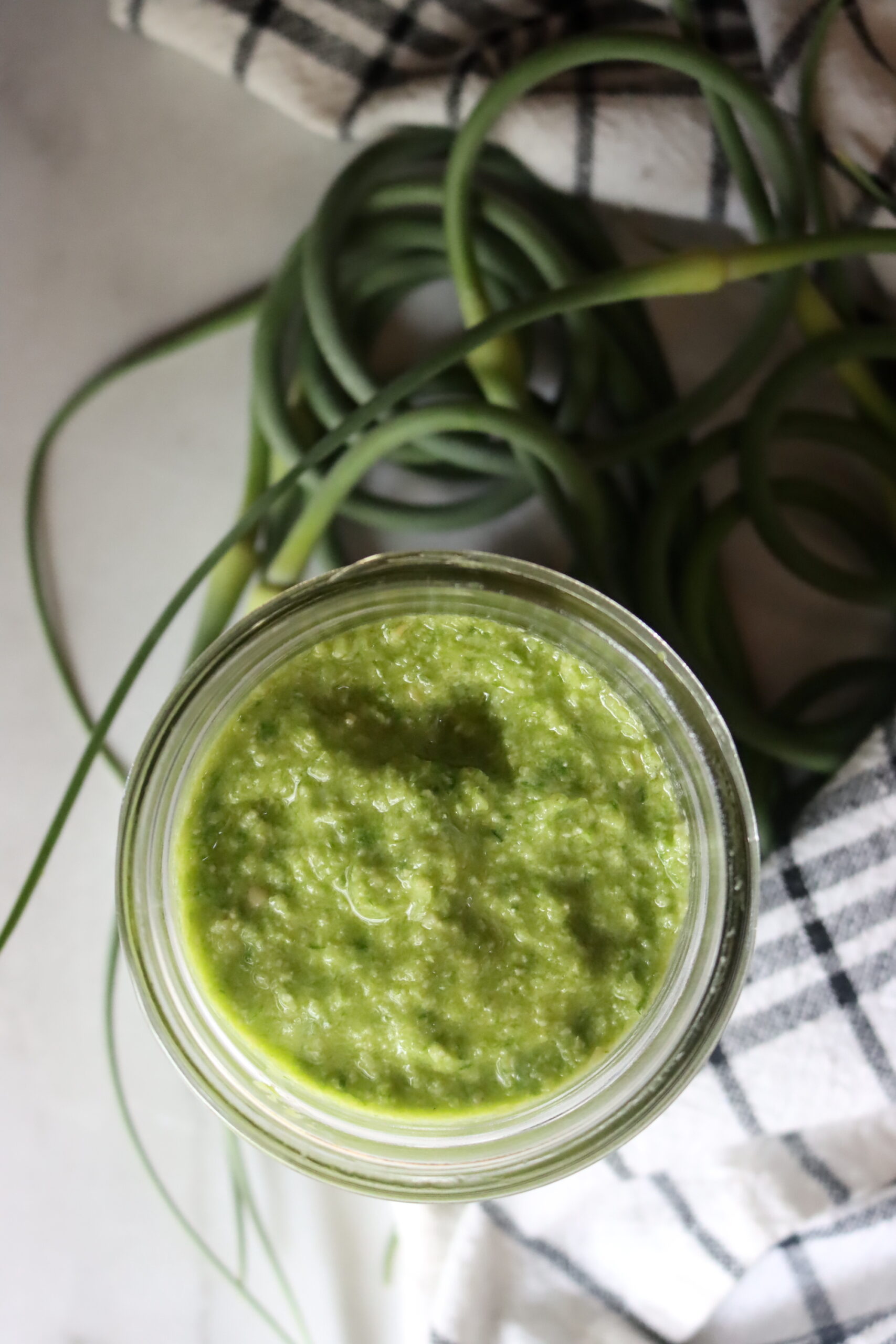
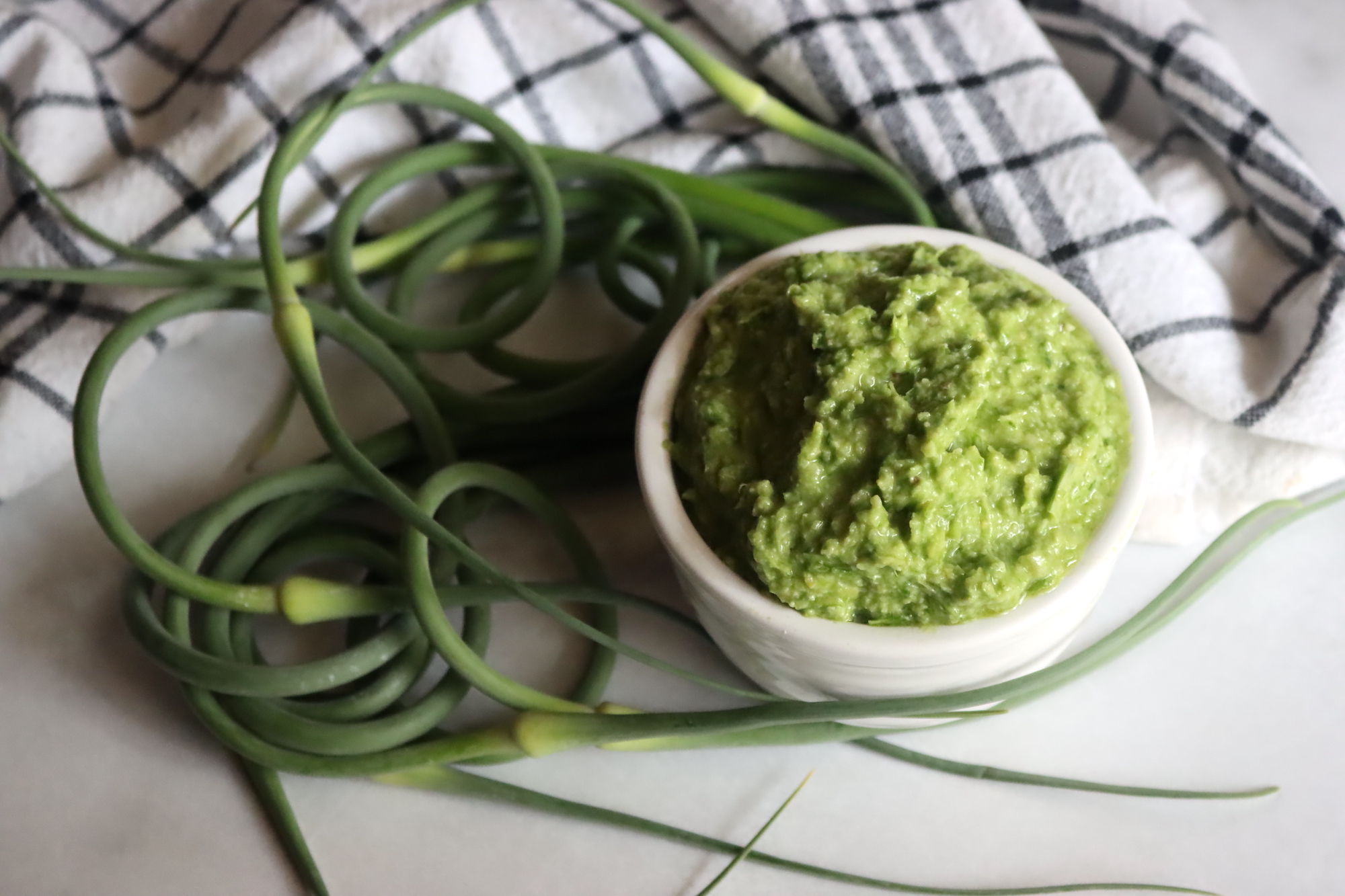
Garlic scape pesto is truly one of the tastiest ways to use this overlooked part of the garlic plant.
Garlic scapes are the long green flower stalks that shoot up from hardneck garlic bulbs in early summer. Farmers cut them off so the plant puts energy into the bulb underground, which means these scapes are often discarded.
They offer a burst of garlicky flavor that’s fresh, green, and notably milder than raw garlic cloves. When you blend them into an easy garlic scape pesto recipe, you get a sauce that is vibrant, herby, and packed with goodness.
Scapes also bring along antioxidants, fiber, and vitamins C and K, which can support your immune system, digestion, and even help lower cholesterol.
This pesto works as a wonderful alternative to traditional basil pesto. You can use it on pasta, pizza, sandwiches, or whisked into salad dressings. The scapes themselves provide all the garlic character you need, so there are no cloves required.
The result is a seasonal sauce that captures spring and early summer in every spoonful, and it takes almost no effort at all.
The ingredients for making garlic scape pesto are quite simple. To make one pint, you’ll need the following:
2 cups garlic scapes, chopped into one inch pieces
1 cup finely grated Parmesan cheese
1/2 cup pine nuts (cashews or raw sunflower seeds work beautifully, too)
1/2 teaspoon salt
1 cup extra virgin olive oil
1/2 to 1 cup fresh basil leaves (optional)
Remember, the scapes themselves are the star here; you will not need any additional garlic cloves.
If you are avoiding dairy, simply swap in a good quality dairy free Parmesan alternative. The pine nuts can be replaced without changing the recipe’s heart.
Cashews give a creamier, slightly sweet finish, while raw sunflower seeds keep things nut free and cost a fraction of the price. Toasted pine nuts add a warmer, nuttier layer if you have a few extra minutes.
Use extra virgin olive oil for the best flavor, though a lighter tasting oil will do in a pinch. The optional basil pushes the flavor closer to a classic pesto, but the all scape version is just as wonderful on its own.
How to Make Garlic Scape Pesto
If you have ever made traditional basil pesto, the good news is that simple garlic scape pesto follows the same no cook rhythm. The whole process takes about 10 minutes, and a food processor does all the heavy lifting.
This recipe yields one pint, but you can easily halve it to make a single cup or double it for a mega batch of one quart.
Begin by gathering your ingredients. Chop the scapes into one inch pieces so they process evenly.
Place the garlic scapes in a food processor and pulse until they are finely chopped. This step breaks them down and starts building a smoother texture.
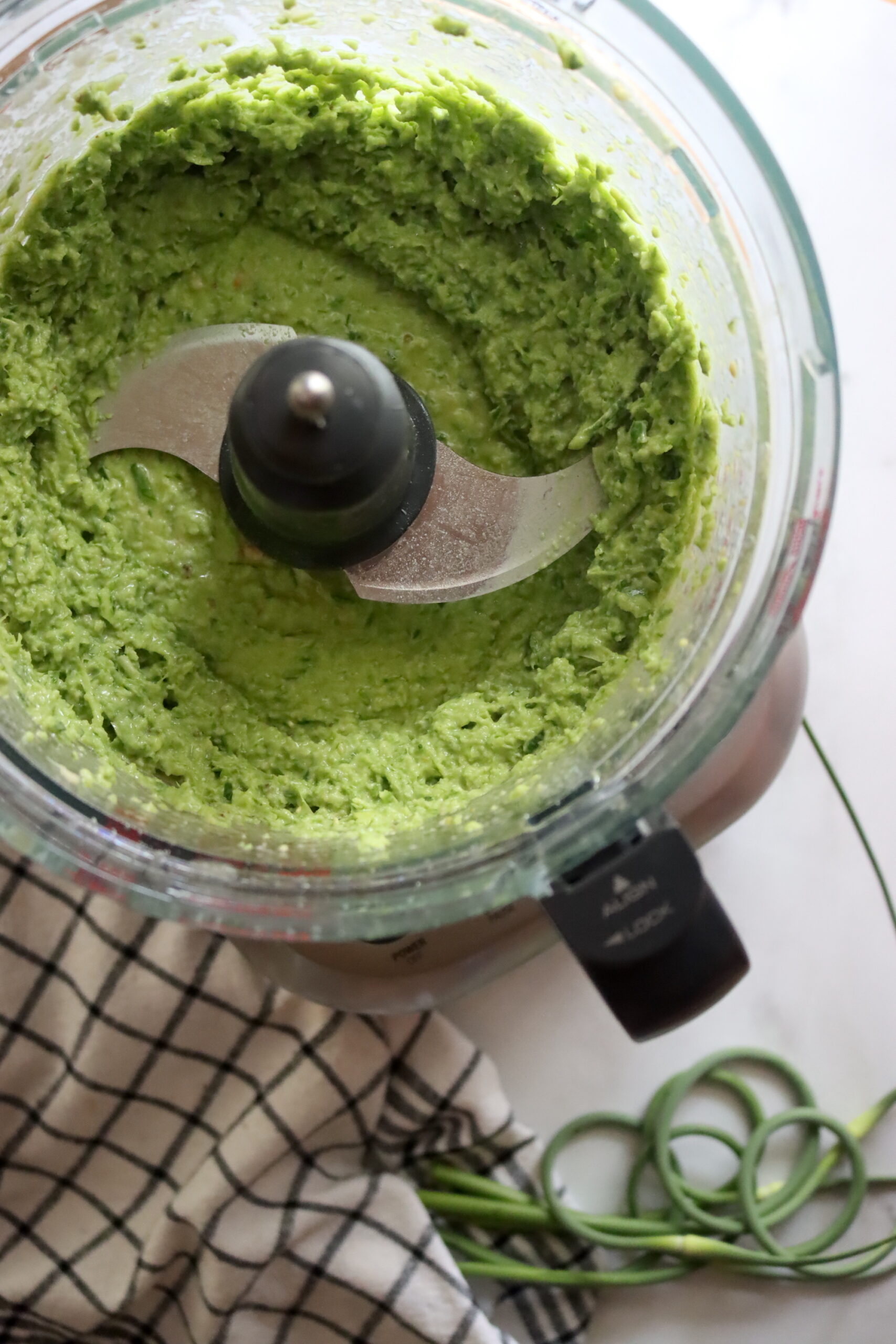
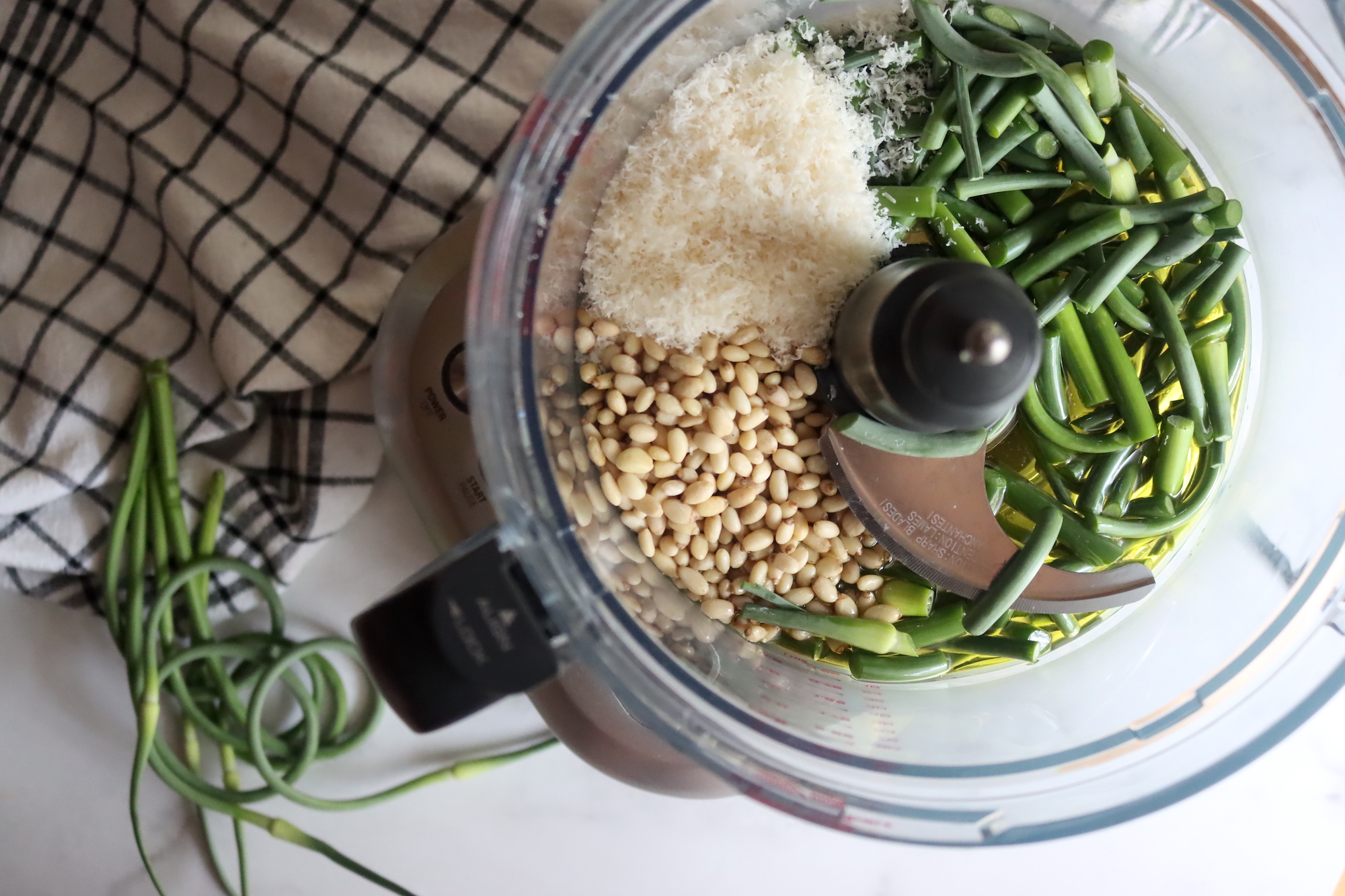
Add the remaining ingredients: Parmesan, pine nuts, salt, olive oil, and basil if you are using it. Process again until the mixture reaches a smooth, spoonable consistency. Scrape down the sides as needed.
Taste your pesto and adjust the seasonings. A little extra salt, a squeeze of lemon juice, or a few more basil leaves can brighten things up right away.
For storage, spoon leftovers into an airtight container and refrigerate for up to one week. To keep it longer, freeze the pesto for up to one year. I love using an ice cube tray: once the cubes are solid, pop them into a zip top bag, and you will have perfect single servings ready whenever you need them. For another tasty way to preserve scapes, try this make and freeze garlic scape butter.
One thing I appreciate about this pesto is how forgiving it is. If you prefer a looser sauce, stream in a little more olive oil while the processor runs. There is no cooking to worry about, so you can make it right before dinner even on a busy weeknight.
Serving Garlic Scape Pesto
This pesto is versatile and can be paired with a variety of dishes. Spread it on your morning toast for a savory breakfast, dollop it on top of grilled chicken or fish for a delicious dinner, or mix it into your favorite pasta for a quick and easy meal.
You can serve it hot or cold. Adding it to warm dishes right before serving keeps the color bright and the flavor fresh.
Tossing it with cold pasta or using it as a dip with fresh vegetables gives you a light, refreshing option on a warm day.
While the pesto is delicious on its own, you can dress it up at the table with a little extra freshly grated Parmesan for creaminess and saltiness, or a sprinkle of toasted pine nuts for crunch.
It also works as a sandwich spread, a pizza base, or a drizzle over grilled steaks and roasted salmon. I once spooned it over a simple sheet pan of roasted summer vegetables, and it turned an ordinary meal into something that felt special.
If you are hunting for even more inspiration, these 8 great garlic scape recipes will keep you busy all season long.
Garlic Scape Recipes
Once you have a batch of pesto in the fridge, you might want to explore other ways to put garlic scapes to work.
Pickled garlic scapes, which are approved for canning, give you a tangy, crisp snack that’s wonderful on charcuterie boards or chopped into salads.
A creamy garlic scape carbonara takes your pasta night in a completely new direction, using the scape pesto to bring a gentle garlic flavor that complements the egg and cheese beautifully.
And garlic scape biscuits with cheddar are a rustic, savory treat that pair perfectly with soups or a weekend breakfast spread. All three recipes show just how adaptable these curly green stalks can be beyond the jar of pesto.
FAQs
What are garlic scapes, and what does garlic scape pesto taste like?
Garlic scapes are the long green flower stalks that grow from hardneck garlic in late spring or early summer. Garlic scape pesto tastes fresh, green, and garlicky, but usually milder than pesto made with raw garlic cloves. It is a seasonal sauce that works well when scapes are abundant.
How do you make garlic scape pesto?
Chop 2 cups of garlic scapes into one-inch pieces, then process them in a food processor until finely chopped. Add 1 cup finely grated Parmesan, 1/2 cup pine nuts, 1/2 teaspoon salt, 1 cup extra virgin olive oil, and 1/2 to 1 cup fresh basil leaves if using, then blend until smooth. The recipe makes 1 pint and takes about 10 minutes total.
What can I use instead of pine nuts in garlic scape pesto?
Cashews or raw sunflower seeds are the best substitutes for pine nuts in this recipe. Sunflower seeds are a practical nut-free option, while cashews give a softer, creamier texture. Keep the garlic scapes in the recipe so the pesto still has its signature flavor.
How long does garlic scape pesto last, and can you freeze it?
Store garlic scape pesto in the refrigerator for up to 1 week. For longer storage, freeze it for up to 1 year, and an ice cube tray works well for portioning. It can be served hot or cold after thawing.
What Is Garlic Scape Pesto? If you ever wander through a farmers market in late spring and spot curly, bright green stalks that look like a cross between a scallion and a coiled ribbon, don’t walk past them.
Total Time:10 min
Yield:1 pint1x
Ingredients
Scale
2 cups garlic scapes, chopped into one-inch pieces 1 cup Parmesan, finely grated ½ cup pine nuts ½ tsp salt 1 cup extra virgin olive oil ½ to 1 cup fresh basil leaves
Instructions
1-Begin by gathering your ingredients: Begin by gathering your ingredients. 2-Process your garlic scapes in a food: Process your garlic scapes in a food processor until they’re finely chopped. This will help break them up into small pieces and make the texture of your pesto smoother. 3-Add in the remaining ingredients and continue: Add in the remaining ingredients and continue processing until you get a smooth consistency. 4-Once you’re happy with your pesto’s consistency,: Once you’re happy with your pesto’s consistency, give it a try! You can adjust the seasonings to your taste with more salt, lemon juice, or basil. 5-Store leftover pesto in the refrigerator for: Store leftover pesto in the refrigerator for up to one week, or freeze for up to one year. It can be served hot or cold.
Last Step:
Please leave a rating and comment letting us know how you liked this recipe! This helps our business to thrive and continue providing free, high-quality recipes for you.